64th Annual Kentucky Foreign Language Conference

For those interested in foreign language and linguistics, check out the 64th Annual Kentucky Foreign Language Conference. There’s a call for papers with an extended deadline until November 15th, but registration just to attend in April is also open. There will be sessions specifically on East Asian Literature and Culture.

—

Location: University of Kentucky , Lexington, Kentucky
Date: April 14-16, 2011
Registration: Regular: $100, Non U-K graduate students: $55
Registration deadline: February 15, 2011

Call for Papers:

The University of Kentucky is now accepting abstracts for the upcoming 64th Annual Kentucky Foreign Language Conference to be held April 14-16, 2011. This year’s conference accepts abstracts for the following divisions: Arabic Studies, East Asian Studies, French and Francophone Studies, German-Austrian-Swiss Studies, Hispanic Linguistics, Hispanic Studies (Peninsular and Spanish American), Italian Studies, Language Technology, Luso-Afro-Brazilian Studies, and Second Language Acquisition.

Mary Louise Pratt will deliver the 2011 Keynote Lecture, “Globalization as Linguistic Force Field” on Thursday, April 14, 2011 at 5:00 p.m.

The deadline for submission of abstracts is now NOVEMBER 15 2010. Acceptance of your paper for presentation implies a commitment on your part to register and attend the conference.

For more information on the conference please visit http://www.as.uky.edu/kflc/ or contact the directors by email at kflc@uky.edu .

Betsy Dahms
Assistant Director
Kentucky Foreign Language Conference
April 14-16, 2011
University of Kentucky
Lexington, Kentucky 40506
http://www.as.uky.edu/kflc
Email: kflc@uky.edu

Posted in announcements, conferences, graduate school | Tagged , , , , , | Leave a comment

Library of Congress Florence Tan Moeson Fellowship Program

Here is a very interesting and unique fellowship program for individuals in Asian Studies to pursue independent research projects within the United States using the Library of Congress Asian and Asian American Pacific Islanders Collection. The deadline has already passed for this year, but if you’re thinking of doing a research project related to these sources, there’s no harm in thinking about your applications far ahead of time!

—

Library of Congress Florence Tan Moeson Fellowship Program

The Asian Division of the Library of Congress announces the Florence Tan Moeson Research Fellowship Program. This Fellowship Program is made possible by a generous donation of Florence Tan Moeson, for 43 years a Chinese Team cataloger in the Regional and Cooperative Cataloging Division at the Library of Congress before she retired in 2001. Mrs. Moeson passed away on November 15, 2008.

The purpose of the FTMR Fellowship Program is to give individuals the opportunity to use the Asian and Asian American Pacific Islanders (AAPI) collections in the Library of Congress to pursue scholarly research projects. The Library’s Asian collections are among the most significant outside of Asia and consist of over 2.8 million monograph, serial, newspaper, manuscript and microform titles in the vernacular languages of East, South and Southeast Asia. It contains primary resource materials including monographs, serials, government reports, newspapers, census data, photos, oral histories, sound recordings, film, and miscellaneous ephemera pertaining to Asian Americans and Pacific Islanders.

Information on the Florence Tan Moeson fellowship can be found online at http://www.lcasianfriends.org/fellowship/

The Florence Tan Moeson Research Fellowship awards total $14,000 each year for 10 years in support of grant support for research projects employing the Asian Division’s Reading Room and the Library’s extensive Asian collections. The grants are awarded upon demonstration of need through a competitive process. Grants are intended to subsidize the researcher’s transportation fares to and from Washington, DC, overnight accommodations and photocopying fees. Graduate students, independent scholars, community college teachers, researchers without regular teaching appointments, and librarians with a demonstrated need for research fellowship support are eligible to apply.

To learn about the content of LC Asian and AAPI collections, visit the Library’s Asian Division’s website at: www.loc.gov/rr/asian/.

Posted in financial assistance, funding, graduate school | Tagged , , , , , | Leave a comment

Fun Link Friday: Translated Japanese Ghost Stories

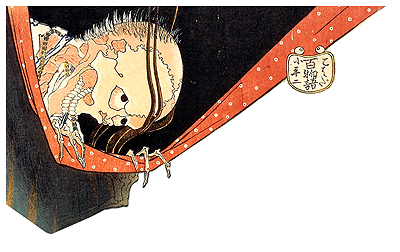
Halloween is over, but the candy piled up on my desk means that I’m not quite ready to let it go. Which is why I couldn’t resist this spooky story treat when I came across it:  a rare gem of culture and fun on the web,         百物語怪談 Hyakumonogatari Kaidankai: Translated Japanese Ghost Stories and Tales of the Weird and the Strange caught my eye.

The site is run by Zack Davisson, an avid researcher of Japanese ghost stories and folklore. He has had a number of articles published online for Japanzine, and works in other freelance writing and consulting capacities. But just one look at this site and one can see that his passion lies with the supernatural of Japan.

As the title suggests, this blog is a collection of translated ghost stories and other strange tales having to do with Japanese supernatural beings and experiences. In Japan, weird accounts of the unseen “other” world date back centuries, and have always caught the eager ears of listeners. The name of this blog comes from the traditional game “Hyakumonogatari Kaidankai” (百物語怪談会), or “A Gathering of 100 Weird Tales.” As Davisson describes it:

100 candles would be placed in a circle, and the players would each tell a ghoulish tale, often a story from their local village, or perhaps a more personal experience. As each tale ended, the storyteller would douse a single candle, the light slowly fading as the tension rose. The game was said to be a ritual of evocation, the expiration of each story and each candle summoning more spiritual energy, transforming the room into a beacon for the dead. With the vanishing of the final light, someone or something terrible would be waiting in the darkness.

There’s a marvelous variety of these tales, and Davisson arranges them thematically in convenient categories such as yōkai stories, Buddhist morals, or magical animal stories, along with tags for essays on kaidan (ghost stories). He has informative articles on ghost stories in Japan, as well as the origins of the hyakumonogatari in both game and published formats. Also of interest are his descriptions of the connection of these early tales to modern j-horror films.

If you’d like a little taste of the spooky (Japan-style), definitely take a look at this site and read a couple of the stories or explanations of Japanese ghosts and supernatural that he’s translated. I definitely lost some time once I got started!

—

Bottom image from 百物語怪談会 Hyakumonogatari Kaidankai: Translated Japanese Ghost Stories and Tales of the Weird and the Strange

Posted in culture, fun links | Tagged , , , , , , , , , | 3 Comments

Why Apply for JET? (With a focus on the ALT position)

The JET program is an excellent program that aims to promote grassroots internationalization between Japan and other nations. There is a common misconception that the main role of JET participants is to teach English. This simply is not true. The “E” in JET stands for “exchange” not “English”. It is a cultural exchange program that takes on the role of advancing mutual understanding between different societies. Teaching English is a significant part of the program, especially if you apply for the ALT or Assistant Language Teacher position, but it is important to keep in mind that the main purpose is to be an ambassador for your nation through foreign language study and international awareness activities.

I first heard about the Japan Exchange and Teaching Program when I was a freshman at Gettysburg College. The thought of moving to a country on the other side of the world and being completely immersed in another culture was a romantic ideal for me at the time. It seemed challenging, adventurous, and very relevant to my area of interest. I was a Japanese Studies major. I could learn about my field while being surrounded by resources. Surely my Japanese would be fluent by the time I returned to the US. All I could see was opportunity and the chance to continue my studies while being paid. It couldn’t get any better than that.

Five years later, when I finally did apply for JET, I looked up everything I could about it. Would this program be the right thing for me? Here are a few things that concerned me in the beginning:

Placement

If you get accepted to the program, you cannot choose where you will go in Japan. You can list your top three choices, but chances are you will not get one of those. You have to go where you are placed or decline to enter the program. The majority of positions are in rural areas. Many cities in Japan already have large foreign populations and there is much less demand for a JET in places like Tokyo, Kyoto, Osaka etc. It is very difficult to move to another place if you do not like your situation after you arrive. If you get on the plane, you are agreeing to fulfill the terms of your contract which means going to the area where the local government that hired you is located.

Working for the Japanese Government

If you are accepted by JET, you will then be appointed to a contracting organization. This means that you will work for a Board of Education, Prefectural Office or something similar that is linked to and under the control of the Japanese government. My only reason for emphasizing this point is that this means working within a very well defined bureaucracy.

Separation from Friends and Family

JET means signing up for at least a year of life in another country without a familiar support system. Depending on where they send you, you could be around other JET participants or you could have a whole island all to yourself.

Long Application Process

The process from start to landing in Japan takes almost a full year. Jen C. wrote a very nice blog about the details of the application process which you can access here. To briefly recap, the process begins in October, the application is due in November, you get called back in January for an interview in February, you are informed of the interview results in April, you are given your placement in May, you ship out in July, and you start working in August. For a more detailed timeline, check out the JET Programme website.

My Experience

With those things in mind, I decided that the benefits outweighed my fears and I applied. My application was successful and I left for the small rural town of Gojome in Akita Prefecture on July 31st, 2010.

ALT Duties

Assistant Language Teacher

As an ALT, one of your main roles is to assist the Japanese Teacher of English or JTE in the classroom. This means that you are the one who has to be flexible a lot of the time. Chances are you will be able to incorporate your teaching ideas gradually but everything must be approved by the JTE. Some JTE’s have no idea how to use you in the classroom and very little time to discuss lesson plans with you before class. You will be working with teachers who have varying levels of experience teaching. They will also vary in their English speaking ability, their level of involvement in the class, and their level of enthusiasm for English. The JTE may base their initial opinion of you on their previous experiences with ALT’s. This could be a good thing or a bad thing depending on your predecessor. Your working relationships with your JTE’s can make or break your JET experience. Fostering good relationships with them is essential.

English and Cultural Expert

You will be considered the resident English and foreign culture expert in your area. You could be put on the spot and asked very specific questions about English grammar, spelling, and word usage. Even if you can provide a correct and concise answer to the question, it may not always be the answer the teacher is looking for and you will feel like you failed. If you can’t spell hippopotamus or archaeologist on cue or if you have no idea what grammar point the teacher is trying to prompt it doesn’t mean that you are a failure. A good JTE recognizes the fact that you can’t read their mind and they sometimes have to look up the correct way to write a Chinese character as well.

Being knowledgeable about your own culture is important but culture is a living, changing, and at times subjective thing. There may not be a defined answer to a question. For example, there is a chapter in one of the English textbooks for junior high school about giving compliments. It teaches that in American culture, people often compliment each other as a greeting, such as, “Hello Mary! That haircut looks great.” I was asked if Americans mean it when they compliment someone or if they are just using it as a greeting. While it is true that Americans use compliments far more often than Japanese and there is often no deeper meaning to “that haircut looks great”, there is no defined answer to this question. It is open to interpretation. People will see you as the definitive guide of all things American, so be careful what you say.

Involvement in the Community

It is expected that you will make every effort to be involved in the community around you. This is a part of your job. Attending school events on Saturdays is often mandatory. Sometimes you have to work on Sunday as well. You should get another day off in place of the Saturday or Sunday you worked, but this is not always the case. ALT’s are often asked to run workshops on international culture, to participate in seminars for JTE’s to improve their English, to attend conferences about improving your own teaching methods and to judge local English speech contests. Another way to be involved in your community is to join a club like Kyudo (Japanese Archery), Taiko (Japanese drums), Tea Ceremony, Flower Arrangement, Yosakoi (a type of Japanese dance), etc. Getting involved in clubs is not mandatory, but will be greatly appreciated. They want to see that you have an interest in Japanese culture as well and you will be expected to make an effort to learn Japanese.

Is this program right for me?

I have been lucky enough to have a very positive experience with JET thus far but it is important to mention that JET is not for everyone. Language and cultural barriers can often be frustrating. Social faux paus are common and JETs are no strangers to embarrassment. JETs are often asked to deliver speeches in front of crowds of people they do not know very well with very little time to prepare. At times, it seems like everyone around you knows what is going on and you have absolutely no idea.  The Japanese teachers stay very late and they seem to constantly be busy. This creates a feeling of disparity that can lead to guilt on the JETs part. Depending on your situation, you could have lots of free periods during the school day in which there is little to do or you could have absolutely no free time at all. Effectively using the time that you do have, whether it is too much or too little, is essential. The climate in your area can also have a strong effect on your mood. In the winter, the sun sets around 4pm in Gojome. Massive amounts of snow fall and Akita prefecture is known for its high suicide rate because it is so dark and cold. Every situation is different and being able to adapt and let the little things go is part of what being a JET is all about.

Conclusion

The JET program is an amazing opportunity to become actively involved in international exchange. It looks great on a resume and you learn invaluable life lessons working and living in another country. The duties of an ALT are not always clearly defined but if you are an enthusiastic individual who is motivated and interested in becoming involved in the community you will succeed. An ALT is much more than an English teacher. They are cultural ambassadors who represent their nations and foreigners in general. The program is not for everyone so please carefully consider your strengths and weaknesses before applying to JET. The JET program has a great reputation of excellence in Japan and the JET community is a global one. It is a great place to begin your career in the field of Japanese Studies.

– Rachel

===

Rachel Reed graduated from Gettysburg College in 2008 with a BA in Japanese Studies. She worked as an Administrative Assistant in the Political Section at the Embassy of Japan in Washington DC for two years (2008-2010) and later worked as an Assistant Language Teacher with the JET program, in Gojome, a small, rural town in Akita Prefecture.

—

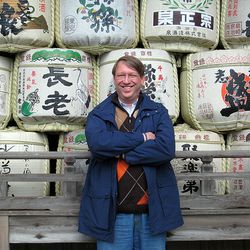
Photo by moriza

Posted in applications, JET, main posts | Tagged , , , , , , | 8 Comments

Book announcement: Japanese Foodways, Past and Present

To complement our Japanese food and drink blog review by Jen, here is an announcement for a new book related to Japanese food coming out soon: Japanese Foodways, Past and Present. Whether you’re a Japanese food historian, connoisseur, or just love the stuff, this book is definitely worth a look!

—

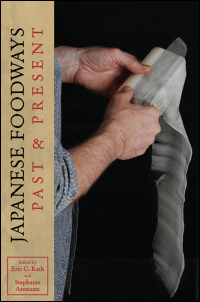
Japanese Foodways, Past and Present
edited by Eric Rath and Stephanie Assmann
(University of Illinois Press, November 2010)
http://www.go.illinois.edu/f10rath

Spanning nearly six hundred years of Japanese food culture, Japanese Foodways, Past and Present considers the production, consumption, and circulation of Japanese foods from the mid-fifteenth century to the present day in contexts that are political, economic, cultural, social, and religious.  Diverse contributors-including anthropologists, historians, sociologists, a tea master, and a chef-address a range of issues such as medieval banquet cuisine, the tea ceremony, table manners, cookbooks in modern times, food during the U.S. occupation period, eating and dining out during wartime, the role of heirloom vegetables in the revitalization of rural areas, children’s lunches, and the gentrification of blue-collar foods.

Framed by two reoccurring themes-food in relation to place and food in relation to status-the collection considers the complicated relationships between the globalization of foodways and the integrity of national identity through eating habits. Focusing on the consumption of Western foods, heirloom foods, once-taboo foods, and contemporary Japanese cuisines, Japanese Foodways, Past and Present shows how Japanese concerns for and consumption of food has relevance and resonance with other foodways around the world.

Contributors are Stephanie Assmann, Gary Soka Cadwallader, Katarzyna Cwiertka, Satomi Fukutomi, Shoko Higashiyotsuyanagi, Joseph R. Justice, Michael Kinski, Barak Kushner, Bridget Love, Joji Nozawa, Tomoko Onabe, Eric C. Rath, Akira Shimizu, George Solt, David E. Wells, and Miho Yasuhara.

For further information and to order: http://www.go.illinois.edu/f10rath

Eric C. Rath, erath@ku.edu
Associate Professor
Department of History
University of Kansas

—

Image from University of Illinois Press

Posted in announcements, culture | Tagged , , , , , , , | 1 Comment

Blog Review: Sake & Japanese Food Navigator

Japan is well-known for its food, whether it be now-ubiquitous sushi, cute and quirky bento, or the “It’s fried and looks delicious!… wait, it’s WHAT?!” that travelers experience more often than they’d like. However, for those of you looking to go deeper into Japanese cuisine, the Sake & Japanese Food Navigator is a great place to start.

Ad Blankestijn, the blog’s author, is a licensed Master Sake Sommelier and Sake Instructor, but posts nearly as many articles about traditional foods. Topics range from sake brewing processes to serving suggestions, and from the basics of tofu to the cultural significance of peaches. His restaurant reviews focus more on providing background for the cuisine and instruction on how to enjoy it than the quality of the food itself, but it is clear from other posts that if the restaurant is worth a write-up, it’s more than worth a visit.

Overall, the Sake & Japanese Food Navigator has a very straight-forward, informative feel. Don’t let that dissuade you from reading it, though– the tidbits of trivia included in each post feel like little lightbulbs going off in your head. You might also learn some really useful information, like how soba helps the liver process alcohol and lowers blood pressure, or how many mikan to eat to get all your Vitamin C for the day! History buffs will be pleased as well– Blankestijn does his research when providing information on even basic tsukemono (though it’s not always cited). Be sure to check it out!

—

Photo from Sake & Japanese Food Navigator

Posted in blogs, culture, useful links | Tagged , , , , , , | Leave a comment

Event: Hakuin Symposium

If you’re in the New York area this week, you may be interested in the Hakuin Symposium, presented by the Japan Society of New York. For those of you not aware, Hakuin Ekaku (1686–1769) was an extremely influential figure in the Rinzai sect of Zen Buddhism. If you’re interested, tickets are $11 for non-members, $7 for JS members.

—

Hakuin Symposium

Location: New York, NY
Date: Nov. 4, 2010

There will be a Hakuin Symposium at the Japan Society of New York on November 4th from 6:30PM to 8:30PM that will include the showing of a newly discovered painting of Kannon Bodhisattva by Hakuin and discussion of the religious import of this work, expanding to a broader discussion of Hakuin as Zen monk and as painter.

The symposium will be led by Yoshizawa Katsuhiro, professor of Zen Studies at Hanazono University, Yamashita Yuji, professor of Art History at Meiji Gakuin University, and Thomas Kirchner, Zen Monk and Associate Researcher in Zen Studies, Hanazono University.

Tickets $11/$7

Japan Society
333 East 47th St. (at First Avenue)
New York, NY 10017
Phone 212-715-1258

—

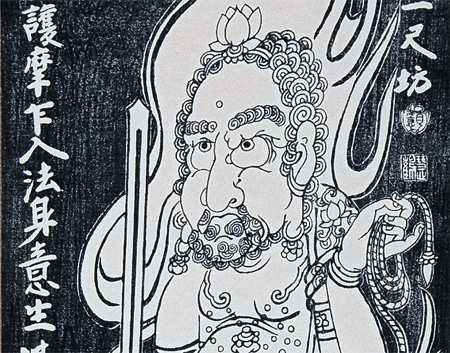
Image from the Japan Society

Posted in announcements, conferences, culture | Tagged , , , , , , , , , , | 1 Comment

Call for papers: pre-modern warrior studies

In case anyone is in Japan now or will be come June 2011, there is a call for papers out on pre-modern warriors panel for the Meiji Gakuin University‘s Asian Studies Japan Conference, held next at the International Christian University. Sounds like it will be a very interesting conference! Check out the announcement below. Deadline for submissions to this panel is November 8th, deadline for other areas of the conference November 15th.

—

Dear Colleagues,

I am developing a panel on pre-modern warrior studies at the Fifteenth Asian Studies Conference Japan, to be held on June 25-26, 2011, at International Christian University, Tokyo. The tentative panel title is “The Warrior Tradition in East Asian Literatures: Interpretation, Socialization, and Idealization.”

The aim of the panel is to identify similarities and differences in warrior cultures of different regions of East Asia, as well as broader sociological and cultural trends in warrior societies of these regions by exploring the ways warrior cultures were represented in pre-modern literary sources.

The panel is particularly concerned with clarifying misconceptions and confusion over warriors in different periods of history, as well as with identifying the intangible foundations of warrior cultures and constituents comprising warrior identity. In this discussion, it will be crucial to bring to light the socio-cultural context behind the authors’ attempts to interpret or idealize what they perceived as the “true warrior.”

We already have two panelists who will speak on Japan and China. For a complete panel, we need one more paper. If you are interested in participating in our panel, please send me your proposal of 250 words maximum by November 8, 2010.

Dr. Anatoliy Anshin
Asian Languages Department
Institute for Linguistics
Russian State University for the Humanities / Moscow International Higher Business School MIRBIS
Email:    aanshin@mirbis.ru

Posted in announcements, conferences | Tagged , , , , , , , , | Leave a comment

Fun Link Friday: Halloween Prank Videos

Nothing says ‘Halloween’ like pranks to terrify your friends and family. And believe me, Japan is no exception. Japanese TV shows love to play all kinds of pranks on people, scary or otherwise, and we’ve selected a few here for your Halloween viewing pleasure.

One thing you may notice when looking at the first and last video, is that Japan has no qualms about scaring the living daylights out of small children. In fact, it seems to be an excellent way to build their confidence as well as make them go to bed on time.

Video 1: Zombie vs. Japanese kids [subtitled]

In this video, watch as a reporter helps a family with small kids fend off a ‘zombie’ attack. I love that this show goes all-out, getting people outside of the home in on it too, just to make it more terrifying for the kids as their neighbors flee in the streets. And who doesn’t appreciate how horrifying it is to get a letter from Zombie-san before he shows up to eat you?

Video 2: Haunted Hospital Prank [subtitled]

This video is more comedy-oriented, sending two guys dressed up as female nurses on missions to retrieve objects in a hospital booby trapped with scary noises and actors. While this doesn’t seem very scary to a Western audience, remember that there are cultural differences at work here, and this is a variety show, so it also isn’t meant to be that scary. (On a side note, I once had a 29 year old female friend who was cover-your-eyes-terrified of the Haunted Mansion ride at Tokyo Disney… definitely some cultural differences there!)

Video 3: Japanese Demon Calms Hyperactive Children [not subtitled]

In one of the most cruel and hilarious of these pranks, this man is dressed up as some kind of demon, attempting to be as frightening as possible, and comes to someone’s house specifically to scare her children into going to bed when mommy says so. Because there’s no subtitles, I’ve translated the gist of it below.

Demon: So the children not sleeping are here are they… [opens door]
[children running and screaming] Who are the children that aren’t sleeping?! (cackle)
[boy in yellow wailing] WILL YOU SLEEP? [boy nods] WILL YOU SLEEP?
Will you listen to what your mother says?!
Sleep! [children getting into bed] Sleep! Sleep!
[demon kneels] Will you listen to what you mother says?
[children nod] Will you listen to what you mother says? If your mother goes to sleep will you go to sleep? [sad noises of affirmation] Say goodnight to your mother.

Children: Goodnight…

Mother: Goodnight. Now go to sleep.

Child: [to demon] Goodnight…

Demon: Close your eyes! Close your eyes!
[demon points to mom]
Mom, go to bed already.

Mother: Yes, yes.

—

Have a great Halloween everyone!

—

Photo by YAXZONE

Posted in fun links | Tagged , , , , , , | 2 Comments

Images of Okinawa after WWII

Here’s a very cool new digital resource for people interested in the history of Okinawa or history after WWII. The University of Hawaii at Manoa has compiled a database of images that can be accessed by anyone and searched by title, author, reference number, category, date, or city. Very neat stuff, so take a look!

—

The Asia Collection of the University of Hawaii at Manoa Library is pleased to introduce the new image database, “Images of Okinawa after World War II” http://digicoll.manoa.hawaii.edu/okinawa/

The site provides over 250 images digitized from the Kupfer Slide Collection donated in July 2010 and the US Civil Administration of the Ryukyu Islands (USCAR) photos, which were part of Dr. Douglas Haring’s personal materials.

If images are used for non-commercial educational purposes such as use of the images in class lectures, students’ presentations, and academic conference presentations, no permission is necessary. Please credit the images with the sentence: “From the Images of Okinawa after World War II, courtesy of “the UHM Library Okinawa Collection” However if the images are planned to be used in books, newspapers, documentaries, films, and other forms of media and print, the users must write to the UHM Library Okinawa Collection to request permission. In the request, please explain the topic, image reference number, and the type of media/print.

—————————————————————-

Tokiko Y. Bazzell, Japan Specialist Librarian
University of Hawaii at Manoa Library
Asia Collection Dept.
2550 McCarthy Mall
Honolulu, Hawaii, 96822 U.S.A.
Email: tokiko@hawaii.edu
PH: 808-956-2315 : FX: 808-956-5968
http://www.hawaii.edu/asiaref/japan/index.htm

—

Image above from the Images of Okinawa after World War II, courtesy of the UHM Library Okinawa Collection

Posted in announcements, culture, useful links | Tagged , , , , , , , , | Leave a comment