Shinpai Deshou, the Next Generation

Shinpai Deshou has been quiet for some time, and a post about it is long overdue. What can I do with a B.A. in Japanese Studies? began in 2010, which is almost hard to believe, considering it was nearly a full 14 years ago. I began this blog during my Master’s degree, though I conceptualized it as early as the final years of my BA (go figure). The digital and career landscapes of 2008 to 2010 were very different than the one we find ourselves in now. Back then, almost a decade and a half ago (!), there were extremely few online resources out there to help folks who hoped to work in some capacity connected to Japan. Helping people locate helpful websites or tools or books or even specialists who have walked the path they were on was my goal, and as my career has continued, that desire to help people hasn’t changed. That said, the current digital environment is indeed a very different beast, and new generations of Japan specialists are blessed with an embarrassment of riches when it comes to guides, platforms, and other materials that can help them envision a multitude of career paths.

As a result, this blog has been quietly sunset, not only because there are many other things out there, but also because my own career has continued to evolve, and my energies have been put into other, adjacent resources related to Japan Studies. For example, I now maintain a Digital Resources and Projects on East Asia database, helping folks in and beyond East Asian Studies find research- and teaching-ready online materials. Every week all year round I collect, analyze, and visualize job data for the East Asian Studies field around the globe. 

Most significant to this blog, perhaps, is that I have spent the last 2-3 years collaborating with colleagues on the creation and launch of Japan Past & Present (JPP), a global information hub and repository that promotes research and teaching in the Japanese humanities across disciplinary, temporal, and geographic borders. JPP very much feels like an extension and expansion of much of the work I always hoped to do with Shinpai Deshou, though more focused on academia.

JPP in fact draws on many of the resources I originally created for Shinpai Deshou, and having support from the Yanai Initiative for Globalizing Japanese Humanities, I have been able to achieve some of the pipe dreams I had as the creator of Shinpai Deshou, like finally taking my 14 years of information collected on funding opportunities for the blog and reenvisioning them with colleagues to create a filterable database of grants that Japan specialists can use to find the support they need, or converting those weekly publication announcements to a community-driven page featuring the latest publications on Japan from around the world.

What can I do with a B.A. in Japanese Studies? has been near and dear to my heart for so many years, and I cannot express the depth of gratitude I feel towards those who contributed their many articles and resources to help cultivate the blog into something that has given back to the Japan community. It has warmed my heart to have had so much encouragement from readers, and to hear from so many people who felt our articles helped them locate jobs, interview for a dream position, choose a school, and much more. Shinpai Deshou will no longer be updated, but I will work to keep the site available for those who still find it useful, outdated though it may become.

In the meanwhile, I hope you’ll explore its next generation, Japan Past & Present, by signing up for our newsletter and following us across social media on Twitter, Facebook, and Bluesky. Though JPP is focused on an academic audience, its content will be of interest to anyone interested in Japan, and its future holds great possibilities for specialists of all kinds as a global information hub for the Japan field.

Thank you all for taking this journey with me and for your support over the years!

Paula Curtis
Posted in announcements | 4 Comments

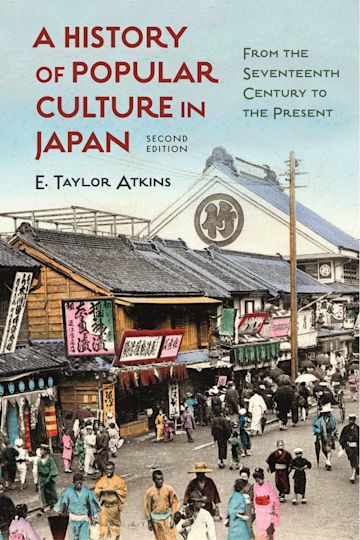
Book Announcement: A History of Popular Culture in Japan

A History of Popular Culture in Japan
From the Seventeenth Century to the Present

E. Taylor Atkins

The phenomenon of ‘Cool Japan’ is one of the distinctive features of global popular culture of the millennial age. A History of Popular Culture in Japan provides the first historical and analytical overview of popular culture in Japan from its origins in the 17th century to the present day, using it to explore broader themes of conflict, power, identity and meaning in Japanese history.

E. Taylor Atkins shows how Japan is one of the earliest sites for the development of mass-produced, market-oriented cultural products consumed by urban middle and working classes. The best-known traditional arts and culture of Japan- no theater, monochrome ink painting, court literature, poetry and indigenous music-inhabited a world distinct from that of urban commoners, who fashioned their own expressive forms and laid the groundwork for today’s ‘gross national cool.’ Popular culture was pivotal in the rise of Japanese nationalism, imperialism, militarism, postwar democracy and economic development.

Offering historiographical and analytical frameworks for understanding its subject, A History of Popular Culture in Japan synthesizes the latest scholarship from a variety of disciplines. It is a vital resource for students of Japanese cultural history wishing to gain a deeper understanding of Japan’s contributions to global cultural heritage.

For more information: https://www.bloomsbury.com/us/a-history-of-popular-culture-in-japan-9781350195936/

Posted in announcements, culture | Tagged , , , , , , , , , , , , | Leave a comment

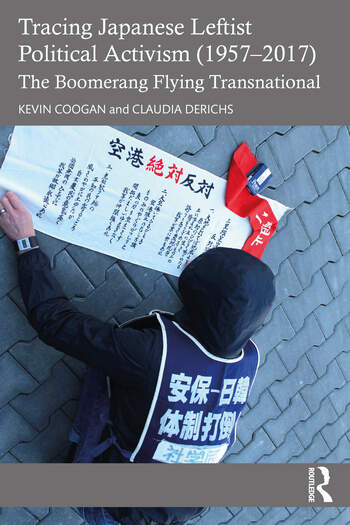
Book Announcement: Tracing Japanese Leftist Political Activism (1957 – 2017): The Boomerang Flying Transnational

Tracing Japanese Leftist Political Activism (1957 – 2017):
The Boomerang Flying Transnational
By Kevin Coogan, Claudia Derichs

Tracing Japanese Leftist Political Activism (1957–2017) tells the story of the Japanese Red Army (JRA), a militant left-wing group founded in 1971 which was involved in numerous terrorist attacks.

It traces the origins of the group in the Japanese New Left in the 1960s and looks at Red Army groups of the early 1970s in Japan, such as the Red Army Faction, and the United Red Army which became infamous for murdering its own members. The book also examines the JRA’s trans- and international links with other militant groups including the Popular Front for the Liberation of Palestine, as well as the networks of intellectuals and fellow activists who supported them.

This book will be of great interest to students and scholars of terrorism, radicalism, and Japanese social history.

For more information: https://www.routledge.com/Tracing-Japanese-Leftist-Political-Activism-1957-2017-The-Boomerang/Coogan-Derichs/p/book/9780367641382

Posted in announcements, culture | Tagged , , , , , , , , , , | Leave a comment

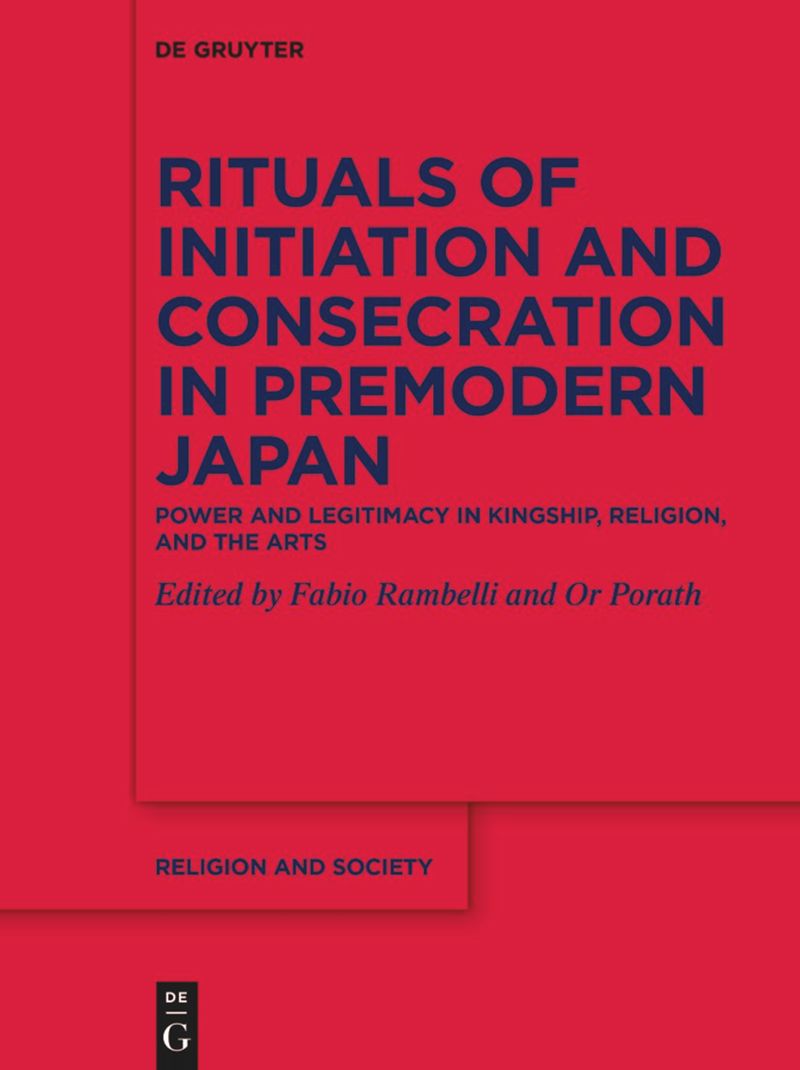
Book Announcement: Rituals of Initiation and Consecration in Premodern Japan: Power and Legitimacy in Kingship, Religion, and the Arts

Rituals of Initiation and Consecration in Premodern Japan: Power and Legitimacy in Kingship, Religion, and the Arts
Edited by Fabio Rambelli & Or Porath

In premodern Japan, legitimization of power and knowledge in various contexts was sanctioned by consecration rituals (kanjō) of Buddhist origin. This is the first book to address in a comprehensive way the multiple forms and aspects of these rituals also in relation to other Asian contexts.

The multidisciplinary chapters in the book address the origins of these rituals in ancient Persia and India and their developments in China and Tibet, before discussing in depth their transformations in medieval Japan. In particular, kanjō rituals are examined from various perspectives: imperial ceremonies, Buddhist monastic rituals, vernacular religious forms (Shugendō mountain cults, Shinto lineages), rituals of bodily transformation involving sexual practice, and the performing arts: a history of these developments, descriptions of actual rituals, and reference to religious and intellectual arguments based on under-examined primary sources. No other book presents so many cases of kanjō in such depth and breadth.

This book is relevant to readers interested in Buddhist studies, Japanese religions, the history of Japanese culture, and in the intersections between religious doctrines, rituals, legitimization, and performance.

For more information: https://www.degruyter.com/document/doi/10.1515/9783110720211/

Posted in announcements, culture | Tagged , , , , , , , , , , , , | Leave a comment

Book Announcement: Interactions Between Rivals: The Christian Mission and Buddhist Sects in Japan (c.1549-c.1647)

Interactions Between Rivals: The Christian Mission and Buddhist Sects in Japan (c.1549-c.1647)
Edited by Alexandra Curvelo & Angelo Cattaneo

This volume presents comprehensive research on how southern European Catholics and the Japanese confronted each other, interacted and mutually experienced religious otherness in early modern times.

In their highly variable and asymmetric relations, during which the political-military elites of Japan at times not only favoured, but also opposed and strictly controlled the European presence, missionaries – particularly the Jesuits – tried to negotiate this power balance with their interlocutors.

This collection of essays analyses religious and cultural interactions between the Christian missions and the Buddhist sects through processes of cooperation, acceptance, confrontation and rejection, dialogue and imposition, which led to the creation of new relational spaces and identities.

For more information: https://www.peterlang.com/document/1190560

Posted in announcements, culture | Tagged , , , , , , , , , , | Leave a comment

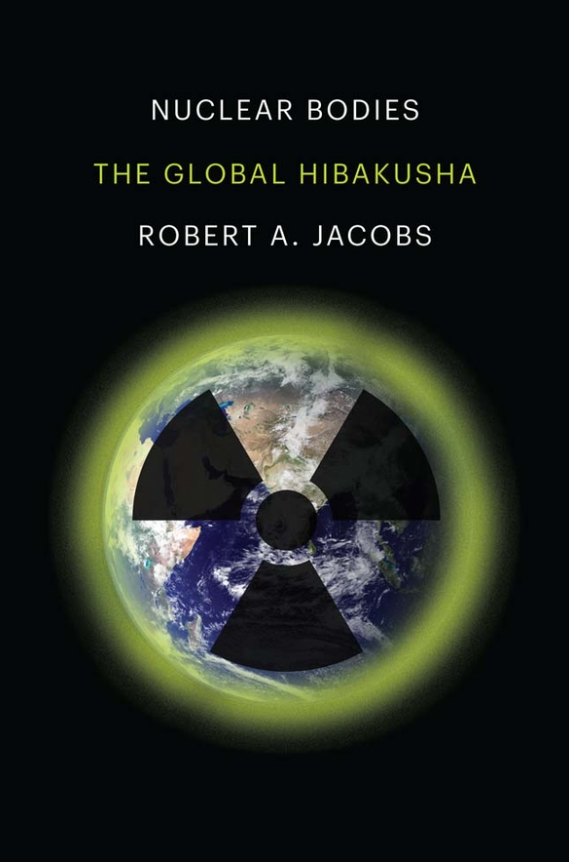
Book Announcement: Nuclear Bodies: The Global Hibakusha

Nuclear Bodies: The Global Hibakusha
Robert A. Jacobs

In the fall of 1961, President Kennedy somberly warned Americans about deadly radioactive fallout clouds extending hundreds of miles from H‑bomb detonations, yet he approved ninety‑six US nuclear weapon tests for 1962. Cold War nuclear testing, production, and disasters like Chernobyl and Fukushima have exposed millions to dangerous radioactive particles; these millions are the global hibakusha. Many communities continue to be plagued with dire legacies and ongoing risks: sickness and early mortality, forced displacement, uncertainty and anxiety, dislocation from ancestors and traditional lifestyles, and contamination of food sources and ecosystems.

Robert A. Jacobs re‑envisions the history of the Cold War as a slow nuclear war, fought on remote battlegrounds against populations powerless to prevent the contamination of their lands and bodies. His comprehensive account necessitates a profound rethinking of the meaning, costs, and legacies of our embrace of nuclear weapons and technologies.

For more information: https://yalebooks.yale.edu/book/9780300230338/nuclear-bodies/

Posted in announcements, culture | Tagged , , , , , , , , , , , | Leave a comment

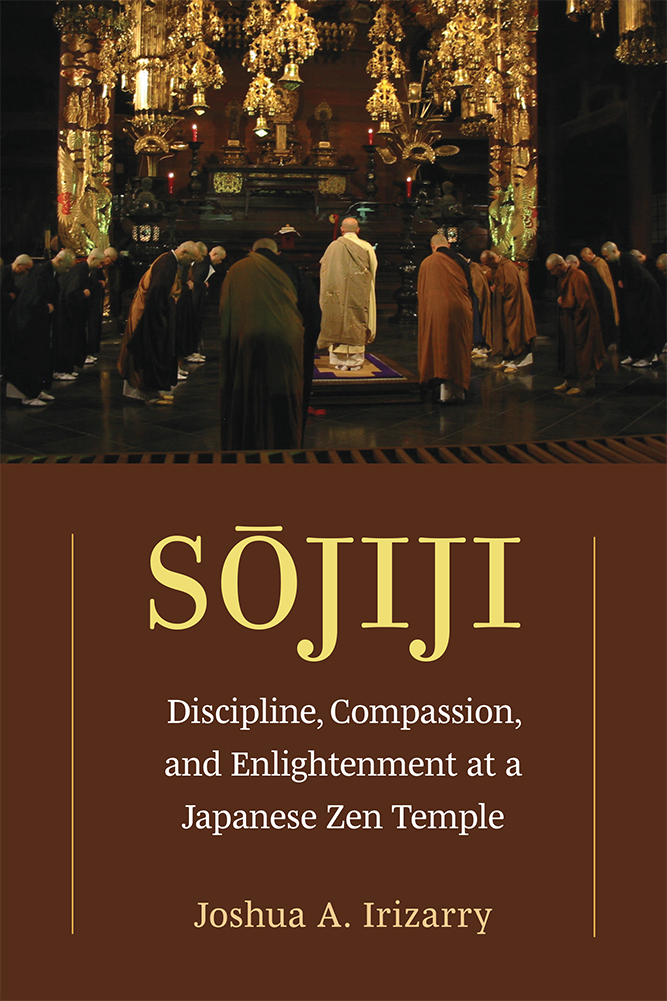
Book Announcement: Sōjiji: Discipline, Compassion, and Enlightenment at a Japanese Zen Temple

Sōjiji: Discipline, Compassion, and Enlightenment at a Japanese Zen Temple
Joshua A. Irizarry

Sōjiji is one of the two head temples of Sōtō Zen, the largest sect of Japanese Buddhism. The temple is steeped in centuries of culture and tradition, but it is very much rooted in the present and future, performing functions and catering to needs that reflect the changing demographic, social, and religious landscapes of contemporary Japan.

Based on more than fifteen years of fieldwork, interviews, and archival research, Sōjiji: Discipline, Compassion, and Enlightenment at a Japanese Zen Temple immerses the reader in the lives and experiences of the different groups that comprise Sōjiji’s contemporary religious community. Through clear and accessible prose, ethnographically-grounded analysis, and emotionally compelling stories, the reader will explore the rich pastiche of daily life and ritual activity at a major Japanese Zen temple in institutional, historical, and social context through the lived practices of its community of clergy, practitioners, parishioners, and visitors.

For more information: https://www.press.umich.edu/11510618/sojiji

Posted in announcements, culture | Tagged , , , , , , , , | Leave a comment

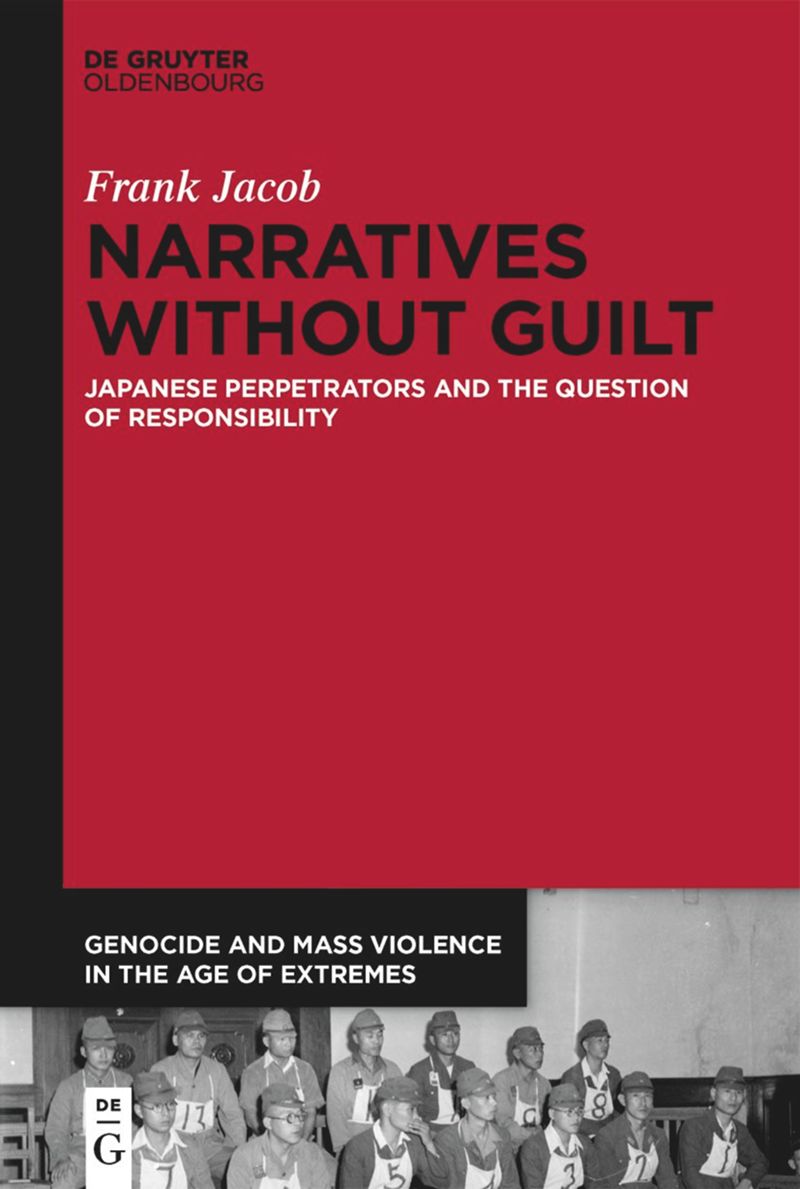
Book Announcement: Narratives Without Guilt: Japanese Perpetrators and the Question of Responsibility

Narratives Without Guilt:
Japanese Perpetrators and the Question of Responsibility
Frank Jacob

During the Second World War Japanese soldiers committed several different war crimes, including the kidnapping and raping of women or the mistreatment of POWs. In relation to the war crime trials after 1945 these perpetrators were interviewed by the Allied powers and could reflect on their acts during the war. How they perceived their own role for the named eruptions of violence is the main focus of the present book. It takes a closer look at the self-perception and the apologetical narratives of war criminals within the Japanese Army to explain how ordinary Japanese men explained their crimes against humanity once the Second World War was over.

For more information: https://www.degruyter.com/document/isbn/9783110731835/html

Posted in announcements, culture | Tagged , , , , , , , , | Leave a comment

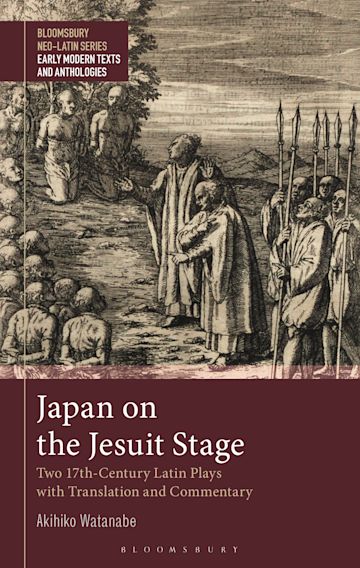
Book Announcement: Japan on the Jesuit Stage: Two 17th-Century Latin Plays with Translation and Commentary

Japan on the Jesuit Stage: Two 17th-Century Latin Plays with Translation and Commentary
Akihiko Watanabe

The Jesuits were a major source of European information on Japan from the late 16th to early 17th century. Not only were they active missionaries but they also produced linguistic, religious and cultural tracts, regional chronicles, as well as hundreds of Latin plays written in imitation of classical Greco-Roman theatre but set in Japan. An intriguing yet underexplored segment of Jesuit school theatre is that which stages non-classical, non-Western subjects such as Japan, and this volume is the first to present Latin texts of two of these plays alongside full English translations, commentaries and an extensive introduction.

The plays in question – Martyrs of Japan and Victor the Japanese – were performed in Koblenz and Munich, in 1625 and 1665 respectively, and are collated from original 17th-century manuscripts for this edition. They were based on specific events which took place in Japan in 1597 and 1613, and their main characters are historically attested Japanese Catholic converts and their pagan peers.

The juxtaposition of the Latin texts and original English translations makes the plays newly accessible to a wide readership, shedding light on the ways in which Western classical humanism rooted in ancient Mediterranean theatre became intertwined with momentous historical developments across the globe to produce these unique spectacles. The introduction and commentary examine the historical, cultural and literary contexts and provide guidance on interpretative and stylistic issues, allowing for a full appreciation of the plays in which pagan classical, Christian, early modern European and Japanese elements come together.

For more information: https://www.bloomsbury.com/in/japan-on-the-jesuit-stage-9781350217218/

Posted in announcements, culture | Tagged , , , , , , , , , , , | Leave a comment

Book Announcement: Tsuchi: Earthy Materials in Contemporary Japanese Art

Tsuchi: Earthy Materials in Contemporary Japanese Art
Bert Winther-Tamaki

An examination of Japanese contemporary art through the lens of ecocriticism and environmental history

Bert Winther-Tamaki explores how Japanese artists have continually sought a passionate and redemptive engagement with earth. By focusing on the role of tsuchi (earthy materials such as soil and clay) as a convergence point for a wide range of creative practices, this book offers a critical reassessment of contemporary art in Japan and its intrinsic relationship to the environment.

For more information: https://www.upress.umn.edu/book-division/books/tsuchi

Posted in announcements, culture | Tagged , , , , , , , | Leave a comment