Japan Foundation “Mask Up 2020” Design Competition

In case you’re looking for a creative way to encourage people to wear masks and support distribution of free masks to various organizations, Japan Foundation’s Center for Global Partnership is sponsoring “Mask Up 2020,” a design competition.

Open to all amateur creators, adults or children, you can design a mask using their provided template and the winners will not only receive 25 of the masks they designed but also have them printed and distributed to medical institutions and Japan-related nonprofits.

For more information, see the main page and the following links:

• Guidelines
• Entry and Release Form
• Mask Template

The deadline is Deadline: January 22, 2021 by 6:00pm (EST)!

Posted in announcements | Tagged , | Leave a comment

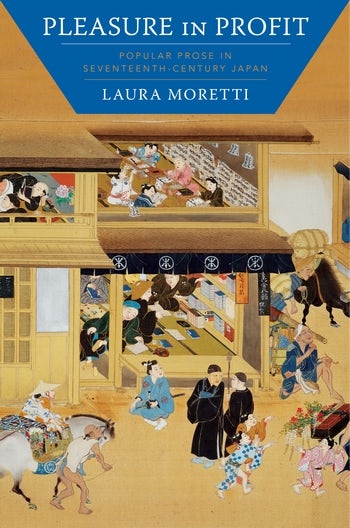
Book Announcement: Pleasure in Profit: Popular Prose in Seventeenth-Century Japan

Pleasure in Profit
Popular Prose in Seventeenth-Century Japan

Laura Moretti

In the seventeenth century, Japanese popular prose flourished as waves of newly literate readers gained access to the printed word. Commercial publishers released vast numbers of titles in response to readers’ hunger for books that promised them potent knowledge. However, traditional literary histories of this period position the writings of Ihara Saikaku at center stage, largely neglecting the breadth of popular prose.

In the first comprehensive study of the birth of Japanese commercial publishing, Laura Moretti investigates the vibrant world of vernacular popular literature. She marshals new data on the magnitude of the seventeenth-century publishing business and highlights the diversity and porosity of its publishing genres. Moretti explores how booksellers sparked interest among readers across the spectrum of literacies and demonstrates how they tantalized consumers with vital ethical, religious, societal, and interpersonal knowledge. She recasts books as tools for knowledge making, arguing that popular prose engaged its audience cognitively as well as aesthetically and emotionally to satisfy a burgeoning curiosity about the world. Crucially, Moretti shows, readers experienced entertainment within the didactic, finding pleasure in the profit gained from acquiring knowledge by interacting with transformative literature. Drawing on a rich variety of archival materials to present a vivid portrait of seventeenth-century Japanese publishing, Pleasure in Profit also speaks to broader conversations about the category of the literary by offering a new view of popular prose that celebrates plurality.


ABOUT THE AUTHOR
Laura Moretti is senior lecturer in premodern Japanese studies at the University of Cambridge and a fellow at Emmanuel College. She is the author of Recasting the Past: An Early Modern “Tales of Ise” for Children (2016).

For more information, see: https://cup.columbia.edu/book/pleasure-in-profit/9780231197236

Posted in announcements, culture | Tagged , , , , | Leave a comment

Call for Applications: Summer School in Early Modern Japanese Palaeography (Cambridge University, 2-14 August 2021)

Summer School in Early Modern Japanese Palaeography
2-14 August 2021.

Upon careful thinking and wide consultation with all the parties involved, including the senior officers of Emmanuel College, we have decided to conduct the 2021 programme virtually.

The 2021 summer school will focus on early modern sources that are humorous and playful. Last year we explored how early modern popular popular texts dealt with pandemics and we realised that humour played a huge part. After a year that has been trying for us all, we thought that a focus on humour, wit, laughter, and playfulness will be a good ki no kusuri 気の薬!

For information on the programming for beginners and intermediate/advanced students of kuzushiji and hentaigana, see details on the website: https://wakancambridge.com/

Deadline to apply is January 31, 2021.

Posted in announcements, language schools, summer program | Tagged , , , , , | Leave a comment

Book Announcement: Eating Wild Japan: Tracking the Culture of Foraged Foods, with a Guide to Plants and Recipes

Eating Wild Japan
Tracking the Culture of Foraged Foods, with a Guide to Plants and Recipes

Winifred Bird with illustrations by Paul Poynter

From bracken to butterbur to “princess” bamboo, some of Japan’s most iconic foods are foraged, not grown, in its forests, fields, and coastal waters–yet most Westerners have never heard of them.

In this book, journalist Winifred Bird eats her way from one end of the country to the other in search of the hidden stories of Japan’s wild foods, the people who pick them, and the places whose histories they’ve shaped.

For more information, visit the website here: https://www.stonebridge.com/catalog-2020/Eating-Wild-Japan


Posted in announcements, culture | Tagged , , , , | Leave a comment

Book Announcement: Ishikawa Sanshirō’s Geographical Imagination: Transnational Anarchism and the Reconfiguration of Everyday Life in Early Twentieth-Century Japan

Ishikawa Sanshirō’s Geographical Imagination
Transnational Anarchism and the Reconfiguration of Everyday Life in Early Twentieth-Century Japan

Nadine Willems

In modern Japan, anti-establishment ideas have related in many ways to Japan’s capitalist development and industrialization. Activist and intellectual Ishikawa Sanshirō exemplifies this imagination, connecting European and Japanese thought during the first decades of the twentieth century. This book investigates the emergence of a strand of non-violent anarchism, reassessing in particular the role of geographical thought in modern Japan as both a vehicle of political dissent and a basis for dialogue between Eastern and Western radical thinkers. By tracing Ishikawa’s travels, intellectual interests and real-life encounters, Nadine Willems identifies a transnational “geographical imagination” that valued ethics of cooperation in the social sphere and a renewed awareness of the man-nature interaction. The book also examines experiments in anarchist activism informed by this common imagination and the role played by the practices of everyday life as a force of socio-political change.

Nadine Willems holds a DPhil in History from the University of Oxford and teaches at the University of East Anglia. She specialises in the intellectual and cultural history of modern Japan, with a focus on East-West transnational exchanges and political dissension. She has also translated Japanese proletarian poetry.

See more information at: https://www.lup.nl/product/ishikawa-sanshiros-geographical-imagination/


Posted in announcements, culture | Tagged , , , , , , | Leave a comment

Book Announcement: Kyoto: A Literary Guide

Kyoto: A Literary Guide

Edited by John Dougill

Reposting from the official blurb on the Camphor Press website:

This fascinating selection of Kyoto-specific literature takes readers through twelve centuries of cultural heritage, from ancient Heian beginnings to contemporary depictions. The city’s aesthetic leaning is evident throughout in a mix of well-known and less familiar works by a wide-ranging cast that includes emperors and court ladies, Zen masters and warrior scholars, wandering monks and poet “immortals.” We see the city through their eyes in poetic pieces that reflect timeless themes of beauty, nature, love and war. An assortment of tanka, haiku, modern verse and prose passages make up the literary feast, and as we enter recent times there are English-language poems too.

Kyoto: A Literary Guide is a labour of love. It arose from the shared passion of a small group of translators, academics and professors of literature chaired by noted Kyoto author John Dougill. For over ten years they have met for monthly discussion, and when they discovered that there was no book dedicated to Kyoto literature they decided to produce their own. This involved sifting through a large number of poems and prose items, with the eventual selection made according to historical importance, literary merit and reference to specific sites. Translations were carefully finessed, with particular regard to the fine balance between linguistic accuracy and literary rendition. Accompanying the translations are the original Japanese with transcription and an informative footnote. The book is generously illustrated with black-and-white photographs, old prints and picture scrolls, adding visual accompaniment to the verbal description.

Given the centrality of Kyoto to the national culture, the book will not only be a must-have for lovers of the city but for anyone with an interest in Japanese literature. It will enhance appreciation for those visiting “the ancient capital” and it will be cherished by those who live there. Above all, it is the hope of the Kyoto-philes who created the book that the pieces collected here will prove an inspiration to readers to go on and explore the larger works from which they were extracted.

Posted in announcements, culture | Tagged , , | Leave a comment

Fun Link Friday: Ukiyo-Enerator

In case you need some more things to do on the internet instead of thinking about what you should be doing, the Ota Memorial Museum of Art collaborated earlier this year to create a “Make Your Own Ukiyo-e” page.

Just pick your background and start drag & dropping all your favorite illustrations from woodblock prints into the mix! You can even add text. If you’re anything like me you just want ghosts and spooky skulls all over the place, so you end up with something that looks like this:

Stop thinking about your work and take some time to fool around with fun images! You can visit the site here: https://ukiyoe2020.exhn.jp/ukiyoenerator/

Posted in culture, fun links | Tagged , , , , , , | 2 Comments

Resource: Writing Business Emails in Japanese

Writing Business Emails in Japanese
by Matsumoto Setsuko, Nanba Fusae, et al. Published by the Japan Times.

My thanks to Dr. Alison Miller who recommended this book on Twitter recently. Despite some practice over the past X years of graduate school, both in classes and in real-life communications with professors, archives, museums, and many others, beginning work last September (2019) in an office where I am the only person who’s not a native Japanese speaker has felt like being thrown in the deep end. I think I’ve figured things out to a great extent, the standard phrases and formats, but I am still frequently coming across situations where I don’t know the best way to navigate things politely and properly. Writing Business Emails in Japanese, published by the Japan Times in 2018, looks like it is going to be a big help.

While there are a number of other books along these lines, and I still religiously use the IUC guides that Dr. Miller mentions, flipping through this book it looks like it might be one of the most simply organized and helpful guides out of the few I’ve worked with.

The entire book is written bilingually in Japanese and English, making it easier to understand what situations a given set of phrases might be appropriate for, and what they each mean. The book starts with some basics about how to input each set of sounds in Japanese, which I suppose might be basics for most of us, but as someone who didn’t learn for many years how to use ‘x’ or ‘l’ to get a small kana character (e.g. typing ‘uli’ or ‘uxi’ to get うぃ), and who still struggles to remember to use ‘d’ to bring up characters like ぢ (di) and づ (du), these charts are a nice inclusion.

The text then goes on to introduce the basic structure of a formal email, and to break down each section. I may have been introduced to this in formal classes, but, then, since I haven’t taken a Japanese language class since 2008, I’m not sure how much we were really introduced to the style of business emails that’s standard today, as opposed to old-school letter writing.

Simple things like the phrase 「ご担当者様」, for when you don’t know who to address an email to, are a huge help if you weren’t aware of that particular phrase. (I’ve always defaulted to 〇〇御中, filling in the institution or department for 〇〇, because I didn’t know of any alternative.) Similarly, after starting work here last September, I quickly learned the phrase お世話になっております。, which can also be used slightly less formally as お世話になります。, or in a slightly more elevated style as いつもお世話になっております。This is translated here as “We appreciate your support.” Seemingly, a very standard phrase to use in business emails; I’m still trying to figure out exactly when I should and should not be using it, but I suppose that’s going to differ from one workplace to another and one situation to another; any guide can only do so much to help with sorting that out.

In any case, the guide then takes you very briefly through introducing yourself, the body of the email, and the signature at the end. One thing I have noticed, as the book suggests as well, is that even though your email address and most likely your name will appear clearly in the Sender area at the top of the email, it’s extremely common for Japanese people to write their office/department/etc. and their name at the top of an email. Outside of the co-workers with whom I physically share an office (or, did, before we all shifted to working from home due to Covid), I think nearly everyone in my Institute nearly always writes something like「図書部 史料・図書サービスチームの濱田です。」or, somewhat less formally, during this current situation, 「伊藤@在宅勤務です。」This isn’t necessarily something we do in English, so it’s good to know that that’s much more common and standard in business emails in Japanese.

Much of the rest of the book is devoted to useful expressions and brief guides to specific situations, from scheduling an appointment to invitations, to notifying the recipient about something. As wonderful as the IUC guides are, I cannot count the times that I’ve been in a situation other than the six or so they detail, so this looks like it will be very helpful. I am particularly appreciative of the inclusion of a significant number of sample phrases for admitting you made a mistake, asking to reschedule or to move a deadline, requesting something, confirming something, proposing something or proposing multiple options. Much like the way that I, and I presume many other grad students, have stressed out even in English with how to navigate the power/respect hierarchy when admitting a mistake to one’s advisor or other professors or suggesting or asking them about something, this comes up a lot in Japanese business emails. Or at least it does for me. So, I’m really glad to have sample sentences such as 「いただいたメールが迷惑メールに分類されており、気づくのが遅くなってしまいました。」 (“The message you sent went to the spam folder and I didn’t notice it until now”) and 「先ほどのメールに添付ファイルを付け忘れておりました。ファイルを添付して再送いたします。」(“I forgot to attach the file to the email I just sent. I will resend the message with the file attached.”) provided here directly.

The book also contains a few brief sections of “Tips for Writing Better Emails,” including small details you might or might not already be familiar with, such as that one should omit the “-sama” 様 when addressing someone by their title (e.g. 斎藤部長、not 斎藤部長様) or when using the phrase “kakui” 各位 to refer to everyone in a given department or division (e.g. 東洋研究所各位、not 東洋研究所各位様), and that it’s often considered polite to write out the people being cc’ed on the next line (e.g. CC: 赤嶺様・真栄田様). The guide also warns against using the wrong kanji, or the wrong version of someone’s name, e.g. 斎藤 vs. 斉藤 vs. 齋藤, or 佐藤つかさ先生, not 佐藤司先生.

These sections also include some useful polite/honorific phrases that we might have forgotten from our units on keigo, or might never have learned, such as the use of kisha 貴社 to refer honorifically to “your company” and heisha 弊社 to refer deferentially to your own company, as well as a few useful keigo verb phrases, such as 見ます vs. 拝見します; 見てください vs. ご覧ください; and 受けました vs. 拝受いたしました。

Of course, for those of us who are academics (or, I would imagine, journalists, translators, artists, etc etc), there will always be situations that are not in any business-oriented book. Emailing archives or museums, or private collectors, to ask about whether you can set up an appointment to view original materials, whether you even need an appointment, what the procedures are, explaining out your research reasons for wanting to view it, etc etc, are not in this book. But, even so, I thoroughly appreciate that, in the section for scheduling an appointment for example, the book does not simply lead you through a single set of standard set-phrases, but instead provides a range of options, from suggesting a meeting time directly, to offering a range of times, asking “can you let me know when’s a good time for you?”, stating that “any time is fine with me,” and so forth.

All in all, my thanks again to Dr. Alison Miller for sharing about this book on Twitter. I’m very glad to have purchased a copy, and anticipate it will be very useful. It retails for 1400円 plus tax (or 1540円税込み) at cover price; it does not appear to be available for order directly from Japan Times, but can be found on Amazon.jp, Rakuten, Kinokuniya, and elsewhere.
Posted in study tools, textbooks | Tagged , , , | Leave a comment

Book Announcement: Turning toward Edification: Foreigners in Chosŏn Korea

Turning toward Edification: Foreigners in Chosŏn Korea
by Adam Bohnet
University of Hawaiʻi Press, December 2020

Though not a book on Japan, Turning toward Edification promises to be a valuable volume for insights into how categories of identity (“ethnicity” if we might use the word) were constituted, defined, understood in early modern East Asia, with Chosŏn Korea providing a meaningful comparative case for our understandings of constructions of identity in China, Japan, Ryûkyû, and elsewhere in the region at that same time.

Though the hardcover edition is predictably expensive at US$80.00, UH Press is releasing a paperback as well, from the beginning, priced at a more reasonable $28.00.

From the official listing for the book on the UH Press website:

Turning toward Edification discusses foreigners in Korea from before the founding of Chosŏn in 1392 until the mid-nineteenth century. Although it has been common to describe Chosŏn Korea as a monocultural and homogeneous state, Adam Bohnet reveals the considerable presence of foreigners and people of foreign ancestry in Chosŏn Korea as well as the importance to the Chosŏn monarchy of engagement with the outside world. These foreigners included Jurchens and Japanese from border polities that formed diplomatic relations with Chosŏn prior to 1592, Ming Chinese and Japanese deserters who settled in Chosŏn during the Japanese invasion between 1592 and 1598, Chinese and Jurchen refugees who escaped the Manchu state that formed north of Korea during the early seventeenth century, and even Dutch castaways who arrived in Chosŏn during the mid-1700s. Foreigners were administered by the Chosŏn monarchy through the tax category of “submitting-foreigner” (hyanghwain). This term marked such foreigners as uncivilized outsiders coming to Chosŏn to receive moral edification and they were granted Korean spouses, Korean surnames, land, agricultural tools, fishing boats, and protection from personal taxes. Originally the status was granted for a limited time, however, by the seventeenth century it had become hereditary.

Beginning in the 1750s foreign descendants of Chinese origin were singled out and reclassified as imperial subjects (hwangjoin), giving them the right to participate in the palace-sponsored Ming Loyalist rituals. Bohnet argues that the evolution of their status cannot be explained by a Confucian or Sinocentric enthusiasm for China. The position of foreigners—Chinese or otherwise—in Chosŏn society must be understood in terms of their location within Chosŏn social hierarchies. During the early Chosŏn, all foreigners were clearly located below the sajok aristocracy. This did not change even during the eighteenth century, when the increasingly bureaucratic state recategorized Ming migrants to better accord with the Chosŏn state’s official Ming Loyalism. These changes may be understood in relation to the development of bureaucratized identities in the Qing Empire and elsewhere in the world during the seventeenth and eighteenth centuries, and as part of the vernacularization of elite ideologies that has been noted elsewhere in Eurasia.

Posted in announcements, culture | Tagged , , , , , , , | Leave a comment

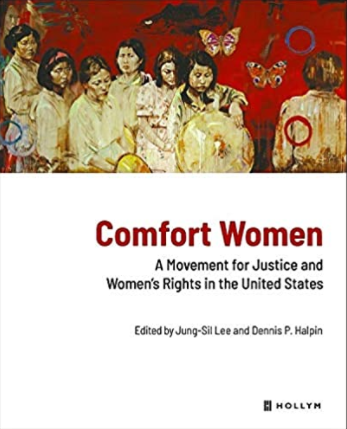
Book Announcement: Comfort Women: A Movement for Justice and Women’s Rights in the United States

Comfort Women: A Movement for Justice and Women’s Rights in the United States

Edited by Jung-Sil Lee and Dennis P. Halpin.

This new edited volume archives nearly thirty years of activism, records the achievements of the “comfort women” redress movement on American soil, and highlights the significant historical moments by members of the non-profit Washington Coalition for Comfort Women Issues (WCCW), its elected officers, congressional staff members, non-profit  organizations, scholars, and artists. Together with its many pages of primary resources and historical photographs, the volume also offers useful links to resources for future generations who wish to pursue the impact and legacies of the Korean “comfort women”.

===

During World War II, the Japanese Imperial Army forced young women and girls in occupied territories into sexual slavery. The purpose was to prevent rapes, sexually transmitted diseases, leaking of confidential information, and to provide “comfort ” to Japanese soldiers. This sexual servitude gave rise to the euphemistic label “comfort women. ” It is estimated there were between 50,000 to as many as 400,000 “comfort women ” throughout more than ten occupied countries including Korea, China, the Philippines, Thailand, Malaysia, the Dutch East Indies, Taiwan, Burma, and Vietnam. This dark period of Asian history remains hotly debated between the right-wing Japanese government and sympathetic groups of activists and feminists. Interestingly, this conflict found a new and unexpected battlefield on American soil and has become part of the discourse on human rights. “Comfort women ” represent something universally troubling: the endemic assault on the rights and ownership of a woman s body and the patriarchal systems that leave such transgressions unpunished. “Comfort women ” issues reflect the atrocities that continue to plague modern society today: rape, violations of human rights, sexual assault, sex trafficking, and more broadly, war-time traumas. What has made many sympathetic to this cause is not just the horrific experiences of these women, but also the realization that women’s rights and justice have not greatly improved since World War II. This book is dedicated to compiling and recording the tremendous efforts of diverse groups of people for the cause of the “comfort women ” in the United States for the last 28 years in hopes that readers can use and learn from these archived materials to prevent such atrocities in the future and to fight those battles today, where the voices of women in the past could not.

All orders from within the United States as well as from other countries should be directed to the Washington Coalition for Comfort Women Issues (WCCW) website:

www.comfort-women.org.

E-mail: wccwcontact@gmail.com

Orders may also be sent to Amazon.com  and to Hollym International Corporation in Carlsbad, California.

Posted in announcements, culture | Tagged , , , , , , | Leave a comment