Call for Papers: Asian Conference on Arts & Humanities 2017 (ACAH2017) & Asian Conference on Literature 2017 (LibrAsia2017)

call for papers [150-2]The International Academic Forum (IAFOR), in conjunction with its global university and institutional partners, is proud to announce The Asian Conference on the Arts & Humanities 2017 (ACAH2017) & The Asian Conference on Literature 2017 (LibrAsia2017).

The Abstract Submission Deadline is January 15, 2017.

To submit an abstract: http://iafor.org/iafor/iafor-submission-system/login.php

Please remember to submit your abstract(s) before the deadline in order to complete the review process.

The Registration Deadline is February 15, 2017.

ACAH2017: http://iafor.org/acah2017-registration/

LibrAsia2017: http://iafor.org/librasia2017-registration/

Join us in Kobe, Japan and contribute to the conference dialogue along with ACAH2017 & LibrAsia2017 Programme Advisor, Dr. A. Robert Lee, a Britisher who helped establish American Studies in the UK and Conference Chairs, Dr. Patrick Lo of University of Tsukuba, Dr. Dickson Chiu of University of Hong Kong and Mr. Andrew J Stark of The Southport School as we discuss this year’s conference theme “History, Story, Narrative”. For more information on ACAH2017 & LibrAsia2017 Conference Co-Chairs, Keynote & Featured Speakers, please visit our website.

Join IAFOR at ACAH2017 & LibrAsia2017  to:

  • Deliver your research findings to a global audience
  • Have your work published in the conference proceedings and considered for peer-reviewed, open access IAFOR Journals
  • Benefit from IAFOR’s interdisciplinary focus by hearing the latest research in the field of Arts & Humanities and Literature
  • Participate in a truly international, interdisciplinary and intercultural event
  • Participate in interactive audience sessions
  • Access international networking opportunities

Conference Theme

The conference theme for ACAH2017 & LibrAsia2017 is “History, Story, Narrative”, and the organisers encourage submissions that approach this theme from a variety of perspectives. However, the submission of other topics for consideration is welcome and we also encourage sessions across a variety of interdisciplinary and theoretical perspectives.

Submissions are organised into the following thematic streams:

  • Arts – Teaching and Learning the Arts
  • Arts – Arts Policy, Management and Advocacy
  • Arts – Arts Theory and Criticism
  • Arts – Social, Political and Community Agendas in the Arts
  • Arts – Visual Arts Practices
  • Arts – Performing Arts Practices: Theater, Dance, Music
  • Arts – Literary Arts Practices
  • Arts – Media Arts Practices: Television, Multimedia, Digital, Online and Other New Media
  • Arts – Other Arts
  • Humanities – Media, Film Studies, Theatre, Communication
  • Humanities – Aesthetics, Design
  • Humanities – Language, Linguistics
  • Humanities – Knowledge
  • Humanities – Philosophy, Ethics, Consciousness
  • Humanities – History, Historiography
  • Humanities – Literature/Literary Studies*
  • Humanities – Political Science, Politics
  • Humanities – Teaching and Learning
  • Humanities – Globalisation
  • Humanities – Ethnicity, Difference, Identity
  • Humanities – Immigration, Refugees, Race, Nation
  • Humanities – First Nations and Indigenous Peoples
  • Humanities – Sexuality, Gender, Families
  • Humanities – Religion, Spirituality
  • Humanities – Cyberspace, Technology
  • Humanities – Science, Environment and the Humanities
  • Humanities – Other Humanities
  • Literature – African Literature
  • Literature – Ancient & Classical Literature
  • Literature – Anglo-American Literature
  • Literature – Arabic/Middle Eastern Literature
  • Literature – Asian Literature
  • Literature – Children’s and Young Adult Literature
  • Literature – Comparative Literature
  • Literature – European Literature
  • Literature – Folktales, Myths and Legends
  • Literature – Historical and Political Literature
  • Literature – Indigenous People’s/Ethnic Literatures & Minority Discourses
  • Literature – Latin American Literature
  • Literature – Literary Criticism and Theory
  • Literature – Literary Practice
  • Literature – Literary Translation and Translatology
  • Literature – Literature and Film
  • Literature – Literature, Language and Identity
  • Literature – Literature and Religion
  • Literature – Poetry
  • Literature – Manuscriptology, Textual and Genetic Criticism
  • Literature – Memoir and Autobiography
  • Literature – Teaching Literature
  • Literature – Travel Writing
  • Literature – Theatre and Drama

About IAFOR and its events

IAFOR welcomes thousands of academics to our conferences each year, which range in size from around 100 to in excess of 500 attendees. They do so because of the supportive and nurturing research environment, because of the unique networking opportunities, and because of the strength of the organization’s platform.

Our conferences are meticulously planned and programmed under the direction of prominent academics to ensure that they offer programs of the highest level, and are also quite unique in the way in which they are supported by some of the world’s leading academic institutions, including the University of London (UK), Virginia Tech (USA), Monash University (Australia), Barcelona University (Spain), Waseda University (Japan), the National Institute of Education (Singapore), and The Hong Kong Institute of Education (HKSAR).

IAFOR’s credibility has enabled it to become a genuine pioneer, and has grown to be the most respected and trusted organization encouraging international, intercultural and interdisciplinary study. The organization is a formative influence in providing new research avenues and visionary development solutions necessary in our rapidly emerging globalized world.

We welcome you to engage in this expanding global academic community of individuals and network of institutions, and look forward to seeing you at one of our future events, as we look forward to breaking new ground, together.
To learn more about IAFOR – iafor.org

Contact Info:

Mr. Kiyoshi Mana
Director of International Relations

Contact Email:
acah@iafor.org
URL:
http://iafor.org/conferences/acah2017/

Posted in announcements, conferences, graduate school | Tagged , , , , , , , , , | Leave a comment

Call for Papers: How to Study Asia in Social Sciences and Humanities?

call for papers [150-2]CALL FOR APPLICATIONS

INTERNATIONAL CONFERENCE
HOW TO STUDY ASIA IN SOCIAL SCIENCES AND HUMANITIES?

Some Methodological Reflections

5th and 6th of December 2016

Room No 638-640, 6th floor, 190 av. de France, 75013 Paris, France

The Young Researchers Office in Asian studies (Bureau des Jeunes Chercheurs sur l’Asie) is pleased to announce the organization of its First international conference on Asia focused on methodology discussion, on 5th and 6th of December 2016. It will be organized in partnership with the GIS Asia.

This conference aims to provide opportunities for PhD/Post Doctoral fellows working on Asia in areas of History, Political Science, International Relations, Economics, Anthropology and Sociology, to present their research and to improve their theoretical but especially methodological approaches. The broad objectives of the conference will be to foster collaboration and the creation of trans-disciplinary research projects on Asia, while discussing common issues that transcends our areas of study: the necessity and possibility of articulating disciplinary knowledge and area studies, as well as the necessity and possibility of applying theories (often of predominantly Western origins) to a local context (Non Western).

This conference will be held on 5th and 6th of December 2016. The proceedings will consist of several panels (in English or in French), with two to three communications each, organized according to topics, theories and methods used. Each participant will present her/his paper, which will then be discussed by a senior researcher and the other participants. Thirty minutes will be devoted to each paper, to allow for in depth discussions. It attempts to adapt variety of inter disciplinary and area study themes, a few suggested themes could be Religion effects, (Post) colonial perspective, Gender and Ethnic effects, Comparatism (intra-Asia but also Western/Eastern), etc.

How to participate

Enrolled scholars working on Asia in all stages of their doctoral and postdoctoral research are invited to submit an abstract (English or French) of maximum of 500 words to jeunes.chercheurs@gis-reseau-asie.org by 15thJuly 2016 at the latest. Successful applicants will be informed by 1st September 2016. Final papers of a maximum of 8000 words should be submitted by 1st November 2016.

Scientific Committee

Dr. Anne-Sophie Bentz, Associate Professor in History, University Paris Diderot, France
Dr. Michel Boivin, Director of Research at CNRS, Centre d’études – Inde/Asie du sud, France
Dr. Guy Faure, Senior Research Fellow, CNRS, France
Dr. Chloé Froissart, Research Fellow, French Centre for Research on Contemporary China, Hong Kong
Dr. Jean François Huchet, Professor in Economics, INALCO, France
Dr. Peilin Li, Professor in Sociology, Chinese Academy of Social Science, China (to be confirmed)
Dr. Ramu Manivannan, Professor in Political science, University of Madras, India
Dr. Emiko Ochiai, Professor in Sociology, Kyoto University, Japan
Dr. Benjamin Taunay, Associate Professor in Geography, University of Angers, France
Dr. Isabelle Thireau, Director of Research in Sociology, CNRS, France

Contact Info:

Organizing Committee

Mr. Ahmed Mansoor, PhD Student, Centre d’études – Inde/Asie du Sud, EHESS, France

Dr. Simeng Wang, Postdoctoral fellow in Sociology, Institute for Research and Innovation in Society, France

Posted in announcements, conferences, graduate school | Tagged , , , , , , | Leave a comment

Call for Papers: Asian Conference on Library, Archive & Information Management 2016 (ACLAIM2016)

call for papers [150-2]The International Academic Forum (IAFOR), in conjunction with its global university and institutional partners, is proud to announce The Asian Conference on Library, Archive & Information Management 2016 (ACLAIM2016).

The Abstract Submission Deadline is August 20, 2016.

To submit an abstract: http://iafor.org/iafor/iafor-submission-system/login.php

Please remember to submit your abstract(s) before the deadline in order to complete the review process.

The Registration Deadline is September 20, 2016.
http://iafor.org/aclaim2016-registration/

Join us in Kobe, Japan and contribute to the conference dialogue along with ACLAIM2016 Conference Co-Chairs, Dr. Patrick Lo of University of Tsukuba, Japan and Dr. Dickson Chiu of University of Hong Kong, Hong Kong as we discuss this year’s conference theme “Preserving Heritage”. For more information on ACLAIM2016 Conference Co-Chairs, Keynote & Featured Speakers, please visit our website.

Join IAFOR at ACLAIM2016 to:

Deliver your research findings to a global audience
Have your work published in the conference proceedings and considered for peer-reviewed, open access IAFOR Journals
Benefit from IAFOR’s interdisciplinary focus by hearing the latest research in the field of Library, Archive & Information Management
Participate in a truly international, interdisciplinary and intercultural event
Participate in interactive audience sessions
Access international networking opportunities

Conference Theme
The conference theme for The Asian Conference on Library, Archive and Information Management (ACLAIM2016) is “Preserving Heritage”, and the organisers encourage submissions that approach this theme from a variety of perspectives. However, the submission of other LAIM-related topics for consideration is welcome and we also encourage sessions across a variety of interdisciplinary and theoretical perspectives.

According to Wikipedia, “preservation refers to the set of activities that aims to prolong the life of a record and relevant metadata, or enhance its value, or improve access to it through non-interventive means. This includes actions taken to influence records creators prior to selection and acquisition.” Obviously, a wide range of organisations, including libraries, archives, museums, galleries, academic institutes, together with professionals and educators in various disciplines, as well as policy makers, are involved.

In this conference, participants are invited to explore and enquire ways in which the initiatives and efforts carried out by the LAIM professionals could bring progress and positive changes to the preservation of heritage worldwide. Abstracts should address one or more of the streams below, identifying a relevant sub-theme:

Documentary/cultural heritage preservation: Technological trends and developments
Documentary/cultural heritage preservation: Domestic, national and international efforts
Documentary/cultural heritage preservation: Public & private partnerships
Documentary/cultural heritage preservation: Organisational management
Documentary/cultural heritage preservation: Professional training & education
Documentary/cultural heritage preservation: Intangible objects
Documentary/cultural heritage preservation: Post-colonial societies
Documentary/cultural heritage preservation: Political agendas
Documentary/cultural heritage preservation: Then versus now
Documentary/cultural heritage preservation: Physical versus online
Documentary/cultural heritage preservation: Educational policy and curriculum design

In addition, general submissions are organised into the following thematic streams:

Principles, theories, models, challenges, legal, social, economic, cultural, government, policy issues of LAIM
Digitisation and repositories: digital libraries, online archives and virtual repositories
Change in LAM practices through technologies
Change in LAM practices in meeting users’ needs/demands
User behaviour, needs and expectations
Digital, information, and reading literacies
Management and marketing issues for LAIM
Service perspectives for LAIM, e.g., recommendation, personalization, operation, monitoring, and evaluation
Social media and network applications for LAIM
LAIM for knowledge management and education
LAIM for other professions, e.g., engineering, healthcare, business, etc.
LAIM practices in multilingual / multi-cultural societies
LAIM and interdisciplinary thinking
LAIM professional associations and sharing
LAIM professional concerns, training and development
LAIM services to people of ethnic minorities, special learning needs/difficulties, and disability
LAIM partnerships and advocacy
Creative use of user space and architecture for LAIM
Data curation and data science
Metadata, ontologies, semantic Web, and bibliometrics
Emerging technology paradigms for LAIM, e.g., mobile, cloud, big data, GIS, etc.

About IAFOR and its events
IAFOR welcomes thousands of academics to our conferences each year, which range in size from around 100 to in excess of 500 attendees. They do so because of the supportive and nurturing research environment, because of the unique networking opportunities, and because of the strength of the organization’s platform.

Our conferences are meticulously planned and programmed under the direction of prominent academics to ensure that they offer programs of the highest level, and are also quite unique in the way in which they are supported by some of the world’s leading academic institutions, including the University of London (UK), Virginia Tech (USA), Monash University (Australia), Barcelona University (Spain), Waseda University (Japan), the National Institute of Education (Singapore), and The Hong Kong Institute of Education (HKSAR).

IAFOR’s credibility has enabled it to become a genuine pioneer, and has grown to be the most respected and trusted organization encouraging international, intercultural and interdisciplinary study. The organization is a formative influence in providing new research avenues and visionary development solutions necessary in our rapidly emerging globalized world.

We welcome you to engage in this expanding global academic community of individuals and network of institutions, and look forward to seeing you at one of our future events, as we look forward to breaking new ground, together.

To learn more about IAFOR – iafor.org

Contact Info:

Mr. Kiyoshi Mana
Director of International Operations

Contact Email:
aclaim@iafor.org

URL:
http://iafor.org/conferences/aclaim2016/

Posted in announcements, conferences, graduate school | Tagged , , , , , , , , , , , | Leave a comment

Fun Link Friday: Spider battles

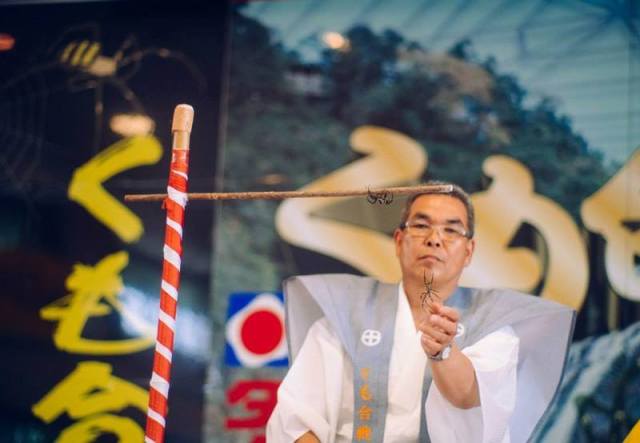
If the humidity of the rainy season hasn’t given you enough of a reason to feel the creepy-crawlies, you might be interested in learning more about the folk tradition of Kajiki Kumo Gassen, or the spider-fighting battles of Aira in Kagoshima.

spiders

Occurring every year in June, the battles are:

…a spider-fighting event with a history of over 400 years. It is said that the Warring States military commander Shimazu Yoshihiro, who participated in the late 16th century Japanese invasions of Korea, began the contest to boost the morale of his troops. In addition to the fighting, there is also a contest for the best spider in terms of color and beauty.

With nearly 200 spiders competing over a day-long event set up as a tournament, viewers can enjoy the festival’s other fun features, learn more about the tradition, and even let the spiders crawl all over them if their owners allow it. But as for the battles themselves, Atlas Obscura writes:

One spider (kamae) stands on the end of a horizontal, wooden pole. A judge places her opponent (shikake) a bit farther down the pole, and places his hand between them, ensuring they are both ready to rumble before allowing the fight to begin. He pulls his hand away and it’s on.

A spider can win a fight in three ways: she can bite her opponent on the abdomen; she can wrap her opponent’s abdomen in thread; or, if her opponent tries to bungee away, she can cut the rival’s thread, causing the loser to tumble to the padded platform below.

If you can handle watching the leggy creepers duel it out, you can watch a video of a battle below:

Happy Friday! …I think. 😛

Posted in culture, fun links | Tagged , , , , , | Leave a comment

Call for Papers: Teaching Postwar Japanese Fiction

call for papers [150-2]Proposals are invited for a volume tentatively entitled Teaching Postwar Japanese Fiction. This volume in the MLA’s Options for Teaching series aims to bring together essays describing innovative and successful approaches to teaching Japanese fiction to an undergraduate audience. The terms postwar and fiction are interpreted broadly, and the volume will encompass approaches to narrative works, including manga, written since Japan’s defeat in 1945. The audience for this collection is both specialists in the field of Japanese literary studies and teachers across disciplines who may be interested in incorporating Japanese fiction into their classrooms. The volume will primarily address teaching works in translation but individual essays will include discussion of teaching the works in the original Japanese. This collection will expose readers to an assortment of pedagogical approaches appropriate for student audiences in a range of settings.

Contributions could provide general background; cover topics under such headings as the canon, war and memory, gender and sexuality, marginalized peoples, environmental concerns, and cross-cultural encounters; or focus on particular pedagogical, institutional, and classroom situations. Possible topics might be autobiographical fiction, orientalism, teaching in translation, “nihongo” literature, disaster, food, politics, adaptation, genre, or individual authors—for example, Mishima Yukio, Yū Miri, Ishimure Michiko, Murakami Haruki, and Tawada Yōko. Other essays may explore the use of Japanese fiction in history, gender studies, or Japanese-language courses. Multidisciplinary approaches are especially welcome.  Every essay proposal should state how the essay will apply to the needs of teachers and students.

Your abstract should make clear your intended topic and its relevance to teaching Japanese literature; it should also contain specifics about the classroom practices (e.g., readings, assignments, exercises), theories, or other critical scholarship that will play a role in the essay. Please note that any quotations from a student or student paper require written permission from the student. Your abstract should argue the value of your intended topic to a broad range of instructors and students.

For the full proposal and other information, please see https://teachingpostwarjapanesefiction.commons.mla.org/

If you are interested in contributing an essay of 2500–3000 words, please submit an abstract of 500 words to Alex Bates (batesa@dickinson.edu) by 1 August 2016.

Posted in announcements, conferences, graduate school | Tagged , , , , , , | Leave a comment

Call for Papers: From “Asia’s Prussians“ to “Yellow Devils“: Images of the Japanese Army from the Meiji Restoration to the End of the Second World War

call for papers [150-2]CFP: From “Asia’s Prussians“ to “Yellow Devils“: Images of the Japanese Army from the Meiji Restoration to the End of the Second World War

Prof. Dr. Frank Jacob (New York) and Prof. Dr. Sepp Linhart (Vienna)

The Meiji Restoration since 1868 changed Japan as a whole, including the Japanese Army, whose soldiers should resemble a modernized and strong nation state. Trained by French and later Prussian officers the armed forces of the Japanese Empire became emblematic for the progress the country went through. In the West, the Japanese soldiers were seen as an expression of Western superiority, especially when the forces of the island empire were victorious against China in 1894/95. Japan achieved a major goal a decade later, when the Anglo-Japanese Alliance and the victories during the Russo-Japanese War in 1904/05 emphasized Japan’s great power status. In this war Japan tried to present its soldiers as noble, gentlemen-like warriors, because they fought against a Western army for the first time. However, the image of the Japanese soldier was an ambivalent one. While military observers emphasized the abilities of the Asian combatants, those who feared the “yellow peril“ began to depict the Japanese soldiers as monkeys.

While the First World War, due to which Japan fought as an ally against Germany, further strengthened the positive image of the Japanese soldier, the events of the 1930s and 1940s would stimulate the image of the “violent yellow devil.“ Events like the Rape of Nanking, the Bataan Death March or the treatment of Allied POWs in Japanese prison camps changed the former positive perspective tremendously. Japanese soldiers were accused to use violence without mercy against soldiers and civilians alike. For a volume on the perception of Japanese soldiers outside Japan, the two editors welcome proposals that deal with, but are not limited to the following major topics:

  • Military and public images of the Japanese Army 1853-1945 in films and novels
  • The image of Japanese military leaders abroad
  • Experience reports and their perception by foreign readers
  • Western newspapers and the image of the Japanese Army
  • The Japanese Army in Korea
  • The perception of Japan’s modern Wars (1868-1945)
  • Japanese POW camps and the reports of imprisoned soldiers
  • Chinese reports on Japanese cruelties (1931-1945)

Proposals (ca. 300 words) and a short CV should be sent to fjacob@qcc.cuny.edu and sepp.linhart@univie.ac.atuntil July 30, 2016. Final chapters, 7,000-10,000 words, using footnotes (Chicago Manual of Style) are due byNovember 15, 2016.

Contact Info:

Frank Jacob, History Department, CUNY-QCC, 22205 56th Ave, Bayside, 11364 New York, USA

Contact Email:

fjacob@qcc.cuny.edu


Posted in announcements, conferences, graduate school | Tagged , , , , , , , , , , , | Leave a comment

Funding: 2016 Abe Fellowship

money [150-2]Now Accepting Applications – Deadline: Sept. 1, 5PM (EST)

OVERVIEW

The Abe Fellowship Program and the Japan Foundation Center for Global Partnership (CGP) announce the annual Abe Fellowship competition.

The Abe Fellowship is designed to encourage international multidisciplinary research on topics of pressing global concern. The Abe Fellowship Program seeks to foster the development of a new generation of researchers who are interested in policy-relevant topics of long-range importance and who are willing to become key members of a bilateral and global research network built around such topics.

RESEARCH AGENDA

Applicants are invited to submit proposals for research in the social sciences and related fields relevant to any of the following four themes:

• Threats to Personal, Societal, and International Security

• Social, Scientific, and Cultural Trends and Transformations

• Growth and Sustainable Development

• Governance, Empowerment, and Participation

Research projects should be policy relevant, contemporary, and comparative or transnational.

FELLOWSHIP TERMS

Terms of the fellowship are flexible and are designed to meet the needs of Japanese and American researchers at different stages in their careers.

The program provides Abe Fellows with a minimum of 3 and maximum of 12 months of full-time support over a 24-month period.

Part-time residence abroad in the United States or Japan is required.

ELIGIBILITY

Applicants must:

  •          be citizens or permanent residents of the United States or Japan. (Nationals of other countries MUST demonstrate a serious, long-term affiliation with research communities in the United States or Japan.)
  •          hold a PhD or the terminal degree in their field, or have equivalent professional experience at the time of application.

Applications from researchers in professions other than academia are encouraged.

CONTACT

For further information and to apply, go to:
http://www.ssrc.org/fellowships/abe-fellowship/
Contact SSRC staff at abe@ssrc.org.

Posted in announcements, funding, graduate school, living abroad | Tagged , , , , | Leave a comment

Book Announcement: Conflicts of Interest: Art and War in Modern Japan

Via University of Washington Press.

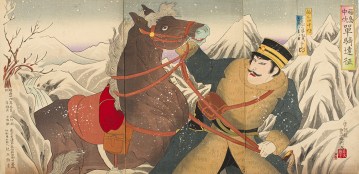
lone-cavalryman

Utagawa Kunimasa IV, Japanese, 1848–1920; published by Kodama Yakichi, Japanese, active late 19th century; The Lone Cavalryman Lieutenant Colonel Fukushima on his Expedition: Actor Fujisawa Asajirô as Lieutenant Colonel Fukushima, 1893; triptych of color woodblock prints; 14 7/8 x 28 3/4 inches; Saint Louis Art Museum, Gift of Mr. and Mrs. Charles A. Lowenhaupt 8:2015a-c

Conflicts of Interest: Art and War in Modern Japan
PHILIP HU, RHIANNON PAGET, SEBASTIAN DOBSON, MAKI KANEKO, SONJA HOTWAGNER, AND ANDREAS MARKS

paperback not available
$49.95 HARDCOVER (9780295999814)

TO BE PUBLISHED: November 2016
SUBJECT LISTING: Art History / Asian Art; Asian Studies / Japan
BIBLIOGRAPHIC INFORMATION: 288 pp., 240 color illus., 9.5 x 11 in.
TERRITORIAL RIGHTS: World Rights
PUBLISHED WITH: Saint Louis Art Museum

CONTENTS

This fascinating publication showcases the Saint Louis Art Museum’s collection of Japanese military prints and related materials-one of the largest collections of such works in the world. The 1,400 objects in the collection are mostly color woodblock prints, but the holdings also include paintings, lithographs, photographs, stereographs, books, magazines, maps, game boards, textiles, ceramics, toys, sketchbooks, and commemorative materials. This extraordinary body of visual works chronicles Japan’s rise as a modern nation from the beginning of the Meiji Restoration in 1868 through the aftermath of Pearl Harbor in 1942, with a focus on the Sino-Japanese and Russo-Japanese wars. Conflicts of Interest will bring to light an important aspect of Japan’s visual culture and the narratives it circulated for its citizens, allies, and enemies on the world stage.

PHILIP HU is associate curator of Asian art at the Saint Louis Art Museum. RHIANNON PAGET is the A. W. Mellon Fellow for Japanese art at the Saint Louis Art Museum. SEBASTIAN DOBSON is an independent scholar based in London and Antwerp. SONJA HOTWAGNER is an independent scholar based in Vienna, Austria. MAKI KANEKO is associate professor of Japanese art at the University of Kansas, Lawrence. ANDREAS MARKS is the Mary Griggs Burke Curator of Japanese and Korean Art and Director of the Clark Center for Japanese Art at the Minneapolis Institute of Arts.

Posted in announcements, culture, Uncategorized | Tagged , , , , | Leave a comment

Fun Link Friday: The Oldest Sake Shop in Tokyo

What a week it has been. In all the chaos of the news, I barely remembered to look up a Fun Link Friday this week. But in the end, what we could all use is a drink (if that’s your thing). So here’s a mini-documentary that was posted to Savvy Tokyo about Toshimaya tavern and brewery, the oldest sake shop in Tokyo. Clocking in at 420 years old, the business was first established in 1596. In the video, originally posted here, you can take a peek into the lives of people passionate about keeping traditions alive in Japan while innovating for a new generation. Stay well and enjoy, everybody!

Posted in culture, fun links | Tagged , , , , | Leave a comment

Resource: Truku-Japanese War Postcard Collection

The East Asian Image Collection hosted by the Skillman Library at Lafayette College recently added a new collection of picture postcards and rare books to their open-access digital archive, “The Truku-Japanese War Commemorative Postcard Collection.” The editor of the collection, Paul Barclay, describes the background and content as follows:

postcardThe Truku-Japanese War of 1914 was the culmination of Japan’s 20-year campaign to disarm and assert sovereignty over Taiwan’s Indigenous Peoples. This 100-postcard set provides an intimate photographic portrait of camp life, logistics, battles, terrain, and Japanese interactions with Taiwanese conscripts, allies, enemies, and objects of ethnographic interest. From May to August of 1914, the government deployed 3108 soldiers, 3127 police, and 4840 laborers (over 11,000 people) against a Truku population of roughly 10,000 people. The goal was to avenge previous uprisings and to finalize the conquest of the island colony. After burning several Truku villages, taking prisoners, confiscating rifles, and killing countless combatants, the Japanese declared victory on August 23, 1914.  Mr. Fang Hsien-hui 方晛煇 lent these items to the Puli Municipal Library for a November 2014 exhibition. The Library’s Mr. Chen Yi-fang 陳義方arranged the transfer of digital images to the East Asia Image Collection, as well as providing invaluable advice. We also thank Dr. John Shufelt and Dr. Wang Peng-hui 王鵬惠 for their contributions to this project.

Each individual postcard in the collection is presented with a high-resolution photograph, below which is the item’s metadata, including a title in English and Japanese, a detailed description of its physical characteristics, and its location and origin. While there is not much more information than these basic details, the postcards themselves are a very valuable visual and historical resource for research on East Asia. Be sure to check out this incredible image database!

Follow the direct link below to the 102 records in the new collection:

http://digital.lafayette.edu/collections/eastasia/tjwar-postcards/browse

Posted in blogs, graduate school, main posts, study tools, undergraduate, useful links | Tagged , , , , , , , , , , | Leave a comment