Funding: Middlebury Summer Language Schools

money [150-2]Full Scholarships Available for Intensive Language Study at the Middlebury Summer Language Schools–The Kathryn Davis Fellows for Peace will cover the full cost of one summer of language study (tuition, room, and board)—from the beginner to graduate level—in any of the eleven languages offered: Arabic, Chinese, French, German, Hebrew, Italian, Japanese, Korean, Portuguese, Spanish and Russian. The deadline is December 15, 2016. See the website for application details.

The Middlebury Language Schools celebrated its Centennial in 2015. Our website has more information on all eleven Language Schools, the Language Pledge®,  activities and the online application. Middlebury’s Arabic, Italian, and Korean programs take place exclusively at our West Coast Site at Mills College in Oakland, California. All other programs take place at the Middlebury College campus in Vermont.  To receive more information by email, please fill out this form.

Need-based Financial Aid Available to All Students – Nearly half of 2016 Language Schools students received financial aid. Learn more about financial aid and other scholarships and fellowships.

Contact Info:

Lesley Huston
Davis Fellows for Peace coordinator
802.443.5821
kdfellowships@middlebury.edu

Middlebury Language Schools
Sunderland Language Center
Middlebury, VT 05753

Posted in announcements, funding, graduate school, language schools, study tools, summer program, undergraduate | Tagged , , , , , | Leave a comment

Book Announcement: The History Problem: The Politics of War Commemoration in East Asia

9780824856748Via University of Hawai’i Press.

HIRO SAITO

DECEMBER 2016
264 pages
ISBN 9780824856748 $62.00
East Asia / history / sociology

Seventy years have passed since the end of the Asia-Pacific War, yet Japan remains embroiled in controversy with its neighbors over the war’s commemoration. Among the many points of contention between Japan, China, and South Korea are interpretations of the Tokyo War Crimes Trial, apologies and compensation for foreign victims of Japanese aggression, prime ministerial visits to the Yasukuni Shrine, and the war’s portrayal in textbooks. Collectively, these controversies have come to be called the “history problem.” But why has the problem become so intractable? Can it ever be resolved, and if so, how?
To answer these questions author Hiro Saito mobilizes the sociology of collective memory and social movements, political theories of apology and reconciliation, psychological research on intergroup conflict, and philosophical reflections on memory and history. The history problem, he argues, is essentially a relational phenomenon caused when nations publicly showcase self-serving versions of the past at key ceremonies and events: Japan, South Korea, and China all focus on what happened to their own citizens with little regard for foreign others. Saito goes on to explore the emergence of a cosmopolitan form of commemoration taking humanity, rather than nationality, as its primary frame of reference, an approach increasingly used by a transnational network of advocacy NGOs, victims of Japan’s past wrongdoings, historians, and educators. When cosmopolitan commemoration is practiced as a collective endeavor by both perpetrators and victims, Saito argues, a resolution of the history problem—and eventual reconciliation—will finally become possible.

The History Problem examines a vast corpus of historical material in both English and Japanese, offering provocative findings that challenge orthodox explanations. Written in clear and accessible prose, this uniquely interdisciplinary book will appeal to sociologists, political scientists, and historians researching collective memory, nationalism and cosmopolitanism, and international relations—and to anyone interested in the commemoration of historical wrongs.

Hiro Saito is assistant professor of sociology at Singapore Management University.

Posted in announcements, culture | Tagged , , , , , | Leave a comment

Call for Applications: HIF 2017: Summer Language Program in Hakodate, Japan

The Hokkaido International Foundation (HIF) offers the 32nd Japanese Language and Japanese Culture Program in Summer 2017. It is an eight-week intensive language program accompanied with homestay for the full duration and Independent Study (IS).

Program Duration: June 8 – August 6, 2017 (8 weeks)
Application Deadline: February 6, 2017 (Japan Standard Time)
Place: Hakodate, Hokkaido
In 2015, Hakodate was ranked Japan’s most attractive tourist destination for the second year in a row.
http://www.japantimes.co.jp/news/2015/10/05/national/survey-ranks-hakodate-as-japans-top-tourist-site-for-second-year-in-a-row/#.V_XcHOWLTIW

We begin accepting applications in mid-November through the online application system. Please visit our website for more information.
http://www.hif.or.jp/en/summer/

Please feel free to forward this message to anyone you think might be interested in.
We look forward to hearing from many of you.

Sincerely,
Hokkaido International Foundation

Posted in announcements, graduate school, study tools, summer program, undergraduate | Tagged , , , , , | Leave a comment

Call for Papers: Tracing the Ecological Footprint of East Asian and World Civilizations, The Fourth Conference of East Asian Environmental History

call for papers [150-2]Call for Panels, Papers, and Posters
Tracing the Ecological Footprint of East Asian and World Civilizations
The Fourth Conference of East Asian Environmental History
(EAEH 2017)
Hosted by Nankai University, Tianjin, China, October 2017

The fourth conference of East Asian environmental history will be held from October 27-30, 2017 in Tianjin, China. It is being jointly organized by the Association for East Asian Environmental History, Chinese Society for Environment Sciences along with a number of other institutions and will be hosted by Nankai University. It will provide an opportunity for multidisciplinary, international academic dialogue. Historians,
archaeologists, ecologists, geographers, environmental scientists and other scholars in relevant fields are invited to gather together to review humanity’s and especially the East Asian peoples’ environmental past, to explain the constantly expanding and deepening interrelationship between humans and the sky, the earth, and the seas, and their various biotic and abiotic components, and to examine the environmental
challenges that human civilizations, including East Asian civilizations have faced in the past and are still facing today. Our goal is to reach a more profound understanding of the complex eco-historical process of the interaction and co-evolution between human beings and nature for this important world region, and to provide non-western perspectives for the search for a road to a harmonious and symbiotic relationship
between man and nature and sustainable development. Scholars from all around the world who are interested in environmental history are welcome.

The general theme of the conference is Tracing the Ecological Footprint of East Asian and World Civilizations. The phrase “ecological footprint” is used in a broad sense here. It does not mean that we must all adopt in the conference a quantitative model for investigating ecological relationships between humans and nature in history, although we appreciate and eventually will need such efforts. We use the phrase to express the goal of attempting to figure out the qualitative as well as quantitative dimensions of human impact on the natural environment for the past few thousand years—to retrace the historical footprints of East Asian and world civilizations from many perspectives.
Discussions of the long-term changes in natural systems (including climate, land, sea, and species populations and distribution) are welcome. Yet we particularly encourage attention to materials, technology, economy, social structure, political institutions, living patterns, and concepts from the perspective of environmental history. What impact or “footprint” have natural forces had on the development of various civilizations? How do we explain how the East Asian peoples, for their own subsistence and development, have adapted to diverse natural settings, continuously expanded the utilization of natural resources, and caused tremendous environmental changes, eventually leading to a state of ecological crisis today? We also encourage a more comprehensive and extensive comparison within the region and beyond so as to
grasp the pulsations, rhythms, patterns, and cycles that human systems and natural systems have exhibited. We encourage proposals that focus on East Asian civilization’s historical integrity, diversity, independence, and linkages among regions and nations, as well as their common natural origin and ecological consequences. But our interest is not confined to this specific region. We also realize that East Asia has
never been ecologically and culturally isolated from the outside world. More attention should be paid to the historical connections between East Asia and other parts of the world. All in all, we hope this conference will promote a more inclusive narrative and a more holistic understanding of East Asian environmental history and the region’s ecological links with the rest of the world. The following are some suggested sub-themes:

  1. Spatial-temporal Process & Historical Pulsation: The Origin, Expansion and Transformation of East Asian Civilization.
    2. Natural Environment and Social Forms: Population Behavior, Ethnic Groups and Nation-state Regimes….
    3. Environment and Lifestyles: Economic Systems, Material Production and the Ways of Food, Clothing, Housing and Transportation.
    4. Environment, Resource and Technology and: Exploitation and Utilization of Material and Energy and Their Impacts to Eco-system.
    5. Deep blue seas changed into Mulberry Fields: The Changing Landscape Under the Joint Action of Natural and Human Forces.
    6. Challenge and Response:Disaster, Disease and Pollution in the Process of Human Civilization.
    7. Cognition and Emotion:Knowledge, Values, Beliefs and Aesthetic Related to Environment.
    8. East Asia and the Outside World:Cultural Contact and Ecological linkage Across Lands, Oceans and Skies.

Participants are encouraged to organize panels and to submit sets of coordinated proposals. Single papers and individual or group posters, however, are also welcome. The organizer will invite experts to review, make selections among the proposals, and publicize the results as soon as possible.

We sincerely welcome colleagues (whether or not a member of the AEAEH) to send us their proposals to help us create that more inclusive narrative and to suggest new avenues of research. The working language of EAEH 2017 is English. All participants except the keynote
speakers are expected to provide competent translations of their work in English, both in their proposals, presentations, and commentaries. To ensure a smooth communication and to encourage young scholars (including doctoral candidates, post-doctoral researchers, etc.) to participate in the conference, we plan to recruit from around the world 5 to 10 volunteers who will serve as simultaneous interpreters during the conference. In compensation, they will be exempted from the usual registration fee and entitled to free accommodation. Applicants should declare their willingness to serve as conference interpreters when they register and provide proof of their language skill. To be chosen as an interpreter, we need evidence of proficiency in both English and Chinese (1 to 2 interpreters should also be fluent in Japanese), and of a professional-level background in environmental history or a related field.

Scholars interested in the conference should log into our website to provide the relevant materials and information in time as required, including

1) Conference registration and paper abstract or panel proposal submission by March 31, 2017.
2) Hotel reservation & attendance confirmation by August 30, 2017.
3) Full paper or report material submission by September 30, 2017.

For further information and updates, please visit our website (http://www.aeaeh.org/eaeh2017.htm). If you have any suggestion or problem, please do not hesitate to contact us.

Contact:
Miss Hsiao-yun Liu
Email: hsyunliu@gate.sinica.edu.tw

Posted in announcements, conferences, graduate school | Tagged , , , , , , | Leave a comment

Fundng: Heinz M. Kaempfer Fund – Society for Japanese Arts

money [150-2]Heinz M. Kaempfer Fund grant for research on Japanese arts and crafts

The Heinz M. Kaempfer Fund invites. applications for a grant programme to support research on Japanese arts and crafts. The fund accepts applications throughout the year. The Fund is associated with the Society for Japanese Arts, based in the Netherlands and encourages research on Japanese art and crafts by young scholars and publication of their work.

Eligibility:
Japanologists and/or art historians who do not yet have a permanent position at a university or museum; MA students; PhD students; PhD graduates who have received their degree maximum one year prior to the date of application.

Funds
The maximum amount that will be awarded is €2000.

Application procedure:
Researchers wishing to apply, are requested to submit a written summary of their research project dedicated to Japanese art (max. 1 page A4) and include a curriculum vitae and one letter of recommendation. Please specify the intended purpose of the grant and the proposed time frame. When available, please attach a sample (or part thereof) of published work.

The grantees are invited to submit the results of their research for publication in Andon, the journal of the Society for Japanese Arts.

The article, preferably 4,000-5,000 words, should be written in English and be accompanied by 10-15 illustrations. Grantees are reminded, however, that publication is at the discretion of the editorial board of Andon, and the article is subject to an editing process.

Application checklist:

Summary of project
CV of applicant
Letter of recommendation
Project budget
If available, example of earlier publication (or part thereof)

For more information about the Heinz M. Kaempfer Fund and the application procedure, please contact the fund’s secretary: hkaempfer@society-for-japanese-arts.org

Posted in announcements, funding, graduate school | Tagged , , , , , , | Leave a comment

Funding: 2017 the Florence Tan Moeson Fellowship at the Library of Congress

money [150-2]The Asian Division Florence Tan Moeson Research Fellowship Program is made possible by the generous donation of Florence Tan Moeson, who served as a cataloger at the Library of Congress for 43 years until she retired in 2001. Mrs. Moeson passed away on November 15, 2008.

The purpose of the fellowship is to provide individuals with the opportunity to pursue research in the area of Asian studies, using the unparalleled collections of the Asian Division and the Library of Congress in Washington, DC. The fellowships are for a minimum of five business days of research at the Library of Congress. The grants may vary from $300 to $3,000 and are to be used to cover travel to and from Washington, overnight accommodations, as well as other research expenses. Graduate students, independent scholars, researchers, and librarians with a need for fellowship support are especially encouraged to apply.

The fellowship application is accepted only via email submission. In order to apply, the applicant must download the application form here (http://www.loc.gov/rr/asian/2017-ftm-application.pdf) and follow the enclosed instructions. The deadline for the 2017 application season is January 13, 2017.

Contact Information:
Tien Doan
Florence Tan Moeson Fellowship Committee
(202) 707-3625
Email: tdoa@loc.gov

http://www.loc.gov/rr/asian/ftm.html


Posted in announcements, funding, graduate school | Tagged , , , | Leave a comment

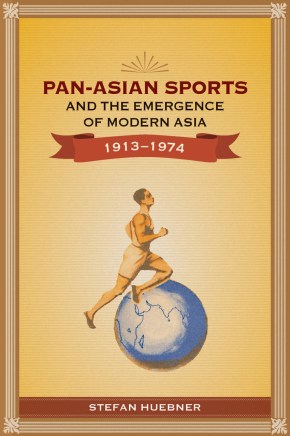
Book Announcement: Pan-Asian Sports and the Emergence of Modern Asia, 1913-1974
sportsPan-Asian Sports and the Emergence of Modern Asia, 1913-1974
STEFAN HUEBNER

The history of regional sporting events in 20th century Asia yields insights into Western and Asian perspectives on what defines modern Asia, and can be read as a staging of power relations in Asia and between Asia and the West. The Far Eastern Championship Games began in 1913, and were succeeded after the Pacific War by the Asian Games. Missionary groups and colonial administrations viewed sporting success not only as a triumph of physical strength and endurance but also of moral education and social reform. Sporting competitions were to shape a ‘new Asian man’ and later a ‘new Asian woman’ by promoting internationalism, egalitarianism and economic progress, all serving to direct a “rising” Asia toward modernity. Over time, exactly what constituted a “rising” Asia underwent remarkable changes, ranging from the YMCA’s promotion of muscular Christianity, democratization, and the social gospel in the US-colonized Philippines to Iranian visions of recreating the Great Persian Empire.

Based on a vast range of archival materials and spanning sixty years and three continents, Sports and the Emergence of Modern Asia shows how pan-Asian sporting events helped shape anti-colonial sentiments, Asian nationalisms, and pan-Asian aspirations in places as diverse as Japan and Iran, and across the span of countries lying between them.

Book link (cover text and google preview):

http://nuspress.nus.edu.sg/products/pan-asian-sport-and-the-emergence-of-modern-asia-1913-1974

Book link (North America):

http://www.press.uchicago.edu/ucp/books/book/distributed/P/bo25434803.html

Posted in announcements, culture | Tagged , , , , , , | Leave a comment

Call for Submissions: William F. Sibley Memorial Subvention Award for Japanese #Translation

The William F. Sibley Memorial Translation Prize was first established by the Department of East Asian Languages & Civilizations and the Committee on Japanese Studies of the Center for East Asian Studies at the University of Chicago in honor of their late colleague William F. Sibley.  Sibley was Associate Professor Emeritus in East Asian Languages & Civilizations and a scholar and translator of Japanese literature. He is best known for his work, The Shiga Hero, first published in 1979 by the University of Chicago Press, which introduced Western readers to the fiction of Shiga Naoya, one of Japan’s foremost modern writers.  To view the William F. Sibley Memorial Translation Prize award-winning translations from 2010 to 2014, please visit the CEAS website.

In AY 2016-2017, the Sibley Prize was renamed The William F. Sibley Memorial Subvention Award for Japanese Translation. It is an annual competition coordinated by the Committee on Japanese Studies of the Center for East Asian Studies at the University of Chicago (CEAS). In keeping with Sibley’s lifelong devotion to translation and to the place of literature in the classroom, up to $3,000 will be given each year as a publishing subvention for translations of Japanese literature into English.

Eligible translations include, but are not limited to, poetry, fiction, short stories, compositions, literary criticism, and essays.  New translations of works previously translated are acceptable.

Subvention funds will be paid directly to publishers.  Nominations will only be accepted from presses that have previously published Japanese literature in translation.  Materials submitted by individual authors and translators will not be accepted.

Author and publisher must agree to acknowledge the publishing subvention as “a William F. Sibley Memorial Subvention Award for Japanese Translation from the University of Chicago Center for East Asian Studies Committee on Japanese Studies” in the acknowledgment section of the book.  Publisher will also provide 3 copies of the final published book to CEAS so copies can be shared with the Sibley family.

Required Nomination Documents:

  • A completed Cover Sheet. (Download PDF)
  • A description of the proposed publication and its potential impact on the field of Japanese literature (MSWord or PDF format, 2-page maximum). Descriptions should situate the work for the general reader, helping them understand why they should care about the translated work. If applicable, descriptions should cite any prior translations and provide a rationale for the new rendition.
  • A PDF copy of the draft manuscript of the publication.
  • A basic budget and explanation of how the subvention would specifically be utilized (MSWord, MSExcel or PDF format).

DEADLINE:  Nominations must be submitted toeastasia@uchicago.edu 
by April 1, 2017.

Posted in announcements, funding, graduate school | Tagged , , , , , | Leave a comment

Fun Link Friday: Amezaiku

amezaiku

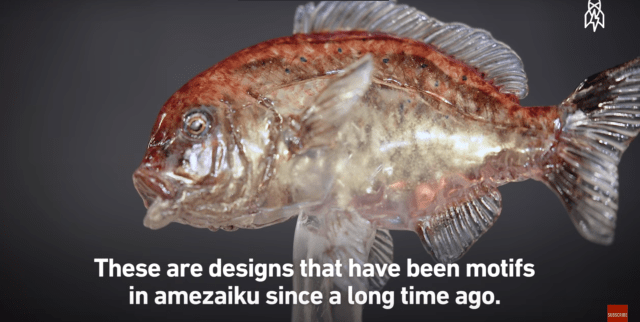
Image: a fish sculpted from candy. Text: “These are designs that have been motifs in amezaiku since a long time ago.”

No, these sculptures aren’t glass: they’re candy sculpted into intricate shapes. Tezuka Shinri creates these edible ephemera in his shop in Asakusa, Tokyo.

At 27 years old, Shinri Tezuka may be one of the youngest people still practicing the dwindling art of amezaiku, or candy crafting, in Japan. The self-taught Japanese artist carves, sculpts and paints delicate lollipops into intricate edible sculptures. Amezaiku dates back hundreds of years, but today there are only two artists left in Tokyo. Tezuka hopes his elaborate goldfish, frog and octopus designs will inspire the next generation of candy crafters to keep the tradition alive.

Check out the video “Keeping the Japanese Art of Candy Sculpting Alive” here.

Posted in culture, fun links | Tagged , , , , | Leave a comment

Call for Papers: “Reflecting (on) the Asia-Pacific: Places, Relations, Systems” ASPAC 2017

call for papers [150-2]On behalf of the program committee for the 2017 Conference of the Asian Studies on the Pacific Coast (ASPAC) at Willamette University, we invite college and university faculty, K-12 teachers, independent scholars, and graduate and undergraduate students with an interest in Asian or Asian diaspora studies to submit proposals for organized panels, roundtable discussions, individual papers or poster presentations on historical or contemporary topics in the humanities, arts, social sciences, education, health, law, business, environmental sciences or other allied disciplines related to East, South, or Southeast Asia and their diasporas.

Both our Association’s name and the Pacific Northwest’s image as a North American gateway to trans-Pacific interactions highlight the importance of concepts and discourses of “region-ness”, and the ways that the enterprise of Asian studies reflects and reproduces interactions that span geographies, cultures, and histories.  We invite papers on all topics, with the hope of stimulating discussions that help us to critically reflect upon, and even de- and re-center, the territorial and temporal frames by which we apprehend Asia.  How does our work situate the region in wider conceptual terrains of the study of “world” or trans-territorial history, culture, politics, economics, society, art, language and humanism?  How do our concepts of regional “relations,” “systems,” and “place” inform our work to understand Asia and Asian diaspora, and how might our diverse ideations be brought into dialogue?

When to apply: Early submission and notification: The early application deadline is Friday, December 30, 2016. Early submission is intended mainly for international applicants who need a letter of invitation for visa purposes. For applications received by the early submission deadline, notification of acceptance will be sent by Tuesday, January 31, 2017. If you miss the early submission deadline and need a letter for visa purposes, we will provide you with it as soon as we can.

Regular submission and notification: For regular applicants, the application deadline is Tuesday, February 28, 2017. For applications received by the regular submission deadline, notification of acceptance will be sent by Friday, March 31, 2017.

Extended submission and notification: For applicants who cannot meet the regular deadline, we will continue to accept submissions until Friday, March 31, 2017 and provide notification of acceptance as soon as possible thereafter.

How to apply: Online submission forms can be found at: http://www.willamette.edu/centers/cas/aspac/CFP/index.html. 
Questions about applying can be directed to the organizers at aspac-2017@willamette.edu

Contact Info:

Conference co-chairs, Ann Wetherell (awethere@willamette.edu) and Huike Wen (hwen@willamette.edu)

Contact Email:

aspac-2017@willamette.edu

URL:

http://www.willamette.edu/centers/cas/aspac/index.html


Posted in announcements, conferences | Tagged , , , , , | Leave a comment