Book Announcement: Recasting the Past: An Early Modern Tales of Ise for Children

recastingRecasting the Past: An Early Modern Tales of Ise for Children (Brill, 2016)
ISBN: 9789004337138; List price: €59 / $65

http://www.brill.com/products/book/recasting-past-early-modern-tales-ise-children

In Recasting the Past: An Early Modern Tales of Ise for Children Laura Moretti recreates in image and text the unresearched 1766 picture-book Ise fūryū: Utagaruta no hajimari (The Fashionable Ise: The Origins of Utagaruta). The introduction analyses Utagaruta through a discussion of the textual scholarship relating to chapbooks and kusazōshi. It also contextualizes this work to shed new light on the reception history of the canonical Tales of Ise and to position Utagaruta within the realm of children’s literature. This is followed by the full transcription and translation of Utagaruta, with annotations to each image. Learned and visually rich, Moretti’s study permits the reader to enjoy the inventiveness and beauty of early modern Japanese literature.

This publication targets undergraduate and graduate students as well as specialists interested in early modern Japanese literature and the reception of The Tales of Ise. The book includes an introduction that discusses topics relevant to those working in the fields of textual scholarship, book history, popular print culture and children’s literature. The reproduction of the original picture-book, together with the integral diplomatic transcription of the text, is a valuable tool in the study of Japanese early-modern palaeography.

Posted in announcements, culture | Tagged , , , , , , , | Leave a comment

Call for Papers: Structure and Subordination: Law, Science, and Religion in East Asia

call for papers [150-2]April 22nd, 2017 at the University of Pennsylvania 
The Department of East Asian Languages and Civilizations at the University of Pennsylvania presents its first annual graduate student conference: Structure and Subordination: Law, Science, and Religion in East Asia. This one-day conference provides a forum for graduate students from regional institutions to examine how the legal, scientific, religious, and sociopolitical boundaries of East Asia (China, Korea, Japan, and Mongolia) have been interrogated in the past and explore how they are being redrawn in the present.

We welcome applications from currently enrolled graduate students in all disciplines related to the study of East Asia and especially encourage those that address the following conference themes:

  • The relationship between policy, technology, and thought in East Asia
  • The mobilization of art and visual culture to challenge political authority in East Asia
  • The construction and performance of gender, race, and other group identities in East Asia
  • The influence of differing conceptions of the body in East Asia
  • The translation of texts across borders and the discovery of self in East Asia

Submission Requirements

Please submit for review an abstract of no longer than 250 words and a short biography of 100 words or less by February 1st, 2016. Application materials may be sent to: ealcgradcon@gmail.com.

Funding

Limited funding is available for conference participants. Please indicate your need at the time of application and include both the location from which you will be traveling and whether you require lodging.

Contact Information

Department of East Asian Languages and Civilizations
University of Pennsylvania
255 S. 36th Street, 847 Williams Hall
Philadelphia, PA 19104
USA
(215)898-7466

Posted in announcements, conferences, graduate school | Tagged , , , , , , , , | Leave a comment

Fun Link Friday: the Salt Sculptures of Motoi Yamamoto

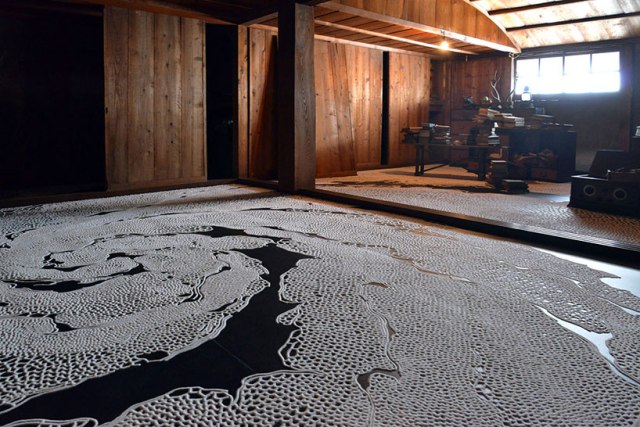
Sorry for the lack of Fun Link Fridays, everyone! It was a busy holiday season and I hope you all enjoyed it. Today is a quickie fun link, something that I had saved and meant to put up around New Years! Spoon & Tamago had an article a few months back about Motoi Yamamoto, someone who calls himself a “salt installation artist.” In Japanese culture, salt is not only an essential cooking ingredient, but also used as a sacred item in many ritual and cultural contexts, especially in connection to Shinto practices. After the death of his sister, Yamamoto began using salt as a kind of artistic tool, creating “paintings” in his home that are as elaborate as they are stunning.

salt

Yamamoto has since traveled the world creating these incredible displays at numerous exhibitions and galleries. You can see more of these amazing art installations at the original article, or this HuffPost article + gallery from several years ago, or any number of articles online. Happy travels through the salt landscapes!

Posted in culture, fun links | Tagged , , , , , , | Leave a comment

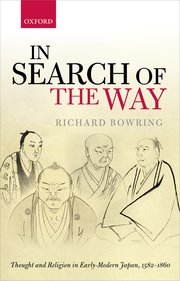
Book Announcement: In Search of the Way Thought and Religion in Early-Modern Japan, 1582-1860

insearchIn Search of the Way:

Thought and Religion in Early-Modern Japan, 1582-1860

Richard Bowring

In Search of the Way is a history of intellectual and religious developments in Japan during the Tokugawa period, covering the years 1582-1860. It begins with an explanation of the fate of Christianity, and proceeds to cover the changing nature of the relationship between Buddhism and secular authority, new developments in Shinto, and the growth of ‘Japanese studies’. The main emphasis, however, is on the process by which Neo-Confucianism captured the imagination of the intellectual class and informed debate throughout the period. This process was expressed in terms of a never-ending search for the Way, a mode and pattern of existence that could provide not only order for society at large, but self-fulfilment for the individual. The narrative traces how ideas and attitudes changed through time, and is based on the premise that the Tokugawa period is important in and of itself, not merely as a backdrop to the Meiji Restoration of 1868.


Posted in announcements, culture | Tagged , , , , , , , | Leave a comment

Call for Papers: Technology in Modern East Asia Workshop

call for papers [150-2]Technology in Modern East Asia History Workshop
June 8 -9, 2017
Hosted by Needham Research Institute, Cambridge, UK
Call for Papers

We are pleased to invite applications for the 2017 edition of the Technology in Modern East Asia Workshop which will take place at the Needham Research Institute in Cambridge (UK), June 8 -9.

The aim of the workshop is to assist in bringing to fruition new research on the role of technology in the history of East Asia since 1800.
Our definition of technology is intentionally broad. We are especially interested in work seeking to explore and highlight the technology in research on materially of scientific practice, energy issues,  infrastructure, materials, engineering practices and technical education, medical technologies, industrialization, and artisanal culture in modern East Asia.

Envisioned as a mentoring and development event, it brings together early career and established scholars for intensive discussion of work in progress. Early career includes advanced PhD candidates and recent PhDs (2011 onward). Feedback on pre-circulated work is structured towards shortening the time from draft to print for promising research articles or book chapters. Therefore, mentoring process also includes meetings with representatives of the academic press and individual editorial development work with an editor of a scholarly journal.

The workshop is generously supported by the Society for the History of Technology (SHOT), the Max Planck Institute for the History of Science (MPGW), the French National Center for Scientific Research (CNRS) and the Needham Research Institute (NRI).

All selected applicants will be provided with accommodation and meals during the workshop. Limited support is available for travel and we strongly encourage candidates to seek some travel funding from their home institution.

Interested applicants are asked to submit a short CV and an abstract (maximum 750 words). The abstract should clearly and succinctly introduce the major thrust and importance of the project, situate the work within broader disciplinary debates, and give indication of the sources deployed.

Applications should be submitted by January 23, 2017, by e-mail to aleksandra.kobiljski@ehess.fr

Successful applicants will be notified by February 3 and are required to submit a 8000-word article/chapter draft by April 3, 2017.

For all inquiries, please email aleksandra.kobiljski@ehess.fr

Previous mentors include: Francesca Bray (University of Edinburgh, UK), Mats Fridlund (University of Aalto, Finland), Barbara Hahn (Technology & Culture/Texas Tech, US), Liliane Hilaire-Pérez (Pars Diderot/EHESS, France), John Krige (Georgia Tech, US), Dagmar Schäfer (MPIGW, Germany), Grace Shen (Fordham, US), Lucy Rhymer (Cambridge University Press), Togo Tsukahara (Kobe, Japan), David Wittner (Utica College, US)

Posted in announcements, conferences, graduate school | Tagged , , , , , , , | Leave a comment

Call for Applications: Trans-Asian Indigeneity/ Summer Institute at Penn State

call for papers [150-2]Call for Applications: Penn State Asian Studies Summer Institute (Special Topic: “Trans-Asian Indigeneity”)

Penn State Asian Studies Summer Institute: 

“Trans-Asian Indigeneity”

Penn State University invites applicants for its annual Asian Studies Summer Institute, to be held June 18-24, 2017. This year’s Institute, directed by Neal Keating, Pasang Yangjee Sherpa and Charlotte Eubanks, focuses on the topic of “Trans-Asian Indigeneity.”

Institute participants spend a week reading and thinking about the annual theme, as well as significant time workshopping their work in progress. Particularly strong work may be considered for publication in the “Indigeneity” special issue of Verge: Studies in Global Asias (http://www.upress.umn.edu/journal-division/Journals/verge-studies-in-global-asias).

Penn State will provide a graduated travel stipend (USD 400 from the East Coast, 600 from the Midwest, 800 from the West Coast; USD 1000 from Europe; USD 1350 from Asia). We will also cover the costs of housing and most meals for the week of the Institute.

Applicants must have completed their PhDs between August 2012 and 2017, or be advanced graduate students who are completing their dissertations.

On the theme:

We invite applications from the Humanities, Arts and Sciences—anthropology, environmental studies, history, political ecology, geography, art and literature—that examine “Indigeneity” as a protean concept and lived reality in Asia, Asian America, and Asian diasporic communities across the globe.  We are especially interested in attending to the concept’s travels between Asian and western settler societies, or those following the movement’s historical concurrence with the rise of neoliberal political economy and the onset of massive anthropogenic environmental change. Marking the ten-year anniversary of the UN General Assembly adoption of the UN Declaration on the Rights of Indigenous Peoples, we explore the possibilities of strengthening collective indigenous identities that are not antithetical to state sovereignty and citizenry, but nonetheless challenge the status quo of nation-states and finance capital to make political space for “other” peoples with collective human rights that are now recognized in international law. We are also interested in the current historical, political and ecological moment, and the growing realization of planetary limits to unchecked economic growth. New forms of human organization are becoming imaginable, and Indigeneity may be among the most sustainable of these. We encourage applications that connect discourses of ‘Asian’ indigeneities with the larger planetary flows of capital and people.

To apply, please send the following documents in a single PDF file to verge@psu.edu by March 15, 2017.

  1. A cover letter (up to 2pp) outlining your current career/research stage, and articulating a connection to the Institute theme.
  2. A sample of your current work (10-20 pp). This need not be the piece you plan to workshop over the summer. It should nonetheless give the review committee some sense of your current and future work.
  3. A current c.v.
  4. Advanced graduate students must also include a letter from the dissertation adviser on academic progress and status. (This may be sent under separate cover, rather than as a part of the single PDF file for items 1-3.)

Decisions will be made by the first week of April 2017. Other inquiries regarding the Summer Institute may be directed to Charlotte Eubanks (cde13@psu.edu).

Contact Email:

cde13@psu.edu

Posted in announcements, conferences, graduate school, summer program | Tagged , , , , | Leave a comment

Job Opening: Digital Humanities Asia, Postdoctoral Fellowship, Stanford University

job opening - 5Institution:      Stanford University, History
Location:         California, United States

Position, Digital Humanities Asia Postdoctoral Fellowship, Stanford University 

The Digital Humanities Asia (DHAsia) program at Stanford University invites applications for a 12-month Postdoctoral position during the 2017-2018 academic year. This position is funded by the Andrew W. Mellon Foundation Sawyer Seminar program, with further support provided by Stanford University. The successful applicant is expected to begin on or by October 1, 2017.

Stanford University is a globally recognized leader in the fields of Digital Humanities, GIS, text analysis, social network analysis, Text Technologies, and natural language processing. The Center for Spatial and Textual Analysis (CESTA), the Center for Interdisciplinary Digital Research (CIDR), the Literary Lab, and more attract scholars from around the world who are eager to learn from our experiences and implement our methods. Flagship projects, such as Mapping the Republic of Letters, the Çatalhöyük Living Archive, Kindred Britain, the ORBIS Geospatial Network Model of the Roman World have all begun to reshape not just the methods that we as Humanists bring to bear on our questions, but the very questions we ask.

At home within this rich DH ecology at Stanford, Digital Humanities Asia (DHAsia) seeks to advance a new era in Non-Western Digital Humanities, with a focus on East, South, Southeast, and Inner-Central Asia. We seek energetic and creative applicants who demonstrate innovative thinking and a proactive approach to the questions that digital humanities methods, approaches, tools, and theories raise in their academic disciplines.

STIPEND & BENEFITS

  • Stipend & Benefits: The 12-month stipend for this position is $51,600, including full benefits
    • Office Space/Workstations: The DHAsia Postdoctoral Associate will enjoy two (2) dedicated workstations, one in the History department and one in the Center for Spatial and Textual Analysis (CESTA)
    • Undergraduate RA Support: the Postdoctoral Fellow will assist in the hiring of a Stanford undergraduate Research Assistant, who will work under their research direction for up to 5 hours per week during the Fall, Winter, and Spring terms; and then on a full-time basis during the Summer term
    • Career Development Assistance: The Postdoctoral fellow will have access to Stanford’s extensive repertoire of career development workshops, to help assist in the candidate’s broader job search process, as relevantRESPONSIBILITIES

    The Postdoctoral Fellow will be affiliated with the Department of History, mentored by Professor Thomas S. Mullaney. Applicants need not hold a PhD in History, however. The Fellow should expect to focus on her/his own research, but also to be well-integrated into the Stanford community and engaging with interested faculty, students, archivists, librarians, and digital technologists. Responsibilities include:
    • Pursuit of independent research project within Asian Digital Humanities
    • Participation in the intellectual life ofDHAsia@Stanford, the Center for Spatial and Textual Analysis, and the 2017-18 Mellon-funded Seminar Series on Asian Digital Humanities [Note: This seminar will bring to Stanford campus many of the world’s leading scholars of DH working on East, South, Southeast, and Inner/Central Asia.]
    • Co-development of DHAsia White Paper, assessing needs, current capacity, and future uses of Asian Digital Humanities
    • Interaction with visiting technologists from Silicon Valley and beyond, to help provide input on the development of next-generation DH tools tailored for the particular requirements of Asian Studies research ELIGIBILITY
    • Applicants must provide evidence of successful completion of their PhD degree byJune 30, 2017, and may not be more than three years beyond the receipt of their PhD at the start of the fellowship. Stanford University doctoral degree recipients are not eligible for this fellowship
    • Applicants must have experience in conducting original academic research in Digital Humanities
    • Applicants must have relevant/advanced language experience in a Non-Western/Asian language
    • Fellow is expected to be in residence at Stanford University during the term of their appointment

    APPLICATION REQUIREMENTS

    Applicants will be asked to submit the following material electronically (faxed or emailed application materials cannot be considered):
    • Cover Letter (2 pages max) describing your research interests to an interdisciplinary search committee • Dissertation Abstract (3 pages max)
    • Research Plan for Fellowship Period (5 pages max)
    • CV (5 pages max)
    • Sample of Written Work (article length/40 pages max)
    • Two Confidential Letters of Recommendation (from faculty members or other appropriate sources)

    Applications should be submitted via https://academicjobsonline.org/ajo/jobs/8685 by 11:59 pm EST on Friday, February 17, 2017.

    Only complete applications submitted through the online system will be considered. All applications will be acknowledged. Finalists may be interviewed. Questions about the application process should be directed to DHAsia Director, Thomas S. Mullaney (tsmullaney@stanford.edu) with the email subject line ‘DHAsia PostDoc Inquiry’.

Contact:           Thomas S. Mullaney (tsmullaney@stanford.edu)

Posted in announcements, graduate school, job openings, jobs | Tagged , , , , , , | Leave a comment

Fun Link Friday: The Origins of Japan’s Christmas Cake

Photo by Shibuya246

Photo by Shibuya246

As the holidays rapidly approach, you may or may not be feeling nostalgic for the spongey, strawberry-laden cakes so well-known in Japan– the Japanese Christmas cake. Orders for this beloved item start being taken all the way back in September in some places, and you can barely pass a bakery window without seeing its red and white decorations, often with plump, beaming Santas on top. But did you know about the Christmas cake’s postwar origins? This recent article on NPR’s website brings the cake to the table, so to speak. Check it out to see why this cakes is so ubiquitous, and maybe now you’ll use the Japanese cake emoticon on your phone a little more often!

Happy holidays everyone!

Posted in culture, fun links | Tagged , , , , , | Leave a comment

Online Workshop: Japanese Culture Through Rare Books

Japanese Culture Through Rare Books–Second offering, organized by Prof. Takahiro Sasaki of the Shido Bunko 斯道文庫, Keio University in Tokyo.

Three parts offering, first part starting on January 9, 2017

Explore the important roles that books have played in the cultural history of Japan.

This is a great three-part online course for understanding the wealth of information Japanese rare books can offer us under the well-organized guidance.

https://www.futurelearn.com/courses/japanese-rare-books-culture

ABOUT THE COURSE

A book is a tool for preserving words and images. Through books, an abundance of information, including the knowledge and experiences of the people of the past, has been handed down to the present. But books are more than records of words and images. Their form, appearance, and even the scripts and styles used tell us about the fashions and technologies of the times that produced them. By studying old books, we can learn a great deal about the geographical areas in which they were made, the historical background, and the individuals and groups involved in their making.

While displaying remarkable similarities with books produced in other areas of the Sinitic cultural sphere, Japanese books also possess some unique features, starting with their sheer diversity of form and appearance. Using a wealth of multimedia content, we will take a journey through the wonderful world of traditional Japanese books.

Posted in announcements, graduate school, study tools | Tagged , , , , , , , | Leave a comment

Funding: Carmen Blacker Research Fellowship

money [150-2]Applications are invited for the Carmen Blacker Research Fellowship tenable at Peterhouse for three years from Easter 2017 or as soon as practicable thereafter.  The Fellowship has been made possible by the generous bequest of the distinguished Japanese scholar Carmen Blacker and the subject areas of the Fellowship reflect her own areas of academic interest.

The Fellowship is intended for researchers in one of the following areas:

  • the religion, philosophy, literature, and history of Japan before the year 1868 or 
  • the religion, philosophy, literature, and history of China before the year 1840 or 
  • Jewish studies before the year 1880.
  • The annual remuneration of a Research Fellow is at present £23,631 (non-resident in College) or £20,923 (resident), with an annual research allowance of up to £1,328. Stipends will be subject to deductions in consideration of emoluments from other sources. Research Fellows are expected to engage in full-time research, but may be permitted to teach for up to six hours a week and will be paid for this. All Research Fellows are allowed seven free meals a week at the Common Table. There is an entertainment allowance in kind. The tenure is three years.
  • The successful candidate will have an excellent academic record and the potential to continue his or her research at the highest level.
  • Candidates must be graduates of, or current students at, universities in the United Kingdom or within the EU.
  • For further details regarding the Eligibility Requirements, please click here. The RF Administrator is unable to answer queries relating to your eligibility; please follow the instructions.
  • Statements of research are required and should be not more than 600 words, outlining the work candidates would submit in support of their applications and the research they propose to pursue if elected. Please note that the statement will be read by people outside as well as inside the candidate’s own discipline and should therefore be intelligible to scholars in other subjects.
  • Applications, including two referees, one of whom must be from an external department and both of whom should be familiar with the candidate’s research work, must be submitted online by 4.00pm on Monday 9 January 2017. Referees’ reports must be submitted online by 4.00pm on Monday 16 January 2017. It is up to applicants to ensure that these reports are submitted by the deadline.
  • Long-listed candidates will be asked to submit a further substantial piece of written work by 4pm on Wednesday 25 January.
  • Interviews for shortlisted candidates will be held in February 2017.
Posted in announcements, funding, graduate school | Tagged , , , , , , | Leave a comment