
Applications Open: Bread Loaf Translators’ Conference 2018

Institution: Middlebury College, Bread Loaf Campus,
Location: Ripton, VT
Dates: June 1-7, 2018
Deadline: Rolling admissions through February 15.
Fees: Application fee, $15; tuition, room, and board, $2,290. Financial aid is available.

4th Annual Bread Loaf Translators’ Conference

Literary translation is, as its name suggests, the translation of a literary work such as a poem, essay, short story, or novel, out of its original language and into a new language, but it is also the creative, complex, and writerly activity of making an equivalent literary text exist (at least in the United States) in English.

The 4th annual Bread Loaf Translators’ Conference is a week-long event based on the Bread Loaf Writers’ Conference model that is designed to provide training and community to beginning as well as experienced translators in the pursuit of translating literary texts into English—or to those aiming to be more sophisticated readers of literary translation and to incorporate it into the classroom. A natural complement to signature Middlebury programs such as the Bread Loaf Writers’ Conference, the Language Schools, and the equally-renowned translation and interpretation degree programs at the Middlebury Institute of International Studies at Monterey (MIIS), this conference aims to strengthen the visibility and access to high quality literary translations in the United States and to acknowledge that translators require the same training and skills as creative writers.

2018 DATES AND LOCATION

Friday, June 1—Thursday, June 7, 2018. The conference will take place at the Bread Loaf Campus of the Middlebury College in Ripton, Vermont.
PROGRAM AND SCHEDULE

The conference will incorporate the Bread Loaf Writers’ Conference model of small, focused, genre-based workshops coupled with lectures and classes focusing on the art of literary translation. Workshops will be limited to ten participants so that each manuscript will receive individual attention and careful critique. All participants will also meet individually with their workshop leader to amplify and refine what was said in the workshop itself.

This week-long conference of workshops, classes, lectures, readings, and discussions is for translators who want to improve their literary craft; for students mastering a foreign language and wanting to begin acquiring skills in the art of translation; for teachers interested in bringing the practice of literary translation into their classrooms; and for anyone wanting to learn more about and participate in the ever-growing community of literary translators.

To get a better feel for what to expect during the week, see this sample schedule from the 2017 conference. In addition to the lectures, workshops, classes, and readings listed, meetings with editors take place during the afternoon, and faculty schedule an individual meeting with each contributor to take place during the session. The workshop packet of student translations for the Translation Workshops and packet of readings for the Introductory Workshop are made available in the weeks leading up to the session in order to allow time to read and prepare before arrival.

THE COMMUNITY

Bread Loaf Writers’ Conferences create diverse and inclusive communities that give voice to writers and translators of all ages and experience. The conferences are not retreats where participants work in solitude, but instead places where writers and translators of all backgrounds and at all stages of their careers—unpublished and published—come together to test their assumptions regarding literature and to seek advice about their progress. Built on a long history of gathering writers from all over the United States, and now from outside of the U.S. as well, to live and learn together during the intensive 7 days, Bread Loaf fosters communities where open-mindedness, respect, and appreciation are truly valued and where each person can thrive and benefit from their time on the mountain.

2018 FACULTY AND GUESTS

Acclaimed and award-winning translators Kazim Ali, Susan Bernofsky, Mónica de la Torre, Bill Johnston, and Sora Kim-Russell will constitute the faculty during this third annual session. In addition to their literary accomplishments, each faculty member has been specifically chosen for his or her skill at guiding developing translators in a given genre.

Other guests from the publishing, literary, and translating world will offer panels, discussions, or one-on-one meetings with conference participants.

WAYS IN WHICH YOU CAN APPLY

As a Participant in the Introductory Workshop:

This workshop is ideal for those interested in literary translation but are still acquiring sufficient proficiency in a foreign language, those who do have some language skills but do not yet have a translation sample to submit for critique, students of literature, comparative literature, and creative writing, and teachers who are interested in learning how to incorporate translation into the classroom. The purpose of the workshop will be to acquaint participants with some of the recurring questions, problems, and pleasures of the activity of literary translation. Students will be provided with literary texts from different genres and languages and expected to create translations that will be reviewed in class.

As a Participant in a Translation Manuscript Workshop:

These workshops are intended for students who already have sufficient foreign language skill and are working on translations that are in-progress. Workshops will be genre based: two workshops in prose (fiction and creative nonfiction) and one workshop in poetry will be offered. In addition, there will be the option of a mixed-genre workshop (comprised of translations of either poetry or prose or of texts in hybrid genres). These workshops are ideal for students and translators who are still honing skills and have a translation sample that they would like to submit for critique as well as intermediate or advanced translators who have undertaken a project and are looking for feedback. Manuscripts of up to 4,000 words (for prose) or 8 pages (for poems) will be reviewed in the workshop and in a one-on-one conference with the instructor.

As an Auditor:

Auditors are those who would like to be “a fly on the wall” in a translation manuscript workshop or the introductory workshop but do not feel ready to participate fully. Auditors are encouraged to attend and take part in all aspects of the conference, although no manuscript will be reviewed nor will an individual conference be held with the instructor.

Full details and application here: http://www.middlebury.edu/bread-loaf-conferences/bltc
Posted in announcements, applications, conferences, summer program | Tagged , , , | Leave a comment

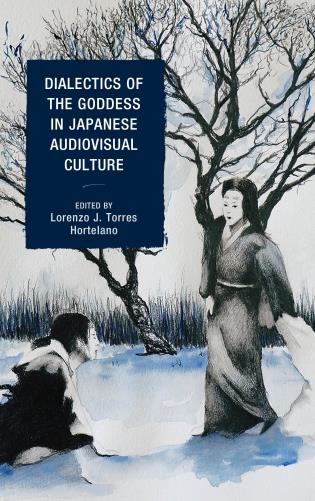
Book Announcement: Dialectics of the Goddess in Japan Audiovisual Culture

Dialectics of the Goddess in Japanese Audiovisual Culture

EDITED BY LORENZO J. TORRES HORTELANO – CONTRIBUTIONS BY LINDA C. EHRLICH; IRENE GONZÁLEZ-LÓPEZ; DOLORES P. MARTINEZ; JOSÉ MONTAÑO; LAURA MONTERO; VÍCTOR NAVARRO-REMESAL; SYBIL A. THORNTON AND LORENZO J. TORRES HORTELANO

Through provocative essays by specialists in different aspects of Japanese culture, this book provides an historical and analytical survey of the presence of Goddesses in Japanese audiovisual culture from its origins to the present day. It shows how these feminine myths are represented in Japan; not only as beneficial or creative deities, but also the archetypal strong or dominant woman that sometimes overshadows masculine figures and heroes, or as influential figures. Therefore, it analyzes this rich dialectic of the feminine and how the audiovisual culture has represented it thus far in film, TV series, and video games made in Japan. While many theories have been proposed to explain the presence of Goddesses in Japan, this book’s focus on audiovisual culture explores how this corpus challenges the traditional conceptions of the feminine as related to Goddesses.

https://rowman.com/ISBN/9781498570152/Dialectics-of-the-Goddess-in-Japanese-Audiovisual-Culture

Posted in announcements, culture | Tagged , , , , , | Leave a comment

CfP: Chinese Objects and Their Lives, Paris

CALL FOR PAPERS – French Association for Chinese Studies 法國漢學協會 (AFEC)

“Chinese objects and their lives”

International workshop

Organizer: French Association of Chinese Studies 法國漢學協會 (AFEC)
Date: June 15, 2018
Venue: Institut National des Langues et Civilisations Orientales – Inalco, Paris
Deadline for submission proposal: February 23rd, 2018

The French Association for Chinese studies 法國漢學協會 (AFEC) organises every second year an international workshop.

To know more about the association, please visit: http://afec.hypotheses.org

Over the last twenty years, material culture studies have occupied a growing place in the social sciences. These studies are founded on the idea that objects—natural, technical or artistic—can be considered documents for the writing of history, or even as actors in the social sphere, where they are capable of conditioning or transforming human behaviour. Therefore, special attention has been given to the social, economic and material conditions of their production and diffusion, their history and uses, and more broadly to their “biographies” or “social lives” in order to account for their ability to take on different roles in different periods. The relationships that people build with objects that surround them, are created by them, or used and exchanged by them, have been an integral part of the issues confronting historians studying material culture since, at least, the 1960s.

How does this growing interest in objects and material culture reveal itself in Chinese studies? Choosing from different disciplines and different periods, this AFEC workshop aims to examine how to approach objects in the humanities and social sciences—from everyday objects to natural objects, consumer goods, technical or scientific instruments, objects of study or devotion, or ritual objects and works of art. By bringing together specialists from different fields (history, art history, archaeology, technology, anthropology, literature, sociology, etc.), the workshop will explore the life, trajectory and the possible metamorphoses of the value, status and function of objects, as well as the relationships these artefacts have with individuals—raising in addition questions of their social uses—by focusing on their religious, symbolic, political, economic, emotional or memorial dimensions.

Abstracts (300 words max) and a short CV should be submitted by February 23rd 2018 at the latest.

We will announce the shortlist of selected abstracts by the end of March 2018.

Contact: Alice Bianchi (University Paris Diderot), email: alice.bianchi@univ-paris-diderot.fr

Lyce Jankowski (University Paris Diderot), email: lyce.jankowski@gmail.com

Posted in announcements, conferences | Tagged , , , | Leave a comment

Job Opening: Study Abroad Advisor, Agnes Scott College

Via NAFSA Job Registry

Institution: Agnes Scott College
Location: Decatur, GA
Posted January 16, 2018
Education: BA required, MA preferred

GENERAL SUMMARY: Advising students on all aspects of independent global study abroad within the guidelines of federal, state and local laws and office, division and college policies and procedures. Reports to the assistant dean for global learning and works with faculty, staff, students and parents: on-campus education about and promotion of study abroad; externally with study abroad providers, ISEP, international organizations, and domestic and foreign governmental offices.

ESSENTIAL JOB FUNCTIONS

  • Advises domestic students on all aspects of independent study, work, volunteer, and internship abroad opportunities, and coordinates with other Global
  • Learning staff to develop and maintain an appropriate advising strategy, in order to meet annual budget figures and maintain or increase the number of students studying abroad.
  • Administers, coordinates, tracks and reports ASC institutional scholarships for study abroad.
  • Promotes and advises for several national study abroad scholarships and advises students with associated required projects.
  • Provides information to students, faculty and department chairs regarding policies and procedures related to study abroad and exchange programs.
  • Serves on SARRFA representing Center for Global Learning & coordinates study abroad processes and policies with those of the college
  • Coordinates and leads multiple group information sessions regarding study abroad.
  • Coordinates three intensive pre-departure orientations annually, as well as re-entry programming and other student events.
  • Manages the outgoing portion of international student exchanges (process applications, conduct orientation sessions, answer student questions before, during and after the exchange, assist students to obtain transcripts, review and process foreign transcripts, and coordinate with other departments on campus to complete all necessary processes)
  • Implements, manages and updates Terra Dotta application and data management system; to include back-up maintenance of the system, training, and furthering the use of the system in additional office processes.
  • Manages and reports on the significant study abroad budget.
    Education: Baccalaureate degree required. Masters degree preferred.

Experience: Minimum of two year of employment experience in the field of study abroad advising. ISEP advising experience preferred.

Knowledge/Skills/Abilities:

  • Excellent communication skills, both verbal and written with special expertise in cross-cultural communication.
  • Commitment to working with students from diverse backgrounds.
  • Previous participation in semester or year-long study abroad.
  • Proficiency with Terra Dotta data management software strongly preferred.
  • Fluency in a language in addition to English preferred.
  • Strong interpersonal skills and proven ability to work in a professional and collegial capacity with students, administrators and faculty.
  • Strong organizational and administrative skills with attention to detail.
  • Ability to prepare and present workshops for students and faculty and prepare promotional materials related to study abroad.
  • Proficiency in PC based software: Microsoft Word, PowerPoint, Excel; background in database management and web page development; and familiarity with popular social media utilized by students.
  • Experience with student (or related) event planning.
  • Demonstrated ability to work independently and maintain confidentiality.

To apply:
https://agnesscott.applicantpro.com/jobs/698442.html
http://jobregistry.nafsa.org/jobs/10656456

Posted in announcements, job openings, jobs | Tagged , , , , | Leave a comment

Fun Link Friday: Laser-cut Stationery Surprises

Although this is old news by internet standards, This is Colossal posted last week about a new memo pad produced by the Japanese company Triad that reveals hidden architectural features or objects as you use up your everyday notes.

Called “The Omoshiro Block” (or literally “fun/interesting block”), this memo pad uses laser-cut technology to form three-dimensional images within your block of paper. As you slowly use up your memos and pull them away, a beautiful structure reveals itself, whether a temple, a camera, or even a piano! Each sheet of paper is also unique, with different cut images and gradual shifts in color as the papers reduce. Although the blocks themselves are still expensive, I imagine they’d make a unique Japan-related gift for those bringing back omiyage to their loved ones. You can follow Triad on Instagram for more interesting products and go to the original article to see some more laser-cut paper works they’ve been doing!

Posted in culture, fun links | Tagged , , , , , , | Leave a comment

Resource: Nikkei Newspapers Digital Archive

Those of you who previously explored our article on the Hoji Shinbun Digital Collection – Japanese Diaspora Initiative may also be interested in a collection of Nikkei newspapers digitized and openly available through the university libraries of the University of Washington. From their website:

The Nikkei Newspapers Digital Archive (NNDA) is a project of the Hokubei Hochi (North American Post) Foundation and the University of Washington Libraries. Our goal is to make accessible two significant newspapers which tell the story of Japanese immigration and Japanese American community life in Seattle and beyond, from 1902 to 1950, and continuing to the present day. The newspapers, North American Times (1902-1942) and North American Post (1946-1950), were published primarily in Japanese, with occasional, and then regularly appearing, pages published in English.

North American Post, 1946-08-28

Browsing the collection you have standard keyword search options and fields you can use to narrow your explanation, or you can just flip through the dozens of newspaper scans. There are also pages with more information on the newspapers themselves as well as on the process of digitizing the collection.

In addition to the uploaded content, for some issues there are translations into English of the captions for front page stories, diagrammed onto their actual location on the newspaper page, which is a fascinating glimpse into the immediate topics of interest for readers:

Their resources page also offers an essay on the history of US-based Japanese newspaper publications and the collections held at the University of Washington.

So if you’re interested in modern US-Japanese history and the history of Japanese American communities, go exploring in the Nikkei Newspapers Digital Archive!

Posted in culture, graduate school, study tools, undergraduate, useful links | Tagged , , , , , , , , | 1 Comment

Book Announcement: Dancer, Nun, Ghost, Goddess: The Legend of Giō and Hotoke in Japanese Literature, Theater, Visual Arts, and Cultural Heritage

Dancer, Nun, Ghost, Goddess explores the story of the dancers Giō and Hotoke, which first appeared in the fourteenth-century narrative Tale of the Heike. The story of the two love rivals is one of loss, female solidarity, and Buddhist salvation. Since its first appearance, it has inspired a stream of fiction, theatrical plays, and visual art works. These heroines have become the subjects of lavishly illustrated hand scrolls, ghosts on the noh stage, and Buddhist and Shinto goddesses. Physical monuments have been built to honor their memories; they are emblems of local pride and centerpieces of shared identity. Two beloved characters in the Japanese literary imagination, Giō and Hotoke are also models that have instructed generations of women on how to survive in a male-dominated world.

Roberta Strippoli, Ph.D. (Stanford 2006), is associate professor at Binghamton University (SUNY). A scholar of premodern Japanese literature and theater, she has published on the late-medieval narratives otogizōshi, including La monaca tuttofare, la donna serpente, il demone beone (Marsilio 2001).

http://www.brill.com/products/book/dancer-nun-ghost-goddess

Posted in announcements, culture | Tagged , , , , , , , , , | Leave a comment

Ishibashi Foundation Summer School in Japanese Arts and Cultural Heritage

*Dates: 28 July – 18 August 2018
*Location: Univ. of East Anglia, Norwich, UK
*Academic level: Advanced Undergraduate or Postgraduate
*Application Deadline: March 31, 2018

The Centre for Japanese Studies, Interdisciplinary Institute for the Humanities invites applications for an intensive three-week postgraduate level Summer School in Japanese Arts and Cultural Heritage. With the support of the Ishibashi Foundation we offer full bursaries to all successful applicants accepted on to the course. The bursary covers tuition, accommodation, breakfast and lunch on working days, study trips and a contribution towards travel costs. Applications are invited from any country from advanced undergraduate and postgraduate students with a demonstrable interest in the field.

Classes will take place on the UEA campus, home to the renowned Sainsbury Centre for Visual Arts, and at the Sainsbury Institute for the Study of Japanese Arts and Cultures in the historic centre of the city of Norwich. Taught by leading specialists in the field, this Summer School offers an exceptional opportunity for students to develop an in-depth appreciation and understanding of Japanese arts and cultural heritage.

Field trips may include: Major museums with Japanese collections and significant cultural heritage sites in London and Norfolk.

By the end of this module students will:

*Be a more intercultural member of society, having gained knowledge about Japan’s social, political and cultural context
*Have a greater understanding of Japan’s artistic and cultural traditions
*Have an appreciation of the global significance of Japanese arts, cultures and heritage
*Use enhanced study skills, in particular the ability to present information and express ideas about materials studied in oral and written formats

Prerequisites:

The course is suited to those who are interested in Japan, East Asia and the latest debates in Japanese arts, cultures and heritage. No specific prior knowledge is required except a strong desire and willingness to learn and engage.

Scholarships:

The Ishibashi Foundation is supporting 20 funded places for the Ishibashi Foundation Summer School in Japanese Arts and Cultural Heritage module. All Scholarships cover tuition, accommodation, breakfast and lunch on working days, a contribution towards travel cost and academic field trips with transport.

For further information and how to apply, see the program’s official webpage. The application deadline for Ishibashi Foundation Scholarships is 31 March 2018.

Posted in announcements, culture, summer program | Tagged , , , | Leave a comment

Fun Link Friday: A Brief History of Kimono

While the Google Arts and Culture app has been taking over the press with its entertaining facial recognition software this week, they also have been releasing some interesting mini-explorations of historical objects and works. Among them is an exhibition entitled “The ancient history making and wearing a kimono,” which walks the viewer through various aspects of kimono history.

The site includes brief historical bites of information on the origins of kimono and their development from ancient to early modern times. It also goes into technical elements, such as the various parts of kimono, dyeing patterns and processes, and even several videos on the weaving and coloring techniques involved in textile production! Throughout the exhibit there are great quality images of kimono and obi (with information on their museum of origin) and some additional explanations about the kind of occasions they would be worn. Be sure to check it out!

Posted in blogs, culture, fun links | Leave a comment

Job Opening: Part-time lecturer(s) (非常勤講師) in premodern Japan studies

The International Master’s Program (IMAP) and International Doctorate (IDOC) in Japanese Humanities in the Graduate School of Humanities at Kyushu University seek part-time lecturers for the 2018–19 Japanese academic year to teach one or more MA courses in the following Japan studies fields: premodern history, premodern literature, premodern religious studies, archaeology and/or preservation practices, cultural heritage studies, cultural anthropology, or linguistics.

Spring term (April–July) courses will be held on Kyushu University’s Hakozaki Campus. Fall term (October–February) courses will be held on the new Ito Campus. All courses are offered in English. Semester-long courses meet for 90 minutes once per week for 15 weeks; however, an intensive course format is also possible. The latter is typically for two weeks, contiguous or with a gap of one or two weeks. Classes typically have five to ten international and Japanese MA candidates.

Further information on the IMAP and IDOC in Japanese Humanities is available at http://www2.lit.kyushu-u.ac.jp/en/impjh/

The ideal applicant will have a PhD and publications in their respective field, teaching experience with graduate students, and native or near-native English skills. ABD candidates with teaching experience will also be considered. Preference will be given to applicants already in Japan, especially senior scholars actively engaged in research.

Salary is commensurate with number of years of teaching experience (3-tier scale: 0-9 years, 9-20 years, more than 20 years) and based on the regulations of Kyushu University. We can provide rough estimates on request. International transportation is not provided; however, one or two round trips to Fukuoka from within Japan are covered, as are lodging costs and the standard University per diem.

Applications will be accepted until the positions are filled; for Spring term courses preference will be given to applications received by February 5, 2018.

To apply, please email the following documents to kokusai@lit.kyushu-u.ac.jp and cjbogel@lit.kyushu-u.ac.jp

–       a one-page cover letter that describes your teaching interests and experience;

–       a curriculum vitae;

–       one or two sample syllabi for an MA-level course in your field

Posted in announcements, job openings, jobs | Tagged , , , , | Leave a comment