Funding: National Science Foundation East Asia and Pacific Summer Institutes for US Graduate Students

2012 APPLICATION NOW OPEN

(Link: www.nsfsi.org )

The National Science Foundation (NSF) East Asia and Pacific Summer Institutes for U.S. Graduate Students (EAPSI) is a flagship international fellowship program for developing the next generation of globally  engaged U.S. scientists and engineers knowledgeable about the Asian and Pacific regions. The Summer Institutes are hosted by foreign counterparts committed to increasing opportunities for young U.S. researchers to work in research facilities and with host mentors abroad. Fellows are supported to participate in eight-week research experiences at host laboratories in Australia, China, Japan (10 weeks), Korea, New Zealand, Singapore and Taiwan from June to August. The program provides a $5,000 summer stipend, round-trip airfare to the host location, living expenses abroad, and an introduction to the society, culture, language, and research environment of the host location.


The 2012 application is now open and will close at 5:00 pm proposer’s local time on November 9, 2011.  Application instructions are available online at www.nsfsi.org. For further information concerning benefits, eligibility, and tips on applying, applicants are encouraged to visit www.nsf.gov/eapsi or www.nsfsi.org.

NSF recognizes the importance of enabling U.S. researchers and educators to advance their work through international collaborations and the value of ensuring that future generations of U.S. scientists and engineers gain professional experience beyond this nation’s borders early in their careers. The program is intended for U.S. graduate students pursuing studies in fields supported by the National Science Foundation. Women, minorities, and persons with disabilities are strongly encouraged to apply for the EAPSI. Applicants must be enrolled in a research-oriented master’s or PhD program and be U.S. citizens or U.S. permanent residents by the application deadline date. Students in combined bachelor/master degree programs must have matriculated from the undergraduate degree program by the application deadline date.

The first Summer Institutes began in Japan in 1990, and to date over 2,400 U.S. graduate students have participated in the program.

Should you have any questions, please contact the EAPSI Help Desk by email at eapsi@nsfsi.org or by phone at 1-866-501-2922.

Posted in announcements, funding, graduate school | Tagged , , , , , , | Leave a comment

Funding: Twentieth Century Japan Research Award for 2011-2012

Twentieth Century Japan Research Award for 2011-2012

The Nathan and Jeanette Miller Center for Historical Studies and the University of Maryland Libraries invite applications for one $1,500.00 grant to support research in the library’s Gordon W. Prange Collection and East Asia Collection on topics related to the period of the Allied Occupation of Japan and its aftermath, 1945-1960.  Holders of the Ph.D. or an equivalent degree are eligible to apply, as are graduate students who have completed all requirements for the doctorate except the dissertation.  The competition is open to scholars in all parts of the world and from any discipline, but historical topics are preferred.  University of Maryland faculty, staff, and students may not apply.

The application deadline is November 18, 2011.  The grant must be used by October 31, 2012.  Grant funds will be disbursed in the form of reimbursement for travel, lodging, meals, reproductions, and related research expenses.  Such costs as computers or software are not eligible.  Reimbursement will require submission of receipts for processing by the University.

All applications must be submitted electronically by attachment to Isabelle Kaplan atiskap@umd.edu with “Twentieth-century Japan Research Awards” in the subject line.  Applications must include a curriculum vitae and a two-to three-page description of the research project.  Applications from graduate students must be accompanied by a letter from the principal faculty advisor attesting to the significance of the dissertation project and to the student’s completion of all other degree requirements.

Materials in the Gordon W. Prange Collection include virtually all Japanese-language newspapers, news agency releases, magazines, pamphlets, and books dating from the period of Allied censorship, 1945-1949, in addition to over 10,000 newspaper photos.  There are also materials published by Chinese and Korean residents, most of which are written in Japanese.  Related collections in English include the personal papers of Charles Kades and Justin Williams.  Office correspondence documenting policies and decisions of the Publications, Pictorial, and Broadcast Division, Civil Censorship Detachment (Civil Intelligence Section), Supreme Commander for the Allied Powers Japan, are complementary to official Occupation records housed at the National Archives, College Park.  Japanese newspapers and magazines from the Prange Collection are available for research on microform in the East Asia Collection.  Other Prange materials are made available for research in the Prange Collection reading area after consultation with the Prange Curator or Manager.  The East Asia Collection contains Japanese-language books published during the wartime period, scholarly monographs on Occupied Japan, and a wide variety of reference works.

A one-page summary of research findings is required at the conclusion of the grant period.
For further information about the collections, consult the following websites:
http://www.lib.umd.edu/prange and http://www.lib.umd.edu/EASIA/eastasia.html

Twentieth-century Japan Research Awards
Department of History, University of Maryland, College Park MD
& Gordon W. Prange Collection, University of Maryland Libraries, College Park MD

Eiko Sakaguchi (坂口英子)
Curator, East Asia Collection &
Gordon W. Prange Collection
McKeldin Library College Park, MD 20742-7011
Tel 301-405-9135 Fax 301-405-9191
Email. eikos@umd.edu

Posted in announcements, funding, graduate school | Tagged , , , , , , | Leave a comment

Internships at the Japan America Society of Washington, D.C. (Winter/Spring Semester)

Interning at a Japan America Society is a great way to prepare for a job in the field of cultural exchange. The Japan America Society of Washington, D.C., has five internships open for the winter/spring semester (minimum of 10 weeks). Can’t make it to D.C. during the school year? There are also internships available for the summer. See website for details.
Deadline: Winter/Spring semester (January ~ April/May): November 15

Minimum of ten weeks; see individual postings for details on dates.

List of Internships (links open as PDFs)

General Application Information

To apply for an internship with the Japan-America Society, please complete the on-line application form, and include your cover letter listing when you would like to start and finish your internship and how many weeks, and a resume listing all relevant academic and work experience, language ability, and other special skills. After completing the on-line application form, please e-mail a copy of your resume and cover letter (in PDF format[www.pdf995.com]) to jaswdc[AT]us-japan.org.

JASW Internship Program
The Japan-America Society of Washington DC
1819 L Street, NW, 1B Level
Washington, DC 20036

/or/ fax it to 202-833-2456

Among the skills and background we look for:

  • Good oral and written communication skills and a motivated attitude
  • Academic concentration in Japanese and/or Asian Studies; Japanese Society and Culture; International Business and Finance; International Affairs; Management; or Business or Public Administration (Please note, JASW is not a think tank)
  • Knowledge of Microsoft Office (Word, Excel, Outlook, and PowerPoint) is required; knowledge of specialized software programs such as FileMaker Pro, Dreamweaver, QuickBooks, PhotoShop, etc. is desirable
  • Prior work or volunteer experience, including in managing student activities and events
  • Good Japanese language skills are desirable but not essential
Posted in announcements, culture, CVs and resumes, job openings, jobs, senior year, undergraduate | Tagged , , , , , , , , , | Leave a comment

Intrax International Internships in Tokyo (Undergraduate)

Undergraduates searching for an internship opportunity may be interested in Intrax International’s 8-week summer internship program in Tokyo. The program is designed for university students and recent graduates, 18-25 years old. The Japan-Tokyo page lists over 20 summer internship opportunities with detailed profiles. The companies involved cover a wide range–tourism, marketing, banking, law, and non-profit. The level of Japanese required varies according to the position. You can also view a short blog by a past participant about the experience of interning at Suruga Bank.

Intrax International is currently accepting applications for the Summer 2012 internship program. Successful applicants are interviewed on an ongoing basis; preference is given to candidates who submit their application early.

Program dates: June 11th through August 3rd, 2011 (8 weeks)

Program cost: $ 6950

Cost includes:
* Program fees
* Housing in a safe, conveniently located area
* Visa sponsorship fees (for US and Canadian citizens)
* Excursions
* Group dinners
* Interview Coaching and Resume Reviews
* Global Skills Training Program
* Pre- Departure and On-site Orientation
* 24 hour Emergency Support
* Travel and Health Insurance

Scholarships Available: Intrax awards two Global Leaders Scholarships, valued at $3000 and a Blogger Scholarhips for $500. See Resources for more information about financial aid and scholarships.

Visit Intrax’s website at https://www.intraxinternshipsabroad.com/ to find the application form and informative videos about applying.

Posted in applications, study abroad, summer program, undergraduate, useful links | Tagged , , , , , , , , , , , , , , , , | Leave a comment

Book announcement: Japan’s Postwar

Edited by Michael Lucken, Anne Bayard-Sakai, Emmanuel Lozerand

Translated by J. A. A. Stockwin

Historical surveys of postwar Japan are usually established on the grounds that the era is already over, interpreting “postwar” to be the years directly proceeding World War II. However, the contributors to this book take a unique approach to the concept of the postwar epoch and treat it as a network of historical time frames from the modern period, and connect these time capsules to the war to which they are inextricably linked. The books strength is in its very interdisciplinary approach to examining postwar Japan and as such it includes chapters centred on subjects as diverse as politics, poetry, philosophy, economics and art which serve to fill the blanks in the collective cultural memory that historical narratives leave behind.

Originally published in French, this new translation offers the English speaking world important access to a major work on Japan which has been greatly enriched by the translator’s great accuracy and knowledge of English, French and Japanese language, history and culture.

Japan’s Postwar will appeal to students and scholars of Japanese Studies and Modern Japanese History as well as historians studying the world after 1945.

http://www.routledge.com/books/details/9780415605380/

Posted in announcements, culture | Tagged , , , , , , , , | Leave a comment

Call For Papers: Asia-Pacific Economic and Business History Conference 2012

2012 Theme: Economic Integration, Historical Perspectives from Europe and the Asia-Pacific region

Dates and place: 16-18 February 2012, Canberra (Australia)
Venue: Australian National University
Organisation: Economic History Society of Australia and New Zealand
Conference website: http://apebh2012.wordpress.com/

Call for Papers

Papers and proposals for sessions are invited for the APEBH 2012 conference. The main conference theme is “Economic Integration: Historical Perspectives from Europe and Asia-Pacific” but the organisers are open to proposals for contributions on other topics in economic, social, and business history, as well as to proposals for sessions on particular themes. Researchers across a broad range of disciplines are warmly welcomed. Early career researchers are encouraged to participate. The conference organisers are particularly interested in attracting papers that examine developments in countries and regions in the Asia-Pacific region and papers that provide an international comparative perspective.

Economic integration is generally considered to be an aspect of the current process of globalisation. The European Union (EU) is often held up as a possible model for fostering the process of regional economic integration in Asia. However, the integration process in Europe since the 1950s has been a formal process by which member states handed some authorities to the supranational EU. But throughout history, processes of economic integration of factor and product markets occurred through both informal and formal processes. They occurred across regions within countries as transport facilities improved. They occurred across the borders of neighbouring countries as bilateral trade barriers were reduced, and in regions of the world due to multilateral initiatives. Formal agreements were not necessarily a prerequisite for economic integration. Private enterprises often took international business initiatives, despite the continued existence of barriers to international trade and investment. Formal processes of lowering such barriers followed. Where tariffs had been lowered, deepening integration by reducing non-tariff trade barriers remained an ongoing process. This happened in countries that became federations (e.g. USA, Germany, Malaysia), and countries concluding bilateral (e.g. Australia-New Zealand) and multilateral trade agreements.

Hence, there are historical experiences abound. What lessons can be drawn from comparative historical perspectives on processes of economic integration? How were such processes taken from one level to the next, how were issues of differential regulation dealt with, how did private enterprises seize new business opportunities and influence the process of integration, and what consequences did cross-border integration have for markets and societies? Lastly, integration has rarely been a linear process, but one of leaps and bounds. What can we learn from cases when integration processes rebounded? Are they fragile processes that need continuous energising to avoid being taken for granted?

Our theme could be approached from a number of perspectives, including those of the cliometrician, the economic historian, the economic theorist, the business historian, the applied economist, as well as the social historian. There is scope for new interpretations, new findings, as well as syntheses of existing work.

ALL ABSTRACTS, PROPOSALS FOR SESSIONS, AND PAPERS FOR REFEREEING OR POSTING ON THE CONFERENCE WEBSITE SHOULD BE EMAILED TO ALL THREE MEMBERS OF THE 2012 PROGRAMME COMMITTEE:

Dr John Singleton, Sheffield Hallam University, Sheffield (UK), J.Singleton@shu.ac.uk

Professor Jim McAloon, Victoria University, Wellington (New Zealand) jim.mcaloon@vuw.ac.nz

Dr Keir Reeves, Monash University, Melbourne (Australia), Keir.Reeves@monash.edu

Paper abstracts of one page may be submitted at any time up to the closing date of 30 November 2011. A decision on proposals will be made within a month of submission. Session proposals of one page may be submitted up to the same date, outlining the main objectives of the session and potential participants. You are not obliged to submit your full paper for refereeing. Complete versions of accepted papers should be sent to us by 4 February 2012 for posting on the conference website.

Some universities require staff attending conferences to have their papers refereed. If this is the case in your institution, please submit the full paper by the 30 November 2011 due date for the double blind refereeing process.

A conference paper prize will be awarded. A selection of papers (subject to the normal reviewing process and standards) may be published in Australian Economic History Review: An Asia-Pacific Journal of Economic, Business and Social History (see: http://onlinelibrary.wiley.com/journal/10.1111/(ISSN)1467-8446  ).

Further details about the conference and this Call for Papers can be found at this web page: http://apebh2012.wordpress.com/

The web page of the Economic History Society of Australia and New Zealand is: http://economichistorysociety.wordpress.com

Professor Pierre van der Eng
School of Management, Marketing and International Business (MMIB)
Deputy Director, ANU Centre for European Studies (ANUCES)
ANU College of Business and Economics
The Australian National University
http://ideas.repec.org/e/pva107.html


Posted in announcements, conferences, graduate school | Tagged , , , , , , , , , , , | 2 Comments

Call for Papers: Michigan Journal of Asian Studies (new publication)

The Michigan Journal of Asian Studies is a new journal at the University of Michigan, supported by the Department of Asian Languages and Cultures, dedicated to publishing undergraduate and graduate work on the broad topic of Asia (East, Southeast, South, and Central). Asia is becoming the new frontier in the world, and we feel that although “Asia” is widely reported on in the news, often it is lumped into one mass, and its contours not addressed adequately in scholarly journals. We would like to change that. We are currently accepting submissions for our first issue – our deadline is October 10th. This is a great opportunity for students to be published in an academic journal on an area of the world that is rapidly growing in
importance. I was hoping you could forward this on to your students.

Submission guidelines can be found on our website:
http://www.m-jas.org.
All questions, comments, and submissions can be sent to
michiganjournalofasianstudies@umich.edu

Posted in announcements, graduate school, undergraduate | Tagged , , , , | Leave a comment

Job Opening: Numata Professorship of Buddhist Studies

Institution: University of Oxford
Location:   United Kingdom
Position:   Full Professor, Oriental Studies Faculty; Numata Professorship of Buddhist Studies

Numata Professorship of Buddhist Studies
ORIENTAL INSTITUTE in association with Balliol College

The Numata Chair was created in 2006 by means of a generous donation
from the Bukkyo Dendo Kyokai of Tokyo, held in trust by Balliol
College, and is named after the BDKs founder, Mr Yehan Numata. The
position is central to teaching and research in Buddhist studies in
the University and to the on-going development of Buddhist studies,
both at the undergraduate and at the graduate level. A scholar of the
highest international calibre is sought, with an outstanding record of
research and publication in any area of Buddhist Studies, and the
ability to teach and inspire students at all levels. The start date
for this post is 1 October 2012.

Please see the further particulars on the website at
http://www.ox.ac.uk/about_the_university/jobs/fp/ for more details
about the post and for full instructions before making an application.
Applications, including a covering letter and full CV, and naming
three referees should be received no later than 21 November 2011, by
Dr Gwen Booth, Personnel Officer, Senior Appointments at
professorships@admin.ox.ac.uk. If you have a query about how to apply,
please contact Mrs Elaine Eastgate (email:
professorships@admin.ox.ac.uk; tel: 01865 280189).

Applications are particularly welcome from women and black and ethnic
minority candidates, who are under-represented in academic posts in
Oxford

Contact: Dr Gwen Booth
Personnel Officer
Senior Appointments
University of Oxford

email: professorships@admin.ox.ac.uk

Website: http://www.ox.ac.uk

Posted in announcements, job openings, jobs | Tagged , , , , , , | Leave a comment

Job Opening: Japanese Literature, Assistant Professor (tenure-track)

Institution: University of Iowa, Department of Asian and Slavic Languages and Literatures
Location:   Iowa, United States
Position:   Assistant Professor, Japanese Literature; Tenure Track Faculty

The Department of Asian and Slavic Languages and Literatures in the Division of World Languages, Literatures, and Cultures at the University of Iowa invites applications for a tenure- track Assistant Professor position in modern and contemporary Japanese literature and culture. Appointment requires the Ph.D. in Japanese literature or related areas by August 2012. Applicants should show evidence of an active research agenda and successful teaching experience, with ability to contribute to general undergraduate courses, majors courses, and graduate seminars. In addition to literature, one or more desirable areas of special expertise may include film/media, popular culture, literary translation, gender, or transnational dimensions of
Japanese culture.
The Department, the Division, and the College of Liberal Arts and Sciences are strongly committed to gender and ethnic diversity; the strategic plans of the University, the College, the Division, and the Department reflect this commitment. Women and minorities are encouraged to apply. The University is an Affirmative Action/Equal Opportunity Employer.

Contact: Interested candidates must include letter of interest, curriculum vitae, one article-length scholarly essay, and the introduction to, or one chapter from, the dissertation to the Search Committee via online application at http://jobs.uiowa.edu and arrange to have three letters of recommendation submitted online to the same link. Refer to requisition number 60070. Paper applications will not be accepted.  Please send questions to dwllc-searches@uiowa.edu

Website: http://clas.uiowa.edu/dwllc/asll

Posted in announcements, job openings, jobs | Tagged , , , , | Leave a comment

FLF: Kusatsu Onsen

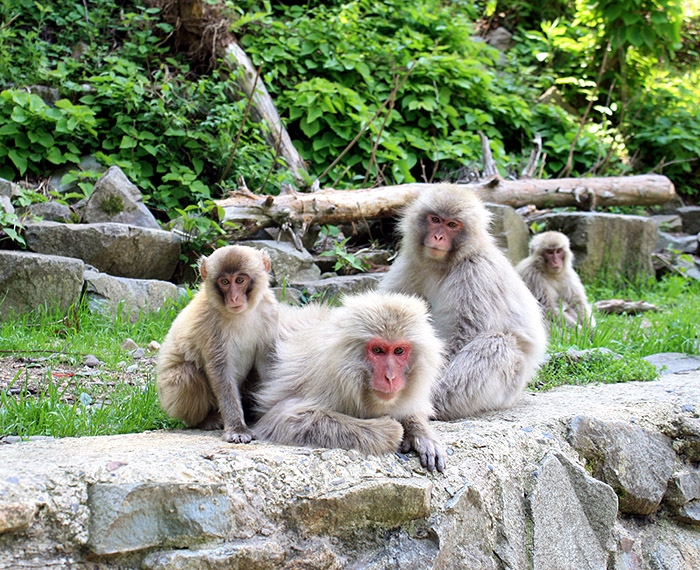
I traveled to Nagano once with a friend, we were going to see the snow monkeys.  Our plan was to spend the night at a ryokan in the small town of Yamanouchi and head to Nagano-shi the next day.  Imagine our surprise when we discovered that the hotel we had booked ahead of time was not only in a different town but in a different prefecture entirely!  In fact, it was on the other side of Shiga-kogen in the Japanese Alps.  Thankfully, all this happened during the summer so driving over the mountains wasn’t too big of a deal, and the whole experience granted us a unique look at a secluded part of Japan.  Ladies and gents, I give you KUSATSU!!

Kusatsu, located in Gunma Prefecture, is home to hot springs so well-reputed, shoguns had it shipped to them all the way in Edo.  It is said to help heal any number of maladies, which explains its popularity with troubled rulers.  The town is a tourist destination year-round.  In the summer, guests wander the streets in cotton yukata, visiting different spots offering a good bath and enjoying the general ambience of a town permanently in festival-mode.  The autumn is highlighted by walks through mountain trails highlighted by orange, yellow, and red leaves.  And the winter…well, you can imagine that a good soak in a hot spring is a thousand times better after an active day skiing or snowboarding.  Did I mention that all of this plays out in front of the Japanese Alps?  Because they’re pretty crucial to the whole “this town is secluded but active” idea.

My friend and I accessed this jewel by car, which is the easiest way to get there.  It also accessible by bus and there is no train station.  However, once you get to Kusatsu, there is no need for any mode of transportation except for your own two feet.  It is an immensely pedestrian-friendly place and is guaranteed to give you a thorough workout with all of its sweet sidestreets and inclined roads.  There are also taxis and buses to take you to parts a bit out of easy walking distance.

So, if you are in the mood for seeing a part of Japan renowned by the Japanese but unknown by most foreigners, I highly recommend giving Kusatsu a shot!

http://www.kusatsu-onsen.ne.jp/foreign/

Posted in culture, fun links, living abroad | Tagged , , , , | Leave a comment