Harvard Summer School in Kyoto at Doshisha University, June 3-July 28, 2012

Dear prospective participants,

I am writing to invite you to take part in Harvard Summer School’s 8-week program at Doshisha University in Kyoto, Japan.  Students enroll in 2 courses:  Professor Mikael Adolphson’s course, “Japan – Tradition and Transformation,”  explores the nation’s tumultuous move to modernity. Professor James Robson’s course, “Introduction to the Study of East Asian Religions,” covers the development and history of Buddhism, Daoism, Confucianism, Shinto, and various forms of popular religion in a cross-cultural setting.  Students reside with local families where they have the best chance to experience the Japanese way of life.  In addition, a myriad of field trips coincide seamlessly with coursework, linking the classroom with the surrounding city.  Noncredit Japanese language instruction with Doshisha staff is provided for students with no previous exposure to the Japanese language.

For detailed information on the program and application instructions please visit: http://www.summer.harvard.edu/abroad/japan/

** Applications are due February 3 **

At a glance —
* Students must be at least 18 years old, have completed at least 1 year of college or be a first-year student, and be in good academic standing to apply
* Application deadline: February 3, 2012
* Dates: June 3 – July 28, 2012
* Cost: $7,750, and includes the following:
– Tuition
– Room and some meals
– All scheduled excursions and extracurricular activities

In addition to the program fee, students are responsible for:
– A health insurance fee ($195; waived if students have US insurance that provides coverage outside the United States)
– Transportation to and from Kyoto
– The cost of passports and visas (if the latter is needed)
– Any immunizations

Posted in announcements, living abroad, study abroad, summer program | Tagged , , , , , , , | Leave a comment

Job Opening: Curriculum and Student Services Assistant

For more information and to apply, see original posting at umjobs.org.
Job Title: Student Admin Asst Inter
Work Location: Ann Arbor Campus, Ann Arbor, MI
Full-Time
Department: LSA Asian Languages & Cultures
Posting End Date: 1/18/2012

Job Summary

This position is 40 hours per week August through May and 32 hours per week during the months of June and July.

The Department of Asian Languages and Cultures is a center for the exploration of the humanities in Asia, where students are invited to cross the boundaries of nations (like China, India, Korea, and Indonesia) and of disciplines (like literature, film, language, religion, and history). The Department offers instruction in the languages and cultures of Asia (including Chinese, Filipino, Hindi, Indonesian, Japanese, Korean, Punjabi, Sanskrit, Thai, Tibetan, Urdu, and Vietnamese).

The Curriculum and Student Services Assistant is the front line contact for our students, faculty, and guests. An enthusiastic, welcoming, and cheerful personality is critical.

More than half of this position’s duties are focused on supporting the department’s course offerings and the graduate and undergraduate curricula. Curricular support duties include managing the time schedule and course guide submissions, course advertisement, course enrollment (including processing overrides and assisting with classroom changes), and managing the course evaluation process. This position coordinates ALC’s portion of the Summer Language Institute (course offerings, admissions, and enrollment), coordinates study abroad trips, coordinates the graduate admissions process (prepares applications for review, responds to student inquiries, and schedules committee meetings), and inputs financial aid awards for all ALC graduate students. The person in this position is an ex officio member of (and provides staff support for) the department’s Curriculum, Graduate Program, and Language Program Committees.

In addition to the responsibilities discussed above, this position coordinates a variety of general support duties including; answering the main office telephone line and handling walk-in traffic; coordinating the faculty computer upgrade process; and submitting faculty computer repair requests. This position will also be responsible for routine updates to the ALC website, various CTools sites, and the ALC Sharepoint site.

Required Qualifications

Bachelor’s degree or progressively responsible work experience. Excellent interpersonal skills and ability to communicate with people from diverse backgrounds; demonstrated ability to exercise initiative, independent judgment and diplomacy; accuracy and attention to detail while working in a fast-paced environment with frequent interruptions; ability to work well under pressure, prioritizing and handling various tasks simultaneously; extensive computer experience with email, spreadsheets, and word processing; ability to manage multiple projects simultaneously; well-organized and able to work both independently and as part of a team.
Desired Qualifications

Interest in Asian culture; experience working in an academic or student services department; knowledge of University policies, rules, and administrative procedures; experience with the student modules in Wolverine Access would be helpful.

How to Apply

A cover letter is required for consideration for this position and should be attached as the first page of your resume. The cover letter should address your specific interest in the position and outline skills and experience that directly relate to this position. Online application information here.

Posted in announcements, job openings, jobs | Tagged , , , , | Leave a comment

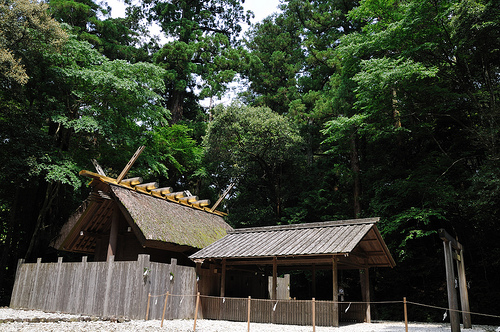
Resource: Encyclopedia of Shinto

Photo by ajari

Do you have an interest in Shinto? Looking for a handy online reference item to check information? Check out the Encyclopedia of Shinto.

About

The Encyclopedia of Shinto in an online translation of the Shintō jiten edited by the Institute for Japanese Culture and Classics and published by Kobundo in 1994. The site offers an added dimension from the book linking video, images, illustrations, photographs and sound files.

The original Shinto jiten is considered to be the most widely used reference resource on Shinto in Japan today. The Encyclopedia of Shinto is a project under Kokugakuin University’s 21st Century Centers of Excellence Program and hopes of the “establishment of of a national learning institute for the dissemination of research on Shinto and Japanese culture” with support of the Ministry of Education, Culture, Sports, Science, and Technology.

Content

The Encyclopedia of Shinto is divided into 10 sections: 1. General Introduction, 2. Kami (Deities), 3. Institution and Administrative Practices, 4. Jinja (Shrines), 5. Rites and Festivals, 6. Belief and Practice, 7. Concept and Doctrines, 8. Schools, Groups, and Personalities, 9. Texts and Sources, and 10. Special Topics.

Other links include a link to all movies within the encyclopedia, Kokugakuin Digital Museum, Images of Shinto: A Beginners Pictorial Guide, Chapter Introductions in Chinese, German, French, Korean, and Russian, Articles in Translation, and a Glossary in kana and alphabetically.

Search and Navigation

The Guide to Usage section provides a good outline as to the arrangement of the Encyclopedia. It explains that the arrangement of online content follows the general topical organization of the original Shintō jiten.

Photo by ajari

Selecting any particular subcategory from the Home page leads to a page with an alphabetical listing of the entries for that subcategory. Each entry heading is accompanied with (approximately) the first fifty words of that entry’s text. After selecting an entry, a user is able to click on a speaker icon located next to the heading to hear the pronunciation of the entry. Some entries are accompanied with icons that indicate the inclusion of photographs (Shinshi for example) or videos (Kenpeishi for example) relevant to the entry.

A full-text search function allows for searches in either headings only or in headings and text. Boolean operators AND and OR are provided. When performing some search strings, I learned that exact phrase searches are not supported. Additionally, quotation marks are treated as part of the search string; using them to delimit a phrase can result in errors. Searches are performed as straight text strings and will locate strings of letters within the word itself. (A search for kami will also bring up searches that include Takamimusihi, for example.) Spaces before and after the search word will have no effect in delineating the search results either. For a searcher looking for a specific topic, utilizing the search function may be a bit cumbersome.

Observations

The original Shintō jiten is one of the most widely used general works of reference regarding Shinto in Japan today. By recreating this resource in a digital format, Kokugakuin University hopes to further growth of international research on Shinto and Japanese culture by both scholars, students, and those interested in Japan.

I encourage you to check out the Encyclopedia of Shinto and discover Japan’s unique culture!

Posted in culture, graduate school, study tools, undergraduate, useful links | Tagged , , , , , | Leave a comment

Postdoctoral positions opening

The Center for the Study of Social Stratification and Inequality

Graduate School of Arts and Letters, Tohoku University, Sendai, Japan

http://www.sal.tohoku.ac.jp/gcoewiki/en/wiki.cgi

The Center for the Study of Social Stratification and Inequality (CSSI) invites applications from excellent scholars for a few postdoctoral positions. (The number of the positions depends on the center’s budget for the next academic year.) The center pursues development of new theories and methodologies on social stratification and inequality with emphasis on studies of rational choice theory, minorities (including gender stratification and inequality), East Asia, transnational migration (especially focusing on “newcomers” in Japan), and fairness. Faculty members of the center are sociologists, social psychologists, cultural anthropologists, religious anthropologists, a historian, and economists, and they study social stratification and inequality from various viewpoints. In addition, the CSSI conducts comparative studies of absolute poverty with the Stanford Center for the Study of Poverty and Inequality.

Applicants should hold doctoral degrees or show academic performance equivalent to holders of doctoral degrees. They should have a good command of English. Postdoctoral fellows of the Japan Society for the Promotion of Science are not eligible for this application.

The successful candidates will be expected to work under the supervision of the faculty members of the center from April 1, 2012 through March 31, 2013. (The starting date is negotiable, but the termination date is March 31, 2013.) The salary of a successful candidate will be 270,000 – 350,000 yen per month depending on his/her academic career. Travel and housing allowances will be paid to those who are eligible for them. Grants for excellent research projects proposed by the successful candidates will be provided. The center also academically and financially supports their presentations at international conferences.

Applicants should send a curriculum vitae, a list of their presentations and publications, a research plan at the CSSI (less than 1,500 words), each copy of three major publications at most, and a letter of reference to:

Dr. Yoshimichi Sato, Director
Center for the Study of Social Stratification and Inequality
Graduate School of Arts and Letters, Tohoku University
27-1, Kawauchi, Aoba-ku, Sendai 980-8576 JAPAN
Phone: +81-22-795-6036  Fax: +81-22-795-5972

The deadline for completed applications is January 31, 2012.

All inquiries concerning the application should be addressed to Yoshimichi Sato at ysato@sal.tohoku.ac.jp .

Posted in announcements, funding, graduate school | Tagged , , , | Leave a comment

Call for Candidates: Managing Editor of Social Science Japan Journal

The Institute of Social Science (ISS), University of Tokyo, is seeking suitably qualified candidates for the post of Managing Editor of Social Science Japan Journal. The appointment will carry the rank of Assistant Professor or Associate Professor at the ISS, depending on the qualifications and experience of the applicant. The appointment will commence on April 1, 2012 for a term of three years, with the possibility of an additional three-year extension.

Social Science Japan Journal (SSJJ) is a fully-refereed, semi-annual journal of social sciences relating to Japan, published jointly by the Institute of Social Science and Oxford University Press. It was launched in 1998 and is now in its 15th year of publication. For further information on SSJJ, please see our homepage at the OUP website:

http://www.ssjj.oupjournals.org/

For further information on the Institute of Social Science, University of Tokyo, please see the ISS homepage:

http://www.iss.u-tokyo.ac.jp/

Nature of the Job
The Managing Editor is responsible for the day-to-day running of SSJJ. The managing editor takes the initiative to insure that the journal runs smoothly and upholds rigorous standards of punctuality and quality. The managing editor is also a full member of the editorial board of SSJJ, which is headed by an editor-in-chief and several associate editors from the institute as well as several external board members from other universities in Japan. The editorial board members meet once a month most months at the institute to review manuscripts and discuss editorial matters. Please refer to the website of the journal (http://ssjj.oxfordjournals.org/) for a complete list of the current editorial board members.

The main duties of the managing editor are as follows:
1.      Edit all papers, survey articles, review essays and book reviews accepted for publication by SSJJ for content, accuracy and style.
2.      Proofread all items for accuracy prior to publication.
3.      Handle correspondence (mostly by e-mail) with authors, book reviewers and referees, and oversee the automated manuscript submission system.
4.      Serve as the main channel of communication between SSJJ and the offices of Oxford University Press in Tokyo and Oxford regarding editorial, production and marketing issues.
5.      Participate actively in the journal monthly administrative meetings and editorial board meetings. This includes contributing to the decision-making process over acceptance or rejection of papers. The successful candidate will also attend faculty meetings of the institute. All these meetings are conducted in Japanese.
6.    Help generate submissions of interesting papers by identifying and encouraging suitable authors.

Benefits of the Job
So long as the journal is kept running smoothly, the managing editor has considerable freedom as to how to use any remaining time. S/he will receive the same research benefits as other faculty at the Institute of Social Science, including travel allowance, photocopying allowance and personal computer. The ISS is a research body, and the managing editor is not required to teach. S/he may take on a limited amount of teaching outside the Institute if s/he wishes, subject to the approval of the ISS faculty meeting. To allow full-time concentration on the journal, the managing editor is excused attendance at ISS committee meetings apart from SSJJ and faculty meetings. Salary will depend on the age, years of professional experience, qualifications, and family circumstances of the successful candidate. S/he will also be eligible for the full range of housing, health insurance and pension benefits provided by the University of Tokyo.

Required and Advantageous Qualifications
The following qualifications are considered essential:

1.      A doctorate or equivalent in a branch of the social sciences, with research focusing primarily on Japan. Ph.D. candidates at the final stage of dissertation writing also are eligible to apply. The social sciences are defined broadly to include economics, business administration, law, political science, international relations, sociology, anthropology, social psychology, philosophy/thought and history (preferably from the Meiji period onward).
2.      Impeccable English, with sensitivity to writing style and a critical eye for the structure and meaning of academic writing. The ability to edit writing in the social sciences is essential.
3.      A willingness to engage intellectually with writing from the above disciplines as they relate to Japan.
4.      Japanese language ability sufficient to engage in meetings, read academic papers written in Japanese, translate Japanese materials into English, and correspond in written Japanese.
5.      Deeply ingrained determination to meet deadlines.

The following qualifications are not essential but would be desirable:
1.      Experience in editing English-language material.
2.      Experience of academic work in Japan.
3.      Substantial publications in the social sciences, broadly defined.
4.      A wide network of contacts in Japan and abroad to access when looking for reviewers, referees, etc.

Selection
The selection is based on the review of application materials, an interview, and written examination testing the candidate abilities in translation and editing.

Deadline and Address for Applications

Applications are welcome from people of any nationality, residing inside or outside Japan. Applications should be sent in hardcopy. Candidates should send a letter outlining their interest in the job, their professional history, and suitability for the job, together with a CV/resume, list of publications, and two letters of recommendation. The materials should be sent to the following postal address, marked SJJ Managing Editor・in red:

Professor Gregory Noble
Institute of Social Science
University of Tokyo
7-3-1 Hongo, Bunkyo-ku
Tokyo 113-0033
JAPAN
Email: ssjrev@iss.u-tokyo.ac.jp

Please ask the two references to send their letters of recommendation to either the postal address or the e-mail address shown above.

The deadline for receipt of applications is 27 January 2012.

Posted in announcements, job openings, jobs | Tagged , , , , , , , | Leave a comment

Job Opening: Ohio State University Libraries: Project Coordinator-Manga/Special Collections Cataloger

Term-appointment for two years. Primary responsibility is to coordinate the cataloging of the Japanese Manga collection, primarily housed in the Billy Ireland Cartoon Library and Museum, including books, serials, audiovisual materials and original art; secondary duties include providing original and copy cataloging of Japanese language and other materials in other Special Collections; works under the general supervision of Head of Special Collections Cataloging and in consultation with the Curator of Billy Ireland Cartoon Library and Museum and Japanese Studies Librarian.

Required Qualifications: Bachelor’s Degree or equivalent combination of education and experience; reading/writing native or master level Japanese language skills; experience Romanizing Japanese; independent and detailed work; effective oral/written/interpersonal communication skills; works in archival storage conditions. Successful completion of background check.

Desired Qualification: Experience cataloging using AACR2/MARC; experience Romanizing Japanese according to ALA-LC Romanization Tables; knowledge of the history/development of Manga; experience using OCLC Connexion Client; experience using III Millennium ILS; experience in project planning, workflow development/documentation; Master’s Degree or equivalent education/experience; MLS or related field or Master’s Degree in Japanese, East Asian Studies, or related field.

Target salary: $35,609.60 – $39,000.00 Annually

For full position description and to apply, please see https://www.jobsatosu.com/postings/33887

Title: Project Coordinator
Department: Collection & Technical Srvcs
Posting Number: 365297

Posted in announcements, job openings, jobs | Tagged , , , , , | Leave a comment

Blog Review: Gaikokujin to Noh, My Journey into Noh Theatre

Main performer (shite) of the play Atsumori.

Thanks to Professor Yip’s course on Japanese Traditional Theatre at Gettysburg College, I have become a casual appreciator of noh theatre. Today’s featured research blog deepens my interest in dedicated international people engaged in the practice and study of noh.

Dr. Diego Pellecchia, a noh practitioner, researcher, and author of the blog 外国人と能, presents his journey into noh theatre with research vignettes, performance/event postings, publication announcements, and links to online content.

Through reading this blog, I learned about The International Noh Institute (INI) and the accomplished foreign instructors trained by Udaka Michishige, a Mastor-Actor of the Kongo and master mask carver, who teaches and performs extensively in Japan and internationally. Pellecchia has studied with the Kongo school and the International Noh Institute in Italy and Japan.

Image from the International Noh Institute

The blog has been updated periodically since 2009. I suggest looking back in the archives for thought-provoking articles such as Exercises of Memory (Sept. 2010) in which the author comments on the ways of practicing the abstract, layered lyrics of utai through a progression from focusing on sound first and developing understanding later. I also enjoyed reading a critique of a noh play about Hiroshima and Nagasaki in Hiroshima’s Prayer for Peace (July 2010) and Diego’s thoughts on Performing shimai abroad(Oct. 2009).

Anyone interested in researching noh, finding information on performances and workshops in Japan or abroad, or just learning more about the international theatre community in connection to this traditional Japanese art ought to look into Pellecchia’s blog for a great collection of information on the subject.

Posted in blogs, culture, useful links | Tagged , , , , , , , , , , | Leave a comment

Book Announcement: Mechademia 6

As passive consumers of manga and anime become active users of cultural commodities, this volume explores the possibilities of, and challenges for, engagement.

MECHADEMIA 6: User Enhanced
Edited by Frenchy Lunning
University of Minnesota Press | 336 pages | 2011
ISBN 978-0-8166-7734-4 | paperback |
Mechademia Series, volume 6

Manga and anime fans can no longer be considered passive consumers of popular culture. They are users, in whose hands cultural commodities can provide instant gratification but also need to be understood as creative spaces that can be inhabited, modified, and enhanced. User Enhanced, the sixth volume of the Mechademia series, examines the implications of this transformation from consumer to creator.

ABOUT THE EDITOR:
Frenchy Lunning is professor of liberal arts at the Minneapolis College of Art and Design.

For more information, including the table of contents, visit the book’s webpage:
http://www.upress.umn.edu/book-division/books/mechademia-6

To learn more about the Mechademia Series, follow this link:
http://www.upress.umn.edu/book-division/series/mechademia

Posted in announcements, culture | Tagged , , , , , , , | Leave a comment

Call for Manuscripts: Journal of Northeast Asian History

http://trywait.net/wp/archives/2080

The Journal of Northeast Asian History invites the submission of manuscripts on Northeast Asian history and territorial issues. Topics may include, but are not limited to, historical interaction in East Asia, imperialism and colonialism in Asia, historiographical issues, maritime and boundary issues, naming of geographical areas, monuments and memory, and history textbooks. The geographical scope includes Korea, China, Japan, Mongolia, Russia’s maritime region, Central Asia, and other nearby areas. Papers focusing on current issues of boundary delineation and territorial sovereignty also are welcomed.

The journal is published semiannually, in June and December. There are no deadlines for the submission of manuscripts. However, the manuscript must reach the Editorial Office by March 15 to be considered for publication in the June issue and by September 15 for the December issue. All submissions will be refereed by specialists in the relevant field. Authors will be notified of the decision of the Editorial Board as promptly as possible as to whether their papers have been accepted for publication. Manuscripts may be edited according to the guidelines of the Editorial Board.

Inquiries and submissions may be sent to: jnah@nahf.or.kr.

Posted in announcements | Tagged , , , , , , , , | Leave a comment

FLF: Celebrity Ads

What do James Brown, Sean Connery, Andy Warhol, and Meg Ryan have in common? They were paid extremely high salaries to endorse Asian products. Business Insider reports that

While many celebrities shy away from product endorsements in their own  country, they have traditionally flocked  to Asian countries, particularly Japan, to shoot extremely high paid  commercials. And the results are hilarious.

In an attempt to keep these often kooky endorsements away from American  audiences, celebrities often enforce a “secrecy clause”, which bars  advertisers from disclosing sponsorship deals in the U.S. Secrecy, however,  has become considerably more difficult in the era of the viral video.

When I lived in Japan, I remember a young Brad Pitt in a commercial where all he said was “minami” 3-4 times (and probably paid millions to do so). While I can’t find that particular ad, I did manage to find another Brad Pitt ad for Roots Coffee:

Celebrities continue to endorse ads in Japan and other Asian countries. Thanks to viral video services like YouTube, you get the opportunity to check them out. Quite recently, one of my favorite ads featured Hugh Jackman strutting his stuff for Lipton Iced Tea in a Tokyo hotel. (Although, I’m uncertain if this was actually broadcast in Japan.)

Anyway, check out Business Insider’s post on celebrity ads. Quite honestly, my favorite is the Sean Connery ad where he’s sitting next to a puppet bunny rabbit, in a convertible, singing about yogurt. There’s really nothing more glorious.

If you’ve seen a more awesome celebrity commercial, do share! I’m sure readers would enjoy them as much as I would.

Posted in culture, fun links | Tagged , , , , , , , | Leave a comment