Workshop: 2016 Early Modern Japan Summer Workshop: Reading Kuzushiji

call for papers [150-2]The Japan Committee of the University of Chicago is pleased to announce the 2016 Early Modern Japan Summer Workshop: Reading Kuzushiji.  The workshop will meet from June 13-17.  The workshop  will be led by Professor Aratake Ken’ichiro of Tohoku University’s Northeast Asia Center.  We invite applicants who are interested in reading print and manuscript materials from the Tokugawa and early Meiji periods.  The workshop is open to faculty, graduate students, librarians, and curators.  Please note that the workshop will be conducted in Japanese and participants should have a working knowledge of classical grammar and some familiarity with hentaigana.  There is a $100 program fee that covers copy costs and lunch each day. Applications can be submitted online at https://japanatchicago.wufoo.com/forms/reading-kuzushiji-summer-2016/

Modest funds are available to assist faculty and graduate students coming from institutions unable to offer support.

For more information, please consult the workshop website (https://lucian.uchicago.edu/blogs/kuzushiji/).  Additional inquiries can be directed to the workshop organizer, Professor Susan Burns (slburns@uchicago.edu).  The application deadline is May 1, 2016.

Posted in announcements, graduate school, study tools, summer program | Tagged , , , , , | Leave a comment

Job Opening: Resident Director, Tokyo, Council on International Educational Exchange

job opening - 5Institution:       Council on International Educational Exchange, Study Abroad
Location:          Japan
Position:          Resident Director, Tokyo

CIEE:

A nonprofit, non-governmental organization, CIEE is the world leader in international education and exchange.  For 65 years CIEE has helped thousands of people gain the knowledge and skills necessary to live and work in a globally interdependent and culturally diverse world by offering the most comprehensive, relevant, and valuable exchange programs available.  Serving over 300 U.S. College and University consortium members, CIEE operates sixty study centers in over forty countries that support study abroad programs for over 7,000 students annually.  In addition, as the largest sponsor for U.S. Department of State J-1 Visa programs, CIEE helps nearly 25,000 international students participate in U.S. based exchange programs annually.  CIEE programs and services span study abroad, teach abroad, international faculty development seminars, and inbound exchange study, work, and internship programs for today’s high school and university students, professionals, and educators.

We strive to lead a robust community of international program providers and sponsors through innovation, exemplary service and exceptional efficiency.  Our success depends on having the very best professionals.  CIEE is committed to recruiting and retaining the best people in the industry, particularly those who are passionate about international education, are self-starters with high levels of energy and autonomy, and are dedicated to exceed expectations in every challenge.

Summary:

The CIEE Tokyo Resident Director is responsible for the quality and success of the programs offered at the CIEE Study Center in Tokyo, Japan.  The position is responsible for all aspects of in-country operations as well as for long-range planning, ongoing program evaluation, development, and marketing.  The Resident Director is responsible for ensuring the highest levels of program quality and customer satisfaction.  This individual must be willing to live full-time in Tokyo 12 months per year in order to oversee CIEE programs.

Reqirements:

  • M.A. required; Ph.D. preferred—candidate must have academic background that includes relevant experience in Japanese/Asian studies
  • Native or near-native fluency in Japanese required
  • 5-7 years’ professional work experience, preferably in an international education-related position required
  • In-depth knowledge of Japan and its culture, history, business practices, and academic environment required
  • Strong leadership and staff management skills required, as well as a demonstrated commitment to customer service
  • Familiarity with U.S. higher education and direct experience working with U.S. college and university students required
  • Prior experience creating/managing budgets and reporting on financial expenditures required
  • Strong interpersonal skills—must be able to engender the trust and confidence of students and parents, and be able to deal effectively with a wide variety of often sensitive issues, ensuring that all involved parties are satisfied with the resolution
  • Willingness and ability to live full-time (12 months per year) in Tokyo; preference will be given to candidates who are currently legal residents in Japan

For full job description and to apply online, go to www.ciee.org/how and Browse Open Jobs

Posted in announcements, job openings, jobs | Tagged , , , , , | Leave a comment

Funding: Isaac Alfred Ailion Foundation Fellowship

money [150-2]We are happy to announce that the Isaac Alfred Ailion Foundation now accepts applications for fellowships at Leiden University’s Asian Library. All information can be found on the website at  http://library.leiden.edu/special-collections/scaliger-institute/research/isaac-alfred-ailion-fellowship.html

The closing date for applying for the Isaac Alfred Ailion Foundation Fellowship is April 1st 2016

Overview:

The Isaac Alfred Ailion fellowship focuses on the study of Japanese culture and language. The program will support scholars to work with the extensive Special Collections of Leiden University in the field Japanese culture and language for a period of two to four months. They will be invited to share their research through public lectures and publications

Fellowship applications will be reviewed by a special board consisting of: Prof. dr. Ivo Smits (Professor of Arts and cultures of Japan at Leiden University and member of the board of the Alfred Isaac Ailion Foundation), Nadia M. Kreeft MA (Subject Librarian Japanese and Korean at Leiden University Libraries) and Kasper van Ommen MA (Coordinator Scaliger Institute).

The Isaac Alfred Ailion fellow is expected to contribute to the activities of the Scaliger Institute, and to give a public lecture in the series of Asian Library at Leiden University Libraries.

For more information on the Scaliger Institute: http://www.library.leiden.edu/special-collections/scaliger-institute/


Posted in announcements, funding, graduate school | Tagged , , , , , , | Leave a comment

Job Opening: Visiting Assistant Professor, East Asian History, DePauw University

job opening - 5The Department of History invites applications for a one-year term appointment as Assistant Professor of History (ABD’s will enter at the Instructor level) starting in August 2016. Candidates must have a strong commitment to teaching undergraduates in a liberal arts environment and will teach three courses per semester.  Candidates for the position should be prepared to teach the pre-modern and modern East Asian survey courses, as well as topical classes at the 100-level and 300-level based on the candidate’s specialties and expertise. Ability to teach national surveys at the 200-level is also desirable. Training in Chinese history is essential and the ability to teach on Japan and/or Korea is also required.

DePauw is a nationally-recognized, leading liberal arts university dedicated to educating 2,300 highly talented, motivated, and diverse students from across the country and around the globe.  For more than 175 years, DePauw has created an atmosphere of intellectual challenge and social engagement that prepares students for lifelong success. Connected to the liberal arts college is one of the nation’s first Schools of Music. DePauw is located in Greencastle, Indiana, a 45-minute drive west of Indianapolis.

Applications should be submitted through Interfolio [http://apply.interfolio.com/34222].  Complete applications must include a cover letter that addresses teaching philosophy and research interests, CV, evidence of teaching effectiveness (such as sample syllabi, sample course descriptions, or course evaluations), three letters of reference, and a copy of graduate transcript(s).  Candidates should provide evidence, in application materials, of a commitment to fostering and engaging with a diversity of ideas and experiences, which create an inclusive environment in the classroom and at the University. 

DePauw University is an Equal Employment Opportunity Employer. Women, members of underrepresented groups, and persons with disabilities are encouraged to apply.

Questions should be directed to David Gellman (dgellman@depauw.edu), Chair, Department of History.

Posted in announcements, job openings, jobs | Tagged , , , , , | Leave a comment

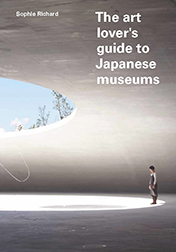
Book Announcement: The Art Lover’s Guide to Japanese Museums

RICARTVia University of Washington Press.

The Art Lover’s Guide to Japanese Museums
SOPHIE RICHARD
$30.00S PAPERBACK (9780955997716)
hardcover not available

PUBLISHED: December 2015
SUBJECT LISTING: Travel; Art History / Asian Art
BIBLIOGRAPHIC INFORMATION: 176 pp., 6 x 8 in.
TERRITORIAL RIGHTS: North America Only
DISTRIBUTED FOR: Paul Holberton publishing
CONTENTS

The museums of Japan feature rich collections and excellent exhibitions in world-class galleries. Yet they can be difficult to navigate without first-hand knowledge. The Art Lover’s Guide to Japanese Museums acts as a personal guide, introducing readers to some of the most distinctive and inspiring museums in the country. In-depth information is given about each listed venue, including the stories behind their creation. From magnificent traditional arts to fascinating artist’s houses and from sleek contemporary museums to idiosyncratic galleries, museums are the perfect gateway to discover Japan’s culture both past and present.

CONTENTS
Introduction
Museums in Japan
Looking at Japanese Art
Tips and Advice
Timeline

Tokyo
Bunka Gakuen Costume Museum
Edo-Toyko Museum
The Gallery of Horyu-ji Treasures
Hara Museum and Hara Museum ARC
Idemitsu Museum of Art
Museums and the Imperial Family
The Museum of the Imperial Collections
Meiji Memorial Picture Gallery
Kyu Asakura House
Mingei and Its Museums
The Japan Folk Crafts Museum
ICU Hachiro Yuasa Memorial Museum
Nezu Museum
Ota Memorial Museum of Art
Shiodome Museum
Suntory Museum of Art
Musee Tomo
Watari Museum of Contemporary Art

Around Toyko
Clematis no Oka
Edo-Tokyo Open-Air Architectual Museum
Museums of the Hakone Region
The Hakone Open-Air Museum
Lalique Museum
Pola Museum of Art
The Museum of Modern Art, Kamakura and Hayama
Kawamura Memorial DIC Museum of Art
MOA Museum of Art
Sankeien Garden

Kyoto Area
Kawai Kanjiro Memorial Museum
Kiyomizu Sannenzaka Museum
Kyukoku Museum
Kirei Shigemori Garden Museum
The Tea Ceremony and Its Museums
Raku Museum
Onishi Seiwemon Museum
Sagawa Art Museum
Miho Museum

West
Benesse Art Site Naoshima
Musuems on the Islands of Naoshima, Teshima and Inujima
Isamu Noguchi Garden Museum
Nagi Museum of Contemporary Art
Ohara Museum of Art
Shoji Ueda Museum of Photography

East
21st Century Museum of Contemporary Art, Kanazawa
Aomori Museum of Art
Hiroshige Museum of Art
Nakamura Keith Haring Collection
Tanaka Honke Museum
Takugawa Art Museum
Toyota Municipal Museum of Art
Towada Art Centre

Index of Museums

Posted in announcements, culture | Tagged , , , , | Leave a comment

Job Opening: Visiting Assistant Professor or Instructor in Japanese History, Connecticut College

job opening - 5One-year, 2/3 appointment, visiting, assistant professor or instructor in Japanese history

Japanese History, Connecticut College

The Department of History invites applicants for a one-year visiting position, beginning in July 1, 2016. This is a benefits eligible, two-thirds appointment, carrying a 2-2 load. In addition to two required introductory Japanese history classes, intermediate- or upper-level classes in the candidate’s area of expertise would be welcomed. The position is open to specialists in all fields of Japanese History. PhD preferred, but ABD will be considered.

Connecticut College is a private, highly selective institution with a demonstrated commitment to outstanding faculty teaching and research. Recognizing that intellectual vitality and diversity are inseparable, the College has embarked on a significantly successful initiative to diversify its faculty, student body and curriculum. The College seeks creative scholars excited about working in a liberal arts setting, with its strong focus on engaged teaching, participation in shared governance, and active involvement in an institution-wide advancement of diversity. AA/EEO

We value the contributions visitors bring to our community and encourage their active engagement with their departments and all aspects of campus life during the course of their appointment. Visiting faculty are initially participating members of the faculty and voting members in their second and subsequent years; their presence is welcome at all faculty meetings.

To apply, please submit a cover letter, curriculum vitae, two letters of recommendation, and evidence of teaching effectiveness to Interfolio at apply.interfolio.com/34192. Review of applications will begin immediately and continue until the position is filled.

Questions may addressed to Lisa Wilson, Chair, History Department, Connecticut College, 270 Mohegan Avenue, New London, CT 06320; lhwil@conncoll.edu

Posted in announcements, job openings, jobs | Tagged , , , , , | Leave a comment

Call for Papers: Joint East Asian Studies Conference – SOAS

call for papers [150-2]Call for Papers – Joint East Asian Studies Conference – SOAS, University of London, 7-9 September 2016

Joint East Asian Studies Conference (JEAS) 2016

7th to 9th September,  SOAS, University of London

The JEAS Conference is a triennial meeting held by the three academic associations representing East Asian Studies in the UK:

This conference provides a major venue for the dissemination of research on East Asian Studies in various disciplines for academics from both the UK and abroad.

Important dates

  • Call for papers: opened on 5 February 2016
  • Call for papers deadline:Friday, 15 April 2016
  • Notification of acceptance:Friday, 6 May 2016

Registration

  • Early bird registration:Friday, 6 May to Friday 10 June 2016
  • Standard registration:Saturday 11 June 2016 to Friday 2 September 2016

Call for papers

Submission Guidelines

We welcome submissions from established academics and doctoral candidates in any field of East Asian studies working within any academic institution internationally. Priority will be given to panel submissions, but individual paper submissions are also welcome and if accepted will be organised into thematic panels.

Panel sessions will comprise no more than four presenters in any one panel and should indicate a panel chair/ discussant.

Panel submissions should organise around a key theme or field and should take the form of a panel outline of no more than 200 words, which will be published on the conference website and in the conference programme. Panel chairs are responsible for collecting paper abstracts from panellists. Paper abstracts should be no more than 350 words each and must include a title, author affiliation and contact details.

The conference is centred on five key themes and panels in these themes are particularly encouraged:

  1. Aging and Demography
  2. Memory & History
  3. Identity
  4. Trans-Cultural Flows
  5. Geo-Politics

Accepted paper presenters will be allowed 15 minutes for presentation and an additional 5 minutes for question and answer session with the audience.

How to Submit

Further details on the conference and the link for submission of abstracts (via easychair) is available at:

https://www.soas.ac.uk/jeas-2016/

Posted in announcements, conferences, graduate school | Tagged , , , , , | Leave a comment

Job Opening: Visiting Assistant Professor, East Asian History

job opening - 5Kalamazoo College, History Department

Visiting Assistant Professor, East Asian History

The Department of History at Kalamazoo College invites applications for a full-time Visiting Assistant Professor position for one year—September 2016 through June 2017.  The successful applicant will contribute to teaching in East Asian History, including the Introduction to East Asian Civilizations course and 5 other East Asian History courses (two courses during each ten-week term) chosen or designed in consultation with the department.  Ph.D. (or evidence of imminent completion) required.  Prior teaching experience is desirable.  Candidates must demonstrate an interest in undergraduate teaching.  The Departmental website can be viewed at: http://www.kzoo.edu/history. 
Kalamazoo College is a highly selective, nationally known liberal arts college of approximately 1450 motivated students, offering an integrated undergraduate experience that weaves a traditional liberal arts curriculum into domestic and international educational experiences (www.kzoo.edu). The campus is located midway between Chicago and Detroit, and the Kalamazoo area encompasses a community of 225,000, which supports several college and university campuses along with numerous civic arts and cultural associations.  Thirty-five miles from Lake Michigan, the area offers many opportunities for outdoor activities.

Review of applications will begin immediately and will continue until the position is filled.  A cover letter, curriculum vitae, statement of teaching philosophy, undergraduate and graduate transcripts (unofficial is acceptable), and three letters of recommendation addressed to Dennis Frost, Chair, East Asian Search, Kalamazoo College, 1200 Academy Street, Kalamazoo, MI 49006-3295, should be submitted electronically in pdf format to the administrative assistant, Amy Leu (Amy.Leu@kzoo.edu).

Kalamazoo College encourages candidates who will contribute to the cultural diversity of the College to apply and to identify themselves if they wish.  Equal Opportunity Employer.

Contact:

A cover letter, curriculum vitae, statement of teaching philosophy, undergraduate and graduate transcripts (unofficial is acceptable), and three letters of recommendation addressed to Dennis Frost, Chair, East Asian Search, Kalamazoo College, 1200 Academy Street, Kalamazoo, MI 49006-3295, should be submitted electronically in pdf format to the administrative assistant, Amy Leu (Amy.Leu@kzoo.edu).

Website:

https://reason.kzoo.edu/provost/facultyjobs/EastAsianHistory/


Posted in announcements, job openings, jobs | Tagged , , , , , | Leave a comment

Should I go on to a Ph.D. after my M.A.? Four insights about the differences between being an M.A. and a Ph.D. Student

We’ve previously posted articles on if graduate school is right for you (or if it isn’t!), and today we will expand on these topics with a guest post by Tori R. Montrose, where she discusses differences between pursuing an M.A. program versus a Ph.D. program. Tori is a Ph.D. Candidate in Japanese Religion at the University of Southern California. You can read more from her at www.dailyacademicblog.com.

===

For those of you currently in an M.A. program and wondering if a Ph.D. program is just like a longer version of an M.A., or if it really is a different beast, I’m here to offer some insights from my own experience making the transition. Of course, program styles vary by school and discipline, so my experiences are by no means universal. Still I think you’ll find a lot of this applies, at least within the humanities.

  1. Time

Most M.A. degree programs are 1-2 years, the average time to degree for a humanities Ph.D. is 5-7 years.  I am currently in the fourth year of my Ph.D. program (fifth if you include the year I paused coursework/research to do a language intensive). Compared to the Ph.D., my M.A. program went by in a blink. Four semesters, fifteen classes, one thesis and *poof* I had an M.A. degree. When I crossed the commencement stage, the best way to summarize my feelings at the time was, “Wait…what?” I have a few more years to go before Ph.D. commencement so I can’t say for sure how I’ll feel then, but what I’ve gathered from others is that after 5,6,7, even 9 years working on a Ph.D., the feeling is more like “Finally!” and “Hallelujah!”

image © Jorge Cham

image © Jorge Cham @ PhD comics

It’s hard to overstate just how significant this time commitment is, and it will have important consequences on other aspects that I’ll discuss in the other sections below. And it’s not just the amount of time, it’s also how the time is spent. In my M.A. program, I was given a fair amount of leeway, at least in the first year, to explore different subjects and courses that fell outside my research area. My research is on modern Buddhism in Japan, but I took a course on pre-modern Buddhism and food, another on foundational social theory, and (because my school was part of a theological consortium and why not?) even Youth Spirituality. Where else can you be taught by a funky nun who enjoyed analyzing religion in pop culture? Sigh. Those where good times. In a Ph.D. program, you will likely not get that kind of flexibility to explore fields and coursework outside of your discipline, or at least not that outside your discipline.  There are many reasons for this: your department is paying for your tuition and therefore gets final word on what classes you can take, or your advisor may discourage it. But most importantly, it’s because you probably won’t have the time. Yes a Ph.D. program is two to three times longer than an M.A. program, but in that time you are expected to acquire far more than two to three times the focus and expertise of an M.A. program.  In addition to that, you’ll be teaching, grading, guest lecturing, attending and organizing conferences, researching, writing, publishing, and applying for jobs. Even if you also did all of these things as an M.A. student, you’ll without a doubt be doing even more of these things as a Ph.D. student. So time, both the amount of it and the way it is spent, is a major difference between an M.A. and a Ph.D. program.

  1. Money

This will be different for everyone but I’ll speak from my own experience. I took out student loans for my M.A. degree but am now in a fully-funded Ph.D. program. Most M.A. programs are not funded, but I believed the investment would be worth it if I could get into a funded Ph.D. program. As luck would have it, the investment paid off and I now earn a salary (be it ever so modest) doing things I love: reading, writing, and teaching. It’s important to me that I explain that I am paid to do this because, as I recently discovered this summer over a somewhat awkward meal with extended family, many (or most?) Americans don’t know that many Ph.D. programs are fully-funded. So what I didn’t realize was that every time I was asked by these relatives “How long until you graduate?” it was a veiled way of asking “How long until you can begin to crawl out of this no-doubt massive hole of debt you are digging for yourself?” When I told them that I was paid to do this, the relief on their faces was clear. If you pursue a Ph.D., there will be well-meaning people you know and love who will also secretly (or not so secretly) worry about your financial situation. And they are not wrong to do so. For one thing (and this relates back to our first topic of time), pay raises and cost-of-living increases for Ph.D. students are rare, and it can be difficult to pay off existing student loans, save for retirement, or do other things like buy a house while you’re in graduate school. While I’ve been in my Ph.D. program, several of my non-academic friends have bought houses, started successful businesses, a few have even become actual millionaires, all the while my pay and quality of life have stayed the same. When I was doing my M.A. program in my mid-twenties, my peer’s financial accomplishments had not yet reached that level of fruition, so I didn’t experience feelings of “falling behind” quite like I do now.  Getting a Ph.D. requires a lot of patience, and is only suitable for people who are comfortable with (very) delayed gratification.  It’s a platitude at this point, but no one should ever pursue a humanities Ph.D. for the money.  It takes too much time and there are no guarantees at the end of it. But you can always take comfort in all that fancy knowledge in your brain. Knowledge that someone else paid you to acquire. And that’s pretty special if you ask me.

  1. Expertise
Photo by Diliff

Photo by Diliff

My advisor once described academia to me as a place where everyone is busy building their own molehills. Every once in awhile, you look up to see what other molehills are emerging around your own and you attempt to make connections between them. These molehills are your research and your expertise, and it takes time (there’s that word again) to build them. One of the major differences I’ve found between being an M.A. student and a Ph.D. student is that as a Ph.D. student you are expected to write and speak with more authority about your molehill.  This has been the largest source of struggle for me during my time as a Ph.D. student, and I know I am not alone in this. Some people call it imposter syndrome, but I think it’s about more than fearing you will be discovered knowing less than people think you know. Sometimes you can feel confident in what you know, but not yet have the right words to articulate what you know. Other times, you are in transition from one molehill to another (like when you switch dissertation topics two years into your program, as I did), and you’re overwhelmed with the idea of starting a whole new molehill. For others, the struggle is about how to make your molehill connect with other molehills, and how to make other scholars understand what makes your molehill both relevant and novel. A major part of my journey from M.A. student to Ph.D. student has been a chipping away of all the things I thought I knew, and a gradual building of my very own molehill; my very own corner of academia to call my own, so that when the fate of the world rests on expertise about the emergence of Buddhist universities in Japan, I’ll be there, standing on my molehill, hands on my hips and cape flapping in the wind, ready to drop some serious knowledge. (I may have indulged myself in these visions of grandeur as an M.A. student but I was a lot less clear about how truly far away I was from realizing it.)

  1. Relationships

The final difference between an M.A. and Ph.D. program is found in the type, nature, and fate of relationships. The most impactful relationship during your time in any graduate program, M.A. or Ph.D. is with your advisor(s) and no two advisor-advisee relationships are the same. Advisors can make your time in grad school rewarding, challenging, and stimulating; but advisors are also capable of making your grad school experience unnecessarily difficult, painful, even humiliating. I’ve been lucky to have wonderfully supportive advisors through both of my degree programs, but I know that is not the case for everyone. In my M.A. program, my advisor did everything she could to prepare me for my next goal: getting into a Ph.D. program. And while that was no easy feat, it pales in comparison to my post-Ph.D. goal: getting a tenure-track position at a university. For this reason, the job of a Ph.D. advisor is much harder and it is why your relationship with them is so very important. Your advisor has to believe you are worth the immense amount of time and energy they will put into your development over the 5+ years you are with them. And as an advisee, it’s equally important to consider this when entering a Ph.D. program. Choosing a school and/or advisor on reputation alone can lead to many frustrating outcomes, so it is essential to consider what your relationship with your advisor will look like by spending time getting to know them and speaking with their other advisees as much as possible.

Next to your relationship with advisor(s), your relationship with your fellow graduate students, whether or not they are in your same department or even school, also gains greater significance when shifting from the M.A. to the Ph.D..  As an M.A. student, my school friends were largely from my cohort– people that entered the program the same year as me. From post-9/11 public religion discourse, to 19th century religious architecture in America, to philosophical and systematic theology, our research interests and fields could not have been more different, though it made for very lively happy hour discussions. Now, as a Ph.D. student I’ve had more years in this game, and thus more opportunities to meet people in my own field. They aren’t always at your school, but attend enough conferences and workshops and you’re likely to meet “your people.” By “your people,” I am referring to any one of many different types of friends you might make during your time in a Ph.D. program.  One type are those rare birds whose eyes light up when you’re talking about your research because your areas of interest overlap and you can talk for hours about the same authors, theory, or period of history while the outside world just kind of smiles and nods.  Another type may not share your research interests
but shares your particular views on academia, the wild world that it is, and they become your go-to friend for venting bureaucratic frustration or celebrating every milestone in this long journey you’re both on. It may be that “your people” are embodied in just one personperson (like Christina Yang was for Meredith Grey (I know, I’m bringing it way back with the Grey’s Anatomy reference)). And “your people” could all be in your department, or scattered across the country, or globe. But these relationships are important because these are the people who will be your co-editors, fellow panelists, and conference hotel roommates for a long time to come. They’ll come to your talk even if it’s scheduled at a terrible time in the conference program. They’ll commiserate with you when your proposal gets rejected or you get harsh feedback. And they’ll invite you to give talks at their school when you both get jobs.  Only 2% of the population in the U.S. has a Ph.D., so for better or for worse, relationships with your colleagues and cohort are important because they represent a small portion of the population who actually knows what you are going through and are experiencing it with you. So whereas cultivating good relationships with your colleagues is an added bonus in an M.A. program, I see it as an essential part of a Ph.D. program.

The last category of relationship in many ways supersedes the other two: your personal relationships.  Given the amount of time and energy that goes into a Ph.D. program, your personal relationships will be affected both positively and negatively. A flexible schedule may allow you to follow a partner to a new city while you research and write; but research needs may also dictate that you leave a partner for long periods of time to conduct research in a foreign country. Some people meet the loves of their lives in a graduate seminar, others may find it hard to meet someone precisely because of their academic lifestyle. Then there are all the issues that women face disproportionately more than men like whether to hide their marital status or delay having a family.  Your graduate student salary can also affect friendships, as income inequality among millennials is higher than any other generation in the U.S.. And then there are the family members who may have tolerated your M.A. degree but, try as they might, cannot understand why you would want to get a Ph.D. (hi Grandpa! love you! (he isn’t online)). There are people on the other end of the spectrum who are getting a Ph.D. because it was expected of them by their families. Of course, while all of these personal relationships exist regardless of degree program, the large chunk of your life and duration of time that the Ph.D. program demands of you will have unique effects on your personal relationships.  But with any luck and some hard work, you’ll be surrounded by loved ones at commencement who supported you through it all.

Final thoughts

When I was an M.A. student, one of the main reasons I wanted to get a Ph.D. was because I was having so much fun as an M.A. and I knew I wasn’t done with academia. Like an enthusiastic supporter of a political incumbent, I wanted “four more years!” I naïvely assumed that the Ph.D. would just be an extension of the M.A.. I have since learned that they differ in several crucial ways.  Are you still writing, researching, learning, and teaching? Yes. But the goals, expectations, and scale of all of those things change in ways you may not expect.  For those of you thinking about continuing on to a Ph.D. from an M.A., I hope this article shed new light on some of the ways in which they differ so that you are better equipped to make the right decision for you.

 

Posted in announcements, applications, graduate school, main posts, undergraduate | Tagged , , , , , , | Leave a comment

Call for Papers: AJLS annual conference

call for papers [150-2]AJLS 2016 at Penn State

word/image/japan

The AJLS (Association of Japanese Literary Studies) conference theme for the 2016 conference to be held at the Pennsylvania State University October 27-30, 2016 is “word/image/japan.”

This conference encourages papers linking Visual and Cultural Studies, broadly conceived, with Japanese literary studies. From the early adoption of the Sinographic script to the cultivation of e-maki, or from classical calligraphic traditions that meld textual form with visual aesthetics to the global popularity of manga and animation today, the long history of association between word and image in Japan renders Japanese cultural material a key case for bringing to light the intertwined roles of linguistic and visual aesthetics in signification.  Signification is not simply about the meaning making that occurs between producer and receiver, but also about the complex ways in which visual and textual materials transform cultural interactions, sculpt world views, and provide material locales for the formation of individual identity and of social groups.

The changing scope of “Japan” as concept, critical method, generative matrix, identitarian site, and material locale is today an object of vital scholarly concern. For this reason, as something of a departure from AJLS’s historical focus on Japanese literature from Japan, we would also like to invite submissions from colleagues working on word/image relations in Japanese immigrant and diasporic cultures, in addition to Japan-specific scholarship.

The material forms of play between word and image abound. A short list of forms might include film, scrolls, manga, anime, photography, video games, oil painting, prints (hanga/shunga), emaki, akahon, nishiki-e, interlingual translation, and so on.  Word and image interplay can also be a core component of less material forms, such as music, drama, advertising, protest, and the performances of everyday life (as in performances of race, ethnicty, gender, class, or religion.)

The organizers solicit individual paper proposals as well as panel proposals designed to stimulate productive discussions across boundaries of medium, historical period, and institution. And we encourage innovative modes of scholarly presentation. (Though the traditional 3 speakers at 20 minutes each followed by discussion format is just fine, if you have an idea for a different format you would like to try, please contact the members of the organizing committee.)

The deadline for submitting paper and panel proposal abstracts is May 15, 2016. Individual paper abstracts should be no more than 300 words in length.  Likewise panel proposals should limit the panel description to 300 words (with paper abstracts for the panel limited to 300 words.)

Please send paper proposals, as well as inquiries, to the program committee at AJLS2016@psu.edu. More information will be available on the conference webpage: http://asian.la.psu.edu/news-alumni/ajls-2016-at-penn-state.

Posted in announcements, conferences, graduate school | Tagged , , , , , , , | Leave a comment