Job Opening: Asia Program Research Associate, Committee to Protect Journalists

job opening - 5Via JETWit mailing list.

Employer: Committee to Protect Journalists
Location: New York, New York
POSTED JANUARY 27, 2017
Education: Bachelor’s degree

Background
About CPJ

Founded in 1981, the Committee to Protect Journalists is an independent, non-profit organization defending journalists worldwide without regard to their political ideology. Through its work to safeguard journalists, CPJ protects the rights of all people to have access to diverse and independent sources of information.

Job Summary
Position: Asia Program Research Associate

Reports to: Asia Program Coordinator

Location: New York preferred

The Committee to Protect Journalists is seeking a research associate for its Asia program to research, report, and document attacks on the press in a diverse region where freedom of expression has been facing new challenges in many countries.

The ideal candidate will have passion for and knowledge of press freedom and human rights issues in the Asia region.

Strong research, reporting, and writing skills, and the ability to work independently as well as in collaboration with a small team, are a must. Strong oral and written communication skills in English are essential. Fluency in a regional language, especially Chinese, Urdu or Bengali, is an asset. The ability to effectively use social media to promote the Asia program’s work and advocacy goals is also an asset.

Responsibilities
Primary Responsibilities:

Conducting daily research, reporting, and writing in English.
Monitoring breaking news and events affecting press freedom and journalists in the Asia region and flagging them to Asia Program Coordinator in a timely manner.
Documenting press freedom violations in the Asia region.
Working with the Asia Program Coordinator and other CPJ staff on regional advocacy efforts.
Maintaining the Asia program’s social media pages on Facebook and Twitter; maintaining and expanding the Asia program’s regional network of contacts.
Working collaboratively with CPJ’s Journalist Assistance Program to help distressed journalists from the Asia region.
In addition, the Asia Research Associate is encouraged to contribute articles on regional press freedom issues to CPJ’s blog and to write such pieces for outside publications.

Qualifications
Education: Bachelor’s degree.
Experience and Skills:

Understanding of press freedom issues in the context of Asia.
Knowledge of the Asia region.
Capability in a major regional language.
Regional experience is an asset.
Proven skills in writing accurately and succinctly.
Research skills.

Full details on Philanthropy News Digest.

Posted in announcements, job openings, jobs | Tagged , , , | Leave a comment

Call for Papers: Zapruder World, “Performing Race”

Zapruder World is an online, open-access and peer-reviewed History journal coordinated by an international network of activists and scholars, both academic and independent. The journal’s parent organization, Storie in movimento (SIM), has been active since 2002 and continues to publish the Italian journal Zapruder.

The aim of Zapruder World is to create a wide arena in which to exchange critical knowledge based on both individual research and collective elaboration. The journal focuses on social conflict paying particular attention to conflicts as movements rather than focusing on their resolutions, so as to better connect the history of social conflicts with current transnational cycles of protest. Zapruder World is animated by an aspiration towards “global history” but intentionally leaves its actual definition, contents, and methods open for discussion.

Seeking to stake a position that does not fall into the definitional trap of considering “race” as a biological fact or as a social construction, the fourth issue of Zapruder World wants to explore the practices through which “race” acquires importance as performance and experience, by focusing on everyday life. Race is indeed not always important per se, but it becomes important through a series of specific practices that influence the way people behave, identify, and reproduce themselves. Racism permeates everyday life in ways often not obvious, affecting the ways in which people relate and look at the world, as well as their aspirations and their sense of identity. And, today, the social construction of “race” is consistently challenged in politics and popular culture by developments in genetic science as well as by public policies that pretend to measure race and establish categories to implement affirmative policies. Critical Race Theory studies and those of connected fields (LatCrit, Feminist and Queer studies) have brought an essential contribution to a new understanding of race by looking at race as a performative identity, shifting the focus from macro-institutions to the mechanisms of the formation of racial identities, still keeping the implicit political dimension of the operation. Yet the idea that racial categorization is primarily the product of historically determined social and cultural practices needs to be further investigated and substantiated. How do the creation and reproduction of racialized discourse interact with the practices that implicitly underpin it? How does the process of construction of “race” as performative identity take place through experiences and practices? Which are the appropriate analytical tools to explore the spaces where race was and is negotiated and socialized? How did the tensions occur at different times/places between racialized institutional practices and patterns of resistance substantiated in forms of struggle against dominant conceptions of race?

In order to answer these questions, this issue aims to explore the ordinariness of the ways in which race shapes the world around us through a set of environments, practices, and relations within which we spend most of our time on a daily basis, and where the ways through which one is “raced” (as well as gendered, classed and so on) are not necessarily explicit or understood. We invite contributions focusing on any area of the World since the 17th century, and that especially address one or more of the following fields:

Consumer culture and consuming practices
Racialized subjectivities, identities and performances
Racial socialization (family, school etc.)
Racism and strategies of resistance in the workplace
Marriage, love and sex
The construction of racial identity through the experience of parenthood
Body and racialized aesthetics

Although history is the main focus of this journal, multi- and interdisciplinary approaches, as well as contributions merging an historical perspective with other disciplines, are highly encouraged. Intersectional approaches focusing on the intersections between race and gender as well as class are also particularly welcomed.

We also invite submissions of non-essay form original work, such photographs, videos, interviews, drawings, comics, songs, hyperlinks to online resources, multimedia, etc., both accompanying the articles themselves and as autonomous contributions. We encourage authors to think about incorporating multimedia both into their pieces proposed for Zapruder World and in the sections (e.g. “yesterday” and “today”) we have created on our website.

Volume 4 (EXTENDED) Timeline:

Abstracts in English (300-600 words) shall be sent by February 15, 2017 to info@zapruderworld.org. All contributors will be informed about the status of their abstract submission by March 15, 2016. Full articles (preferably 6,000-9,000 words) are expected by May 30, 2017.

Posted in announcements, conferences, graduate school | Tagged , , , | Leave a comment

Bread Loaf Translators’ Conference

Scall for papers [150-2]aturday, June 3 – Friday, June 9, 2017

Applications are rolling admission and due on Feb. 15, 2017.

The 3rd annual Bread Loaf Translators’ Conference is a week-long program based on the Bread Loaf Writers’ Conference model that is designed to provide training and community to beginning as well as experienced translators in the pursuit of translating literary texts into English.

The conference offers small, genre-based workshops coupled with lectures and classes focusing on the art of literary translation. Workshops are limited to ten participants so that each manuscript will receive individual attention and careful critique. All participants also meet individually with their workshop leader and sign up for one-on-one or small group meetings with guests from the publishing, literary, and translating world.

Each year Bread Loaf Translators’ welcomes a group of 55 participants and celebrates a variety of source languages. Manuscripts have included literary works in Arabic, Czech, Dutch, Farsi, Finnish, French, German, Greek, Icelandic, Italian, Japanese, Latin, Mandarin, Norwegian, Portuguese, Russian, Spanish, Swedish, and more. The program also offers an introductory workshop and auditor spaces for those interested in translating who do not yet have a manuscript to submit with their application.

Dates & Location: Saturday, June 3 to Friday, June 9, 2017 on Middlebury College’s Bread Loaf Campus in Ripton, Vermont

Faculty: Maureen Freely, Jennifer Grotz, Suzanne Jill Levine, Christopher Merrill, and Idra Novey

Guests: Tynan Kogane, Editor, New Directions; Carolyn Kuebler, Editor, New England Review; Fiona McCrae, Publisher, Graywolf Press; Chad W. Post, Publisher, Open Letter; Olivia E. Sears, Founder, Center for the Art of Translation and Two Lines; Michael Wiegers, Executive Editor, Copper Canyon Press; and Michael Z. Wise, Cofounder, New Vessel Press

Ways in which to apply:

The Translation Manuscript Workshops are intended for students who already have sufficient foreign language skill and have a translation sample that they would like to submit for critique. These workshops are ideal for translators still honing skills as well as intermediate and advanced translators who have undertaken a project and are looking for feedback.

The Introductory Workshop is ideal for those interested in literary translation but are still acquiring sufficient proficiency in a foreign language, those who do have some language skills but do not yet have a translation sample to submit for critique, students of literature and creative writing, and teachers who are interested in learning how to incorporate translation into the classroom.

Auditor slots are available in both the introductory and manuscript workshops for those who do not feel ready to participate fully in a workshop but would like to explore and become part of the growing community of literary translators.

Application & Acceptance: The conference offers rolling admissions through February 15; applicants are notified four to six weeks after submission.

Fees: Application fee, $15; Tuition, room, and board, $2,205; financial aid is available.

For more information: Visit Bread Loaf Translators’ Conference or write to us at blt@middlebury.edu.

Posted in announcements, applications, conferences | Tagged , , | Leave a comment

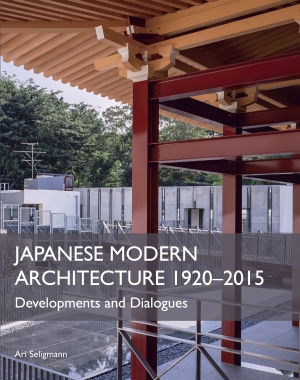
Book Announcement: Japanese Modern Architecture 1920-2015

jmaJapanese Modern Architecture 1920-2015: Developments and Dialogues
Ari Seligmann

Japanese Modern Architecture 1920-2015 uses a series of thematic lenses to explain the rich history of Japanese architectural developments from the 1920s foundation of modern architecture to contemporary permutations of modern and post-modern architecture.
The book introduces the diversity of Japanese architecture and traces the evolution of Japanese architecture in the context of domestic and international developments. It examines the relationship between architecture and nature, and explores various approaches to craft and material. Finally, this new book considers tensions between refinement and ostentation in architectural expression.

For more information: http://www.crowood.com/details.asp?isbn=9781785002489&t=Japanese-Modern-Architecture-1920-2015—Developments-and-Dialogues


Posted in announcements, culture | Tagged , , , , , , | Leave a comment

Workshop: Japanese Performance Theory Workshop

imageJune 10–17, 2017

Apply by April 1!

Open to undergraduates, graduates, and faculty.

The Japanese Performance Theory Workshop (JPTW) intervenes between Japanese Studies and Performance Studies to foster generative critical engagements with Japanese performance. Through seminar-style discussions, performance screenings, research presentations, and writing exercises, this intensive week-long summer workshop will help participants working on Japanese performance at the undergraduate, graduate, and faculty levels develop better conceptual, methodological, and pedagogical tools.

At a basic level, the JPTW represents an experiment designed to address a few overlapping gaps. The initial idea for this residential workshop emerged several years ago, mainly out of frustration with a prevailing conservatism in the study of Noh drama within the Japanese academy especially. The theoretical and methodological worldliness that often characterized literary study of premodern and modern narratives did not obtain for some sectors of the academy devoted to “traditional Japanese theater.” It felt like there was a wealth of fascinating material being underserved by painstakingly informative but unduly positivistic approaches. What if there was a way to energize that material along different lines?

There also seemed to be a gap between conceptually vibrant performance studies scholarship that dealt mainly with modern and contemporary western forms, on the one hand, and historically astute but conceptually dilute work on traditional Japanese performing arts, on the other. Performance Studies programs tend to neglect East Asian performance traditions, while studies of East Asian performance—of the premodern era, in particular—tend to lack theoretical rigor. While there exist intensive summer opportunities for students of various academic and artistic backgrounds to study Japanese performance traditions, both in the U.S. (e.g. the Noh Training Project) and in Japan (e.g. the Traditional Theater Training Program), there are no comparable opportunities for university students and faculty to study Japanese performance with an emphasis on strengthening conceptual approaches to it and analytical writing about it. Given these circumstances, the basic aim of the JPTW will be to provide a venue in which to study Japanese performance practices and critical theoretical approaches to Japanese performance in relation to one another within the context of an intensive summer workshop.

JPTW is a residential summer workshop that focuses on improving engagements with Japanese performance and performance theory. The program will host advanced undergraduates, graduate students, and faculty (five each), working across fields such as performance studies, Japanese literary and cultural studies, ethnomusicology, visual arts, dance studies, and creative writing.

To the extent that a rigorous engagement with Japanese performance need not require Japanese language skills or a performance background, neither of these is required for admission to the program. Indeed, this background can often inhibit more adventurous interpretations. Along these lines, the JPTW will maintain a critical stance toward prevailing notions of expertise and will explore forms of producing knowledge that do not adhere strictly to either an Area Studies model or a practice-based model.

Summary of Important Dates

The JPTW will be held at the University of Michigan from June 10–17, 2017.

January 15, 2017: Application Cycle Begins
April 1, 2017: Application Deadline
April 15, 2017: Admissions Decisions Announced
May 1, 2017: Accept/Decline Notification Due

Eligibility

What sort of participants are you looking for?

Short answer: “Interesting and interested ones.” Longer answer: JPTW seeks a diverse cohort of participants willing to make work and share work in a constructively critical environment. We seek intellectually ambitious participants at different career stages who are willing to refine their projects, rethink notions of what rigorous work should entail, and learn from each other. While I imagine a majority of applications coming from students of drama or Japanese language and culture, the goal is to assemble a group whose different perspectives and skills will offset one another in productive ways. Ideally, in addition to there being an even mix of undergraduates, graduate students, and faculty, there would also be theater practitioners and visual/media artists joining the group.

Does my application really stand a shot even if I’m not majoring in something Japan-related?

Yes! The JPTW encourages applications from undergraduate and graduate students from all disciplines, and faculty within and beyond fields like Japanese Studies or Performance Studies. In addition, JPTW also welcomes participation by playwrights, dramaturges, visual artists, and independent scholars with demonstrated interest in Japanese performance. If your investment is sincere and you’re doing interesting work, please apply!

How many participants will be admitted?

This program is open to undergraduate and graduate students, as well as postdoctoral fellows, faculty, independent scholars, and artists. Fifteen slots are available; roughly five slots apiece will be allotted for participants in the undergraduate, graduate, and postgraduate (e.g. faculty/artist) pools.

What about tuition, travel, and lodging expenses?

Tuition for attending the JPTW (including course readings/materials) is free for all accepted participants.

Moreover, lodging and travel expenses will be covered for undergraduates, graduate students, and participants unable to secure funds by other institutional means. Faculty will be expected to use research funds if possible, but limited funds are available to defray costs for faculty demonstrating need. Note: Admissions decisions will be made irrespective of financial circumstances and every effort will be made to accommodate accepted participants at all levels, regardless of financial need. No potential participant should refrain from applying for financial reasons. Translation: If you’re broke but possess skill, sincerity, and hustle, then we’re willing to expend the funds and effort to get you here.

What if I’m not based in the U.S.?

Applicants from outside the United States are also welcome, though travel funding for multiple international participants may prove more limited. That said, every effort will be made to accommodate international participants’ circumstances.

What will the language of instruction be?

Given the nature of the readings, seminar discussions, and writing exercises, applicants must have high proficiency in English (reading, writing, speaking, and listening comprehension). Skype interviews will be conducted as part of the admissions process, both to learn more about applicants and, in some cases, to assess non-native speakers’ English language proficiency.

Applicants need not have previous Japanese language experience. Original language versions of texts will be available for interested participants, however.

No Japanese necessary? Why not?

Because having good Japanese doesn’t necessarily translate to having good ideas. Moreover, extensive training in Japanese language and culture, while beneficial in some respects, can also inculcate an expertise that limits the more exploratory work the JPTW pursues. Put simply, each applicant’s entire application will be evaluated and advanced training in Japanese will not automatically secure better chances of being admitted.

For full details and to apply, see the original post  on the CJS website. 

Posted in announcements, applications, culture | Tagged , , , , , | Leave a comment

Workshop: Japanese Language Text Mining: Digital Methods for Japanese Studies

call for papers [150-2]Emory University is pleased to accept applications, beginning January 20, 2017, for participation in an interdisciplinary workshop — Japanese Language Text Mining: Digital Humanities Methods for Japanese Studies. The workshop will bring together researchers working across the fields of computational text analysis and Japanese Studies. We welcome applicants from both fields. Applications from research pairs or teams (combining different specialties) are encouraged. Faculty, professionals, and Ph.D. students at all levels are welcome.

The workshop sessions will focus on the unique challenges of digital analysis of Japanese texts. Topics will include:

  • Finding and using web-based corpora, e.g., the Aozora Bunko
  • Using web-based analytical tools, e.g., PhiloLogic
  • Creating digital collections (corpora), including challenges of OCR (Optical Character Recognition) for Japanese texts
  • Specialized tools for classical, early modern, and modern Japanese grammar
  • Methodological principles that underlie standard text mining techniques (e.g., word frequencies, collocation, KWIC, document term matrices, metrics of text similarity)

The workshop will include two half-day specialized sessions: a tutorial on Japanese language and orthography for digital humanities specialists and a session on basic computational concepts and methods for Japan specialists.

Through the generous support of the Japan Foundation, all participants will be provided with accommodations, travel support, as well as breakfast and lunch during the workshop. We strongly encourage candidates to seek supplemental funding from their home institutions.

Workshop leaders:

Sponsorship and support:

Application Requirements:

All applicants are requested to submit their applications in a single email to jtextmining@gmail.com with the following:

  • Contact information sheet
  • Two page c.v. (one c.v. per participant)
  • A statement of fewer than 600 words describing your research interests or research project (one statement per participant)

Application opens: January 20, 2017

Application deadline: February 20, 2017

Award notification: March 13, 2017

Workshop: May 30, 2017 to June 2, 2017

Posted in announcements, graduate school, study tools, summer program | Tagged , , , , | Leave a comment

Call for Papers: International Association of Japanese Philosophy 2017

call for papers [150-2]International Association of Japanese Philosophy
2017 International Conference
Date: 28-29 July 2017 (Friday to Saturday)Venue: National Taiwan Normal University, Taipei, Taiwan
Organizer: International Association of Japanese Philosophy (IAJP)
Co-organizer: Research Center for East Asian Culture and Sinology, National Taiwan Normal University

Theme

Globalizing Japanese Philosophy: From East Asia to the World

Languages

English, Japanese and Chinese

Synopsis

This second annual international conference for IAJP aims at 1) further reinforcing Japanese philosophy as a global academic discipline; 2) exploring the potential of Japanese philosophy in its interface with the various philosophical traditions of East Asia, including, but not limited to, Confucianism, Buddhism and Daoism; and 3) developing a solid research network within East Asia for the field of Japanese philosophy in order to facilitate its promotion across the world.

Riding on the wave of the very successful first international meeting of IAJP in 2016, IAJP’s second international conference will continue the promotion and development of Japanese philosophy globally. Although the reception of and confrontation with Western philosophy remains on the agenda of the 2017 conference, the IAJP also seeks to explore the comparatively underdeveloped but indeed important connection between Japanese philosophy and the philosophical traditions of East Asia. The philosophical and cultural diversity that Taiwan embraces will definitely provide conference participants an opportunity for inspiring intellectual exchange involving the people of Taiwan and scholars of Japanese philosophy from East Asia as well as other parts of the world. This conference welcomes proposals for critical and insightful presentations that challenge the study of Japanese philosophy through a re-reading and reconfiguring of related philosophical texts and issues, from the perspectives of Western as well as Eastern philosophical traditions. This conference specifically encourages young scholars to submit their proposals.  Topics may cover any period, figure, or context pertaining to Japanese philosophy and thought.

Call for Papers

This conference invites proposals for organized panels and individual papers. All submissions should be sent to tetsugakuconference@gmail.com on or before 15 March 2017 (Japan Time).

Contact Info:

For organized panels, please submit the following in MS Word format:

  1. Full names (surname in CAPITAL letters), affiliations (including Department) and email addresses of 3 to 4 members of the panels and indicate one as the chair
  2. A 250-word (maximum) abstract for the panel
  3. A 250-word (maximum) abstract for each papers of the panel
  4. Research interests
  5. Publications (optional)

For individual papers, please submit the following in MS Word format:

  1. Full name (surname in CAPITAL letters), affiliation  (including Department) and email address
  2. A 250-word (maximum) abstract
  3. Research interests
  4. Publications (optional)

Each individual paper will be given 20 minutes for presentation and 10 minutes for discussion

Send to the email address below.  For inquiries please contact at the email address: John Krummel, Mayuko Uehara, Kevin Lam, or Cheung Ching-yuen.

Posted in Uncategorized | Tagged , , , , , | Leave a comment

Book Announcement: ABC Dictionary of Sino-Japanese Readings

9780824823313Via University of Hawai’i Press (catalog).

VICTOR H. MAIR

JULY 2016 232 pages, 7 x 10
Hardback 9780824823313 $55.00 s
ABC Chinese Dictionary Series Japan / China / language

Victor H. Mair is professor of Chinese language and literature at the University of Pennsylvania.

The significance of Japanese-language scholarship on China cannot be overstated. Yet much of it is largely untapped by China scholars in both the West and China, in part because they are unfamiliar with the Japanese pronunciation of Chinese characters. Even those who know Japanese are frequently frustrated when seeking an obscure reading of a personal or place name. The purpose of this volume is to enable Sinologists and others involved in Chinese studies to access entries in Japanese reference works dealing with China without going through the time-consuming process of looking up characters by radical and stroke. For users of this dictionary, it is a simple matter to find a character by looking it up by its alphabetical pinyin pronunciation. Having located it, the user can go directly to the item in Japanese reference works. The Dictionary includes more than 13,072 entries not only in Chinese characters and their Sino-Japanese (ondoku/onyomi) readings, but also the Japanese (kundoku/kunyomi) readings. The romanized Japanese readings will assist in correctly transcribing Japanese names, such as the names of Japanese publishers and authors, and the technical terms employed by Japanese in their writings on China. These features will also give those familiar with pinyin greater access to material on Japanese history and culture. The ABC Dictionary of Sino-Japanese Readings will be a boon to Sinologists and others interested in the study of China.


Posted in announcements, culture | Tagged , , , , , , | Leave a comment

Call for Papers: Post-WWII Reeducation in Germany, Japan, and Beyond

call for papers [150-2]REEDUCATION REVISITED: STRATEGIES, ACTORS, INSTITUTIONS IN TRANSNATIONAL AND COMPARATIVE PERSPECTIVE

Conference at the German Historical Institute at Washington, D.C., September 28-30, 2017

Proposals accepted till March 15, 2017

Organized by Katharina Gerund, Heike Paul (FAU Erlangen-Nürnberg), and Tomoyuki Sasaki (College of William & Mary, Williamsburg)

The post-World War II program of “reeducation” is both culturally and locally specific as well as global: it is localized in particular national and subnational arenas and brought to bear upon the minds of the ‘defeated’/liberated residents of those places; at the same time reeducation policies create a semi-global stage as well as site-specific laboratories for reform, involving a transpacific as well as a transatlantic sphere of US influence. This conference seeks to engage in “comparative reeducation studies” and to explore how US reeducation policies after World War II were designed and enacted with regard to specific audiences in different places (1), how they were received and reworked in their respective target societies (Germany, Japan, and beyond) (2), and what kind of repercussions this may have had for US discourses of democracy, war, and militarism as well as constructions of cultural difference and victimhood in the larger social field, cultural imaginary, and long-term historical development (3). Setting aside one of the dominant angles of interpretation that views reeducation more as a prelude to cold war cultural diplomacy, we invite contributions that consider reeducation as a project in its own right and thus do the groundwork for further cross-cultural and transnational comparisons. Thus, we also welcome papers that explore how we can connect the arenas of reeducation proper to settings in which US efforts of cultural diplomacy also made itself felt at around the same time (Italy, Korea, Latin America). Following the transnational turn in the larger field of American studies, we seek contributions that address the phenomenon of reeducation (in a broader sense) with regard to international networks and interdependencies.

Possible topics include but are not limited to:

Reeducation and Gender (women as one focus group of reeducation; the changing of gender roles in post-war Japan, Germany and the US; representations of women in Japan and Germany in US media; constructions of femininity and masculinity in Japan and Germany; a new post-war women’s consumer culture in Japan and Germany; historicizing the sexual politics of reeducation in comparative perspective)

Reeducation and Race (war and post-war discourses of racial difference in the US, Japan, and Germany in comparative perspective and in light of post-war encounters ‘abroad’; strategies of racial othering – or the opposite thereof – in reeducation policies; antisemitism and racism in perspective)

Reeducation and Youth (children and adolescents as another important focus group of reeducation; metaphors of childhood: Germans as ‘bad,’ ‘sick’ children who need to be ‘taught’ [infantilization of the German adult population]; ambiguous constructions of childhood and questions of responsibility and guilt; generational affiliations and generation gap in responses to Reeducation)

Institutions and/of Reeducation (strategies of de-militarization and re-militarization; the making of the German “Staatsbürger in Uniform” and the Japanese “self-defense forces”; Okinawa’s ‘state of exception,’ educational reform, the democratic curriculum, and the origins of political education; a new popular culture of empiricism, involving market research, quizzes for entertainment, and statistics)

Intellectual History and Reeducation (historicizing theories of reform, therapy, social engineering, and cultural mobility, revisiting Brickner’s Is Germany Incurable? in light of discourses of reform in the US and abroad; Progressivism and Reeducation; Reeducation and Empire; “comparative reeducation studies”)

Please submit paper proposals (max. 500 words) and a short CV by March 15, 2017.

Proposals should be sent to the following three organizers:

Katharina Gerund: Katharina.Gerund@fau.de

Heike Paul: Heike.Paul@fau.de

Tomoyuki Sasaki: tsasaki@wm.edu

Questions about this conference can be addressed to any of these three.

Posted in announcements, conferences, graduate school | Tagged , , , , , , , , , , | Leave a comment

Fun Link Friday: Japanese idioms and proverbs

One of the most fascinating parts of foreign languages is learning the intricacies of local sayings, since they help us really dig into the cultural context specific to that language, but also see the universal themes many places and peoples across the world hold dear. We look to ことわざ (kotowaza, proverbs) and 慣用句 (kanyōku, idioms) to see these fun additions to Japanese. Oftentimes these phrases are incredibly old, though the sentiments are timeless. Matador Network recently posted a list of 30 Japanese sayings (some I knew, others that were new to me!) that will likely spark your interest. Here’s a neat one that I’ve never come across, even in the English version:

羊頭狗肉

“Sheep head, dog meat.”

Meaning false advertising, or “crying wine and selling vinegar,” the image this one paints is more graphic, and therefore more powerful.

What’s your favorite? Let us know!

Posted in culture, fun links | Tagged , , , , , | 2 Comments