
Job Opening: History of Asia, University of Macau

Institution:  Universty of Macau
Location:  Macau
Position:  Associate / Assistant Professor in History of Asia / East-West Interactions / Public History

The University of Macau (UMacau) is the flagship public university in Macao, which gives it a unique advantage when pursuing the goal of becoming a world-class university with regional characteristics. English is its working language. In recent years, the university has made great progress in various areas, gaining increasing international recognition for its teaching, research, and community service. To better support higher education development in Macao and to meet society’s ever-increasing demand for high-quality professionals, the university relocated in August 2014 to a new campus of approximately 1.09 square kilometres. With a state-of-the-art campus, the implementation of Asia’s largest residential college system, the establishment of new faculties and well-equipped laboratories, the increasing numbers of students and faculty members recruited from around the world, UMacau possesses great potential and provides exciting new possibilities for professional development.

The Department of History of the Faculty of Social Sciences invites applications for the position of Associate or Assistant Professor in History.

The Department of History staff includes highly-renowned and innovative senior and junior scholars from Mainland China, the United States, and Europe. The department offers programs leading to BA, MA, and PhD degrees, and provides fellowships for postdoctoral research. The department’s current research emphases include Chinese history, history of East-West interactions, maritime history, and history of science and arts.

Qualifications

Appointment is at the rank of Associate or Assistant Professor, depending on qualifications. Applicants should have a PhD in hand by the time of appointment, some teaching experience, and a strong record of research, and should specialize in one or more of the following research and teaching areas: Ancient/Modern/Contemporary Asia, European-Asian Relations, and/or Public History (including museums, archives, and cultural heritage). The successful candidate may be required to teach General Education courses in the areas of Global Awareness, or Macau and Chinese Civilization. Command of at least one European or Asian language (in addition to English), relevant to her/his area of specialization, may be considered an advantage.

The selected candidate is expected to assume duty in August 2018.

Position and Remuneration

Remuneration and appointment rank offered will be competitive and commensurate with the successful applicants’ academic qualification, current position and professional experience. The current local maximum income tax rate is 12% but is effectively around 5% – 7% after various discretionary exemptions.

Application Procedure

Applicants should visit http://www.umac.mo/career for more details, and apply ONLINE at Career@UM(https://isw.umac.mo/recruitment(Ref. No.: FSS/DHIST/AAP/06/2017). Review of applications will commence on 1 October 2017 and continue until the position is filled. Applicants may consider their applications not successful if they were not invited for an interview within 3 months of application.

Human Resources Section, Office of Administration
University of Macau, Av. da Universidade, Taipa, Macau, China
Website: https://isw.umac.mo/recruitment;  Email: vacancy@umac.mo
Tel: +853 8822 8577;  Fax: +853 8822 2412

The effective position and salary index are subject to the Personnel Statute of the University of Macau in force. The University of Macau reserves the right not to appoint a candidate. Applicants with less qualification and experience can be offered lower positions under special circumstances.

***Personal data provided by applicants will be kept confidential and used for recruitment purpose only***

** Under the equal condition of qualifications and experience, priority will be given to Macao permanent residents**

Website: https://isw.umac.mo/recruitment/showJobDetails.do?

Posted in announcements, job openings, jobs | Tagged , , , , , , | Leave a comment

Fellowship: Transregional Research Junior Scholar Fellowship

CALL FOR APPLICATIONS

Transregional Research Junior Scholar Fellowship:
InterAsian Contexts and Connections
&
Global Summer Semester Residency at the University of Göttingen

Applications due September 27, 2017

The Social Science Research Council is pleased to invite preliminary applications for its expanded and enhanced Transregional Research Junior Scholar Fellowship, funded with generous support from the Andrew W. Mellon Foundation. Following on four successful grants cycles, through which more than sixty-five individual fellowships totaling nearly 2.5 million USD have been awarded, the SSRC is continuing its transregional grants program, offering a 2018 Junior Scholar grants competition and awarding approximately fifteen grants of up to $45,000 to researchers in any world region.  These fellowships help junior scholars (those at the postdoctoral stage, up to five years out of the PhD) complete first books and/or undertake second projects.

In addition, working closely with the Global and Transregional Studies Platform at the University of Göttingen in Germany, the SSRC is pleased to offer a short-term fellowship opportunity in 2018—the SSRC Global Summer Semester Residency at the University of Göttingen (approximate residency dates: April 15, 2018–July 15, 2018).

These fellowships are aimed at supporting transregional research, strengthening the understanding of issues and geographies that do not fit neatly into existing divisions of academia or the world, and developing new approaches, practices, and opportunities in international, regional, and area studies. In addition to funding research, the fellowships will create networks and shared resources that will support fellows well beyond the grant period through intensive workshops and activities that promote transregional perspectives on individual campuses. The Transregional Research Junior Scholar Fellowship and Global Summer Semester Residency will thus provide promising scholars critical support, advance transregional research, and establish structures for linking scholars across disciplines in the arts, the humanities, and the social sciences.

The broad intellectual thrust of the fellowships will continue to be InterAsian Contexts and Connections, or the reconceptualization of Asia as an interlinked historical and geographic formation stretching from West Asia through Eurasia, Central Asia, and South Asia to Southeast Asia and East Asia. In addition, applications that explore the networks that connect Asia with Africa are encouraged for the 2018 awards cycle. Proposals should bear upon processes that connect places and peoples across the boundaries of regions and countries (such as religion, migration/diaspora, media, literature and other arts, shared access to natural resources, cultural and economic continua, and resource flows), those that reconfigure local and translocal contexts (such as shifting borders, urbanization, and social movements), and those that are situated at the nexus of the global/regional/local (such as youth culture, tourist arts, and illicit flows).

Invitational priorities for the 2018 Transregional Research Junior Scholar Fellowship include:

Afro-Asian Connections

Environmental Humanities

Religious Networks

Migration/Refugees

Resources & Archives

This does not preclude proposals on other topics.

Invitational priorities for the 2018 Global Summer Semester Residencies include:

Movements of Knowledge

Transregional Populisms

Religious Networks

This does not preclude proposals on other topics that engage with existing research expertise at the University of Göttingen.

Transregional Research Junior Scholar fellows will be selected through a two-part application process. Upon review of the preliminary applications submitted in September, the Selection Committee will invite select applicants to submit full narrative proposals in late fall 2017. Fellowships will be awarded in spring 2018, and fellowship funds can be disbursed flexibly over the sixteen-month period between May 1, 2018, and August 31, 2019.

Global Summer Semester Residency fellowships will be awarded in late fall 2017.

The application processes, eligibility criteria, and award amounts vary across competitions. Applications and additional fellowship details, including former fellows’ research abstracts and answers to frequently asked questions, are available on the program website at http://www.ssrc.org/fellowships/transregional-research-fellowship.


Contact Email:
Posted in announcements, funding, graduate school, summer program | Tagged , , , , , | Leave a comment

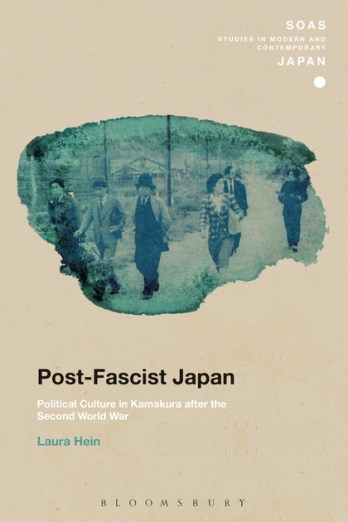
Book Announcement: Post-Fascist Japan: Political Culture in Kamakura after the Second World War

Post-Fascist Japan: Political Culture in Kamakura after the Second World War


Laura Hein

SOAS Studies in Modern and Contemporary Japan

In late 1945 local Japanese turned their energies toward creating new behaviors and institutions that would give young people better skills to combat repression at home and coercion abroad. They rapidly transformed their political culture-policies, institutions, and public opinion-to create a more equitable, democratic and peaceful society.

Post-Fascist Japan explores this phenomenon, focusing on a group of highly educated Japanese – humanists, historians and social scientists – based in the former capital and coastal city of Kamakura, where the new political culture was particularly visible. Many of these leftist elites had been seen as ‘the enemy’ during the war, making this project of domestic repair deeply personal for them. The book argues that they saw the problem as one of fascism, an ideology that had succeeded because it had addressed real problems. They turned their efforts to overtly political-legal systems but also to ostensibly non-political and community institutions such as universities, art museums, and local tourism and environmental policies, aiming not only for reconciliation over the past but also to reduce the anxieties that had drawn so many towards fascism.

By focusing on a particular group of people in a particular place who had an outsized influence on Japan’s political culture, Hein’s study is both local and national. She grounds her theoretical discussion by using specific personalities, showing their ideas about ‘post-fascism’, how they implemented them and how they interacted with the American Occupiers. This is a unique, engaging and important study which will be extremely valuable for students and scholars of 20th-century Japanese intellectual, political and social history.

https://www.bloomsbury.com/us/post-fascist-japan-9781350025813/

Posted in announcements, culture | Tagged , , , , , , , , , | Leave a comment

Job Opening: Asian and Gender Studies, University of Notre Dame

Institution: University of Notre Dame
Location:  Indiana
Position: Assistant Professor in Asian and Gender Studies

University of Notre Dame: Keough School of Global Affairs
Assistant Professor in Asian and Gender Studies
Location: Notre Dame, IN

The University of Notre Dame’s Keough School of Global Affairs invites applications for a tenure-track faculty position in Asian Studies with focus on gender. The position will begin August 20, 2018; Ph.D. or equivalent degree required at the time of hire.

This position is part of the founding of the first new school at Notre Dame in nearly a century. The Keough School (http://keough.nd.edu) promotes interdisciplinary research on critical issues in global affairs, offers a master’s degree, and supports undergraduate and doctoral programs. The inaugural cohort for the two-year master’s degree will arrive in Fall 2017 and consist of 38 fully-funded students from 21 different countries.

The successful hire will work closely with the Liu Institute for Asia and Asian Studies, one of the constituent institutes of the Keough School, in furthering the integration of Asia-related expertise into the activities of the School. The successful hire will also further the study of gender across campus by making appropriate contributions to the Gender Studies Program in the College of Arts & Letters, with the possibility of a concurrent appointment in the Program.

QUALIFICATIONS

Applicants for this position may come from any related discipline in the arts, humanities, or social sciences. In addition to an active research agenda on aspects of gender in the Asian context, they should have a firm grounding in gender theory and the ability to teach about gender both at the theoretical and methodological level, as well as in the context of specific case studies. Our preference is for scholars working on East and/or South Asia.

APPLICATION INSTRUCTIONS

All applicants are required to submit a letter of interest and a Curriculum Vitae. Junior candidates should also arrange for the submission of three letters of reference (to be submitted through Interfolio).

For full application instructions and position description, visit http://apptrkr.com/1050201

Nominations and inquiries may be sent via email to:

Prof. Michel Hockx
Director, Liu Institute for Asia and Asian Studies
Chair, Asian and Gender Studies Search Committee
Keough School of Global Affairs
University of Notre Dame
mhockx@nd.edu

http://apptrkr.com/1050201 


Posted in announcements, job openings, jobs | Tagged , , , , , , , | Leave a comment

Call for Papers: 5th Ocha Zanmai: 2018 San Francisco International Conference on Chanoyu and Tea Culture

The 5th Ocha Zanmai Conference

Sunday, April 29, 2018

(with welcoming events on Saturday, April 28)

San Francisco State University

Ocha Zanmai is an interdisciplinary conference series that presents the latest research findings and significant work in the study of chanoyu (the Japanese tea ceremony), including various aspects of chanoyu culture as well as tea cultures of countries other than Japan that contribute to furthering the understanding and enjoyment of chanoyu.  Scholars, students, tea masters of various schools, museum curators, professionals, artists, and other individuals whose work concerns the fields stated above are all welcome to present at the Ocha Zanmai Conference.  For the 2018 conference, kaiseki cuisine chefs and tea-sweet confectioners are also welcome.

What: Any subject matter related to the 2018 conference theme: Food Culture of Chanoyu. The main focus will be on tea sweets and kaiseki cuisine.  We will consider a broad range of presentations, including historical surveys, detailed studies of particular events, aspects, or characteristics, and even on-site demonstrations.  But cooking by fire is not possible.

How: Send an English abstract (250~500 words) for a 20~30-minute presentation with a separate cover sheet.  The cover sheet must contain the title of the paper, applicants’ full name, position, institution, email address, street address, and telephone number.  Please write the title on the top of the abstract page but do not write your name or the institution that you belong to. The cover sheet and the abstract will be separated for a double-blind peer review.

Where to send: Send the abstract with the cover sheet by email attachment to mmckeon@sfsu.edu.

Possible publication: Successful papers will be invited for publication in Chanoyu and Tea Culture, the Ocha ZanmaiConference’s proceedings volume.

Contact Info:

Midori McKeon, Ocha Zanmai Conference Organizer and Professor of Japanese
Department of Modern Languages and Literatures, San Francisco State University
1600 Holloway Avenue, San Francisco, CA 94132, U.S.A.

Contact Email:

Posted in announcements, conferences, graduate school | Tagged , , , , , , , | Leave a comment

Job Opening: Premodern Japanese literature, Stanford University

Institute: Stanford University, East Asian Languages and Cultures
Location: 
California, United States
Position: 
Assistant Professor in Premodern Japanese Literature


Faculty Position Available

The Department of East Asian Languages and Cultures at Stanford University is seeking applicants for a tenure track Assistant Professor in the area of premodern Japanese literature. Areas of secondary interest include but are not limited to Japanese History, Performance, Religious Studies, Visual Culture, Gender Studies, and Chinese Language and Literature. Candidates are expected to have completed the Ph.D. degree by the time of appointment. Appointees will be expected to teach courses at both the graduate and undergraduate levels in Japanese literature and premodern forms of language.

Applicants should submit a curriculum vitae, a list of publications, and three letters of reference online via www.AcademicJobsOnline.org: [https://academicjobsonline.org/ajo/Stanford/EALC]. For full consideration, materials must be received by October 15, 2017. The appointment will begin on September 1, 2018.

Stanford University is an equal opportunity employer and is committed to increasing the diversity of its faculty. It welcomes nominations of, and applications from, women, members of minority groups, and protected veterans and individuals with disabilities, as well as others who would bring additional dimensions to the university’s research, teaching, and clinical missions.

Contact: 

James Reichert
East Asian Languages and Cultures
521 Memorial Way
Stanford University
Stanford, CA 94305-2000
reichert@stanford.edu

Posted in announcements, job openings, jobs | Tagged , , , , , , , | Leave a comment

Call for Papers: Forum on European Expansion and Global Interaction

Conference: Forum on European Expansion and Global Interaction
Where: University of Hawaiʻi at Mānoa, Honolulu, Hawai’i
When: February 23-24, 2018
CfP deadline: August 15, 2017

The Forum on European Expansion and Global Interaction (FEEGI) invites paper proposals for its twelfth biennial conference, to be held February 23-24, 2018 at the University of Hawaiʻi at Mānoa, Honolulu, Hawai’i.

FEEGI conferences investigate the histories of places and people touched directly and indirectly, advantageously or catastrophically, by European overseas expansion. Our conferences provide an opportunity for exchange about the circumstances, causes, and consequences of increased global interaction in the early modern period (roughly 1450 to 1850). We welcome proposals exploring political, economic, and socio-cultural interactions from a variety of fields and perspectives. We encourage interdisciplinary approaches. The FEEGI Program Committee hopes that the Hawaiian venue will be particularly attractive to those working on Europe-Asia exchanges.

One of the hallmarks of FEEGI conferences is the creation of an intellectual space for comparative thinking and interaction among scholars across traditional temporal, geographic, and imperial boundaries. To promote such dialogue, the Program Committee configures panels to make deep thematic connections, and all our sessions are plenary.

Please enter proposals for individual papers no later than 15 August 2017 by using the online form here: http://feegi.org/conferences.html. Submissions should include a 300-500 word abstract as well as a brief (1-2 page) C.V. We welcome submissions from advanced graduate students; we hope to provide some financial support to graduate student presenters.

Posted in announcements, conferences, graduate school | Tagged , , , , | Leave a comment

Call for Papers: Murakami Haruki Conference

40 Years with Murakami Haruki
International conference at Newcastle University, March 8-9, 2018

2018 marks the fortieth year since Japanese author Murakami Haruki first decided to write a novel while watching a game of baseball (or so the story goes). Coinciding with this anniversary, The School of Modern Languages, Newcastle University (UK) is hosting an Arts and Humanities Research Council (AHRC) funded project on Murakami. Scholars and other professionals are invited to submit a paper proposal for an international conference that explores various aspects of Murakami, his literary works and characters as well as their transmedial reach. Confirmed keynote speakers include four prominent Murakami scholars, Dr Rebecca Suter (University of Sydney), Professor Matthew C. Strecher (Sophia University), Emeritus Professor Shibata Motoyuki (Tokyo University) and Emeritus Professor Katō Norihiro (Waseda University).

Deadline for proposals http://forms.ncl.ac.uk/view.php?id=1265927-10-2017

Throughout the 1980s and 1990s, Murakami’s works were met with much criticism from established literary circles and prize committees. Since then, he has prolifically produced not only novels and short stories, but also essays and translations, and Murakami’s writings have become part of global culture—indeed, in 2015 he was recognized as one of the world’s 100 most influential people by Time. His works are now translated into more than 50 languages and his stories and characters are increasingly becoming transmedial, inspiring global producers of cultural products such as film makers, artists, computer game programmers, travelogue writers, performing art producers and dance choreographers. For scholars interested in the processes of translation and transmedial production, Murakami therefore provides an intriguing case study.

At a time when literature is challenged by other digital media forms, the enduring global popularity of Murakami’s literary worlds and characters is a compelling reason why we need to enhance knowledge of his works. As cultural products that potentially influence our world view and imagination, it is interesting to ask what his works tell us about key topics such as gender and history. However, Murakami is also interesting because of his unusual position in the cultural hierarchy. While he is subject to a type of fandom typically associated with popular culture, his writings have also received some of the world’s most prestigious literary prizes including the Franz Kafka Prize (2006) and the Jerusalem Prize (2009). This straddled position might inspire us to question the relevance of segregating ‘pop’ and ‘pure literature’ in academic research.

As a topic for interdisciplinary academic inquiry, Murakami’s literary worlds and characters offer an opportunity for the humanities and social sciences to bring together specialists from diverse disciplines, such as literary studies, popular culture and gender studies, with translators, transmedial producers and general readers, thereby enriching the field of Japanese studies by connecting it to the wider academic and non-academic communities. In tandem with the conference, a series of events is scheduled to take place in Newcastle, including a workshop with public lectures on translating Murakami, film screenings and an art exhibition. The full program and further information about the entire AHRC funded project is available at http://research.ncl.ac.uk/murakami/.

To present a 20-minute paper at the conference, please submit a 250 word proposal http://forms.ncl.ac.uk/view.php?id=12659 before 27-10-2017. While papers on gender and transmediality are especially encouraged, all perspectives on Murakami are welcome. As inspiration, consider the following list of exploratory topics:

  • Character construction and narrative techniques
  • Transmedial productions and media mix
  • Translation (Murakami as translator and translating Murakami)
  • Marketing and reception
  • Representations of sex and gender
  • Representations of historical and political events
  • Genre, ‘popular culture’ and ‘pure literature’
  • Thematic investigations such as the meaning of colours, food and parallel worlds

Please contact Dr Gitte Marianne Hansen (gitte.hansen@ncl.ac.uk) with any inquiries.

Posted in announcements, conferences, graduate school | Tagged , , , , , | Leave a comment

Call for Papers: Japan Studies Association 2018

Join us in sunny Honolulu January 2018 to share our new and continuing pedagogical and research interests in Japan’s literary and cultural traditions, historical and economic developments, sociopolitical and religious past and present. We invite proposals for individual presentations, discipline-specific or interdisciplinary panels, roundtables on pedagogy and teaching innovation and staged readings.

We encourage both east-west and inter-Asian comparative perspectives and particularly welcome contributions by alumni of JSA’s Freeman Foundation intensive workshops on Japan (2002–2016) such as the Wichita and Belmont workshops, both funded by a generous grant from the Japan Foundation. We also welcome proposals from participants in the 2014 Kyoto, the 2015 Hiroshima/Nagasaki and the 2017 Okinawa workshops. We recommend you contact colleagues with whom you share pedagogical and research interests to form a panel or a round table as this results in more engaging presentations and follow-up discussion.

Submitting an abstract or a panel proposal:

Abstracts for an individual presentation (approx. 250 words) or proposals for a themed panel, roundtable or staged reading (approx. 500 words) should be submitted via JSA’s website: http://www.japanstudies.org by Monday, 25 September 2017 Please make sure that you include the name(s), institutional affiliation and contact information for each presenter along with individual presentation titles.

For more information, please contact the Conference Program Co-Chairs:

Prof. Andrea Stover, Belmont University: andrea.stover@belmont.edu

Prof. Paul Dunscomb, University of Alaska Anchorage: pedunscomb@alaska.edu

Posted in announcements, conferences, graduate school | Tagged , , , , , | Leave a comment

Funding: D. Kim Foundation Fellowships

D. Kim Foundation Fellowships

The deadline for fellowship applications is December 1, 2017. Successful applicants will be notified by e-mail in early February. The fellowship term is September 1 through August 31, but can be adjusted with permission from the Foundation. If a recipient receives another fellowship or grant, he/she must report it to the Foundation. The Foundation may adjust the amount of the fellowship award accordingly.

Post-doctoral Fellowship: One or two fellowships ($55,000 each) will be awarded annually to a distinguished young scholar who has received his/her doctoral degree within the previous five years. Applicants should include an invitation letter from their host institution; the host institution cannot be changed without permission from the Foundation.

Visiting Studentship: Candidates must be registered in a Masters or PhD program at a university or approved research institute in East Asia, working on topics relevant to the Foundation. Two letters of recommendation are required: one from an academic referee familiar with the candidate’s work, and the other from the host institution confirming that it is willing to host the candidate during the period of the studentship. A detailed plan of the work that the candidate intends to carry out at the host institution is required. All applications must be accompanied by a certificate of English-language proficiency from an internationally recognized test, such as TOFEL or IELTS. The Foundation will conduct either Skype or personal interviews for the final selection. The duration of fellowship is six to twelve months. The candidate selected must normally stay at the host institution during the whole of the studentship period. The amount of the studentship is up to US$45,000. The final amount will be decided later in accordance with the candidate’s specific circumstances.

Dissertation Fellowship: One or two fellowships (up to $25,000 each) will be awarded annually to Ph.D. candidates who are writing their dissertations. Applicants should include  two draft chapters with their application.

Grants

Traveling/Research Grant: Several grants (up to $2,500 each) will be awarded annually to scholars who are traveling for short-term research projects (less than a month). All applications must include the description of the research purpose and the detailed outline of budget (travel, accommodation and library fees, if applicable). Travel must be made between July 1, 2018 and June 30, 2019. If a recipient receives another grant, he/she must report it to the foundation. Deadline for submission: December 1, 2017.

Conference/Workshop Grant (NEW): Several grants (up to $2,500 each) will be awarded twice a year to scholars who plan to present papers at international conferences or workshops. All applications must include the abstract (or paper), and a detailed outline of budget (transportation, lodging, and registration).  If possible, they should also include a letter from conference/workshop organizers confirming that the proposed paper or panel has been accepted.  While applications will still be considered if such confirmation is not yet available, no grant payment will be made until official confirmation of acceptance has been provided. If a recipient receives another grant, he/she must report it to the foundation.

Deadline 1 (May 1, 2017), if the meeting is held between July1, 2017 and January 31, 2018

Deadline 2 (December 1, 2017), if the meeting is held between February 1 and June 30, 2018.

Application starts with an online form

For more information: http://dkimfoundation.org/wp1/fellowships/

Posted in announcements, funding, graduate school, job openings, Uncategorized | Tagged , , , , , , , , , , , | Leave a comment