Funding: 2018 Asia Studies Fellowship at the East-West Center in Washington DC

2018 Asia Studies Fellowship at the East-West Center in Washington DC

This fellowship supports scholars and analysts from the United States and the Asia-Pacific who wish to undertake independent research and writing on topics of relevance to contemporary US-Asia policy; in particular, key challenges in U.S.-Asia relations and possible responses and approaches to addressing those challenges.

The fellowship finances residencies for a period of three months in Washington, D.C. at the East-West Center in Washington. Residency may begin as early as March 2018 and extend through September 2018.

The fellowship includes a monthly stipend, round trip economy airfare to Washington, D.C. Fellows will complete articles or a monograph and must give a seminar on their topic. Next generation applicants whose careers would benefit from such an opportunity; those with no-prior experience with the Washington D.C. academic and policy making communities; and those with research that would greatly benefit from the resources afforded by residency in Washington D.C., are particularly encouraged to apply.

The deadline for applications is January 2, 2018 (11:59pm EST).

For detailed information and how to APPLY, please click HERE to visit our Visiting Fellowships web page.

Posted in announcements, funding, graduate school | Tagged , , , , , , | Leave a comment

Book Announcement: The JET Program and the U.S.-Japan Relationship: Goodwill Goldmine

Since 1987, the Japan Exchange and Teaching (JET) Program has recruited thousands of young college graduates from more than sixty countries, including the United States, to work in Japan for up to five years. Now, thirty years after the program’s founding, there are more than 60,000 JET Program alumni worldwide, more than half of them hailing from the United States. The JET Program and the US–Japan Relationship: Goodwill Goldmine argues that JET functions as much more than an opportunity for young people to spend a year or more teaching in Japanese schools or working in municipal offices across the Japanese archipelago. This study examines the JET program as a form of public diplomacy and soft power. Through original survey data and extensive interviews with alumni, the author provides a comprehensive analysis of the program’s effects and argues that it has been highly useful in shaping interactions between Japan and the United States.

Table of Contents:

Chapter 1: The JET Program and Its Implications
Chapter 2: Frameworks for Public Diplomacy
Chapter 3: Japan and the Soft Power Context
Chapter 4: JET’s History, Implementation, and Visibility
Chapter 5: A Profile of American Alumni
Chapter 6: The American Alumni Community
Chapter 7: Alumni in the World
Chapter 8: Mining Thirty Years of Goodwill

Posted in announcements, culture | Tagged , , , , , | Leave a comment

Job Opening: Kyoto Consortium for Japanese Studies (KCJS) Postdoctoral Fellowship

The Kyoto Consortium for Japanese Studies is pleased to announce the new position of KCJS Postdoctoral Fellow (discipline open), beginning in academic year 2018-19. Based at Doshisha University, KCJS is an undergraduate study abroad program governed by a consortium of thirteen American universities and administered by the Office of Global Programs & Fellowships at Columbia University.

The KCJS Fellow is expected to engage in their own research while teaching one course each semester in Kyoto. One course should be in the fellow’s own field of special interest, while the second course, normally taught in the spring semester, should be a broad introductory survey of Japanese civilization, aimed at students who are just beginning to learn about Japan. Such a survey may be provided with a particular disciplinary emphasis—such as art, religion, or literature—but both courses should be designed to appeal to a wide range of majors and take full advantage of the KCJS location, in order to enrich the students’ knowledge of Kyoto and the Kansai region.

Additional responsibilities include: assisting the resident director with the students’ academic orientation session at the beginning of the fall and spring semesters; advising students on academic and career planning matters; and attending occasional KCJS-sponsored co-curricular events. The Fellow is also expected to engage in the academic life of Kyoto through involvement in research study groups at Doshisha or other local universities.

The term of appointment is from August 1, 2018 to May 31, 2019, with a ten-month salary of $50,000 or the equivalent. Round-trip transportation from the U.S. to Japan for the fellow and immediate family members which may include a spouse/partner and one child under 18 years of age will be provided, and up to $5,000 is reimbursable for research expenses

For more information about the KCJS program, please visit http://ogp.columbia.edu/program/kcjs-semester

 Application Process

Candidates must have the Ph.D. defended by July 1, 2018. Applications are due by Monday, January 15, 2018, and a final decision will be made by early March.

Candidates should submit a curriculum vitae, including a list of previous courses taught (if any) and course evaluations if available; anticipated date of dissertation defense; and two course descriptions as specified above. All application materials, including three letters of reference attesting to the candidate’s qualifications, should be sent to Fay Ju, Associate Dean of Columbia Global Education Programs (fjj1@columbia.edu), as well as any further inquiries about the KCJS fellowship.

Posted in announcements, job openings, jobs | Tagged , , , , | Leave a comment

Fun Link Friday: Haiku Contest!

A quickie fun link for those haiku (and tea!) lovers out there. The well-known tea company Oi Ocha is hosting a “new haiku” contest that is open from now through February 28. All ages and nationalities are welcome to submit their (English language) poem on whatever topic they would like. There are a variety of prizes for multiple winners.

The procedures are simple:

One contestant may submit up to six poems by postcard, A4-sized fax, or the Internet.
Application must include the poems and the name of the entry division. Applicants also must include their name, address, telephone number, e-mail address, age, and any Haiku group or club of which they are a member. Students are also asked to include their school names.

When applying with standard postcards, write the poems and entry division on the rear and the other information on the front.

You can also see past winners and their poems here! Good luck and get writing! 🙂

Posted in culture, fun links | Tagged , , , , , | Leave a comment

Funding: Wolfsonian Fellowship Program (modern Japan)

Wolfsonian-FIU Fellowship Program

The Wolfsonian-Florida International University is a museum and research center that promotes the examination of modern visual and material culture. The focus of the Wolfsonian collection is on North American and European decorative arts, propaganda, architecture, and industrial and graphic design of the period 1885-1945. The collection includes works on paper (including posters, prints and design drawings), furniture, paintings, sculpture, glass, textiles, ceramics, lighting and other appliances, and many other kinds of objects. The Wolfsonian’s library has approximately 50,000 rare books, periodicals, and ephemeral items.

The Wolfsonian has several significant concentrations of material related to Japan. Military propaganda from the 1930s and 1940s, as well as propaganda about Japanese involvement in Manchuria, is represented by books, ephemera, posters and other items. The Wolfsonian’s library has Japanese hotel, railroad and steamship advertising, and publications about decorative arts and architecture. There are also many publications relating to Japanese participation at international expositions. The objects collection holds a notable series of prints by the artist Koizumi Kishio depicting Tokyo in the 1920s and 1930s. The collection also has rich material documenting Western interest in and depictions of Japan, including publications about Japanese art, travel writing, and anti-Japanese propaganda from the Second World War.

Besides material from Japan, the Wolfsonian also has extensive holdings from the United States, Germany, Great Britain, Italy, and the Netherlands. There are also smaller but significant collections of materials from a number of other countries, including Austria, Czechoslovakia, France, the former Soviet Union, and Hungary.

Fellowships are intended to support full-time research, generally for a period of three to five weeks. The program is open to holders of master’s or doctoral degrees, Ph.D. candidates, and to others who have a significant record of professional achievement in relevant fields. Applicants are encouraged to discuss their project with the Fellowship Coordinator prior to submission to ensure the relevance of their proposals to the Wolfsonian’s collection. For more information, visit https://www.wolfsonian.org/research-library/fellowships or email to research@thewolf.fiu.edu.

The application deadline is December 31, for residency during the 2018-19 academic year.

Posted in announcements, funding, graduate school, study tools | Tagged , , , , , , , , | Leave a comment

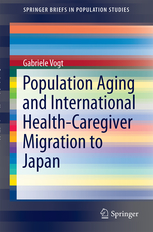
Book Announcement: Population Aging and International Health-Caregiver Migration to Japan

Population Aging and International Health-Caregiver Migration to Japan

Gabriele Vogt, Cham: Springer, 2018.

This book introduces Japan’s current policy initiatives directed at eldercare and international labor migration, and, wherever appropriate,it adds a comparative perspective from Germany. The book shows how eldercare is currently being organized and discusses integration policies for foreigners. It studies the policy-making process behind the system, and contextualizes the migration avenue within the strong roots of Japan’s eldercare in local communities and the non-preparedness of the nation to grant local citizenship to international newcomers. Through applying an approach of multi-level policy making, putting a strong focus on the local level and introducing new approaches, this book is of interest to policy makers and scholars in aging, migration, health care, and contemporary Japan.

http://www.springer.com/us/book/9783319680118 

Table of contents:
1) Introduction: Population Aging, Health-Caregiving to the Elderly, and International Labor Migration to Japan
2) Health-Caregiving to the Elderly in Japan: Professionalized Labor, Community-Based Approaches, and International Migration
3) International Health-Caregiver Migration to Japan and Germany: Policies Designed to Fail
4) International Migration to Japan: Political and Societal Responses to the Challenge of Integration
5) Outlook: International Health-Caregiver Migration to Japan

Posted in announcements, culture | Tagged , , , , , | Leave a comment

Kokugakuin University Visiting Fellows Program 2018-2019

Kokugakuin University is pleased to announce a call for applications to The Kokugakuin University Visiting Fellows Program for the academic year 2018-2019.

“Toward the promotion of international academic communication and cooperation, and in the interest of stimulating global research on Japanese society and culture, Kokugakuin University administers a Visiting Fellows Program to support qualified foreign researchers with fellowships as Kokugakuin University Visiting Fellows.”

Qualifications:

  1. Applicants for the Visiting Fellows program shall be researchers engaged in a field of study dealing broadly with Japanese culture and society.
  2. The focus of a Visiting Fellow’s research must be one shared with one or more faculty members of Kokugakuin University to allow the provision of appropriate collaboration with and direction to the Visiting Fellow.
  3. In principle, Visiting Fellows must be candidates for the Ph. D. degree (or equivalent) affiliated with universities or research intuitions located outside of Japan.
  4. Citizenship or nationality is not taken into consideration when selecting Visiting Fellows.
  5. The successful applicant for the Visiting Fellows Program shall possess a sufficient command of the Japanese or English language to allow successful completion of research and academic activities in Japan.
  6. During the term of his or her designation as Kokugakuin Visiting Fellow, an individual may not receive other fellowships or funding exceeding JPY300,000 (or equivalent) per month, and may not take on any employment not permitted by the conditions of his or her visa.

For full details, please follow the link:
https://www.kokugakuin.ac.jp/en/global/globalization/p1

Application Deadline: January 12, 2018, Japan standard time

Posted in announcements, job openings, jobs | Tagged , , , , | Leave a comment

Book Announcement: Buddhism & Medicine: An Anthology of Premodern Sources

C. Pierce Salguero (ed.), Buddhism & Medicine: An Anthology of Premodern Sources (New York: Columbia University Press, 2017).

From its earliest days, Buddhism has been closely intertwined with medicine. Buddhism and Medicine is a singular collection showcas- ing the generative relationship and mutual influence between these fields across premodern Asia. The anthology combines dozens of English-language translations of premodern Buddhist texts with contextualizing introductions by leading international scholars in Buddhist studies, the history of medicine, and a range of other fields. These sources explore in detail medical topics ranging from the development of fetal anatomy in the womb to nursing, hospice, dietary regimen, magical powers, visualization, and other heal- ing knowledge. Works translated here include meditation guides, popular narratives, ritual manuals, spells texts, monastic disciplinary codes, recipe inscriptions, philosophical treatises, poetry, works by physicians, and other genres. All together, these selections and their introductions provide a comprehensive overview of Buddhist healing throughout Asia. They also demonstrate the central place of healing in Buddhist practice and in the daily life of the premodern world.

https://cup.columbia.edu/book/buddhism-and-medicine/9780231179942

Posted in announcements, culture | Tagged , , , , , , | Leave a comment

Call for Papers: Rethinking Labor: Work and Livelihood in Japan

Rethinking Labor: Work and Livelihood in Japan
April 13th and 14th, 2018
University of California, Berkeley

The UC Berkeley Center for Japanese Studies presents its fifth annual graduate student conference:Rethinking Labor: Work and Livelihood in Japan. The conference will explore how historically situated configurations of “work,” “labor,” and “livelihood” operate in Japan ranging from the household to the transnational. We invite proposals for papers from current graduate students from all disciplines that use conceptions, manifestations, and representations of labor as a framework in the study of Japan across all historical periods.

Labor has and continues to be an important analytic in Japan Studies as it illuminates diverse phenomena such as macro-economic change, state-society relations, and industrial development, among other topics. Yet, drawing upon recent approaches in anthropology, sociology, and legal studies, we also seek to invoke the concepts of work and livelihood, which can emphasize subjectivity, sociality and the material conditions to sustaining life in ways that complement and complicate previous studies focusing on traditional concepts of labor. While we welcome papers focusing on labor configurations in Japan such as the salaryman, craftsman, guilds, and factory and day laborers, we also invite papers that reframe what constitutes “labor” by invoking “work” and “livelihood” as a means of addressing categories such as domestic structures, underemployment, volunteerism, care and unwaged labor, among other topics.

Categories of exploration might include but are not limited to:

  • Transnational identities and labor flows, including colonial labor, immigration, zainichi, and international labor movements
  • Gendered labor, such as OLs, factory work, domestic labor, and sex work
  • Effects of recession and/or neoliberal policies on work, such as changes in lifetime employment, underemployment, flexible labor, precariat movements, netto kafe nanmin, and furītā
  • Visual culture for and/or about workers, such as proletarian literature, socialist realism, salaryman film and manga
  • Role of labor in media production, such as participation in the studio cinema system, patronage, advertising, factory work
  • Ideological centrality of categories of labor to specific historical period, such as imperial service in Heian Period, military service in the Wartime period, and the salaryman in the postwar era
  • Workplace conditions especially in cases of karōshi, burakku kigyō, powahara.
  • Work through religions; such as the livelihood of Buddhist monasteries, Shinto shrines, or Christian convents
  • Architecture and infrastructure of work
  • The shifting relationship between economic structure and regimes of labor at specific historical moments, such as the manorial economy and the emergence of the shōen system, the development and growth of a commercial economy and rural industry, Tokugawa urbanization and urban consumption, the move from agriculture to industry

Requirements for Submission

Please sent an abstract of no more than 250 words along with your name, institutional affiliation, presentation title, and short biography (100 words) to cjsgradconference@berkeley.edu by December 15, 2017.

Limited funding is available for participants. Please apply early and indicate your need for funding, including from where you will be travelling and whether you will require lodging. International scholars are encouraged to apply.​

Posted in announcements, conferences, graduate school | Tagged , , , , , | Leave a comment

Job Opening: Tenure-track Position, Japanese History

Furman University invites applications for an open-rank, tenure-track position in any field of Japanese history with a preferred outside field in Korean history to begin August 2018. The successful candidate will have a Ph.D. in hand by the start of appointment and be expected to become an excellent classroom instructor and student mentor, establish and maintain an active scholarly agenda, and be an enthusiastic contributor of service to the History and Asian Studies departments as well as to the university. Furman is particularly interested in candidates who can enrich the diversity of the academic community through their research, teaching, and/or service. The teaching load is 3-2.

Furman University is a selective private liberal arts and sciences college committed to helping students develop intellectually, personally, and interpersonally and providing the practical skills necessary to succeed in a rapidly-changing world. Furman professors are exceptional teacher-scholars who mentor undergraduate students within a campus community that values and encourages diverse ideas and perspectives. Our recently-launched strategic vision, The Furman Advantage, promises students an individualized four-year pathway facilitated by team of mentors and infused with a rich and varied set of high impact experiences outside the classroom. These include undergraduate research, study away, internships, community-focused learning, and opportunities to engage across differences. The Furman Advantage is designed to help each student, and their team of mentors, create a personalized four-year educational pathway that prepares them to have successful careers, impact their communities, and lead lives with meaning and purpose.

Furman is an Equal Opportunity Employer committed to increasing the diversity of its faculty and staff. The University aspires to create a community of people representing a multiplicity of identities including gender, race, religion, spiritual belief, sexual orientation, geographic origin, socioeconomic background, ideology, world view, and varied abilities. Domestic partners of employees are eligible for comprehensive benefits.

A broad network of centers and institutes support the Furman student experience, including The Riley Institute, The David E. Shi Center for Sustainability, The Institute for the Advancement of Community Health, The Rinker Center for Study Away and International Education, The Cothran Center for Vocational Exploration, The Shucker Center for Leadership Development, The Malone Center for Career Engagement, and our newest addition, The Center for Inclusive Communities.

Furman is located in Greenville, South Carolina, which is one of the fastest growing cities in the Southeast and is ranked among “America’s Ten Best” by Forbes Magazine. The charming downtown features excellent restaurants, in-town parks, shops, museums, galleries, music venues, and theaters. The city also has excellent public and private schools and a vibrant international community. A 20-mile bike and running trail connects the university to Greenville and to Travelers Rest, which was named “one of America’s coolest small towns.” The surrounding area abounds with outdoor recreational activities and has some of the most beautiful lakes, rivers, and mountains in the country. Greenville is within easy reach of the Blue Ridge Mountains and Atlantic Beaches. The newly renovated Greenville-Spartanburg Airport, located just 25 minutes from downtown, runs daily flights to major cities and airline hubs. Greenville is 2 1/2 hours from Atlanta and only one hour from Asheville, North Carolina. It is an ideal place to live and work.

For more information: https://jobs.furman.edu/postings/6812

Posted in announcements, job openings, jobs | Tagged , , , , | Leave a comment