Funding: Harvard-Yenching Library 2017-2018 Travel Grant

The Harvard-Yenching Library is pleased to announce its Travel Grant Program for the 2017-2018 academic year. The purpose of the grant is to assist scholars from outside the Boston metropolitan area in their use of the Harvard-Yenching Library’s collections for research. There will be nineteen grants of $600 each (seven in Chinese studies, seven in Japanese studies, and five in Korean studies) to be awarded on a merit basis to faculty members and to graduate students engaged in dissertation research. Priority consideration will be given to those at institutions where there are no or few library resources in the East Asian languages and no major East Asian library collections are available nearby. Please note that the awards must be used by September 30, 2018.

Applications for the travel grant, including a letter with your mailing address, a brief description of the research topic, and an estimated budget should be addressed to the following. You can send in your application either in paper form or as an email attachment.

The deadline for receiving applications is extended to February 15, 2018

Note: Independent scholars and all levels of graduate students are also welcome to apply.

Posted in announcements, funding, graduate school | Tagged , , , , | Leave a comment

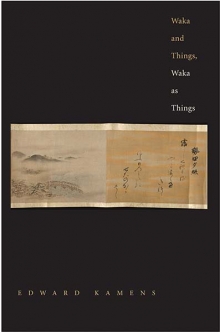
Book Announcement: Waka and Things, Waka as Things

Waka and Things, Waka as Things
Edward Kamens

A challenging study offering a new perspective on classical Japanese poems and how they interact with and are part of material culture

This generously illustrated volume offers a fresh perspective on classical Japanese poetry (waka), including many poems treated here for the first time in a Western-language publication. Edward Kamens examines these poems both as they relate to material things and as things in and of themselves, exploring their intimate connections to artifacts and works of visual art, sacred and secular alike, and investigating the unique rhetorical messages and powers accessed and activated through these multimedia productions. This book makes a major contribution to Japanese literary and cultural studies.

Edward Kamens is Sumitomo Professor of Japanese Studies at Yale University and author of Utamakura, Allusion, and Intertextuality in Traditional Japanese Poetry. He lives in New Haven, CT.

https://yalebooks.yale.edu/book/9780300223712/waka-and-things-waka-things

Posted in announcements, culture | Tagged , , , , , , , | Leave a comment

Job Opening: Academic Translators and Editors (Freelance)

Academic Language Experts

Academic Translators and Editors (Freelance)

Academic Language Experts is a company dedicated to helping academic scholars publish their research in prestigious academic fora around the world. We help scholars translate, edit and format their research for publication in academic journals, books, conferences, and more. All of our projects are completed by an expert in their field and then reviewed by one of our managing editors. We work with all major languages and can format according to all style sheets. Feel free to visit our website to learn more about our services.

We are currently looking to expand our team and bring in new freelance academic translators and editors. The ideal candidates have strong language and writing skills and are passionate about research and scholarship. We work with all major languages and all fields of academic expertise, including the humanities and social sciences. Work is from home and completed on a freelance basis. An MA and at least two years previous experience translating and editing academic texts are required.

Contact:

You can apply directly via our website here.

If you have additional questions you can be in touch with Gabrielle Fine, Director of Recruitment.

Email: gabrielle@aclang.com
UK Phone: 020-3769-0297
International Phone: +972-526-665-095

Website: https://www.aclang.com/

Posted in announcements, job openings, jobs | Tagged , , , , , | Leave a comment

Job Opening: University of Mississippi, Assistant Professor of History, East Asia

Institution: University of Mississippi, Department of History
Location:Mississippi, United States
Position: Assistant Professor of History, East Asia

East Asia. The Arch Dalrymple III Department of History at the University of Mississippi (http://history.olemiss.edu) invites applications for a tenure-track position of assistant professor in East Asian History with an emphasis on global capitalism and empire. Teaching load is 2/2, and appointment will begin in August 2018. Ph.D. by the time of appointment, demonstrated excellence in teaching, and the potential for significant peer-reviewed publications are required. Candidates must complete an online letter of interest and submit a CV, three letters of recommendation, teaching portfolio (including syllabi and evaluations, if available), and a chapter-length writing sample. These supplementary materials may be attached to the online application (https://jobs.olemiss.edu) or mailed to Chair, East Asian History Search Committee, Arch Dalrymple III Department of History, 310 Bishop Hall, University of Mississippi, P.O. Box 1848, University MS 38677-1848. Review of applications is scheduled to begin February 15, 2018. The University of Mississippi is an EOE/AA/Minorities/Females/Vet/Disability/Sexual Orientation/Gender Identity/Title VI/Title VII/Title IX/504/ADA/ADEA employer.

Contact:

Arch Dalrymple III Department of History
history@olemiss.edu
662-915-7148
Website: http://jobs.olemiss.edu

Posted in announcements, job openings, jobs | Tagged , , , , , , | Leave a comment

Resource: Visualizations and Digital Analyses on Modern Japan

Much is presently being made of the digital humanities, that is, how we can use digital tools to engage, answer, or facilitate humanities study. From this marriage of tech and humanistic thought, a number of fascinating projects related to Japan have popped up that not only prompt fresh questions about our world but also archive and make available information in new and exciting ways. Today I will briefly introduce a number of projects by Steven Braun, a creative developer and data analytics/visualization specialist at Northeastern University who also works with Japanese subjects.

Among Braun’s numerous online projects are the following selection, which engage broad topics from the relationship between historical memory and Japanese textbooks to the relationship between kanji radicals and a variety of digital methods, including network visualization and language frequency maps. Below are just a few of the projects Braun has created, which I encourage you to explore and share as great examples of the intersection between technology, history, linguistics, and numerous other aspects of Japanese society:

Sono Toki

This project draws on the Japan Disasters Archive (JDA) of the Reischauer Institute of Japanese Studies at Harvard University, an archive of images, websites, articles, video, and other media related to the March 11, 2011 earthquake in Tōhoku, Japan. Here, Braun has put together a series of interactive visualizations that help us think about collective memory, correlating the co-occurrence of keywords from disaster testimonials with distance from the epicenter. The testimonials are responses to the question, “その時、何をしていましたか What were you doing at the time the disaster struck?

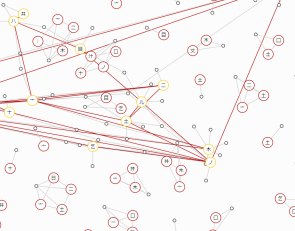
Radical Reactions

This project seeks to add a physical element to the understanding our education over the years in reading and writing kanji characters. Braun seeks to visualize radicals and the kanji they compose like atoms with shared bonds, clustered across the school years of learning new vocabulary. Ever thought about just how complex your knowledge in kanji characters actually is? Check out this visualization to be impressed with yourself!

Atomic Narratives: U.S. and Japanese Textbook Accounts of Hiroshima and Nagasaki

In this visualization, Braun comparatively explores textual narratives of U.S. and Japanese accounts of the atomic bombings in World War II. What gets emphasized, and what doesn’t? How does this change across publishers and cultural difference? The textbooks used get tokenized by part of speech, demonstrating the structure of the stories that get told, and later, by topics. While this project is just a sampling of select textbooks, it very much puts the process of writing history into perspective.

Other projects related to Japan that appear on the site are:

  • Space, Time, and Body Asunder: Mapping the Voices of the Hiroshima Archive
  • Kanji Deconstructed
  • Passing the Beat: Crossover Artists in the U.S., U.K., and Japan

You could literally lose hours sifting through these projects and their data, so be sure to check it out when you have the time!

Posted in blogs, culture, fun links, main posts, study tools, useful links | Tagged , , , , , , , , , | Leave a comment

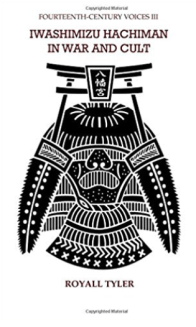
Book Announcement: Iwashimizu Hachiman in War and Cult (Fourteenth-Century Voices) (Volume 3)

Iwashimizu Hachiman in War and Cult (Fourteenth-Century Voices) (Volume 3)

Royall Tyler

Here are three works from 14th c. Japan. MEITOKUKI narrates a failed rebellion against the shogun in 1391. OEIKI narrates another failed rebellion in 1399. The third work is HACHIMAN GUDOKUN (ca. 1304), an important treatise on the cult of Hachiman, an extremely significant deity, based at Iwashimizu, near Kyoto.

Posted in announcements, culture | Tagged , , , , | Leave a comment

Job Opening: Japanese Teacher, Fusion Academy, Huntington Beach


Job: Japanese Teacher/Mentor
Institution: Fusion Academy
Place: Huntington Beach, CA

(copied from official job posting)

About the Organization:
Fusion Academy is a revolutionary, accredited private middle and high school. Our classes are one-to-one: one student and one teacher per classroom, offering a truly individualized education for students in grades 6-12. Fusion Academy has campuses across the United States, is growing rapidly, and is the nationwide leader in one-to-one schooling.

Each and every student at Fusion is unique, and comes to us for different reasons, but one thing they have in common is that traditional school hasn’t worked for them. They may be gifted or accelerated learners, need a flexible class schedule to work around extracurricular careers or interests, have a mild learning difference, or struggle with other social/emotional challenges. Teachers act as mentors and meet students where they are to build a foundation of trust, and personalize curriculum for each student’s unique strengths, interests, and learning style.

Our education model is a unique academic program where students can start at any time of the year. Our campus environment is highly personal and socially inclusive. We understand that kids are more than their grades. That’s why we also care about students’ social and emotional well-being. In addition to full-time enrollment, students may take a class for credit, or join us for tutoring/mentoring.

The Fusion culture offers a truly unique place to work, teach, and learn. Fusionites are creative, passionate, embrace change, and have fun! They communicate honestly and with compassion to both students and colleagues. People join the Fusion family for more than just a paycheck; they seek to work with peers who share these values. And because Fusion is growing rapidly, we offer considerable opportunity for career advancement throughout the country.

Position Summary:

Our campus has an immediate opening for a Japanese Teacher. This position provides a student centered, supportive classroom that promotes compassion and tolerance, emotional security, resourcefulness, and independent critical thinking while addressing the individual academic and emotional needs of each student through Fusion’s differentiated approach.

Key Responsibilities Include:

*Provide a one-to-one teaching experience in the areas of Japanese 1 through Japanese 3 at grade levels 6-12.
*Show evidence of adapting and differentiated instruction for all students and a classroom forum for holistic growth.
*Maintain complete and accurate records.
*Develop and maintain genuine, positive and consistent communication with parents.
*Contribute to and benefit from the campus community.
*Practice professionalism through ongoing professional development, reflection and continuous improvement.
*In addition to subject matter tutoring and teaching, this position includes significant student mentoring.
*Other duties as assigned.

Qualifications Required:

*A minimum of a Bachelor’s Degree is required for consideration, as well as a higher level Japanese background.
*Solid subject matter knowledge in a majority of these areas: Japanese 1 through Japanese 3 at grade levels 6- 12.
*Teaching credentials are a plus but are not mandatory
*Experience with students with learning differences and ADHD is a plus as well as mentoring experience.
*The ideal candidate is outgoing, well organized, competent in basic computer skills, and is an individual who is eager to work in a highly dynamic, energetic school setting.
*Candidate must be prepared to teach and tutor material at a high school level immediately.

Competencies Desired:

*Expertise in the relevant subject area.
*Understand learning differences and emotional difficulties.
*Ability to mentor as a positive role model.
*Understand and support each student’s Formal Education Plan (FEP).
*Commitment to continuous improvement.
*Self-directed, proactive, intelligent, knowledge of curriculum and assessment, multi-tasker, problem solving skills, professional written and verbal communication skills, ability to connect with students with patience and compassion.
*Ability to manage stress, and self-regulate during chaos and crisis, consistently positive attitude, strong teamwork, passionate, genuine, organized, internally motivated, service orientation, ability to reserve judgment and respond with curiosity and compassion.

To Apply: do so online, at appone.com.

Questions can be directed to: Connor Mufich at cmufich@fusionacademy.com

Posted in announcements, job openings, jobs, Uncategorized | Tagged , , , | Leave a comment

Workshop: University of Michigan Medieval Komonjo Workshop 2018

University of Michigan Medieval Komonjo Workshop 2018

“Commoners and Authority in Medieval Japan”, July 9 to August 3, 2018

We are delighted to announce the University of Michigan Medieval Komonjo Workshop 2018, a month-long intensive summer program in medieval historical materials, the theme of which will be “Commoners and Authority in Medieval Japan.” The workshop will introduce a variety of materials that emphasize the non-elites and their relationship to political institutions and authorities that impacted their everyday lives. Some materials to be covered are documents from the Kanazawa bunko komonjo 金沢文庫古文書, Shokunin uta awase 職人歌合, and Sengoku daimyo letters in the possession of the Nagano Prefectural Museum of History.

The workshop will occur in two sessions, with instruction M-F, 9AM–12PM, 1PM–4PM. The first session, led by Professor Sasamoto Shōji (Director, Nagano Prefectural Museum of History), will focus on the Muromachi/Sengoku periods (1336-1603). The latter session, by Professor Takahashi Shin’ichirō (The Historiographical Institute of the University of Tokyo), will focus on the Kamakura period (1185-1333). Additional lectures on material culture and commoner life will be provided by Professor Eric C. Rath (University of Kansas, UM Center for Japanese Studies Toyota Visiting Professor, 2017-2018).

The workshop will be conducted in Japanese. Participants will decipher premodern texts, transcribe them into modern Japanese, and finally translate them into English. Participants should have advanced Japanese proficiency and have at least introductory level proficiency in classical Japanese or Chinese.

The workshop will be free to participants. While it is possible to attend only one session, full financial support for housing costs will be provided for those attending both sessions (particularly graduate students). Housing support for part-time attendees will be determined on a case-by-case basis. The estimated cost for one-session housing is $1,000. The cost of travel and meals (aside from workshop welcome dinners) will not be provided. However, depending on the number of applicants, a partial travel grant may be available to graduate students.

Applications are due March 2, 2018. 

See the application form on the Center for Japanese Studies website below for more details.

Link: https://ii.umich.edu/cjs/news-events/events/conferences-and-symposia/university-of-michigan-medieval-komonjo-workshop-2018–commoners.html

Please direct any further questions to Paula R. Curtis (prcurtis@umich.edu), cc Hitomi Tonomura (tomitono@umich.edu).

This workshop is made possible by the generous support of the University of Michigan Center for Japanese Studies, The University of Michigan International Institute, Northeast Asia Council (NEAC) of the Association for Asian Studies, the University of Michigan’s Department of History, The University of Michigan Asia Library, University of Michigan’s Japanese Studies Interdisciplinary Colloquium, The Eisenberg Institute for Historical Studies, and the University of Michigan Medieval and Early Modern Studies Program.

Posted in announcements, graduate school, study tools, summer program | Tagged , , , , , , | Leave a comment

Call for Papers: Mediatised images of Japan in Europe: Through the media kaleidoscope

Europe and Japan are geographically far removed from one another. However, and increasingly, Japan is also present in a variety of public venues and forms travelling on multiple distribution platforms: print, television, and online media. Inevitably, all these sources provide polyvalent images of Japan as traditional and modern, familiar and alien. The variety, and sometimes conflicting nature of these images can raise questions about their accuracy and how representative of Japan they are. Japan is perceived through the kaleidoscope of the media, as a fragmented and scattered succession of images, forming an ever-changing vision. While air travel has become accessible for the masses, Japan remains distant for many Europeans, and thus their main or only sources of knowledge are those that are available to them in their home country or on the Internet.

Papers for this workshop can fall into, but are not limited to, the following categories:

  • Japan in the European media, in the past and currently
  • The press: newspapers, weekly and monthly magazines, internet magazines and portals
  • Television: variety shows, documentaries released in European TV stations
  • Travelogues and carnets de voyage
  • European/American cinema and TV shows
  • Images of Japan as depicted in Japanese manga and animation (anime, feature films, auteur short animations) as well as Japanese live-action films and TV series released in European countries
  • European/American novels, comics, cinema and TV shows
  • Accuracy of media portrayals of Japan
  • ‘Contradictions’ and ‘paradoxes’ about Japan in European and Japanese media
  • ‘Japan’ as a constructed image in/by the media
  • Western stereotyping of Japan in the media

Cardiff University’s School of Modern Languages, in co-operation with Mutual Images Association, invite potential speakers to this workshop. Interested presenters are invited to submit a 300-word abstract on topics related to images of Japan through a foreign lens and vice-versa. PhD students and early career researchers are particularly encouraged to submit papers. Panel submissions are welcome, but also all the individual papers will be grouped with others of a similar theme, where possible. All papers presented may be subsequently published in the peer-reviewed journal Mutual Imagesmutualimages-journal.org.

Please send your abstract, along with your details (name, position and institution/affiliation), to: mutualimages@gmail.com

The deadline for abstracts is 15th February 2018. Presentations will be scheduled for 20 minutes, followed by 20 minutes of discussion and exchange.

Information about attending as a delegate will be sent out shortly after the deadline. A provisional schedule and details of the keynote will be provided at that time.

WRITING RECOMMENDATIONS

Abstracts should be in Word format with the following information and in this order:

a) title of abstract, b) body of abstract, c) up to 10 key words, d) author(s), e) affiliation(s), f) corresponding author’s email address.

Please use plain text (Times New Roman 12) and abstain from using footnotes, special formatting or characters, and emphasis such as bold, italics, and underlining.

Your email subject line must read: MUTUAL IMAGES 2018 Abstract Submission.

All abstracts will be anonymously reviewed by a jury of specialists.

We acknowledge receipt and answer to all paper proposals submitted. If you do not receive a reply from us in a week, please resubmit.

Contact Info:

Joint Organising Chairs:

Christopher Hayes, Cardiff University, UK: hayescj@cardiff.ac.uk

Dr Aurore Yamagata-Montoya, University of the West of England, UK: auroremontoya@gmail.com

Maxime Danesin, Université François Rabelais de Tours, France: maxime.danesin@etu.univ-tours.fr

Dr Marco Pellitteri, Kobe University, Japan: marco.pellitteri@gmail.com

Dr Matteo Fabbretti, Cardiff University, UK: mattfabb@hotmail.com

Fabio D. Palumbo, University of Messina, Italy: fabiodomenicopalumbo@gmail.com

Contact Email:
Posted in announcements, conferences, graduate school | Tagged , , , , , , , | Leave a comment

Job Opening: International Student Adviser (Student Advocacy Specialist), The Pennsylvania State University

Via NAFSA job registry.

job opening - 5Institution: The Pennsylvania State University (Penn State)
Location: University Park, Pennsylvania
Posted Jan. 21, 2018
Deadline: open until filled
Education: MA

As the locus for all the University’s global engagements, the University Office of Global Programs is an area of opportunity for those seeking a career in the field of international education. Responsible to the Director of International Student Advising for a full range of services for international students. Duties include advising international students in a fast paced and constantly changing environment on a broad range of regulatory matters; assisting students on matters related to life at Penn State and in the United States including, but not limited to immigration regulations, finances, employment, adjustment to the campus, maintenance of student status, and social and cultural questions; updating SEVIS (the Department of Homeland Security Web-based system known as SEVIS, Student and Exchange Visitor Information System) events; liaising with various campus and government offices including but not limited to the U.S. Department of Homeland Security, the U.S. Department of State, Social Security Administration, the Pennsylvania Department of Transportation, various embassies and sponsoring agencies.

This is a fixed-term appointment funded for one year from date of hire with good possibility of re-funding.

Requirements

Must be a U.S. Citizen or U.S. permanent resident to meet qualifications for appointment as a Designated School Official and Alternate Responsible Officer. Must have a full working knowledge of U.S. immigration regulations pertaining to F-1 and J-1 visa status and possess the analytical skills to apply regulations. Must be committed to customer service and able to work effectively with faculty, students, University and government officials from different cultural backgrounds while maintaining legal and ethical standards. Should be an energetic, friendly, outgoing, creative, and flexible individual who can work in a busy and dynamic office with a very diverse international clientele. Must be able to deal with difficult and sensitive situations. Must have excellent written and verbal communication and have ability to make presentations to an international audience through traditional (e.g., lecture or PowerPoint) and new media (e.g., Facebook, Twitter, YouTube). Must have strong computer literacy. At minimum, the candidate must be proficient with database usage such as data entry, data queries and database maintenance. Good proficiency with word processing and spreadsheets and good experience in Web applications technologies is needed. Candidates with strong computer and application software usage who can help further the unit’s goal of delivering and dispensing students’ engagement via electronic and social network media are encouraged to seek this opportunity.

This job will be filled as a level 3, level 4, or level 5, depending upon the successful candidate’s competencies, education, and experience. Typically requires a Master’s degree or higher in an education or social science related discipline or higher plus one year of related experience, or an equivalent combination of education and experience for a level 3. Additional experience and/or education and competencies are required for higher level jobs. Master’s degree or higher in counselor education, student affairs, or intercultural communication and experience working with or in another culture preferred.

Apply online at https://psu.jobs/job/75753

Posted in announcements, job openings, jobs | Tagged , , | Leave a comment