Job opening: Japanese theater and performanc​e search at Yale U.

The Department of East Asian Languages and Literatures and the Program in Theater Studies at Yale University announce a search to make a tenure-track appointment as assistant professor in the field of Japanese theater and performance, to begin July 1 2012. The appointee will teach undergraduate and graduate courses on Japanese theater and performance (such as Noh, Bunraku, Kabuki, modern and contemporary theater, etc.) and courses in the Theater Studies program. Candidates should have completed a Ph.D. by the time of appointment.   Send letter of application, curriculum vitae, a sample chapter or scholarly paper (30 pp. maximum) and three letters of recommendation to Japanese Theater Search, Theater Studies, Yale University, Box 208296, New Haven CT 06520-8296, fax (203) 432-1308. The review of applications will begin September 12, 2011.

Yale University is an affirmative action/equal opportunity employer. Yale values diversity among its students, staff, and faculty and strongly encourages applications from women and underrepresented minorities.

Posted in announcements, job openings, jobs | Tagged , , , , , , , , , , , , | 2 Comments

Job Opening: Film Studies – Open Rank Professor

Institution:  University of Western Ontario, Film Studies
Location:   Ontario, Canada
Position:   Assistant Professor, Associate Professor, Full Professor

The Department of Film Studies, The University of Western Ontario invites applications for one tenure-track or tenured position in Transnational/World Cinema or American Cinema to begin 01 July 2012; the rank of the appointment will be commensurate with experience. At the Assistant rank the completed Ph.D. or equivalent, and experience and promise in teaching and research are minimum qualifications; a strong record of published work in Film Studies is essential at the Associate or Full Professor ranks.

The successful candidate will be a junior or senior scholar with a commensurate record of publication and teaching in South Asian, East Asian, Middle Eastern, or American cinema. He or she will also have an opportunity to contribute to the Department’s MA in Film Studies.

Positions are subject to budgetary approval.  All qualified candidates are encouraged to apply; however, Canadian citizens and Permanent Residents will be given priority. Applicants should have fluent written and oral communication skills in English. The University of Western Ontario is committed to employment equity and welcomes applications from all qualified women and men, including visible minorities, aboriginal people, and persons with disabilities.

Contact:  Please send a letter of application, curriculum vitae, copies of transcripts, a writing sample, and three letters of reference to: Professor Paul Coates, Acting Chair, Department of Film Studies, University College, Room 78, The University of Western Ontario, London, Ontario, Canada N6A 3K7. Please feel free to contact Professor Coates with questions about the position or the department (519-661-3307).  The Review of Applications will begin 15 October 2011 and continue until the position is filled.

Website: http://www.uwo.ca/film

Posted in announcements, job openings, jobs | Tagged , , , , , , , , , , | Leave a comment

Fun Link Friday: An Introduction to Japanese Pro Wrestling

Hello, everyone! Before I begin this guest post about professional wrestling (aka puroresu, or puro for short) in Japan, let me address two things right off the bat.

1) Yes, pro wrestling is fake. It’s a big sweaty oily series of hugfights whose outcomes are fixed for the purpose of spectacle rather than competition. That said, puro’s emphasis on simulating realistic, rather than emotionally satisfying, combat means that they very often beat the crap out of each other during what are still, for lack of better phrasing, predetermined athletic exhibitions.

2) Any kind of scholarly article on the history of puroresu would take literally forever to write, and even longer than that to read, so I’ll try to breeze through it without omitting anything too important.

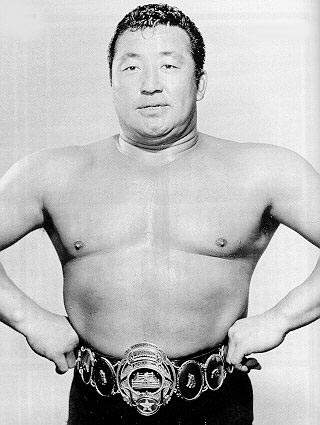
The development of puroresu can be traced back to one man: Rikidōzan (real name Mitsuhiro Momota). Born in Japanese-occupied Korea, Rikidōzan trained for sumo and competed in the makuuchi division, but discrimination against Koreans forced him out of the sport. So, like countless other wash-out athletes before and since, he made his way into pro wrestling. He debuted in 1951 and became a national hero in post-war Japan by defeating an endless conveyor belt of American wrestlers, including Freddie Blassie, the Destroyer, and NWA Heavyweight Champion Lou Thesz, who’d built up his own impressive reputation for ass-kicking in the States. Once he’d established himself, Rikidōzan started his own wrestling promotion, the Japan Pro Wrestling Alliance, and trained a handful of wrestlers. We’ll get back to them once Rikidōzan is dead.

Actually, we’ll just skip ahead to that now and save a little time. Rikidōzan pissed off the yakuza somehow and got stabbed in a nightclub in 1963, dying of peritonitis a week later. His JWA promotion would close up shop in 1973, after every main event draw left the company. Two of those stars, Kanji “Antonio” Inoki and Shohei “Giant” Baba, were among Rikidōzan’s original students, and they each formed their own wrestling promotion after breaking away (which has since become a recurring theme in Japan).

Inoki, known for his enormous chin, started New Japan Pro Wrestling. Inoki was a man with big ideas, and he grew NJPW by having his stable of wrestlers defeat invading forces, usually in the form of foreigners or other companies. Inoki was also a fan of mixed martial arts before that was even a term (back in the day, it was called shootfighting), and that hard-hitting style has become puro‘s most recognizable, and imitated, feature. Unfortunately for Inoki, his own attempts at shootfighting weren’t nearly as successful. The most infamous of his fights was a 1976 bout against Muhammed Ali that went for 15 rounds without a winner and provoked the Tokyo audience into rioting out of sheer boredom. Not even kidding.

Baba, known for his enormous size (6’10” on a good day), founded All Japan Pro Wrestling, and was pretty much the antithesis of Inoki in every way. He insisted on clean finishes to matches (aka no outside interference, cheating, or other chicanery), and distanced himself from other companies, preferring to work with wrestlers who competed exclusively for AJPW. Baba was widely respected throughout the international wrestling community, and AJPW’s golden years produced some of the greatest matches in the history of professional wrestling, Japanese or otherwise. None of them involved Giant Baba, though – even in his prime, he moved like something that slept in a sarcophagus.

Today, puro is struggling to maintain the business it had enjoyed in the 1980s and 90s, but AJPW and NJPW are still around – AJPW is currently owned by Masayuki Uchida, and NJPW is owned by Yuke’s, a software company best known for developing the hilariously broken WWE Smackdown vs. Raw series.

Anyway, enough with the history – let’s get down to some classic pro graps! Since I talked up Baba and Inoki here, I’m including matches in which each of them participated.

Match 1: Abdullah the Butcher/the Sheik v. Giant Baba/Jumbo Tsuruta (AJPW 1977)

—

Match 2: Antonio Inoki v. Andre the Giant (NJPW, year unknown)

And in addition to them, a whole slew of other Japanese promotions have opened up, which we’ll get to in future posts. If Paula will let me, that is. 🙂 Hope you enjoyed a glimpse into the world of puroresu.

Posted in culture, fun links | Tagged , , , , , | Leave a comment

Call for Papers and Extended Deadline: Science, Technology, and Medicine in East Asia

Science, Technology, and Medicine in East Asia:
Policy, Practice, and Implications in a Global Context

October 7-9, 2011
The Ohio State University
Mershon Center for International Security Studies
1501 Neil Avenue
Columbus, OH 43201

http://history.osu.edu/east-asian-conference

Since the end of World War II, historical and contemporary developments in East Asian science, technology, and medicine have received increasing scholarly attention partly due to historian of Japanese science James R. Bartholomew’s career-long commitment to the field and his mentorship of a younger generation of scholars.

This interdisciplinary conference proposes to examine the ways in which the sciences in East Asia – whether basic or applied, from technology to medicine-have shaped and been shaped historically, and are being transformed in the contemporary world by political, economic, institutional, social, and cultural forces, both regional and global.

In honor of and reflecting the career of Professor Bartholomew, the organizing committee invites complete panel proposals, as well as proposals for individual papers, round table discussions, or poster presentations on modern Japan and East Asia, especially, but not limited to, themes which engage the interstices between any field of science, technology, or medicine and such topics as social and political policy, national security, gender, environment, justice, aesthetics and values and the like, as well as other topics.

Complete panel proposals and round table sessions should be comprised of three or four persons, including the chair/discussant. A panelist may also serve as chair. We also welcome creative panel formats. If you are interested in serving as a discussant for another panel, we ask that you send a short cv and statement of interest and specialty in a single attachment named with your last name and the word “discussant,” e.g., “Smith discussant,” to David.Blaylock@eku.edu .

If you have questions, please feel free to contact David Wittner at dwittner@utica.edu .

Extended Deadline: Monday, August 15, 2011

Panelists should consider how their papers fit within one of the following subthemes and indicate this in the proposal.

. Tradition and Modernity in Science, Technology and Medicine
. Embodied Subjectivity: Race, Class, and Gender in Science, Technology and Medicine
. Ideologies of Science, Technology and Medicine
. Geographies of Scientific and Engineering Knowledge
. Science, Medicine, and Technology in War and Peace
. Science, Technology, Medicine and Empire
. Failure and Innovation in Science, Technology and Medicine
. Ethics in Science, Technology and Medicine
. The Science and Technology of National Security
. Science, Technology, Medicine and Environmental Justice
. Science, Technology, Medicine and Discourses of Identity
. Pandemic: Histories of Public Health and Public Policy
. Pedagogy of East Asian Science, Technology, and Medicine

Directions for Submitting an Online Proposal:

Individual Papers, Complete Panel or Roundtable Sessions, and Poster Presentations

Proposals for individual papers and poster presentations must include:

1. One-page abstract which includes a brief explanation of how the paper contributes to a conference subtheme (maximum 250 words).
2. One-page curriculum vitae, including current postal and e-mail addresses
3. The submitter’s personal information, including name, email address, and institutional affiliation.

Proposals for complete panel sessions and roundtable sessions must include:

1. Short description of the session, names of participants and paper titles and an explanation of how individual papers contribute to a conference subtheme (300 word maximum excluding participant’s names and paper titles).
2. One-page abstract (maximum 250 words) for each paper included in the session.
3. One-page curriculum vitae, including current postal and e-mail addresses for each presenter and the chair/discussant.
4. Personal information, including name, email address, and institutional affiliation for each presenter and the chair/discussant

Deadline for proposals is Monday, August 15, 2011

Submission Instructions for individual papers and poster presentations:

Proposals can be submitted through our website http://history.osu.edu/east-asian-conference or as follows:

Send a single attachment to David.Blaylock@eku.edu  containing:

1) paper abstract of no more than 250 words, and;
2) a current cv in either Microsoft Word (.doc or .docx), Rich Text Format (.rtf) file format, or Adobe Acrobat (pdf). Name your attachment with your last name and the words “paper proposal” or “poster proposal,” e.g., “Smith paper proposal” or “Jones poster proposal,” whichever is appropriate.

Submission Instructions for complete panel sessions and roundtable sessions:

Send a single attachment to David.Blaylock@eku.edu containing :

1) 300 word description of the session;
2) 250 word abstracts for each paper included in the session, and;
3) current cv for each participant-chair/discussant in either Microsoft Word (.doc or .docx), Rich Text Format (.rtf) format, or Adobe Acrobat (pdf). Name your attachment with the panel organizer’s last name and the words “panel proposal” or “roundtable proposal,” e.g., “Smith panel proposal” or “Jones roundtable proposal,” whichever is appropriate.

Posted in announcements, conferences, graduate school | Tagged , , , , , , | Leave a comment

IUC Series: The IUC Summer Program

The Inter-University Center for Japanese Language Studies has two programs, the intensive summer program and the intensive 10-month program (I use this word for both because there’s really no denying that the 10-month program is just as serious business as the summer one). Like the year program, the summer program aims to provide an environment well-suited to the study of advanced Japanese. But unlike the year program, there are not subject divisions by field or numerous electives to take. Rather, there is a heavy emphasis on reading comprehension, vocabulary, and practical spoken skills. In this article, I would like to address some important topics concerning the summer program, including whether or not the summer program is right for you and what the coursework itself is like.

Photo by Alissa Murray

Should I do the summer program? Is the summer program just for people who need extra work before the 10-month program?

When applying to the IUC, you’ll find the Center cautions students that although they may be admitted to the year program, some people could be required to attend the summer program prior to admittance because their Japanese is not quite up to speed. This leaves some questions about the proficiency of students and the suitability of the summer program for many who feel they may not need the extra work (or just want to take the summer program independently).

I was a first year MA student when my Japanese professor suggested I go to the Inter-University Center. I had four years of Japanese at undergrad (using the Yookoso textbooks for the first two), one year of intensive summer SPEAC (level 4) using JSL, and was enrolled in the Japanese fifth year independent study level. My professor told me that IUC was the next logical step in really improving my Japanese, especially for research. She suggested I apply for the year program, but told me that I didn’t need the summer program because my level was already high enough.

Of course, like most people, I was not that confident in my Japanese, and though I was flattered that she thought I was good enough to skip the summer program, I definitely wanted to apply anyway. Applying to both, I took the entrance exam required for the 10-month application and found that I was not required to take the summer program, but I had been accepted should I choose to go. In my case, I had also been awarded a Foreign Language Area Studies (FLAS) fellowship that would have funded my summer stay. There was no question that I wanted to go: I thought I needed the extra review, I would be able to get established in Japan long before the 10-month program started, I would have more time in Japan to travel or network,  and I knew I was going to be funded.  It was an all around win.

But what was the situation once I actually attended?

Although the IUC uses the summer program to help prepares students who need more study before the 10-month program, that is not its primary function. Many people take the summer session with no intention of going on right away to the 10-month program, if at all. Typically people either

1)      were required to take the summer program
2)      wanted to take the summer program independently for intensive study
3)      wanted to get a good refresher after having already done the 10-month program, perhaps several years ago

It was also the case that some students of the 10-month program stayed on during the summer after their time at the IUC to do extra research, but I can’t speak to the details of that or the process of applying to do that.

The classes were also split into different levels of proficiency. Although there is no official acknowledgment that classes are divided by how advanced your Japanese is, from my own observation during my time in the program there seemed to be about six classes divided into roughly three levels of proficiency.

One group of classes contained students who were required to take the summer program. These students started off their work with review of grammatical patterns like causative (使役), passive (受身), and causative-passive (使役受身). They got through a handful of chapters in the taigū hyōgen 待遇表現book on polite expressions (which we do all of during the 10-month program). So far as I know, they used different reading materials than the other classes, though this is likely subject to whatever professor runs your particular class.

I was placed in what I can only assume is the mid-level proficiency group. These classes included people who were doing the summer program independently as well as those like myself who had the option of not taking the summer session before entrance into the 10-month program, but chose to anyway. We worked from articles from the beginning, did lots of speeches and discussion activities, and completed the entire taigū hyōgen 待遇表現book.

Lastly, there were also classes more advanced than my own. They began using the same materials as my class did, and also completed the taigū hyōgen 待遇表現 book, but about halfway through the summer picked up the pace significantly and broke off into more advanced reading/grammar materials.

One feature of the summer program is that you don’t trade off classes/classmates like the 10-month program does on a quarterly basis. Because of this, you may not get to know people in the other classes well unless you’re particularly outgoing, and I therefore can’t give specifics about what others students did in their coursework. Though I can’t provide details, I do know from friends that there were definitely classes more and less advanced than myself in the summer course, which indicates that the summer program offers sufficient opportunities to improve for advanced-intermediate as well as advanced learners. Thinking your level is too high or too low shouldn’t deter you from applying; there’s something for everyone.

Coursework

As I mentioned before, the summer program is different from the 10-month in that you don’t trade off or mix up classes with other students, and there are also no electives. Instead, you have a single class that ranges from 6-8 students that you see every day, with morning sessions from 9:30am – 12:30pm five days a week, and an afternoon session 1:30pm – 2:30pm, with Fridays off for afternoon field trips to museums, temples, gardens, archives, or other various locations. You also get ten minute breaks between your classes.

The English-language IUC website says the following about classes:

The morning sessions of the Inter-University Center’s summer program are focused on advanced spoken Japanese. The objective is to acquire the ability to naturally, correctly, and appropriately express thoughts and opinions. Written and computer-based text materials are used, as well as video documentaries, commentaries and movies.

The afternoon session is devoted to conversation, field trip classes, and kanji. Three times weekly, students engage in discussion focused on a variety of topics during a one-hour conversation class. The objective of the class is to improve fluency through free discussion on various topics. Teachers moderate and encourage participation, and introduce the use of appropriate expressions.

Obviously depending on what level class you’re in and who’s teaching it, the content will vary.

My daily experience was as follows:
 

Morning Session 1 (9:30 – 10:30)

–          One student gives a 5 minute speech, the class has 15 minutes of discussion
–          Spend 15-20 minutes discussion recent news (we were required to watch the first 20 minutes of NHK news every night and report on one or more of the topics in class)
–          Vocabulary quiz

Morning Session 2 (10:40 – 11:30)

–          Read articles
–          Review grammar items in articles
–          Review vocabulary in articles
–          Discuss article content

Morning Session 3 (11:40 – 12:30)

–          Taigū hyōgen 待遇表現 (Polite Expressions) textbook
–          Role playing exercises in formal/humble expressions

Afternoon Session (1:30 – 2:20)

–          (M, T, W) One student acts as discussion leader on a controversial topic (having sent discussion questions to the class the night before) – moderates discussion for the entire class
–          (Th) Review/discussion of kanji and vocabulary
–          (F) Fieldtrip

This is roughly how the summer program classes were run for me. In addition, you’re encouraged use your free time to practice SKIP (Special Kanji Intensive Program), a collection of all the daily use kanji broken up into 143 chapters with accompanying quizzes.

At the end of the summer program there is also an oral presentation. You prepare a 10 minute speech with the help of your professors and then the students of all the classes are (at last!) mixed up into several different classrooms. You give an oral presentation before your peers and professors and field any questions they might have.

Housing

The Inter-University Center recommends that summer students use monthly mansions for their brief stay (see Karen’s article on this), but it may be cheaper to find a homestay in the area (this is what I did; see my article on choosing an unaffiliated homsetay) or find someone subletting for the summer via the Tokyo area craigslist, GaijinPot, or any other number of options. If you’re also doing the year program, you might think about getting your own apartment or finding something else long-term.

—

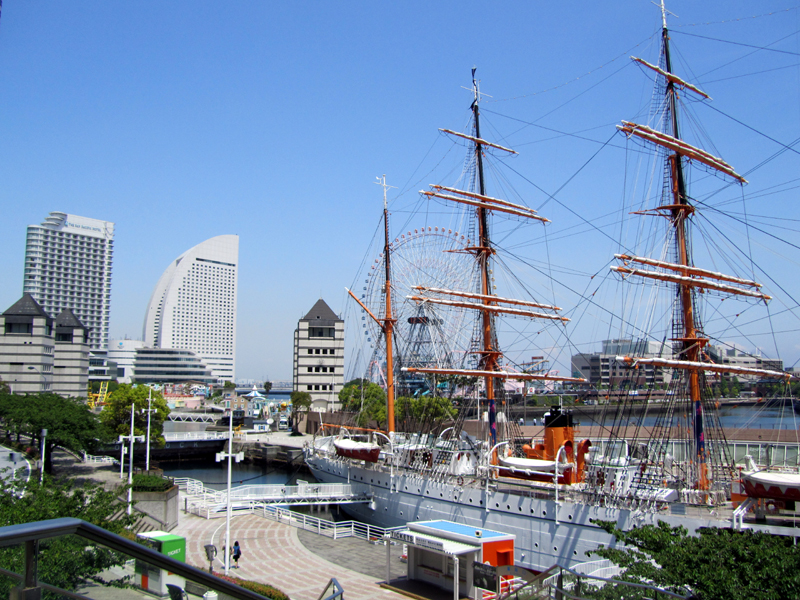
For me, the summer program was a fantastic way to work on things that needed reviewing as well as learn new grammar points and tons of new vocabulary I might not normally encounter. Watching Japanese television regularly really helped me get familiar with the language and style of news media (which I probably wouldn’t have taken the time to get into otherwise while in the states) and the polite expressions textbook especially is something I consult all the time. Also, there’s enough flexibility in the schedule and from the teachers themselves that you can pursue research or networking on your own time as well. Being in Yokohama also gives you the benefit of a very multicultural area with a lot of international business and close proximity to a wealth of museums and other resources near Tokyo. If you do the summer program before the 10-month, you’ll also have a month’s vacation between the terms to travel, research, or do whatever else your heart desires.

Whether your proficiency is just below where you need to be to enter the 10-month program or you’re advanced enough to be working at a much faster pace, the Inter-University Center’s summer program will keep you on your toes and give you lots of opportunities to improve your Japanese during your stay. I highly recommend it! If you have any questions please leave a comment or shoot us an email at shinpai.deshou@gmail.com

Posted in applications, graduate school, housing, language schools, living abroad, main posts, program review, study abroad, summer program | Tagged , , , , , , | 5 Comments

CIES Fulbright Scholar Program Webinars for Applicants

Helpful resources are available at www.cies.org/  for those interested in submitting a Fulbright Scholar Application.

DEADLINE: August 1, 2011

Participate in one of several webinars organized to provide valuable information regarding the application process:

Wednesday, July 20, 2011
2:00 PM – 3:00 PM EDT
Reviewing Your Fulbright Application Package
Scheduled less than two weeks prior to the deadline, this webinar will cover any remaining questions applicants may have about their application packages.

Wednesday, July 27, 2011 2:00 PM – 3:00 PM EDT
Reviewing Your Fulbright Application Package
Scheduled less than one week prior to the deadline, this webinar will cover any remaining questions applicants may have about their application packages.

In case you miss the above segments or wish to view previous webinar presentations, all webinars can be viewed in the Webinar Archive.

Please visit the Catalog of Awards and our online Application.

CIES – Fulbright
3007 Tilden Street NW Suite 5L
Washington DC 20008

Posted in announcements, applications, funding, graduate school, living abroad, study abroad, study tools, useful links | Tagged , , , , | Leave a comment

Summer Program: HIF Japanese Language and Japanese Culture Program

Already thinking about a summer language program for next year? Check out HIF, which has a February application deadline!

—

http://www.hif.or.jp/en/program/

Program Objectives

The HIF Japanese Language and Japanese Culture Program is a university level intensive summer course that focuses on proficiency-oriented instruction. The program aims to help participants acquire or improve communication skills in all aspects of Japanese language with the following combination. Please refer to To Improve your Japanese Proficiency for the detailed information of each category.

The class hour of Japanese class is 140 class hours and equivalent to two semesters of Japanese study at most universities. Past participants have found this program to be highly demanding, as they needed to study for at least 3 hours per day on their own to manage homework assignments, quizzes, weekly tests, midterm and final exams and to maintain class participation.

Prerequisites

Academic Background

Applicants should be enrolled at an institution of higher education in an undergraduate, graduate or postgraduate course. Professionals or graduates with at least an undergraduate degree are invited to apply.

Japanese Level

Applicants should have studied Japanese for at least one semester at any appropriate institutions, and have attained a proficiency of higher than Novice-Mid as outlined in the ACTFL proficiency guidelines.

Non-academic Requirements

Applicants should have willingness to abide by the program’s regulations. Also they should be able or willing to adapt to new situations with social and cross-cultural sensitivity.

Selection of Applicants

Applicants are selected for admission by the HIF Selection Committee by reviewing all submitted materials. Please note the enrollment in the Japanese Language and Japanese Culture Program is limited to 60 and if there are a large number of applicants it may not be possible to admit all applicants even if qualified.

Program Instruction

Academic Credits

Participants who satisfactorily complete the Japanese Language and Japanese Culture Program will receive certificates of completion and grade transcripts. Since HIF is not an affiliated institution, participants are responsible for consulting their academic dean to find out if it is possible to transfer credits to their home institutions. Most participants have received credits equivalent to one year’s work from them.

Class levels
Intermediate-Low or above (2 classes), Intermediate-Mid or above (2 classes), Advanced-low, and Advanced-Mid or above. Levels are determined in accordance with the proficiency guidelines of the American Council on the Teaching of Foreign Languages (ACTFL). Participants’ levels are assessed through placement tests in reading, writing, listening and speaking skills, as well as prior Japanese language study.

Class size
10 students

Japanese Class: Independent Study

This independent study is designed to enhance your Japanese proficiency by accomplishing your individual study objectives in addition to the HIF basic Japanese classes. The study objectives, method, timelines, and the tangible result should be discussed and defined by consulting with your instructor. You may choose a theme related to your interests provided that you can finalize and submit the outcome before the Summer Program is completed. You are required to report the progress of your independent study to your instructor at least once a week so that you can refine your work. The instructor will evaluate the work including the final product. Participants are expected to prepare outlines for their independent study in advance.

Homestay

The eight-week homestay provides you with full immersion in Japanese language and Japanese culture. Host families volunteer to participate in the program not merely to accommodate you but also to help you to practice your Japanese skills and deepen your understanding of Japanese culture. The homework and class topics are also expected to reflect your homestay experience. Please note some host families accommodate more than one student and they provide each one with an individual room.

Japanese Only Rule(日本語だけルール)

To maximize learning in the program, all participants must observe the Nihongo-Dake (Japanese Only) Rule from the moment they enter designated areas of the school building. Participants are encouraged to avoid using languages other than Japanese at school.

For more detailed information, see the HIF homepage:

http://www.hif.or.jp/en/program/

Posted in announcements, graduate school, homestay, language schools, living abroad, study abroad, study tools, summer program, undergraduate | Tagged , , , , , , , , | Leave a comment

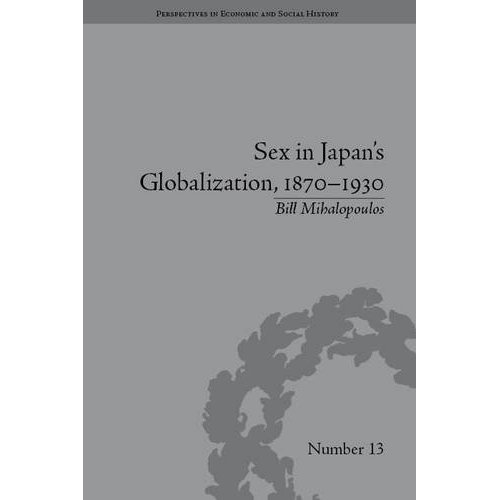
Book announcement: Sex in Japan’s Globalization, 1870–1930: Prostitutes, Emigration and Nation-Building

Bill Mihalopoulos
London: Pickering & Chatto, 2011
ISBN-10: 1848932014
ISBN-13: 978-1848932012

www.pickeringchatto.com/nationbuilding

Based on archival research undertaken in Japan and Britain, Mihalopoulos offers a new perspective on the relations between gender hierarchies and the political economy in a newly modernized Japan. The industrialization of Japan in the late nineteenth century coincided with attempts to establish new trade links abroad. The peasant class were sent overseas as ‘free labourers’ in a state-sponsored programme that also sought to maintain traditional codes of behaviour and morally acceptable forms of work. This study examines the particular impact of these restrictions on peasant women who become marked by the government as ‘voluntary criminals’ because of their work as prostitutes. Sex in Japan’s Globalization reveals how the ‘freedom’ offered to the poor by the market and the state was highly selective and limited. It will be an invaluable tool for those studying Japanese history, politics and economics as well as gender studies and anthropology.

Contents

Introduction: In the Beginning was the Prostitute

1 Another Japan: Sex and Women’s Work
2 Creating the Archive: The Power of the Pen
3 Sexuality and Class: Prostitution and the Japanese Woman’s Christian Temperance Union
4 Sex as Progress: Fukuzawa Yukichi on Trade and Overseas Prostitution
5 Disciplining Globalizing: The Colonial Singapore Example
Conclusion: Globalization and the Poor

Posted in announcements | Tagged , , , , , , , , , | Leave a comment

Call for Papers/Panels: Cool New Asia (Auckland NZ)

Cool New Asia: Asian Popular Culture in a Local Context
Date: 25th and 26th November, 2011
Location: Unitec Institute of Technology: Auckland, New Zealand.

Abstract Submission Due Date: August 31st, 2011.

Confirmed Keynote Speakers: Professor Koichi Iwabuchi (Waseda University, Tokyo) and Professor Matthew Allen (University of Wollongong, NSW, Australia)

Koichi Iwabuchi is Professor of media and cultural studies at the School of International Liberal Studies of Waseda University in Tokyo. He has worked on the issues of media and cultural globalization and transnational connections, multicultural questions and cultural citizenship in the Japanese and East Asian context. His English publications include: Recentering Globalization: Popular culture and Japanese Transnationalism (Duke University Press, 2002); Feeling Asian Modernities: Transnational Consumption of Japanese TV Dramas (ed. Hong Kong University Press, 2004); East Asian Pop Culture: Analyzing the Korean Wave (co-eds with Chua Beng Huat, Hong Kong University Press, 2008). He is an editor of a Hong Kong University Press book series, TransAsia: Screen Cultures.

Matthew Allen is Professor and Head of the School of History and Politics at University of Wollongong, NSW, Australia. He has written on Japanese culture, popular culture, history, ethnopsychiatry, and on Okinawan identity construction. Currently he is working on three projects: culinary globalisation and the localisation of sushi; the representation of popular culture in memorialisation of the nation; and social responses to natural disasters in Japan and Australia. His books include Undermining the Japanese Miracle (Cambridge University Press,1994, 2009, 2010), Identity and Resistance in Okinawa (Rowman and Littefield, 2002), and an edited volume with Rumi Sakamoto, Popular Culture, Globalization and Japan (Routledge, 2006).

Symposium Theme:

As popular culture flows and consumption opportunities become increasingly ubiquitous, what is often overlooked is the marked and local specificity of the popular culture texts themselves. In multicultural societies there is growing interest expressed by different agencies to utilise popular culture for their own purposes. We are particularly interested in the theme of the emerging conflict between different agencies performing popular culture, especially as popular culture texts are used, misused or abused in the pursuit of singularly local objectives and stable cultural identities. Questions of ownership, authenticity and the production/negotiating of identity are central when considering the role diasporic and immigrant communities play in any local environment.

This symposium seeks to bring together scholars and practitioners from across the spectrum of popular culture production and theorisation, leading to new understandings of the ways in which international popular culture and particularly East Asian popular culture is produced and consumed in a local context.

We invite proposals for individual paper presentations and panel proposals with up to 4 participants. Individual papers in the form of 250-word abstracts and panel proposals in the form of 200-word panel proposal and 250-word individual abstracts, to be sent to the conference organisers:

Dr. Elena Kolesova: ekolesov@unitec.ac.nz

Dr. Scott Wilson: swilson2@unitec.ac.nz

Suggested Presentation Topics Include (but are not limited to):

* Identity Construction and Popular Culture * National Identity * New Media * Adaptation * Fans and Audiences * Asian goods outside of Asia * East Asian Popular Culture (either general studies or specific textual examinations but with the focus on a consumption of Asian Popular Culture outside of Asia)
* Media-specific Production and Consumption
* Popular Culture Production
* Subaltern Groups

Free papers are also most welcome.

On your abstract proposal please indicate the following:

* title of paper
* author/s (please include a short bio)
* contact details
* three to four keywords

On your panel proposal please indicate the following:

* title of panel
* panel chair
* panel abstract
* individual paper abstracts
* short bios of all panel participants

Original papers will be considered for publication in a proposed book to be made up of selected, refereed papers.

Key words: identity, ideology, nationalism, pop(ular) culture, agency, subaltern cultures, power struggle

Private Bag 92025
Victoria Street West
Auckland 1142
New Zealand
Website: http://www.unitec.ac.nz

Posted in announcements, conferences | Tagged , , , , , , , , , , | Leave a comment

Call For Papers: Japanese Cities in Global Networks

2012 Annual Meeting of the Association of American Geographers
(AAG) NY, Feb 24-28

Organizers: Carola Hein (Bryn Mawr College), Paul Waley (University of

Leeds) and Cary Karacas (City University New York)

In recent years there has been a revival of interest in and work on comparative urbanism alongside new understandings of the importance of mobility in ideas, policies and practices as they impact on urban environments. Geographers, historians, sociologists and urban studies specialists are increasingly interested in understanding cities and urban life in terms of flows and networks of ideas, technologies and policies. Ironically, however, despite the attempts to move away from an approach centered on the positions of Western social theory, little of this research has of yet focused on East Asia, and while there has been a clear historical focus to the new comparative urbanism literature, recent work on policy mobilities has tended to focus on contemporary conditions.

We invite papers on themes that present Japanese cities in a comparative framework and/or that forefront Japan in discussions of the transfer of urban policies, techniques, forms, and lifestyles between Japan and other parts of East Asia and elsewhere in the world. Papers covering any period from the mid-19th century onwards (including the contemporary period) might:

* Reflect on scalar interactions and urban engagements with global capital and their expression in the built environment.
* Assess the relationship between local actors, histories, technologies, practices and global actors and impacts  — planning theories, practices, financial changes, technological innovations, etc.
* Consider the role of Japanese policies, practices, techniques in reinforcing an identifiable sense of East Asian urbanism.

We welcome papers that use a focus on Japanese cities and Japanese urbanism more broadly to speak to the following range of overlapping themes:

1) Comparative studies of urban policy, practice, and form

— Urban governance: for example, issues of centralization and decentralization
— Urban planning: land readjustment, master planning.
— Waterfront design/ riverfront regeneration
— Transport, infrastructure
— Land reclamation and new town development
— Disaster planning and post-disaster reconstruction

2) Work on networks, mobilities and exchange of techniques

— Exchange of policy ideas and practice through on-site visits, policy tourism, etc.
— Neighbourhood associations and community organization
— Transfers of knowledge, skills, professional techniques
— Foreign aid and investment as tools for the diffusion of “urban techniques and skill”
— Ideas and practices in ecological urbanism
– Japanese construction companies and their global activities

3) Research into the transmission of urban forms, cultures and lifestyles

— Consumption practices and retail spaces in Japanese cities and their regional and global influence
– Urban structures and forms as well as infrastructural design
— Diffusion of urban lifestyle practices through magazines, visual media, tourism
— Transmission of urban imaginaries in manga, film, fiction, etc.
— War and its memorialisation in physical monuments and urban “intangibles”

The above list is intended to be indicative, and papers on related themes are also welcome.

The session will help establish new approaches to comparative studies of Japanese cities in regional and global contexts integrating Japanese urban development into the international context. Beyond that, it will work toward placing Tokyo and other Japanese cities in the context of ongoing discussions on global cities and globalization, contributing thereby to wider debates about comparative urbanism and policy mobilities.

Inquiries can be directed to Carola Hein (chein@brynmawr.edu ), Paul Waley (p.t.waley@leeds.ac.uk ) and Cary Karacas

(cary.karacas@csi.cuny.edu ). We welcome abstracts of up to 250 words by September 14, 2011.

Posted in announcements, conferences | Tagged , , , , , , , , , , | Leave a comment