Job Opening: Asian History in Gender and Sexuality, Assistant Professor

Institution: University of Saskatchewan, History
Location:   Saskatchewan, Canada
Position:   Assistant Professor, Asian History in Gender and Sexualities

The Department of History in the College of Arts and Science at the University of Saskatchewan invites applications for a tenure-track position in Asian history with a specialization in gender and sexualities.   The starting date for this position is July 1, 2013. Geographical specialization (within Asia) and temporal focus are open. Familiarity with feminist and/or queer theory is a strong asset.

Continue reading

Posted in announcements, job openings, jobs | Tagged , , , , , , , | Leave a comment

Funding: American Association of University Women [general] [women]

Graduate, post-graduate, and professional ladies will be interested in the various large and small fellowship and grant opportunities offered by the American Association of University Women, which aims to advance equity for women and girls through advocacy, education, philanthropy, and research.

Fellowships and grants include American Fellowships to support women doctoral candidates, particularly those completing their dissertations, doing postdoctoral research leaves, or working on research in the short-term for publication. There are also Career Development grants for BA graduates, Community Action grants for non-profit organizations and non-degree-based research projects, and International Fellowships for full-time women researchers who are not US citizens or permanent residents.

If some of these might be useful to you or others you know, check it out!

http://www.aauw.org/learn/fellows_directory/index.cfm

Posted in announcements, financial assistance, funding, graduate school, jobs, useful links | Tagged , , , , , , | Leave a comment

Funding: Blakemore Foundation deadline approaching

2013 Blakemore Freeman Fellowships & Refresher Grants for Advanced Study of Asian Languages

Blakemore language grants are awarded to individuals pursuing professional careers in fields such as business, academia, journalism, law, science, medicine, architecture, engineering, the fine arts, public service, etc. who would benefit from improved fluency in an East or Southeast Asian language.

The Blakemore Foundation is now accepting applications for its 2013 Blakemore Freeman Fellowships and Blakemore Refresher Grants. The postmark deadline for applications is December 31, 2012.  For application forms, eligibility requirements, grant guidelines and instructions see the Foundation’s website at www.blakemorefoundation.org.

For 2013, the Foundation plans to award approximately 12-15 grants for the advanced study of Japanese, Chinese, Korean, Thai, Vietnamese, Indonesian, Khmer and Burmese.  The grants cover tuition and a stipend for related educational expenses, basic living costs and transportation, but do not include dependent expenses.
The Blakemore Freeman Fellowships fund an academic year of advanced language study at the Inter-University Center for Japanese Language Studies in Yokohama, the Inter-University Program for Chinese Language Studies at Tsinghua University in Beijing, the International Chinese Language Program at National Taiwan University in Taipei, and similar programs in other countries of East and SE Asia. Where there is no structured advanced-level language program at an educational institution in the country, the grant may provide for the financing of private tutorials under terms set forth in the application instructions.  The fellowships are limited to U.S. citizens and permanent residents of the U.S. who have an undergraduate degree and are pursuing academic, professional or business careers that involve the regular use of an East or Southeast Asian language. The most important criteria for selection is a focused, well-defined career objective involving Asia in which the regular use of the language is an important aspect.

Blakemore Refresher Grants are intended to provide mid-career professionals an opportunity to renew their East Asian language skills by attending a language program in Asia for a summer or semester of intensive full-time language study at the advanced level. Applicants must be a U.S. citizen or permanent resident of the U.S., working as a professional in an Asian field, or teaching in an Asian field as a professor at a college or university in the United States, or be a former Blakemore Freeman Fellow.

Eugene H. Lee, Trustee       Mimi Gardner Gates, Board Chair
Griffith Way, Trustee Emeritus
Cathy Scheibner, Administrative Assistant

Blakemore Foundation
1201 Third Avenue, Suite 4900, Seattle, WA 98101
Phone: 206.359.8778
blakemorefoundation@gmail.com or blakemore@perkinscoie.com
www.blakemorefoundation.org

Posted in announcements, financial assistance, funding, graduate school, Uncategorized | Tagged , , , , , , | Leave a comment

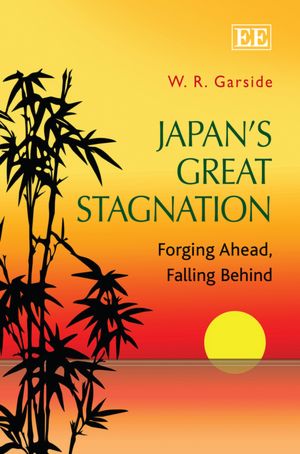
Book Announcement: Japan’s Great Stagnation: Forging Ahead, Falling Behind

W.R.Garside
Waseda University, Japan and University of Durham, UK
Edward Elgar Publishing, 2012
ISBN-  978-0-85793-821-3

This timely book presents a critical examination of the developmental premises of Japan’s high-growth success and its subsequent drift into recession, stagnation and piecemeal reform. The country, which within a few decades of wartime defeat mounted a serious challenge to American hegemony, appeared incapable of fully adjusting to shifting economic circumstance once the impulses of catch-up growth and the good fortune of an accommodating international environment faded.

Contents
Contents: Preface 1. Before Stagnation: Legacies of the High-growth Period 2. Catch-up Growth and Maturity: Developmentalism in Retrospect 3. Developmentalism as Ideology 4. Economic and Financial Policy in a Changing International Environment: The Origins and Course of the Bubble Economy 5. ‘Losing a Decade’: Economic and Financial Hubris in Recessionary Japan, 1990–97 6. Funding a Recovery: The Impact and Fate of Fiscal Policy, 1990–97 7. Banking Crises, Monetary Policy and Deflation, 1997–2000 8. Reform Without Salvation: Japan 1997–2000 9. Recession, Stagnation and the Labour Market: Continuity and Change in the 1990s 10. ‘Lost Decades?’ Japan’s Political Economy in the New Millennium Bibliography Index

‘Recent events have rendered Japan’s lost decades all the more relevant to the rest of us. Rick Garside, in this wide-ranging and accessible account, explores the political economy of Japan’s great stagnation with an eye toward describing how other advanced economies can avoid going down the same path.’
– Barry Eichengreen, University of California, Berkeley, US

‘Professor Garside’s timely book transcends the national preoccupation suggested by its title. From one viewpoint this is a case study (admittedly on a grand scale) of the experience of one country in one historical period. But in analyzing the dynamic relationship between Japan’s post-war economic miracle and its chronic stagnation from the 1990’s he offers a penetrating insight into the links between profound and embedded institutional and ideological influences, global upheaval, and almost disastrous national economic performance. Hence, Japan’s Great Stagnation – the unfolding story of that country’s declining experience from masterful economic power to seeming economic paralysis – provides us with an all-too familiar scenario with which to approach the contemporaneous ills of the world’s developed economies. The interaction between banking crises, unwieldy institutions (especially, but not only, financial institutions), policy frailties, and stagnating demand – all conspired to create crisis and then handicap or prevent recovery. And the familiarity of the story is aggravated by the global financial crisis which now threatens to engulf us. History never fully repeats itself, but Professor Garside’s illuminating examination of Japan’s recent experiences must surely provide important points of relevance for the world’s current malaise. He is to be congratulated on the depth and scope of what he has achieved – and for its relevance to what we are experiencing.’
– Barry Supple, University of Cambridge, UK

Posted in announcements, culture | Tagged , , , , | Leave a comment

Job Opening: East Asian Visual Culture, Lecturer (part-time), Smith College

Institution: Smith College, Program in East Asian Studies and Department of Art
Location:   Massachusetts, United States
Position:   Lecturer in East Asian Visual Culture

The Program in East Asian Studies and Department of Art at Smith College invite applications for a part-time position as Lecturer to teach three courses in East Asian visual culture for three years beginning in 2013-14. Scholarship that is methodologically engaged is considered a plus. Smith offers competitive salaries commensurate with experience; the position comes with partial benefits.

Please apply at http://www.smith.edu/deanoffaculty/facultypositions.html with a letter of application, curriculum vitae, sample syllabi, and three confidential letters of recommendation; semifinalists may be asked to provide a writing sample. General questions regarding the search should be directed to Becky Davis at bdavis@smith.edu or (413) 585-3103. Review of applications will begin December 1, 2012.

Smith College is an equal opportunity employer encouraging excellence through diversity.

Website: http://www.smith.edu/deanoffaculty/facultypositions.html

Posted in announcements, job openings, jobs | Tagged , , , , , , , | Leave a comment

Fun Link Friday: Halloween at Baskin Robbins, Japan

Documenting of the evolution of Halloween in Japan is one of my favorite visual anthropology side projects. Unfortunately, I don’t live as close to a Baskin Robbins, one of the original Halloween taste-makers, as I did in my study-abroad days, but Kay at RocketNews24 wrote an article about this year’s BR Halloween line up with plenty of photos: “Sweet Heavens! Baskin Robins All Set to Get Japan Into the Halloween Spirit.”

With Halloween quickly approaching, we hope those of you with plans to go trick or treating have been inspired by some good costume ideas! Although Halloween in Japan is not as major an event as it is in the U.S., more and more people have begun to “celebrate” it in recent years, albeit mainly in the form of pumpkin shaped cookies or Halloween-themed decorations in shops. Baskin Robins Japan is no exception, and the ice cream chain is ready to offer their customers a little Halloween flavor, quite literally!

I’m personally fond of the Pumpkin Pudding ice cream and might have to trek out to BR this weekend. What are your experiences with Halloween goods and celebrations in Japan?

Posted in culture, fun links | Tagged , , , , , | Leave a comment

Job Opening: East Asian or Southeast Asian History, Assistant Professor

Institution: Baruch College, City University of New York, History
Location:   New York, United States
Position:   Assistant Professor, Tenure Track Faculty, East Asian/Southeast Asian History

EAST ASIAN/SOUTHEAST ASIAN HISTORY

The Department of History at Baruch College of the City University of New York invites applicants for a tenure track assistant professorship in East Asian and/or Southeast Asian history to begin August 2013. Preference will be given to candidates with research focusing on areas outside China, especially Japan, Korea, or Southeast Asia. Transnational/transregional emphasis and focus on the modern era desirable.  Teaching excellence required for a global history survey and upper level undergraduate electives, especially ones with a global or transnational framework.  Ph.D. required. Please send a letter of application addressing research and teaching interests and experience, C.V., three recommendation letters, syllabi and/or teaching evaluations if available, and an article length writing sample to: Tansen Sen (East/Southeast Asia Search Committee Chair), Department of History B5/200, Baruch College, 1 Bernard Baruch Way, New York, NY 10010.  Applications may be emailed to Tansen.Sen@baruch.cuny.edu. Please indicate in cover letter if you will attend the AHA or AAS.

Deadline:  December 4.  Baruch College is committed to enhancing our diverse academic community by actively encouraging people with disabilities, minorities, veterans, and women to apply.  Baruch is an Affirmative Action/Equal Opportunity Employer.

Contact: Tansen Sen (East/Southeast Asia Search Committee Chair), Department of History B5/200, Baruch College, 1 Bernard Baruch Way, New York, NY 10010
Tansen.Sen@baruch.cuny.edu
History Department Office:  646-312-4310

Website: http://www.baruch.cuny.edu/wsas/academics/history/index.htm

Posted in announcements, job openings, jobs | Tagged , , , , , , , | Leave a comment

Call for Papers: Media Histories/Media Theories and East Asia

UC Berkeley Conference

*
Symposium date: February 7-8, 2013*

This symposium brings together prominent and emerging scholars to discuss Japanese and East Asian cross-cultural developments in media theory and culture from the early twentieth century to the present. The symposium will read East Asian film and visual arts as part of a changing media landscape in relation to commercial cinema, television, and intermedia arts as well as political, economic and cultural transformations. We encourage submissions on topics such as: the relation between urban space and the arts in cultural politics; reading the problems of film audience and reception; the important (and neglected) role of East Asian film and media theory and critical writings; East Asian arts movements in transnational perspective; film and visual art as a mediator of cultural/political history; avant-garde artist networks, commercial culture, and architectural transformation. The symposium aims to foster transnational and local scholarly perspectives on East Asian arts and media theory in the context of recent cross disciplinary arguments in film and media studies.

Please submit a *250 word abstract along with a brief bio* to mbsas@berkeley.edu by *November 25, 2012*.

Posted in announcements, conferences, graduate school | Tagged , , , , , , | Leave a comment

On the State of the Humanities and the value of the PhD

I have seen countless articles and blog posts in the last few years – and I am sure you have too – commenting on the state of the humanities, dramatic shifts in the nature of the university as an institution, and the challenges faced by those seeking to forge a successful career in academia. More specifically, many of these focus on the increasing difficulty of obtaining tenure-track positions, the explosion in colleges’ use of adjuncts, lecturers, etc., and the worrying consequences for those of us pursuing a PhD in the hopes of actually making a living as a professor.

Many of the most interesting and compelling posts on these “state of the academy” subjects have been on the personal blogs of individual professors, graduate students, and others, and I think it absolutely thrilling that such discussions are going on in such an active, vibrant, engaging environment (i.e. on the internet), and not only in the much more slow-moving world of print publications, nor solely within the halls of individual academic departments or campuses. There are a ton of recent articles & blog posts on these subjects out there, addressing a myriad aspects, from a variety of viewpoints and perspectives; today I thought I would share just a few, the articles that have most recently grabbed my attention and really gotten me thinking on these issues (by chance, mostly from a publication called The Chronicle of Higher Education).

The gates to Brown University. The gates of academia. (Photo by the author.)

Last week, a friend pointed me to a recent article in the Chronicle which alerts us to the fact that many university departments today are only hiring if you’ve completed your PhD quite recently. The crazy part is, it would seem that in the eyes of many of these search committees, the undesirability of having completed your PhD more than a few years ago is scarcely ameliorated at all by having spent that intervening time engaging in post-doctoral fellowships, adjunct teaching experience, or other academic/professional activities. This kind of behavior is inappropriate even if there were a genuine gap in your professional activities since completing your PhD – whether because you spent those intervening years trying and trying, unsuccessfully, to secure a tenure-track position, or because you took off time to raise your children, or for any number of other reasons. But to take valid, genuine professional/academic activities such as post-doctoral research or adjunct teaching experience as negatives, to consider them almost equivalent to having no such experience at all, seems on the surface almost absurd.

Personally, I have every intention, upon completing my PhD, of taking whatever exciting opportunity may present itself. Post-doc fellowship? Museum position? Teaching college in Japan? Sign me up! … I sincerely hope that pursuing such a path doesn’t hinder, or destroy, me, if/when I do seek a tenure-track professorial position here in the US a little later down the road. But, more importantly than my own personal motivations, I think that the academy continuing to put a stronger emphasis on a very specific type of scholarly activity as a prerequisite to earning a tenure-track job, rather than opening up and embracing a wider range of types of scholarly activity (e.g. teaching, museum work) is terribly wrong-headed.

I am not the only one thinking this way. Many have noted, questioned, and criticized the single-minded focus of the academy on training PhD students for careers in the academy, i.e. solely as scholars/researchers & as professors (teachers), leaving many such students woefully unprepared for careers in related fields. Curatorial positions, for example, along with certain other museum professionals’ jobs, today increasingly demand applicants to have completed the PhD. And yet, most PhD programs (and at least some Museum Studies programs, as I saw from personal experience) fail entirely to include teaching or training in some of the most essential, fundamental curatorial skills, such as exhibit design, connoisseurship, and art handling.

Columbia University commencement, 1913. Courtesy of the Library of Congress on Flickr.

Ten years ago, in an article in the American Historical Association’s own Perspectives on History magazine, Lynn Hunt asked “Has Professionalization Gone Too Far?” It’s a short article and a very engaging read – I recommend reading the whole thing, but in summary, Hunt worries that the structure, or culture, of academia has come to be one that encourages the intense, focused pursuit of professional goals, to the detriment of what she terms “the most essential component of graduate education: the intense passion of intellectual inquiry.” I certainly feel this pressure myself, in no small part due to the numerous articles out there bemoaning the dearth of tenure-track jobs and the incredible competition for them. I find I feel another kind of pressure as well, for there is also another type of professionalization at work in graduate school: the pressure to become a certain type of historian, with a certain type of approach, such as fits into certain people’s definitions of what it means to be a “professional” historian.

Why should teaching, or museum work, or certain other professional paths, be seen as somehow lesser than a path more exclusively devoted to research (that is, a very specific type of research, that which the academy accepts and values and will be willing to see published)? Many commenters see another problem with the system in the incredible length of time it takes to complete a PhD, and suggest that steps be taken to shorten the process. Personally, I’m not sure it’s the length of the program that is such a problem, so much as it is the trade-off of the pay-off1. We pursue the PhD for all kinds of personal, intellectual, scholarly reasons, but also with the hopes of being able to have a successful career afterwards, something that seems ever more in doubt these days.

Professor Leonard Cassuto, in an extremely recent article in the Chronicle, considers the benefits and short-falls of the possibility of creating multiple tiers of professional scholarly training, allowing students the possibility of earning a degree in a shorter period of time that still grants them entré into a career in a scholarly field (e.g. museums, or teaching), and better prepares them for that career, while maintaining a separate path (i.e. the PhD path more or less as it stands today) for those devoted to more purely intellectual pursuits. There are certainly pitfalls associated with this multiple-track scheme, chief of which is the danger of those in the less purely scholarly track becoming something of a professional underclass within the field/discipline, though to be honest, I get the impression that museum professionals, librarians, archivists, and professionals in other such highly scholarly fields are already regarded as somehow “lesser” as compared to university professors, who are supposedly devoted more chiefly, more purely or exclusively to research and scholarship, despite their clear role/identity as classroom teachers. So that wouldn’t necessarily be such a change. In any case, I think it would be wonderful if the PhD did prepare us better for a wider range of career possibilities, and if the professional realm of academia itself was less biased and stratified, instead embracing as equals people who choose a career path other than professor (e.g. archivist, curator), as well as allowing for freer engagement in a wider range of activities, e.g. being a professor who also curates exhibitions and/or works with an archive, or being someone whose chief employment is with some kind of arts & culture NPO but who also publishes scholarly material that is accepted as equally scholarly and valid.

At Brown University. Photo by the author.

Shifting gears a bit, we come now to an article by Prof. Frank Donoghue, published two years ago in the Chronicle of Higher Education, and entitled “Can the Humanities Survive the 21st Century?” In it, he draws our attention to the idea that even though the terms “the university” or “the academy” are very often used to mean “the humanities” or “the humanities & social sciences,” in fact, it’s the hard sciences, business, and law that tend to dominate universities these days. This is a development I personally find quite unfortunate and unappealing, but there is a clear logic when one considers (1) the job market, and the increasingly professional-goals-oriented, or to put it another way, financially-minded, attitudes of undergraduates, as well as (2) the economic incentives for corporations to fund the kind of research (e.g. hard sciences, engineering) and (business/law/corporate) education that is most directly relevant to their own corporate endeavors.

And so, when we talk about the state of the university as an institution, we must be careful, he argues, not to conflate “the university” with “the humanities,” and must instead recognize that the university is doing just fine, and will likely continue to do just fine in the foreseeable future, albeit as a dramatically different institution from what we in the humanities idealize. The humanities, meanwhile, as I am sure comes as no surprise, are in trouble. Or, rather, to give away Donoghue’s surprise ending, it is the humanities in their current form as disciplines within the university that are in trouble. This is a long article, and there is a lot here (though I do strongly recommend reading this one through as well, as there’s a lot of excellent stuff here) but to sort of jump ahead to the ending, and to bring us back around to something I touched upon earlier in this post, Donoghue suggests that by the next century, the university may change so much that the humanities may no longer have a place in it, but that this doesn’t mean the humanities as disciplines, or humanities scholarship as a profession, will come to an end. Rather, the humanities will survive, and perhaps even flourish, outside of the academy. It is my hope that this means an increased potential for humanities scholars to find successful careers in the art & museum worlds, popular publishing, journalism (e.g. Donoghue cites Thomas Friedman of the NY Times as a prominent “humanist”), and other wide-ranging and/or creative pursuits, though Donoghue is not quite so explicit as to the form he imagines this development may take.

Perhaps I have gotten too much into my own personal desires and career goals here, but I hope that you find the links, the questions and problems they address, and the arguments they make, intriguing and engaging.

—-
(1) As well as the content/structure of that program (focusing on the production of a lengthy, theory-dense piece of scholarship on a very narrow subject rather than a process of investigating a much wider range of subjects).

Posted in graduate school, jobs, main posts | Tagged , , , , , , | 1 Comment

Job Opening: Southeast/East Asian History, Edmund A. Walsh School of Foreign Service in Qatar

Institution Type: Georgetown University, Edmund A. Walsh School of Foreign Service in Qatar
Location:   Qatar
Position:   Assistant Professor, Associate Professor, Full Professor; Southeast or East Asian History or African History (Open Ranks)

Georgetown University invites applications for the position of Assistant, Associate or Full Professor in South or East Asian or African History at the Edmund A. Walsh School of Foreign Service in Qatar (SFS-Q).  Candidates whose research interests are broadly transnational are especially sought. The normal teaching load is 2-2, and will include introduction to global history and/or a regional survey course.  ABDs are welcome to apply, with the Ph.D. completed by August 2013.

Applicants should have substantial research accomplishments or evidence of an ambitious research agenda and exceptional promise. All applicants must have outstanding teaching credentials given the small size of our classes and the diversity of our students. Compensation and expatriate benefits packages are excellent, and we provide generous research and conference travel support.  For more information about SFS-Q, please see http://qatar.sfs.georgetown.edu/.

Please apply online at https://academicjobsonline.org/ajo/jobs/2144 and upload a letter of interest (including a description of research and teaching strengths and interests as part of the application letter), a curriculum vitae, and at least three reference letters for assistant professorial rank with the names of at least three references at the more senior ranks.  Candidates selected for interviews at the assistant professorial level will also be required to provide an official graduate transcript and a chapter-length writing sample.  Review of applications will begin November 15, 2012 and continue until the position is filled.

Georgetown University is an Equal Opportunity, Affirmative Action Employer fully dedicated to achieving a diverse faculty and staff. All qualified candidates are encouraged to apply and will receive consideration for employment without regard to race, sex, sexual orientation, age, religion, national origin, marital status, veteran status, disability or other categories protected by law.

Contact: Questions about the online application system should be directed to Nick Starvaggi atnhs22@georgetown.edu. Queries about the position should be directed to Dr. Kai Barth, Assistant Dean for Academic Affairs, at khb3@georgetown.edu.

Website: qatar.sfs.georgetown.edu

Posted in announcements, job openings, jobs | Tagged , , , , , , , , , , , | Leave a comment