Funding: Applications for 2014 Critical Language Scholarship (CLS) Program

money [150-2]2014 Critical Language Scholarship (CLS) Program 

Deadline: November 15, 2013

The U.S. Department of State is pleased to announce the scholarship competition for the 2014 Critical Language Scholarship (CLS) Program in thirteen critical foreign languages. The CLS Program provides fully-funded group-based intensive language instruction and structured cultural enrichment experiences for seven to ten weeks for U.S. citizen undergraduate and graduate students.

Languages offered: Arabic, Azerbaijani, Bangla, Chinese, Hindi, Indonesian, Japanese, Korean, Persian, Punjabi, Russian, Turkish, and Urdu.

The application is available online at
http://www.clscholarship.org. Applications will be due November 15, 2013 by 8:00 pm EST. Prior to preparing their application, interested students should review the full eligibility and application information on the CLS Program website. Arabic, Chinese, Persian, Russian, and Japanese institutes have language prerequisites, which can also be found on the website.

Students from all academic disciplines, including business, engineering, law, medicine, science, social sciences, arts and humanities are encouraged to apply. While there is no service requirement attached to CLS Program awards, participants are expected to continue their language study beyond the scholarship period, and later apply their critical language skills in their professional careers.

The CLS Program will be planning outreach events at universities across the U.S. in fall 2013. Check out the CLS webpage or our Facebook page for updates!

For more information about the CLS Program, please visit the CLS website.

Critical Language Scholarship (CLS) Program
Phone: 202-833-7522
Email: cls@americancouncils.org
Visit the website at http://www.clscholarship.org

Posted in announcements, financial assistance, funding, graduate school | Tagged , , , , , , , | 1 Comment

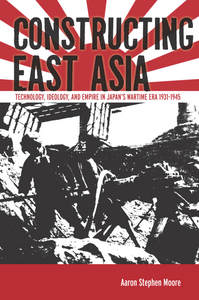
Book Announcement: Constructing East Asia: Technology, Ideology, and Empire in Japan’s Wartime Era, 1931-1945

0804785392Via Stanford University Press.

Constructing East Asia: Technology, Ideology, and Empire in Japan’s Wartime Era, 1931-1945

Aaron Stephen Moore

2013, Available Now

328 pp.
ISBN: 9780804785396
Cloth $55.00
ISBN: 9780804786690
E-book $55.00

The conventional understanding of Japanese wartime ideology has for years been summed up by just a few words: anti-modern, spiritualist, and irrational. Yet such a cut and dried picture is not at all reflective of the principles that guided national policy from 1931–1945. Challenging the status quo, Constructing East Asia examines how Japanese intellectuals, bureaucrats, and engineers used technology as a system of power and mobilization—what historian Aaron Moore terms a “technological imaginary”—to rally people in Japan and its expanding empire. By analyzing how these different actors defined technology in public discourse, national policies, and large-scale infrastructure projects, Moore reveals wartime elites as far more calculated in thought and action than previous scholarship allows. Moreover, Moore positions the wartime origins of technology deployment as an essential part of the country’s national policy and identity, upending another predominant narrative—namely, that technology did not play a modernizing role in Japan until the “economic miracle” of the postwar years.

Posted in announcements, culture | Tagged , , , , , , , , , | Leave a comment

Announcement: 2014 OAH-JAAS Japan Residencies Program

In cooperation with and support from the Japan-United States Friendship Commission, the OAH and the Japanese Association for American Studies (JAAS) plan to send two American scholars to Japanese universities for two-week residencies in the Spring of 2014. During their residencies, the American historians give lectures and seminars in English in their specialty. They also meet individually and in groups with Japanese scholars, graduate students, and undergraduate students studying American history and culture, and participate in the collegial life of their host institutions. The purpose of this exchange program is to facilitate scholarly dialogue and contribute to the expansion of scholarly networks among students and professors of American history in both countries. We are pleased to announce the eighteenth year of the competition.

Round-trip airfare to Japan, housing, and modest daily expenses are covered by the award (note: if the host university is unable to provide housing, award recipients are expected to use the daily stipend to pay hotel expenses). Award winners are also encouraged to explore Japan before or after their two-week residency at their own expense.

Host institutions for 2014

University of the Ryukyus

The University of the Ryukyus (Okinawa, Japan) is seeking a specialist in US history with one or more interdisciplinary areas of interest such as indigenous culture and language, border studies, transpacific diaspora, mixed-race issues, and/or gender issues.

Tokyo Metropolitan University

Tokyo Metropolitan University (Tokyo, Japan) is seeking a specialist in expressive culture in the United States with a focus on the intersection of (white) mainstream culture and African American culture.

How to Apply

Applicants must be members of the OAH, have a PhD, and be scholars of American history. Applicants from previous competitions are welcome to apply again. Award winners are expected to attend the 2014 OAH Annual Meeting in Atlanta, Georgia, so that they can meet with visiting Japanese scholars and graduate students and with members of the OAH/JAAS Historians’ Collaborative Committee before their trips to Japan.

Applications must include the items below. Please send all materials (in Microsoft Word format) toprizes@oah.org, and indicate “2014 Japan Residencies Program” in the subject line. The deadline for materials is midnight on Friday, November 29, 2013. If you do not receive an e-mail confirmation that your application has been received within three (3) days of sending, please contact the OAH Committee Coordinator at khamm at oah.org/812-855-9650.

* A two-page curriculum vitae emphasizing teaching experience and publications. Also include the names and contact information of three references.

* The institution(s) for which you would like to be considered.

* A personal statement, no longer than two pages, describing your interest in this program and the issues that your own scholarship and teaching have addressed. Please devote one or two paragraphs to why you understand this residency to be central to your development as a scholar in the world community. You may include comments on any previous collaboration or work with non-US academics or students. If you wish, you may comment on your particular interest in Japan.

Committee Coordinator
Organization of American Historians
112 North Bryan Avenue
Bloomington, IN 47408-4141
812-855-7311
812-855-0696
Email: http://www.oah.org/about/contact/
Visit the website at http://www.oah.org/programs/awards/

Posted in announcements, funding, living abroad, useful links | Tagged , , , , , , , , | Leave a comment

Job Opening: Asian-American History, Assistant professor

job opening - 5Institution: San Francisco State University, Asian American Studies
Location:   California, United States
Position:   Assistant Professor, Asian American History

Qualifications

*  PhD or equivalent terminal degree by August 1, 2014
*  required specialization in Asian American history
*  preferred expertise in Chinese and/or Japanese American Studies
and/or political science
*  candidates with bilingual expertise in an Asian language are
encouraged to apply

In addition to the specific area(s) of specialization for this position, candidates must demonstrate (1) an ability to teach general and comparative Asian American Studies courses (both undergraduate and graduate levels), (2) excellence in curricular development and student advising, (3) commitment to scholarly/professional activities in the field of Asian American Studies, and (4) service to Asian American communities.

Application Deadline: November 15, 2013
Submit an application dossier containing the following: a CV, all official undergraduate and graduate transcripts, writing/publication samples, three letters of recommendation, and a teaching portfolio that includes sample syllabi for one general lower-division course and one specific upper-division course matching this job description.

Mail hard copies to:
Asian American Studies Hiring Committee, Search #10.13
College of Ethnic Studies
San Francisco State University
1600 Holloway – EP 103
San Francisco, CA 94132

San Francisco State University is a comprehensive institution located in a diverse and international urban setting. The University serves a multi-cultural student body of approximately 29,000 and offers more than 200 degree programs. Excellence in teaching is the faculty’s primary mission, although research/scholarship/creative work and service to the community are high priorities. The University seeks to provide a climate for learning that promotes the appreciation of scholarship, freedom, and human diversity. SFSU is one of 23 campuses in the California State University system.

San Francisco State University is an Affirmative Action Equal Opportunity Employer

Contact: Application Deadline: November 15, 2013
Submit an application dossier containing the following: a CV, all official undergraduate and graduate transcripts, writing/publication samples, three letters of recommendation, and a teaching portfolio that includes sample syllabi for one general lower-division course and one specific upper-division course matching this job description.

Mail hard copies to:
Asian American Studies Hiring Committee, Search #10.13
College of Ethnic Studies
San Francisco State University
1600 Holloway – EP 103
San Francisco, CA 94132

Website: http://www.sfsu.edu/~aas/pdf/AAS-ttk-Search-10-13.pdf

Posted in announcements, job openings, jobs | Tagged , , , , , | Leave a comment

Fun Link Friday: Halloween Bento 2013

Images are from Cookpad. They are linked to their original recipes and credited.

I do one of these articles every year, but now I want to start documenting the numbers, since I have a theory that Halloween in Japan is gaining more and more cultural saturation every year.

Cookpad, Japan’s most popular recipe website, lists 76 entries for “ハロウィンのお弁当おかず”; the total number in the Halloween category is 3311 (as of Oct. 23, 2013). Here are some of the new and cute bentos for 2013:

Kyra-ben Halloween Ghost Bento by cake*mama

This cute ghost is made of white rice, cheese, nori, and ketchup.

Kyara-ben: Fish Sausage Mummy by Pukuyoshi

This mummy is made out of fish sausage, cheese, and nori. Cheese and nori seem to be very popular for the black-colored pieces in bento.

For Halloween: Double-Jack Bento by meg526

This bento has a jack-o-lantern onigiri and a Jack Skellington onigiri. The designs are made with nori and the orange coloring is made by mixing the rice with ketchup and butter.

Halloween Kyara-ben Ghost and Jack-o-Lantern by momo**

This bento uses ketchup for the pumpkin and reddish Viennese sausage skins for the cheeks and tongue of the ghost.

Kyara-ben for Halloween: “Franken-kun” by Chicchi no ohanaben

Frankenstein’s Monster (lovingly referred as “Furanken” in Japanese) is made of rice tinted with soy sace, peas, ham, cheese, and nori.

Check out these recipes and more in the Halloween category on Cookpad!

Posted in culture, fun links | Tagged , , , , , , | 5 Comments

Job Openings: (3) Japanese Studies, Full Professor/Associate Professor/Assistant Professor

Institution:   University of Hong Kongjob opening - 5
Location:   Hong Kong
Position:   Assistant Professor, Associate Professor, Full Professor(3 posts) in the School of Modern Languages and Cultures

Founded in 1911, The University of Hong Kong is committed to the highest international standards of excellence in teaching and research, and has been at the international forefront of academic scholarship for many years.  The University has a comprehensive range of study programmes and research disciplines spread across 10 faculties and about 110 sub-divisions of studies and learning.  There are over 27,800 undergraduate and postgraduate students coming from 50 countries, and more than 2,000 members of academic and academic-related staff, many of whom are internationally renowned.

Professor/Associate Professor/Assistant Professor in Japanese Studies (3 posts) in the School of Modern Languages and Cultures (Ref.: 201300928)

Applications are invited for appointment as Professor/Associate Professor/Assistant Professor in Japanese Studies (3 posts) in the School of Modern Languages and Cultures, from January/September 2014, or as soon as possible thereafter, on a three-year fixed-term basis, with the possibility of renewal.  Appointees with demonstrated performance will be considered for tenure towards the end of the second three-year contract.

The appointees should be specialists in modern Japanese literature, history and/or culture. Applicants should possess native or near-native fluency in Japanese and English.  They should have experience in teaching and researching Japan in transnational contexts, and be capable of offering courses on literature, film studies, popular culture, or other visual and performing arts. The appointees will be responsible for teaching at both undergraduate and postgraduate levels, mentoring students and contributing to curriculum development.  They should have demonstrated leadership and vision, and possess an excellent research agenda and an energetic and engaging personality for propelling the program to new heights.  The School and the Hong Kong Research Grants Council offer competitive funding for research projects of all kinds. The appointees should have obtained a Ph.D. degree in taking up the appointment.

A globally competitive salary commensurate with qualifications and experience will be offered.  At current rates, salaries tax does not exceed 15% of gross income.  The appointments will attract a contract-end gratuity and University contribution to a retirement benefits scheme, totalling up to 15% of basic salary, as well as annual leave, and medical benefits.  Housing benefits will also be provided as applicable.

Contact:

Applicants should send a completed application form, a cover letter, an up-to-date C.V., a writing sample of scholarly work, an abstract of dissertation or current research project, evidence of teaching ability (e.g. syllabi, student teaching evaluations), and 3 confidential references (quoting the advertisement reference number) sent directly by the referees to smlcsena@hku.hk.  Please indicate clearly at which level they wish to be considered for.  Application forms (341/1111) can be obtained athttp://www.hku.hk/apptunit/form-ext.doc.  Further particulars can be obtained at http://jobs.hku.hk/.  Closes November 30, 2013.  The University thanks applicants for their interest, but advises that only shortlisted applicants will be notified of application result.

The University is an equal opportunity employer and is committed to a No-Smoking Policy

Website: http://jobs.hku.hk

Posted in announcements, job openings, jobs | Tagged , , , , , , | Leave a comment

Workshop: Edo-period written Japanese: an intensive course

江戸時代の書き言葉   集中セミナー

Emmanuel College (The University of Cambridge – Dr Laura Moretti) and Nishōgakusha University (Tokyo – Prof Yamabe Susumu) will offer a two-week intense course that teaches comprehensively the written languages and the written styles used in early-modern Japanese materials. This course brings together all the skills (both linguistic and palaeographic) that one needs in order to access, decode and interpret Edo-period printed and handwritten materials. Three will be the areas covered by this seminar: 1.
Kanbun and kanbun kundoku; 2. Sōrōbun; 3. Wabun (hentaigana and kuzushiji). There will also be one day devoted to an introduction to Japanese bibliography.

Period: 4-16 August 2014
* You are requested to arrive in Cambridge on August 3 and leave Cambridge
on August 17

Venue: Emmanuel College (Cambridge) – Harrods Room
St Andrews Street
CB2 3AP Cambridge
UK


Linguistic areas covered

1. Kanbun 漢文and kanbun kundoku 漢文訓読 (36 hours)
Materials used: original printed texts of the Edo period
Script: kaisho 楷書
Aims: a. learn how to read kanbun kundoku without kakikudashi versions
b. familiarize yourself with the specific tools that are necessary for reading kanbun kundoku
c. reflect upon the strategies used for kunten and okurigana in Edo-period kanbun

2. Sōrōbun 候文 (18 hours)
Materials used: letter manuals printed in the Edo period and handwritten komonjo 古文書of the Edo period
Script: sōsho 草書(kuzushiji くずし字and hentaigana 変体仮名)
Aims: a. learn how the syntax of sōrōbun works
b. learn set phrases typical of the Edo-period epistolary style
c. familiarize yourself with the specific tools that are necessary for reading sōrōbun
d. get used to the way in which kanji are rendered in the calligraphy applied in this kind of handwritten materials.

3. Wabun 和文 (in hentaigana 変体仮名and kuzushiji くずし字) (18 hours)
Materials: woodblock printed texts (seihanbon 整版本) of the Edo period
Script: sōsho 草書
Aims (building upon your knowledge of classical Japanese – bungo 文語)
a. learn how to read hentaigana and kuzushiji
b. familiarize yourself with the specific tools that are necessary for reading hentaigana and kuzushiji


For whom is this workshop useful?

–     Master and PhD students in the fields of early-modern Japanese literature, art, intellectual history, history
–     Undergraduate students in their final year who intend to continue with graduate studies in one the fields of Japanese early-modern studies mentioned in the point above
–     Faculty members who wish to expand and/or solidify their knowledge
–     Librarians and curators who are in charge of antiquarian and archival materials of the Edo period and wish to develop solid linguistic knowledge to deal with this kind of material


Teaching staff and language of the tuition

Kanbun will be taught by Prof Yamabe Susumu (Nishōgakusha University) in Japanese.

Sōrōbun and wabun (hentaigana and kuzushiji) will be taught by Dr Laura Moretti (The University of Cambridge, Faculty of Asian and Middle Eastern Studies/Emmanuel College) mainly in English (though translation into modern Japanese will be required from time to time).

Japanese bibliography will be taught by Dr Ellis Tinios (University of Leeds) in English.

Teaching style

The seminar format will be applied throughout the whole course. Introductory learning materials created ad hoc for each of the three areas covered by the course will be distributed two months in advance (beginning of June 2014, via Dropbox). Copies of the primary sources used in class will be available at the check-in in college. Other materials will be provided during the course.

The teaching staff will make sure that each of you will reach the level of proficiency aimed at, for each of the sections of the course. The teaching staff is well trained in conducting interactive teaching, that welcomes questions and values personal feedback.

The schedule will be organized as follows:

Monday – Friday
9.00-10.30: kanbun and kanbun kundoku
10.30-10.45: coffee break
10.45-12.15: kanbun and kanbun kundoku
12.15-13.15: lunch
13.15-14.45: sōrōbun / wabun
14.45-15.00: coffee break
15.00-16.30: sōrōbun / wabun
16.30 onward: study time

Saturday
“The world of Japanese bibliography”

Sunday
Free time (excursions in Cambridge and its outskirts will be organized)

Eligibility

In order to be able to participate in this intensive course you need to:
–          Have an advanced knowledge of modern Japanese (both written and spoken)
–          Have a solid knowledge of classical Japanese
–          Be committed, as the pace will be intense and you will be requested to work a great deal within and outside classes

Previous knowledge of kanbun/kanbun kundoku, sōrōbun, hentaigana and kuzushiji is not requested, but you will be asked to study the preparatory materials mentioned above before you come to Cambridge.

Please pay attention also to the following two points. You are expected to: – Make the necessary preparations before class. In order to do so, you need to bring your own dictionaries.
– This is thought as a comprehensive study of Edo-period written languages and styles. You are requested to attend all the three sections of the seminar (kanbunkanbun kundoku, sōrōbun and wabun).

Tuition fees

£100 (one-hundred pounds) for the two weeks (UK sterling)

Accommodation costs

Accommodation will be provided in Emmanuel College. The cost for a single room with breakfast is £59.95 per night. No children are admitted in college.

How to apply


By 30 November 2013 
send you application via email to lm571@cam.ac.uk (Dr Laura Moretti) and cah09710@pop13.odn.ne.jp (Prof Yamabe Susumu).

Subject of the email: Application Summer Course on Edo Cambridge / SURNAME

Body of the email: please include the following contents:
–          your name, surname, affiliation and position
–          a personal evaluation of your  modern Japanese (both written and spoken) and your classical Japanese
–          a statement about why you need to take part in this course (please, be as detailed and concrete as possible)
–          an explanation of how this course relates to your current research work (if a PhD, a scholar, a librarian or a museum curator), your studies (if an undergraduate student), your daily work with your
collections (if a librarian or a museum curator)
–          a statement about whether you have any knowledge of kanbun/kanbun kundoku, sōrōbun, hentaigana and kuzushiji and, if so, please assess your level

We can only accept 20 participants. If the requests go beyond this number a selection will be made on the basis of the relevance of the course to your work.

For any further inquiry please send an email to:
Dr Laura Moretti   lm571@cam.ac.uk

Posted in announcements, graduate school, study tools | Tagged , , , , , , , | Leave a comment

Call for papers: Shifting Terrains of Struggle in Japan and Japanese Studies

call for papers [150-2]Triangle Center for Japanese Studies Conference, April 11-13, 2014

The Triangle Center for Japanese Studies (a joint undertaking of Duke University, North Carolina State University, and the University of North Carolina at Chapel Hill, with support from the Japan Foundation) invites proposals for papers to be presented at our inaugural conference, to be held April 11-13, 2014, at the University of North Carolina at Chapel Hill.

Recent social scientific explorations of labor in the neoliberal global economy have focused on the condition of precarity, which is marked by, among other things, the vitiation of established social contracts and guarantees, and which has provoked new forms of social identification and political struggle. The objective of this conference is to expand the analytical parameters of the concept of precarity, thus rendering it productive across a longer chronological span and opening it to multiple disciplinary approaches that can generate novel understandings of”Japan”
and Japanese studies in the world.

The conference will engage with the following broad questions:

* How have different historical shifts (political systems, economic conjunctures, environmental shifts, wars, natural disasters, etc.) produced new terrains of social struggle and rendered existing social relations “precarious”? How have modes of inclusion and exclusion evolved across time, giving different meanings to”Japan”?

* How have transformations in knowledge systems rendered disciplines or modes of knowing “precarious” and engendered struggles for reintegration?

* How have different spaces been mapped or experienced as precarious or marginal, and what struggles have arisen to invest spaces with meaning and political value?

* How have the shifts noted above called forth new modes/forms of language, expression, sight, and sensibility, and through them new subjectivities that might be considered precarious? How have they mobilized and transformed existing actors, institutions and practices?

* How has precarity informed the experience or understanding of bodies, gender, sexuality, and reproduction?

Anne Allison (Duke University) will be the keynote speaker. The program will also include a workshop and roundtable discussion for graduate students. The Triangle Center for Japanese Studies will support travel and accommodation for conference participants.

Please send paper proposals of no more than 300 words and a 2-page C.V. totcjs2014conference@gmail.com. Proposals must be received by November 1, 2013.

For more information about the Triangle Center for Japanese Studies, please visit our website athttp://trianglejapan.org/.

David Ambaras

David R. Ambaras
Associate Professor and Director of the Honors Program
Department of History
Campus Box 8108
North Carolina State University
Raleigh, NC 27695-8108
Phone: 919-513-2228
Fax: 919-515-3886
dambaras@ncsu.edu
Skype: dambaras
http://history.ncsu.edu/faculty/view/david_ambaras

Posted in announcements, conferences, graduate school | Tagged , , , , , , | Leave a comment

Funding: Japan Research Award Grant, Univ of Maryland

money [150-2]20th Century Japan Research Award Grant for 2013-2014,

The Nathan and Jeanette Miller Center for Historical Studies and the University of Maryland Libraries Gordon W. Prange Collection and East Asia Collection on topics related to the period of the Allied Occupation of Japan and its aftermath, 1945-1960.

20th Century Japan Research Award for 2013-2014

The Nathan and Jeanette Miller Center for Historical Studies and the University of Maryland Libraries invite applications for two $1,500 grants to support research in the library’s Gordon W. Prange Collection and East Asia Collection on topics related to the period of the Allied Occupation of Japan and its aftermath, 1945-1960. Holders of a Ph.D. or an equivalent degree are eligible to apply, as are graduate students who have completed all requirements for the doctorate except the dissertation. The competition is open to scholars in all parts of the world and from any discipline, but historical topics are preferred. University of Maryland faculty, staff, and students may not apply. More information can be found on the Prange Collection website.

The application deadline is November 15, 2013.  The grant must be used by October 31, 2014. Grant funds will be disbursed in the form of reimbursement for travel, lodging, meals, reproductions, and related research expenses. Such costs as computers or software are not eligible. Reimbursement will require submission of receipts for processing by the University.

All applications must be submitted electronically by attachment to millercenter@umd.edu with Twentieth-Century Japan Research Awards in the subject line. Applications must include a curriculum vitae and a two-to three-page description (double-spaced) of the research project. Applications from graduate students must be accompanied by a letter from the principal faculty advisor attesting to the significance of the dissertation project and to the student’s completion of all other degree requirements.

Materials in the Gordon W. Prange Collection include virtually all Japanese-language newspapers, news agency releases, magazines, pamphlets, and books dating from the period of Allied censorship, 1945-1949, in addition to over 10,000 newspaper photos.  There are also materials published by Chinese and Korean residents, most of which are written in Japanese.  Related collections in English include the personal papers of Charles Kades and Justin Williams. Office correspondence documenting policies and decisions of the Publications, Pictorial, and Broadcast Division, Civil Censorship Detachment (Civil Intelligence Section), Supreme Commander for the Allied Powers Japan, are complementary to official Occupation records housed at the National Archives, College Park.  Japanese newspapers and magazines from the Prange Collection are available for research on microform in the East Asia Collection.  Other Prange materials are made available for research in the Prange Collection reading area
after consultation with the Prange Curator or Manager.  The East Asia Collection contains Japanese-language books published during the wartime period, scholarly monographs on Occupied Japan, and a wide variety of reference works.

A one-page summary of research findings is required at the conclusion of the grant period.

For further information about the collections, consult the following websites: http:/www.lib.umd.edu/prange and http://www.lib.umd.edu/EASIA/eastasia.html

Posted in announcements, financial assistance, funding, graduate school | Tagged , , , , , , , | Leave a comment

Call for articles from readers! Japanese Studies: 5-10-20

5-10-20Next year What can I do with a B.A. in Japanese Studies? is planning a series of periodic articles from guest writers entitled “Japanese Studies: 5-10-20.” Our aim to hear about the personal experiences of people at various stages of their post-Japanese Studies lives and share with readers the great diversity of paths possible for people who have embraced Japanese and Japanese Studies at one time or another.

Are you five or so years out of your degree and into the world? Roughly ten? Twenty or more? Where have your language and cultural skills taken you? What resources helped you? Did your studies bring you down a path that was unexpected? Academic? Business? Cultural? Even if you didn’t pursue Japanese itself, did the skills you learned along the way help you land a non-Japan related job?

We want to hear from you! As with all of our articles, the goal will be to offer advice and guidance to readers, expanding the available knowledge of what life is like with Japanese and Japanese studies under your belt.

If you think you might be interested in writing an article for us about your experiences, please email us at shinpai.deshou@gmail.com with an expression of interest by November 25th, 2013. We look forward to hearing from you!

Posted in announcements, jobs, main posts, site maintenance | Tagged , , , , , | 8 Comments