Funding: Weatherhead Initiative on Global History Fellowships

money [150-2]Description

The Weatherhead Initiative on Global History (WIGH) at Harvard University, directed by Sven Beckert and Charles Maier, identifies and supports outstanding scholars whose work responds to the growing interest in the encompassing study of global history. We seek to organize a community of scholars interested in the systematic scrutiny of developments that have unfolded across national, regional, and continental boundaries and who propose to analyze the interconnection–cultural, economic, ecological and demographic–among world societies. We encourage applicants from all over the world, and especially from outside Europe and North America, hoping to create a global conversation on global history.

For further information about WIGH please consult our website at
http://wigh.wcfia.harvard.edu.

WIGH Fellows are appointed for one year and are provided time, guidance, office space, and access to Harvard University facilities. They should be prepared to devote their entire time to productive scholarship and may undertake sustained projects of research or other original work. They will join a vibrant community of global history scholars at Harvard.

Terms

The competition for these awards is open only to scholars with a PhD (or comparable professional school degree). If still pursuing the PhD, WIGH Fellows must receive their degree no later than May 2013. There is no limit on time since submission of the candidat’s degree; we are open to candidates at various stages of their careers. We expect that candidates will be able to submit samples of independent work (articles, papers, dissertation chapters) in support of their candidacies on request. The WIGH Fellowship is residential and Fellows are ordinarily expected to live in the Cambridge/Boston area for the duration of their appointments unless traveling for pre-approved research purposes, and they are expected to participate in WIGH activities, including a bi-weekly seminar.

Fellows will receive an annual stipend of up to $50,000, according to
fellows’ needs.

Applications are welcome from qualified persons without regard to
nationality, gender, or race.

How to Apply

Applications are due January 10th, 2014
. The following materials are required for a complete
application:

–      A current curriculum vitae, including a list of publications
–      A statement of the applicant’s proposed research, including intellectual objectives and planned methodological and disciplinary work (no more than three pages)
–      A cover letter which succinctly states the applicant’s academic field and proposed or actual research topic
–      Two letters of recommendation
–      A completed application form (to be filled out on our website)

Faxed or e-mailed applications will be considered only from parts of the
world where surface mail is unreliable or prohibitively expensive.

Application materials should be mailed to:

Weatherhead Initiative on Global History
Weatherhead Center for International Affairs
Harvard University
1727 Cambridge Street
Cambridge, MA 02138
USA

All materials must be received by January 10th, 2014. The selection process begins immediately thereafter. Applicants whose materials are late or incomplete are at a disadvantage when considered by the Selection Committee.

For additional information contact:
Jessica Barnard, Program Coordinator
jbarnard@wcfia.harvard.edu
Phone: +011 (617) 495-8923
http://wigh.wcfia.harvard.edu/

Posted in announcements, funding, graduate school, jobs | Tagged , , , , , , , | Leave a comment

Book Announcement: Icons and Iconoclasm in Japanese Buddhism: Kukai and Dogen on the Art of Enlightenment

icons and iconoclasmVia Oxford University Press.

Icons and Iconoclasm in Japanese Buddhism: Kukai and Dogen on the Art of Enlightenment

Author: Pamela D. Winfield
Price(incl.tax): 3,224 yen
ISBN: 9780199945559
224 Pages
Paperback
Feb 2013

Pamela D. Winfield offers a fascinating juxtaposition and comparison of the thoughts of two pre-modern Japanese Buddhist masters on the role of imagery in the enlightenment experience. Kukai (774-835) believed that real and imagined forms were indispensable to his new esoteric Mikkyo method for “becoming a Buddha in this very body” (sokushin jobutsu), yet he deconstructed the significance of such imagery in his poetic and doctrinal works. Conversely, Dogen (1200-1253) believed that “just sitting” in Zen meditation without any visual props or mental elaborations could lead one to realize that “this very mind is Buddha” (sokushin zebutsu), but he too privileged select Zen icons as worthy of veneration. In considering the nuanced views of Kukai and Dogen, Icons and Iconoclasm in Japanese Buddhism updates previous comparisons of their oeuvres and engages their texts and images together for the first time in two decades. Winfield liberates them from sectarian scholarship, which has long pigeon-holed them into iconographic/ritual vs. philological/philosophical categories, and restores the historical symbiosis between religious thought and artistic expression that was lost in the nineteenth-century disciplinary distinction between religious studies and art history. Winfield breaks new methodological ground by proposing space and time as organizing principles for analyzing both meditative experience as well as visual/material culture and presents a wider vision of how Japanese Buddhists themselves understood the role of imagery before, during, and after awakening.

Posted in announcements, culture | Tagged , , , , , , , , , , | Leave a comment

Reminder: Writers wanted – Japanese Studies 5-10-20

Just a quick reminder that we are still looking for people interested in writing (brief!) articles for our Japanese Studies 5-10-20 project, linked here.

Image

Are you five or so years out of your degree and into the world? Roughly ten? Twenty or more? Where have your language and cultural skills taken you? What resources helped you? Did your studies bring you down a path that was unexpected? Academic? Business? Cultural? Even if you didn’t pursue Japanese itself, did the skills you learned along the way help you land a non-Japan related job?

We want to hear from you!

Tell your friends! Forward to your colleagues! We are excited to share your stories.

Posted in announcements, jobs | Tagged , , , , | Leave a comment

Job Opening: Postdoctoral Fellowship in Japanese Studies

job opening - 5Institution: Stanford University, Center for East Asian Studies
Location:   California, United States
Position:   Post-Doctoral Fellow. Japanese Studies

The Center for East Asian Studies at Stanford University is pleased to offer a postdoctoral fellowship in Japanese Studies for 2014-15. This award is open to scholars in any field of Japanese studies. Applicants must have been awarded their Ph.D. no later than August 31 the year in which the fellowship begins, and may not be more than five years beyond receipt of the doctoral degree. Fellowships may be awarded to those who hold continuing, assistant professor-level teaching positions. U.S. citizenship is not required. Those who have received their Ph.D. from Stanford University will not normally be considered. The center expects to make one award carrying a 12-month stipend of approximately $60,000. Fellows are required to be in residence in the Stanford area during the appointment period; to teach one course during the academic year; and to participate in all regular Center activities. They may also have the option to organize a lecture series. Stanford University Press will have first right of refusal for manuscripts produced during the postdoctoral appointment.

Submission deadline for the 2014-15 fellowship applications is:
January 17, 2014

(5:00 p.m. Pacific Standard Time)

How to Apply

Our fellowship application consists of five required elements:

1) Online application form
2) Current curriculum vitae
3) Research plan for the year of appointment (max. 5-page double-spaced)
4) Writing sample (dissertation chapter or other paper) no longer than 30 pages single-spaced
5) Two letters of recommendation (sent directly to CEAS by recommenders)

In addition to the above materials, you may also upload up to two sample syllabi/course proposals for courses you might teach while in residence. These materials are optional and will not be taken into consideration by the review committee when reviewing applications.

You will fill in the required biographical information, upload your application documents, and list your two recommenders on the online application form. When you submit your form, an email will be sent to your recommenders with instructions for completing your recommendation letters online. Be sure to fill out all sections highlighted as required information and to check the certification checkbox before submitting. You will receive an email confirmation of your completed submission, and will also have a chance to print a copy of your application info for your records. If you do not receive a confirmation email, your application was not submitted. Application information (including uploaded files) may be updated at any time before the deadline by entering your email and auto-generated ID# in the application form. You will receive final notification via email on or before Feb. 1 listing any missing application items or verifying that your application is complete.

Questions may be addressed to John Groschwitz, Associate Director, at jgroschwitz@stanford.edu.

Begin your online application

Contact:
Questions may be addressed to John Groschwitz, Associate Director, at jgroschwitz@stanford.edu.

Website: ceas.stanford.edu

Posted in announcements, graduate school, job openings, jobs, Uncategorized | Tagged , , , , , , | Leave a comment

Fun Link Friday: A Dance of Brush and Ink: Tomoko Kawao at TEDxKyoto 2013

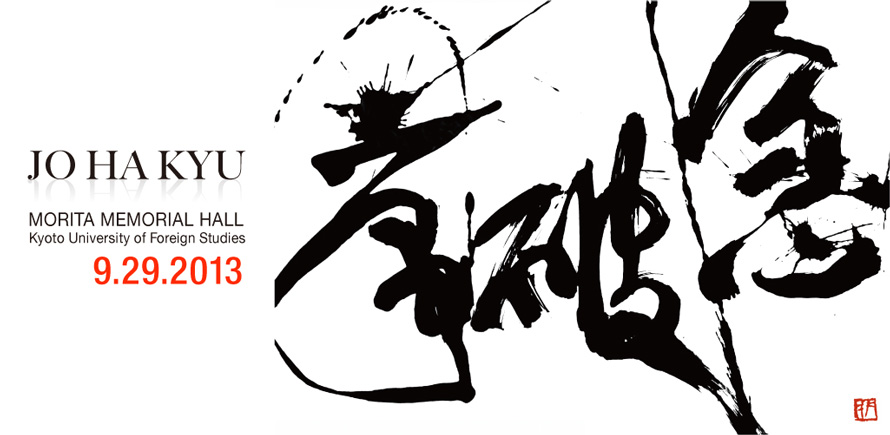
Today’s Fun Link is one of the TEDxKyoto 2013 events, A Dance of Brush and Ink with Tomoko Kawao.

Image via TEDxKyoto 2013

Image via TEDxKyoto 2013

A Dance of Brush and Ink: Tomoko Kawao at TEDxKyoto 2013.

In the hands of calligraphy artist Tomoko Kawao, the brush and ink become part of a dance that mesmerizes just as much as the work of art she is creating. Kawao began learning calligraphy at the age of 6, and since 2004 she has studied under the Master Calligrapher Shoshu. Kawao has received numerous awards and considerable recognition for her body of work, which featured in the logo for the Hankyu Railway Arashiyama Station, included in window displays of numerous department stores, and incorporated in collaborations with the music and fashion industries.

Her masterpiece – the Correlation series – focuses on brush movement between dots, conveying the theme of “imagining the invisible”. The Correlation series, inspired by her daily examination of classic works, was used as the opening sequence for the NHK drama Yae no Sakura and also serves as the basis for all of her live performances and workshops.
All these achievements, however, come down to the simplicity of paper, brush and ink, transformed in the hands of Kawao into works of staggering beauty. TEDxKyoto2013

Watching Kawao create a large-scale piece–the creation of the art is also an art. Watch on Youtube.

Posted in culture, fun links | Tagged , , , , , , | Leave a comment

Call for Abstracts: 23rd Annual Columbia University Graduate Student Conference on East Asia

call for papers [150-2]CALL FOR ABSTRACTS: COLUMBIA GRADUATE STUDENT CONFERENCE ON EAST ASIA

23rd Annual Graduate Student Conference on East Asia
Columbia University in the City of New York
Friday February 14th to Saturday February 15th, 2014

Graduate students (and qualified undergraduates) are invited to submit abstracts for the 23rd Annual Columbia Graduate Student Conference on East Asia. This two-day conference — the oldest of its kind in the nation — provides students from institutions around the world with the chance to meet and share research in progress with their peers.  In addition, participants will gain valuable experience presenting their work through discussion with fellow graduate students as well as Columbia faculty.

This year’s conference will be both a forum for promoting and circulating new ideas within East Asian studies and an opportunity to engage with fellow graduate students across disciplinary and regional frontiers. The field of East Asian studies, broadly conceived, offers fertile ground for exploring and re-inventing conventional analytical categories such as nation, society, politics, objects, space, economics, race, class, mind, identity, culture, body, art, nature, and so on. To that end, we especially encourage work that crosses national, temporal, and disciplinary boundaries to critically rethink the categories that both bind and sub-divide area studies. With an eye toward using the methodological tools of particular disciplines to make connections that are broadly applicable to the East Asian field, projects presented at this conference will be the starting point for discussions that can create new frontiers of knowledge and invigorate the next generation of scholarship.

We welcome applications from students engaged in research on all fields in East Asian Studies, including but not limited to: history, literature, political science, economics, art history, religion, sociology, archaeology, law, environmental studies, media studies, and anthropology.

PARTICIPATION:

Participants can take part in the conference as presenters or discussants. Presenters deliver a talk no longer than 15 minutes that summarizes research in progress. Discussants introduce the panelists, offer feedback, and facilitate the 20-minute discussion session following the presentations. Please indicate on your application which role(s) you are applying for.

Presentations may take two possible forms: a standard academic research paper, or demonstration based in another medium. We encourage submissions of experimental work that engages non-traditional media, including (but not limited to) film, music, creative writing, and visual art. Please specifically indicate the format of your presentation on your application form.

Finally, this year’s committee is also willing to consider applications from pre-arranged panels of three to four presenters organized around a specific research topic, such as a region, discipline or theme. If you are applying as a pre-formed panel, please make sure to include a topic or tentative title for your panel on the application form.

APPLICATIONS (due November 29th, 2013):

Please fill out the application on
<<http://www.columbia.edu/cu/ealac/gradconf/2014form.html>>
with the required information:

*Your full name as you would like it to appear in the abstract booklet and
conference schedule
*Contact information (e-mail)

*Institutional affiliation
*Major area of study (region and discipline)
*Title of your paper (or alternative media presentation)
*250-300 word abstract in print-ready format, including your name and
institution

*Five key words for your paper (along with the abstract)

*Whether or not you would like to be considered as a discussant
*PLEASE NOTE: We will not accept presenter applications without abstracts.

Successful applicants will be notified of acceptance by mid-December.

Final Papers (5-7 pages maximum) are due January 10th, 2014.

NOTE:

Please indicate any audiovisual equipment you will need for your presentation. Please note that our A/V resources are quite limited, and we may not be able to satisfy everyone’s needs. Presenters must bring their own laptops and VGA adapters for computer presentations.

Since presentations will be limited to 15 minutes, full-length research papers or theses will not be accepted. Presentations in any other format will also be restricted to 15 minutes.

Applicants who have not submitted final papers or projects will not be
permitted to participate in the conference.

__________________________________________________________

HOUSING:
Housing will be available on a very limited basis, but we encourage
everyone to arrange their own accommodations in advance. The conference
runs from Friday afternoon to late Saturday evening. Travel and lodging
information will be available soon on the conference website.

CONFERENCE ORGANIZERS:
Allison Bernard, Eunsung Cho, James Gerien-Chen, Lei Lei, Jack Neubauer,
Rachel Staum

CONTACT INFORMATION:

http://www.columbia.edu/cu/ealac/gradconf/

columbiagradcon2014@gmail.com

Graduate Student Conference on East Asia
Department of East Asian Languages and Cultures
407 Kent Hall, Mail Code 3907
Columbia University
New York, NY 10027
FAX: 212-678-8629

Posted in announcements, conferences, graduate school | Tagged , , , , , , | Leave a comment

Resource: Travel Panda

I recently came across a site called The Inaka Project, which looked like a, potentially, truly wonderful travel guide site for Japan. The site aimed to flesh out guides to Japan’s inaka, or rural countryside, by providing guides and articles written by JETs, former JETs, and others intimately familiar with Japan’s all-too-overlooked nooks and crannies. Unfortunately, it would seem that the project fell through; the website’s beautiful, very professional-looking, appealing, and easy to navigate front page is still up, but sadly most of the links are broken.

Some of the people behind the Inaka Project, however, have created another travel site, called Travel Panda, covering all of East Asia. This one does not seem to be quite as open to submissions for entries/articles, but it does have comment spaces (like a blog) on each of the articles, some of which seem to be fairly active, with commenters suggesting additional sites to check out in a given city, for example.

The site boasts having added over 120 new articles in just the last few months, and is hopefully still going strong, still continuing to regularly add new articles. Some of those already up include Things to Do Before Traveling Internationally, How to Pack, Japan’s Top 3…, Best of Shikoku, Japan’s Must See Castles, and What to do in Osaka.

Right: Pandas on a Coke machine in Kobe Chinatown.

Each post tends to be much more like one of those “Top 10” or “25 Funny Things” lists on Cracked.com or BuzzFeed, rather than being a more in-depth, lengthy, text. But, these provide an engaging, appealing, and light, easy-to-read starting point for one’s travel planning research. After reading their Best of Chugoku, for example, and seeing their beautiful pictures and intriguing brief description of Iwakuni – a city I don’t think I’d actually heard of before – I then went and investigated Iwakuni further, on other websites. Travel Panda prides itself on its photos, and I think it’s within its rights to do so – the photos are gorgeous, well-chosen, and very appealing and intriguing, making me enjoy their posts very much, and inspiring me to want to visit these places.

One of the really key things that I enjoy and appreciate about Travel Panda is that it operates outside of the disgustingly vapid, travel industry mode that is all too common in travel writing both online and off. Travel Panda is not trying to sell you anything; they’re not (so far as I know) funded or sponsored or run by any particular hotel chain or tourism company. I have seen far too many articles lately clearly aimed at a particular imaginary stereotypical tourist, articles that border on the Orientalist in their vapid attempts to sell resort hotel rooms and cultural “experiences” to the type of tourist who, hypothetically, stereotypically, knows basically zero about Japan, who will likely never come back to Japan again, and who is there for a tourist experience, to be catered to, to take in the culture & history in very superficial, “isn’t that cute” “isn’t that interesting” sort of bite-size ways. The kind of tourist who follows a guidebook, and goes to the restaurants all the tourists go to – most likely, the same restaurants that are paying the guidebook to recommend them. Don’t get me wrong, I love reading about cool restaurants and cafés in Japan, but when someone like Deep Kyoto writes about these things, it’s written by someone who genuinely lives there and is genuinely engaged in Kyoto life, Kyoto social circles, Kyoto goings-on – the “real” Kyoto, if you will, rather than the tourist’s Kyoto – and it’s written for those operating outside of this stereotypical, painfully vapid, tourist mode.

Installation painting at Honolulu Museum of Art Spaulding House, by artist Angry Woebots

While Travel Panda isn’t by any means a guide to living in Japan, as The Inaka Project might have been, and as many sites, such as Okinawa Hai! (one of my recent obsessions) provide, Travel Panda’s posts, for the most part, do seem to focus on recommending & describing not just the big name sites, but other sites as well. They provide guides to more remote parts of the country – not just Tokyo and Kyoto – and many of their descriptions are quite detailed in their attention to the history, assuming the reader not only knows certain basic facts, like what the shogunate was, but also assuming the reader has a certain interest in and respect for history; in other words, Travel Panda doesn’t talk down to you as far too many travel sites do. I love that they have pages like Best of Shikoku and Best of Chugoku, and I love that they have pages on Japanese Castles and “Japan’s Top 3…” Because while I know that I – as a graduate student specializing in Japanese history, who has spent roughly 18 months total in Japan in four trips over the last ten years – am by no means a typical traveler, I think that there are plenty of other people out there interested in Japanese history and culture, interested in seeking out historical sites, interested in experiencing Japan on a slightly higher level. People who are not looking for a pre-packaged luxury experience, who are not looking to see only the most stereotypical aspects of Japanese culture. If anything, I think the brief descriptions on Travel Panda could even be seen as a plus in this respect – they don’t talk down to you, as if you need everything spelled out and planned out for you.

Right: Panda advertising for a Chinese restaurant in Ikebukuro

Instead, they simply provide the basics, saying for example, “Iwakuni is a smaller city in Yamaguchi, but there is a great deal to see here. Iwakuni’s Kikko Park contains some spectacular museums and some former samurai residences that are worth checking out,” and leaving it to you to look up which museums you might be interested in seeing, and to learn more about the samurai residences on your own. Getting back to the point, a list of castles seems to me precisely the kind of thing someone already deeply interested in Japan, and either planning out a lengthy cross-country adventure, or living in Japan and planning out multiple day trips or weekend holidays, would really enjoy. And, similarly, a list of Japan’s Top 3s seems like something that would be of great appeal to the traveler explicitly disinterested in what’s stereotypical for Americans to want to see & do in Japan, and who is, instead, a bit more attuned to the tradition or history of which sites the Japanese appreciate, and why.

Travel Panda is only a very young site, but I have high hopes for it. Check it out. What travel websites do you like best? Are there any you like with particularly good posts for those moving to, or living in, Japan for longer-term periods? Let us know in the comments!

TravelPanda logo (c) Travel Panda. All other images my own.

Posted in living abroad, useful links | Tagged , , , , | 4 Comments

Job Opening: Regional Conference and Communications Coordinator, Regional Centre in Bangkok, Institute for Global Environmental Strategies (IGES) [Thailand]

job opening - 5

For those with a background in general Asian studies, communications, science, or Thai studies.

Institution: Regional Centre in Bangkok, Institute for Global Environmental Strategies (IGES)
Location: Patumwan, Bangkok, Thailand
Application deadline: November 15, 2013
Education: none listed
Contract: Initially one year contract with 3 months probationary period and possible extension

Background:

The Institute for Global Environmental Strategies (IGES) Regional Centre based in Bangkok is seeking a dynamic person with strong interest and relevant experience in event planning and handling external affairs for the position of Regional Conference and Communications Coordinator.

The successful candidate will be primarily responsible for organizing large-scale, regional climate change events for the USAID funded Climate Change Adaptation Project Preparation Facility for Asia and the Pacific (ADAPT Asia-Pacific) project and coordinating and implementing knowledge management and communications activities. To some extent, he or she will also contribute to knowledge management activities for the Asia Pacific Adaptation Network (APAN).

The USAID-funded ADAPT Asia-Pacific project is an integrated knowledge transfer, capacity building and technical assistance program that links climate funding organizations with eligible Asia-Pacific countries and helps prepare projects that increase resilience to the negative impact of climate change. Knowledge management component consisting of strengthening a regional knowledge sharing platform (i.e. APAN) and convening an Annual Forum supports the activities of the ADAPT Asia-Pacific project.

APAN is a regional network of practitioners responding to the growing and urgent needs in climate change adaptation. The network was launched under an initiative of the United Nations Environment Programme (UNEP). APAN’s work is supported by the Ministry of the Environment, Japan, the Asian Development Bank, USAID through the ADAPT Asia-Pacific Project, and others.

The Regional Conference and Communications Coordinator will be primarily responsible for planning, organizing, and executing regional ADAPT Asia-Pacific annual forums, as well as convening a regular and robust climate change practitioners’ discussion (i.e. online community of practice) and producing the project’s knowledge products. The Regional Conference and Communications Coordinator is expected to contribute to the overall impact generation and sustainability of the ADAPT Asia-Pacific project through implementing the tasks above.

This position announcement is made in supplement to the formerly advertised Knowledge Management Coordinator position on August 27, and only one position is currently open.

Duties and responsibilities:

Under the supervision of the Team Leader of the Knowledge Management component of the ADAPT Asia-Pacific (Director of IGES Regional Centre) as well as the Knowledge and Outreach Manager, and working with the Website and Database Manager and Assistant Office Manager of IGES Regional Centre in the team. The Regional Conference and Communications Coordinator will be responsible for the following tasks:

Convening an Annual Forum/ (60-70% of the workload)

  • Plan, organize and execute an annual forum that draws over 100 participants comprising government officials from ADAPT Asia-Pacific’s 27 eligible countries and fund managers from various development agencies and bilateral/multilateral donors.
  • Coordinate all logistical aspect of the annual forum, including:
  • Develop concept note, agenda, and participants list,
  • Invite speakers and participants and prepare documents necessary for their traveling (invitation letter, visa, insurance, etc.),
  • Maintain communication with forum participants before, during and after the Annual Forum
  • Secure venue, plan layouts, and make necessary arrangements/negotiating with venue manager and contractors/vendors,
  • Disburse DSA/Per Diem and other expenses to participants in accordance with the organization’s regulations,
  • Develop and manage budgets, and
  • Conduct other tasks required for the forum. Above tasks must be carried out in close communication with ADAPT Asia-Pacific team members and in compliance with USAID’s regulations.
  • Coordinate the development of forum materials (concept note, agenda, participants list above and other handout materials), produce forum proceedings, conduct forum evaluation and prepare reports, promote project, and prepare other related pre- and post-forum materials.

Strengthening a Regional Knowledge Sharing Platform (30-40% of the workload)

  • Maintain an online database of ADAPT Asia-Pacific project beneficiaries’ contact information and regularly communicate with them through the use of email marketing tools to create, track and send HTML-based emails.
  • Assist in convening regular and robust climate change practitioners’ discussions by operating an online community of practice (CoP) – through a live chat and other mechanisms – among previous and current ADAPT Asia-Pacific forum participants and other project beneficiaries;
  • Identify and plan topics of online CoP discussions with the ADAPT Asia-Pacific team, and
  • Draft and circulate regular practitioners’ discussion (CoP) reports as knowledge products of the project to participants.
  • Assist in writing web articles, newsletter stories, press releases and other outreach materials.
  • Above tasks must be carried out in close communication with ADAPT Asia-Pacific team, USAID, and other key stakeholders.

In addition, the Regional Conference and Communications Coordinator is expected contribute to strengthening a regional knowledge sharing platform (i.e. APAN) as a team member of knowledge management and carry out any other additional tasks as may be assigned by the Team Leader of the Knowledge Management component (Director of IGES Regional Centre), Senior Policy Advisor of IGES, and Knowledge and Outreach Manager as necessary.

Requirements:

  • Excellent command of the English language (writing and speaking) – native speaker of English preferred. A candidate must demonstrate strong writing and editing skills, as well as the ability to use appropriate writing styles to present information clearly to a variety of audiences.
  • Demonstrated experience in planning, organizing and executing large-scale, regional events with minimum supervision and support – including finding and booking locations, managing contractors, and liaising with donor agencies, development agencies and government officials. Ability to pay attention to details in the preparation and execution of an event is a must. Understanding of USAID rules and regulations is a plus.
  • A minimum of 2-3 years of relevant experience in similar regional projects, international/regional development institutions or in the private sector engaging in event management, communication, public relations and/or other related fields. Experience in living and working in Asia or the Pacific is a plus.
  • Working knowledge of IT systems and tools – including using social media platforms, email marketing tools, and content management systems – to support knowledge management activities and implement online communities of practice is preferred.
  • A first-level university degree (BA) in business/public administration, operations management, communication, social science, environment or related field is preferred. Good knowledge of, or familiarity with, climate change adaptation and development issues is a plus.
  • Excellent interpersonal, project management and organizational skills, including the ability to efficiently take up multiple tasks under pressure and tight deadlines.
  • Willingness and ability to travel under short notice for an extended period to organize the Annual Forum when necessary.

Reporting:

The Regional Conference and Communications Coordinator will report to the Team Leader of Knowledge Management Component of the ADAPT Asia-Pacific project (Director of IGES Regional Centre), the Knowledge and Outreach Manager, and ultimately to the Chief of Party of ADAPT Asia-Pacific.

About IGES and IGES Regional Centre:

Established in 1998, the Institute for Global Environmental Strategies (IGES) is an independent, non-profit environmental policy think-tank, with headquarters based in Japan that goes beyond research to provide practical ways to protect the earth’s environment and to realise greater sustainability and equity in the global community. While the outlook of IGES is global, the principal geographical scope of its activities is the Asia-Pacific region. IGES activities include strategic research, outreach, networking/multi-stakeholder dialogue, and capacity development (http://www.iges.or.jp/).

Since 2003, IGES has been operating a project office in cooperation with the Regional Resources Centre for Asia and the Pacific (RRC.AP) of the Asian Institute for Technology (AIT), Pathumthani, Thailand. In 2011, the project office was upgraded to the IGES Regional Centre located in downtown Bangkok (Patumwan, Bangkok) to strengthen its functions and expand activities under the missions of IGES. IGES Regional Centre is a growing operation unit to respond to the needs of the institute as well as stakeholders in the Asia-Pacific region.

The main role of the IGES Regional Centre is to manage three networks that IGES provides secretariat services for, including Asia Pacific Adaptation Network (APAN), Asian Environmental Compliance and Enforcement Network (AECEN), Network for Integrated Planning and Sustainable Development Strategies in Asia-Pacific Region (SDPlanNet-AP), conduct/implement various region-wide activities including those that each network above has planned and others (ADAPT Asia-Pacific project, etc.), and to coordinate collaborative research with international, regional and national organisations and research institutes in the Asia-Pacific region. (http://www.iges.or.jp/en/bangkok/index.html)

Full application details on Idealist.org.

Posted in announcements, job openings, jobs | Tagged , , , , , , , , | Leave a comment

Job Opening: U.S. Japan Relations, Postdoctoral Fellowship

job opening - 5Institution:   Harvard University, Program on U.S.-Japan Relations
Location:   Massachusetts, United States
Position:   Post-Doctoral Fellow

HARVARD UNIVERSITY, PROGRAM ON U.S.-JAPAN RELATIONS

Postdoctoral Fellowship

Harvard University’s Program on U.S.-Japan Relations offers postdoctoral fellowships for social scientists in a broad range of fields, including anthropology, economics, education, history, law, political science, public health, public policy, and sociology. Projects that focus on Japan or Japan’s international role from a comparative, historical, or global perspective are welcome.  Knowledge of the Japanese language is not required. The postdoctoral fellow is required to teach one undergraduate course during the academic year. Awards are for the academic year and provide $50,000 over 10 months. The application deadline is 15 January. Candidates must hold a doctoral degree by 1 August, prior to the start of the academic year.

Application forms are available at http://programs.wcfia.harvard.edu/us-japan, or by contacting: Program on U.S.-Japan Relations/61 Kirkland Street/Cambridge, MA  02138-2030 (email:us_japan@wcfia.harvard.edu).

Contact:
us_japan@wcfia.harvard.edu

Website: http://programs.wcfia.harvard.edu/us-japan/apply-become-postdoctoral-fellow

Posted in announcements, job openings, jobs | Tagged , , , , , , | Leave a comment

Job Openings: Japanese Studies/Chinese Studies, Assistant Professors

job opening - 5Institution:   Rose-Hulman Institute of Technology, Department of Humanities and Social Sciences
Location:   Indiana, United States
Position:   Assistant Professor of Japanese Studies and Chinese Studies
(two positions)

Assistant Professor of Japanese Studies and Chinese Studies (two positions)

The Department of Humanities and Social Sciences at Rose-Hulman Institute of Technology seeks two tenure-track assistant professors, one in China Studies and one in Japanese Studies, to start August 2014. Candidates must have an earned PhD or be near completion in anthropology, sociology, or a related discipline.  A strong commitment to and experience in undergraduate teaching is expected.  Essential job functions include: classroom teaching, student advising, curriculum development and continuous improvement of curriculum, service, committee work, and professional development.  For fifteen consecutive years U.S. News and World Report has ranked Rose-Hulman first among engineering colleges that do not offer a PhD.  To apply, submit a cover letter, curriculum vitae, evidence of teaching excellence, a sample of scholarly work, and contact information for three references online at: https://jobs.rose-hulman.edu, where interested candidates will find more details about each position.  Application deadline is November 30, 2013.  EEO/AA

Contact: Dr. Terrence Casey, Department Chair
casey1@rose-hulman.edu

Website: https://jobs.rose-hulman.edu

Posted in announcements, job openings, jobs | Tagged , , , , , | Leave a comment