As the first article in our Japanese Studies: 5-10-20 series, Lara Mones, who is a Program Officer with Japan Society’s Performing Arts Program, will discuss her experiences and tips for the eventual encounter with the job market in Japan-related fields.
===
What can I do with a BA in Japanese studies? From 10 years out the gate.
If you’re reading this post, you’ve most likely already decided to join the “J-club,” a special group of highly unique, interesting and passionate individuals, whom for a variety of reasons have chosen to dedicate endless hours to the memorization of kanji, perfection of keigo and mastery of the art of being humble. Whether you’ve come to Japan through pop culture, history, literature, or a significant other, you’re now part of a rich community of people who will be sources of friendship, mentorship and inspiration for the rest of your life.
I began learning Japanese in high school pretty much on a whim, having grown frustrated with my French class, and with the itch to try something new and different. From there, I was accepted into a 6-week summer homestay program in Japan for high school students that introduced me to a wonderful family, delicious food, and culture totally foreign from that of my own, ultimately igniting my desire to explore further. When it came time to choosing a college, I decided on Middlebury College in Vermont for its small student body, bucolic campus, and top-notch Japanese Department. In my (gulp) 10 years since graduating from college, I’ve had many different pursuits, with most, but not all, relating in some way to Japan.
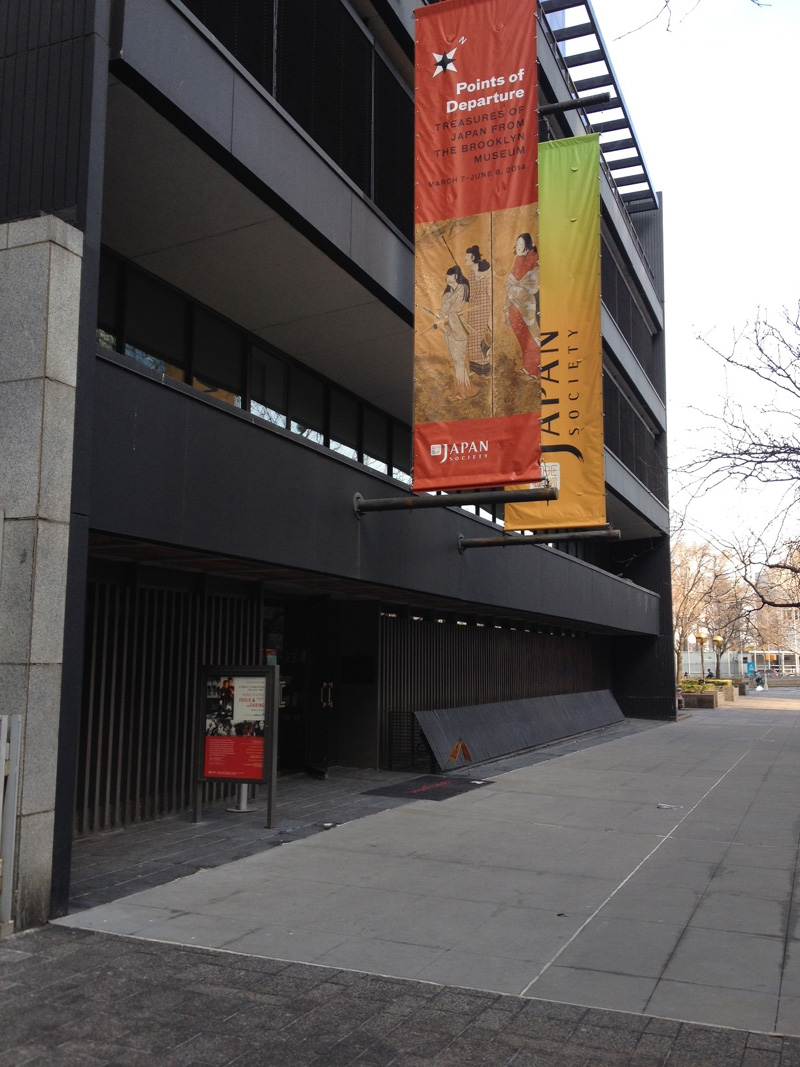
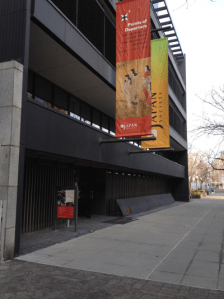 10 years post-graduation, I now work as the Program Officer in the Performing Arts Department of New York’s Japan Society, a position that I attribute to dedication, hard work as well as a lot of good luck. Japan Society is a U.S. not-for-profit, non-governmental organization with a mission to introduce the culture of Japan in a global context (through performances, lectures, film screenings, gallery exhibitions, family programs, Japanese classes, and more) to audiences in the states. I’m one of four members of the Performing Arts Department and the only non-Japanese. Our small team plans and executes all of the live performances presented by the Society that range from extremely experimental to the most traditional music, dance and theater from Japan and artists around the world creating works related to Japan. My main responsibilities are the creation and dissemination of English language materials for each of the programs, grant writing, and liaising with the artists. I have had the good fortune of working with some of the most amazing artists in Japan and around the world and experiencing so much boundary-pushing, border-crossing art.
Throughout my 3.5 years at Japan Society, I have also had the great pleasure of mentoring many wonderful interns pursuing B.A.’s and M.A.’s in Japanese Studies and helping to guide and encourage them on their academic and professional pursuits. My path (so far) has been an incredibly eye-opening and fulfilling. In this post I will talk about what opportunities I see there being in the U.S. for young people looking for a job in a field related to Japan, my recommendations for what you need to get these jobs, and what to do if you can’t initially find that perfect job. The information included in this post is based all on personal experience, but I hope it can offer some guidance and inspiration for your journey.
So…what can I do with a B.A. in Japanese?
Despite the current state of the global economy and the fact that “working in a job related to Japan” further limits the playing field, it seems to me that there are still a significant number of interesting opportunities for those looking to pursue careers related to Japan.
For one, there’s always academia. Getting a degree in Japanese pedagogy or in a subject related to Japan and teaching or doing research is always a viable option. There is also the idea of moving to Japan and getting a job working at a Japanese company or foreign company based in Japan. This way, you’re assured that Japan will be a part of your life. The Boston, L.A., and New York Career Forums seem to be good opportunities for people looking to do this. And then there’s JET, which I never did, but seems fun for the 1 to 3 year terms that the program allows. But since I don’t have much personal experience with these options, I will let other posts cover these topics, and I’ll stick to J-related jobs that I know about in the states and my suggestions on how to get them.
As I mentioned earlier, I work at Japan Society, a U.S. cultural not-for-profit that at its most basic introduces Japan to America. There is a large network of Japan-America Societies with varying, but similar missions around the country that are always looking for people with different skill sets to execute their programs. Other options that I am familiar with are Japanese companies, Japanese governmental or semi-governmental offices, and Japanese retailers and restaurants with branches or chains in the states. There are also Japanese nationals living in the U.S. starting their own businesses (i.e. artists, IT specialists, researchers) looking for help with their ventures, administrative jobs at academic institutes that offer Japan or East Asian related programs, and of course American companies and organizations that have some type of relations (even if only minimal or if you have to start them yourself) with Japan. And I would be remiss to leave out translation and interpretation careers that you should note are by no means limited to people who just happen to have grown up in both cultures, but that most certainly include individuals who have worked hard to develop these necessary skills.
What do I need to get these jobs?
If you’re going to dedicate yourself to Japanese Studies and are hoping to pursue a career in a related field, my first piece of advice would be prepared to work hard! Unlike decades ago when any affiliation whatsoever with Japan made you as rare as hen’s teeth, and therefore incredible valuable, today, there are so many bi-lingual Japanese/English speakers competing for the same positions, that it isn’t easy. While being bi-lingual is certainly a desired and helpful skill set, depending upon the job, it’s not typically the deciding factor.
The ability to demonstrate to a potential employer your achieved proficiency in a foreign language and knowledge and acceptance of a culture different from your own is just as important. So take advantage of every resource, movie screening, tea time, and karaoke night that your college or university offers and immerse yourself as much as possible into the language and culture of Japan.
Some particularly helpful Japanese language resources that I recommend based solely on personal experience include the following:
Middlebury College Summer School offers a number of immersion language programs over the summer, including a 9-week Japanese program. The “No English Spoken Here” language pact that all students are required to sign forces everyone to struggle through awkward communication with peers and teachers during the entire summer, but you come out on the other end all the better. Ideal for intermediate levels, very advanced speakers should probably just find a way to go to Japan.
There are tons of junior year study abroad programs in Japan these days with half and full year options. I opted for Doshisha University’s Associated Kyoto Program (AKP), a 9-month long program which requires all attendees to live with a family (good for me not for everyone). It’s my understanding that most of these junior year programs aren’t about the academics, but rather the exposure to a new culture and the life changing experiences that you will have while living abroad. For anyone seriously considering work in a field related to Japan, I highly recommend actually living in the country for some period of time.
Then there’s Stanford University’s Inter-University Center (IUC), the crème de la crème of Japanese language training programs. If you really want to improve your Japanese and can swing living in Japan on your own for 10 months (they have a summer program too, but I recommend the 10-month program), this is not an opportunity to pass up. Plus, you’re bound to make some good academic and professional connections through their vast alumni network. It’s mainly for graduate students, but there were some high-achieving undergraduates there when I attended.
Japan Society Toyota Language Center – sorry, had to make the pitch! New York’s Japan Society offers Japanese language (and shodo) classes of varying levels. Since most of the classes meet only once or twice a week during designated term periods, the program isn’t nearly as rigorous as the others mentioned above, but the classes are a relatively inexpensive and a fun way for busy people to maintain proficiency and to meet people of all ages and walks of life interested in Japan.
Secondly, while it’s important to memorize the stroke order of kanji, that’s not going to land you your dream job. In addition to the pursuit of your Japanese BA, it is crucial to develop another set of skills that will make you stand out and be the ideal candidate. I interview a lot of Japanese Studies B.A. and M.A. students for the Society’s internship program and the applicants that stick out and ultimately get hired are those with that extra something interesting or additional experience or expertise that makes them unique.
One obvious way to acquire this is through academic pursuits, by studying another field that you are interested in, whether it be economics, politics, business, arts, literature, IT, marketing, media, or whatever. Upon graduating from Middlebury and IUC, I waivered over whether I should pursue an M.A. in East Asian Studies or another field. I knew from pretty early on that I didn’t want to be in academia, so I ultimately decided to go for an M.A. in Arts Administration at American University, something totally different from my B.A. in East Asian Studies, but a field which I was also really interested in. Plus at the time I knew no one with a BA in Japanese/East Asian Studies and an M.A. in Arts Management. Now I work in the Performing Arts Department of Japan Society, a perfect match!
Another great way to achieve this is through interning, particularly at organizations or types of organizations that you think you might be interested in working at one day, and making sure you are assigned tasks that you think will help bolster your resume for your ultimate first real job. From the time that I graduated from Middlebury, through my masters, and until I started working at Japan Society, I volunteered, interned and worked at a whole range of organizations that both directly related to Japan (for example an internship with the Japan Society Performing Arts Department!) and had nothing to do with Japan but were along the lines of what I thought I wanted to do in the future (including work at a small chamber music festival in Vermont). I also participated in The John F. Kennedy Center for the Performing Arts internship program at the time of their JAPAN! Culture + Hyperculture Festival of Japanese artists. Each experience developed my skill sets, bolstered my resume, gave me an idea of what I was interested in and what I wasn’t, showed my future employer what I was capable of, and offered great networking opportunities.
Thirdly, throughout all of these academic and professional pursuits it is key to find a mentor, someone who believes in you and will act as your #1 advocate. This “J-club” isn’t so big and so having someone to encourage, guide, and be your proponent along the way is important. When it comes time to begin looking for a job let everyone you know know. Web-sites are obviously great places to learn about jobs, but professors, mentors, and supervisors that you have worked with are indispensable sources of information (they get forwarded job opening notifications all the time – I for one always e-mail my alma mater when looking for stellar summer interns) and likely have connections at establishments where you are interested in applying, so use them.
What if I can’t find my dream job immediately?
I’m not going to lie, the job market is tough these days and coupled with that timing and luck plays a huge part, it certainly did for me. Whatever you do, don’t just sit around, do something that will develop your skills and put you in the right spot for when your dream job does open up.
Continue to immerse yourself in the language and culture of Japan. Attend every event in your area, take Japanese classes, volunteer at organizations that you are interested in (if you have time) read books, listen to podcasts (my personal favorite), get together and speak with your friends who know Japanese, study for the JLPT (but only if you want), keep in close touch with teachers and mentors, and network with the “J-club” members in your community. Keep yourself involved whether you’re working directly in the field and at your dream job or not, and you’ll be sure to find fulfillment and no doubt make connections that will help you get to the next step.
I hope that something in this post has been meaningful for you and wish you the best of luck on your career path. It should be an exciting and exploratory adventure that will lead you to places that you didn’t know exist. Feel free to be in touch with any questions. Plus, Japan Society is always looking for terrific interns with B.A.’s and M.A.’s in Japanese Studies (and that little extra something) just like you!
Lara
Lara Mones received a Bachelor of Arts degree in East Asian Studies from Middlebury College and a Master of Arts degree in Arts Administration from American University. Lara studied abroad in Japan, spending one year at the Associated Kyoto Program (AKP) and one year at Stanford University’s Inter-University Center (IUC). Lara was Festival Assistant for The Kennedy Center for the Performing Arts’ JAPAN! Culture + Hyperculture Festival in 2008 and was Festival Manager of Yellow Barn Music School & Festival before joining Japan Society’s Performing Arts Program in September 2010 as Program Officer. Contact: lmones@japansociety.org

![money [150-2]](https://shinpaideshou.com/wp-content/uploads/2012/07/money-150-22.jpg) The Bard Center for Environmental Policy in New York State is pleased to announce the availability of new Henry Luce Foundation Scholarships for students from East Asia (China, Japan or South Korea) to complete a two-year Master of Science degree in Environmental Policy or Climate Science and Policy starting August 2014.
The Bard Center for Environmental Policy in New York State is pleased to announce the availability of new Henry Luce Foundation Scholarships for students from East Asia (China, Japan or South Korea) to complete a two-year Master of Science degree in Environmental Policy or Climate Science and Policy starting August 2014.


![call for papers [150-2]](https://shinpaideshou.com/wp-content/uploads/2012/06/call-for-papers-150-23.jpg)
 What can I do with a B.A. in Japanese Studies?