Postdoctoral Fellowship: Program on U.S.-Japan Relations

job opening - 5Institution:    Harvard University, Program on U.S.-Japan Relations
Location:    Massachusetts, United States
Position:    Post-Doctoral Fellow

Harvard University’s Program on U.S.-Japan Relations offers postdoctoral fellowships for social scientists in a broad range of fields, including anthropology, economics, education, history, law, political science, public health, public policy, and sociology.  Projects that focus on Japan or Japan’s international role from a comparative, historical, or global perspective are welcome.  Knowledge of the Japanese language is not required. The postdoctoral fellow is required to teach one undergraduate course during the academic year. Awards are for the academic year and provide $50,000 over 10 months.

The application deadline is 15 January. Candidates must hold a doctoral degree by 1 August, prior to the start of the academic year. Application forms are available at http://programs.wcfia.harvard.edu/us-japan, or by contacting: Program on U.S.-Japan Relations/61 Kirkland Street/Cambridge, MA  02138-2030 (e-mail: wnehring@wcfia.harvard.edu).

Posted in announcements, funding, graduate school, job openings, jobs | Tagged , , , , | Leave a comment

Book Announcement: Lords of the Sea: Pirates, Violence, and Commerce in Late Medieval Japan

Lords of the SeaLords of the Sea:

Pirates, Violence, and Commerce in Late Medieval Japan

Peter D. Shapinsky


Michigan Monograph Series in Japanese Studies Number 76

A John Whitney Hall Book

Published by the Center for Japanese Studies, University of Michigan

ISBN 978-1-929280-80-3, hardback

ISBN 978-1-929280-81-0, paperback

“In step with the maritime turn in global history, Lords of the Sea takes readers down to the shore for a fresh look at Japan in the heyday of the samurai. Reading against the grain of a terracentric archive, Shapinsky demonstrates beyond a doubt the importance of sea power to late medieval Japanese society—as well as to the consolidation of an early modern order, in the archipelago and beyond. Essential reading.” — Kären Wigen, Professor and Director of the Center for East Asian Studies at Stanford University

Lords of the Sea revises our understanding of the epic political, economic, and cultural transformations of Japan’s late medieval period (ca. 1300–1600) by shifting the conventional land-based analytical framework to one centered on the perspectives of seafarers who, though usually dismissed as “pirates,” thought of themselves as sea lords. Over the course of these centuries, Japan’s sea lords became maritime magnates who wielded increasing amounts of political and economic authority by developing autonomous maritime domains that operated outside the auspices of state authority. They played key roles in the operation of networks linking Japan to the rest of the world, and their protection businesses, shipping organizations, and sea tenure practices spread their influence across the waves to the continent, shaping commercial and diplomatic relations with Korea and China.

Japan’s land-based authorities during this time not only came to accept the autonomy of “pirates” but also competed to sponsor sea-lord bands who could administer littoral estates, fight sea battles, protect shipping, and carry trade. In turn, prominent sea-lord families expanded their dominion by shifting their locus of service among several patrons and by appropriating land-based rhetorics of lordship, which forced authorities to recognize them as legitimate lords over sea-based domains.

By the end of the late medieval period, the ambitions, tactics, and technologies of sea-lord mercenary bands proved integral to the naval dimensions of Japan’s sixteenth-century military revolution. Sea lords translated their late medieval autonomy into positions of influence in early modern Japan and helped make control of the seas part of the ideological foundations of the state.

Posted in announcements, culture | Tagged , , , , , , , , | 1 Comment

Call for Papers: Transnational Cultural Interactions between Korea and Japan, From the Pre-modern to the Colonial Period

call for papers [150-2]Transnational Cultural Interactions between Korea and Japan, From the Pre-modern to the Colonial Period 

The Hebrew University of Jerusalem, Israel, May 17–19, 2015

Keynote Speaker: Theodore Q. Hughes, Korea Foundation Associate Professor, Columbia University

Cultural interaction between Korea and Japan has become more fluid ever since Korea lifted the ban on importing cultural products from Japan in 1998, and since the Japanese have begun to experience Korean culture more directly through their consumption of Korean popular culture, better known as “Hallyu.” Spurred by this dynamic cultural exchange, scholars in Korea have been actively exploring both pre-modern and modern Korea-Japan relations since the late 1990s. In order to contribute to this thriving scholarship on Korea-Japan cultural relations, the Department of Asian Studies and the Harry S. Truman Research Institute for the Advancement of Peace at The Hebrew University of Jerusalem are hosting an international conference on Korea-Japan cultural interactions from the pre-modern to the colonial period, with special emphasis on transnational perspectives.

The conference aims to open a venue for scholars whose research covers Korea-Japan relations from interdisciplinary and comparative perspectives. Some of the questions the conference would like to explore include (but are not limited to): what has been the role of culture in shaping the relations between Korea and Japan? How can the study of cultural interactions between Korea and Japan contribute to the formation of discourses over unresolved historical issues? Who are the actors and agents of transnational cultural interactions between Korea and Japan? What methodological, theoretical, and empirical approaches would be useful to invigorate the study of Korea-Japan cultural relations?  And how do transnational cultural, political, and economic forces shape people’s perceptions of the “Japanese Other,” the “Korean Other,” and themselves?

We welcome individual papers and panel proposals from scholars working in various disciplines including (but not limited to) literature, history, media, language, visual arts and performance, philosophy, religion, etc., whose research interests fit with one or more of the following issues:

1)    Interactions between Korea and Japan in literature, translation, arts, music, and language

2)    Exchanges of philosophical and religious thoughts and practices between Korea and Japan

3)    Images of Korea in Japan/of Japan in Korea

4)    Koreans in Japan/Japanese in Korea

5)    Reception of Korean culture in Japan/Reception of Japanese culture in Korea

6)    Political and economic relations between Korea and Japan

Proposals (both individual and panel proposals), including name, institutional affiliation, the title of the paper, email address, and an abstract of 300 words maximum (with relevant keywords listed), should be sent by January 10, 2015, to koreajapanconference@gmail.com 

Successful applicants will be notified by mid-February 2015 and asked to send their working papers of approx. 3,000 words (including bibliography and footnotes) at least three weeks prior to the conference.

Selected participants will be provided with accommodations (hotels and meals) during the conference period; airport pickup upon arrival; and a post-conference tour of Jerusalem and the Dead Sea.

Organizing Committee:

Dr. Jooyeon Rhee and Dr. Nissim Otmazgin, The Hebrew University of Jerusalem

Please contact Dr. Jooyeon Rhee at koreajapanconference@gmail.com for further inquiries.

The Department of Asian Studies at the Hebrew University of Jerusalem is the oldest of its kind in Israel and is one of the biggest departments in the Faculty of Humanities, home to over 300 students specializing in Chinese, Japanese, Korean, and Indian Studies. The department is characterized by its excellence in research and teaching, and it maintains an environment of cooperation between students and faculty in a wide array of extracurricular activities. To read more about the department, visit: http://asia.huji.ac.il/en.

Posted in announcements, conferences, graduate school | Tagged , , , , , , , , , | Leave a comment

Fun Link Friday: Japanese Youtubers for Listening Practice

Last month, RocketNews24 presented a wonderful and detailed list of youtubers they recommend to improve your Japanese listening skills.

I love youtube, so this guide was helpful. For language learning, I feel old that this option for being exposed to Japanese was not available when I was in high school. Many Japanese youtubers also weren’t that active through most of my college years, so I am always excited about finding new favorites to keep me up to speed while I’m living in the US. I was aware of some of the youtubers mentioned by RocketNews24 and I’ve found that several of them have been effective and interesting for higher-level proficiency as you get towards the bottom of the article. And who doesn’t like Cooking with Dog, right?

As the article points out, you could peruse the 100 most subscribed youtube channels in Japan to find more.

For this week’s FLF, I want to introduce another youtube channel I think could help with listening skills.

My favorite entertaining Japanese youtuber for practicing my listening skills is a content curator, Ari Keita.

Several years ago I asked a Japanese college student, who was using youtube to help with her English studies, which Japanese youtube channels I should check out. She introduced me to Ari Keita. He deals in current news, entertainment, humor, and talking as fast as humanly possible in his とりあえず時事ってみた(TJM) series. That means he covers a wide variety of topics from week to week. With about 58,722 subscribers, he has a moderate following. It seems his archive is cleaned out regularly, but he posts frequently. These videos are fast-paced and quick, which keeps me listening (2 or 3 times even). Personally, I improve my listening best by hearing fast-paced Japanese during studying. Straining to keep up is good for me. Then, a regular face-to-face conversation or presentation at normal speed doesn’t seem so daunting. I suppose the danger is I might start speaking too quickly, but I’m aware of it. Ari Keita has some other content projects and a vlog channel on youtube, as well. One of his latest videos was interesting words from 2014 (English and Japanese).

Ari Keita’s pronounces each word oh so carefully and three times for good measure, it cracks me up. I learned some new English buzz words I was probably better off not knowing, thanks. The second half is about Japanese words in 2014 from pop culture, politics, and other news.

Let me know in the comments what’s your favorite Japanese youtube channel!

Posted in culture, fun links, social networking, study tools | Tagged , , , , , , , | 1 Comment

Program: Buddhist Asia: Traditions, Transmissions and Transformations, University of Hawaii

This multidisciplinary program, funded by the National Endowment for the Humanities, will offer five weeks of context-rich engagement with Buddhist teachings, practices and primary texts (in translation), and how they have shaped and been shaped by cultures and societies throughout Asia. The program will consider how Buddhism addressed both personal and social needs in ways that were inseparable from the dynamics of intellectual exchange, artistic production, trade and politics. Designed to strike a balance between the needs both for breadth and depth in engaging traditions that are culturally and historically distant, Buddhist Asia will provide abundant resources for developing pedagogically-effective course materials across a wide range of humanities and social science disciplines. Applications will be welcomed from eligible fulltime and adjunct faculty, as well as qualified graduate students, at American colleges and universities. Participants will receive a stipend of $3900 to defray costs for travel, housing, meals and incidentals. Lodging will be available at the East-West Center guesthouse, Lincoln Hall.

Program dates: May 25 to June 26, 2015

Application deadline: March 2, 2015.

Visit the website at http://www.asdp-buddhistasia.org

Posted in announcements, graduate school | Tagged , , , , | Leave a comment

Living in Japan Part 4: How to Read Apartment Listings

In my previous article, I explained many of the basics of what to keep in mind when you apartment hunt in Japan. Now you’ve got an idea of a location you might want to live (or at least have located some convenient areas) and you’ve opened up an apartment search site or two. You know what types of apartments exist, and have a basic idea of the costs you could be looking at. So how do you go about searching and interpreting apartment listings? This article will focus on the technical aspects of apartment listings and what to expect of apartments in general.

===

Return to the previous article for a list of popular rental websites and an explanation of the basic search options (by area, rail line, station, etc.). Then, let’s start thinking about apartment advertisements by breaking down some common shorthand and vocabulary.

Room Size

Japan uses letter-based shorthand on their apartment listings and on floor plans. They will also combine these letters with numbers to count how many rooms are inside the apartment in addition to its features.

R/ルーム room
L living room
D dining room
K kitchen
S storage
CL Western-style closet
WC / トイレ toilet
UB unit bath
PS pipe space (for water or gas pipes)
1K 1 bedroom + kitchen
1DK 1 bedroom + dining kitchen (typically dining room and kitchen are combined)
1DK (+S) 1 bedroom + dining kitchen + storage
2K 2 bedrooms + kitchen
2DK 2 bedrooms + dining kitchen
2LDK 2 bedrooms + living room + dining kitchen

You get the idea. Most listings will give variations up to 4K. In addition to these roman-letter shorthands, you’ll also find kanji commonly used in apartment floorplan images that denote the basic features included in the apartment.

Room sizes are typically measured in tatami mat length (even if they have hardwood floors), with a single mat being approximately 90 x 180 cm. This means a small 1 bedroom, which is often 6 mats (帖), is about 9.6 m². The area is about 103 ft².

Apartment features

Some common words (and their abbreviations) you’ll find in floorplans are as follows:

玄 / 玄関 genkan entryway
洋 / 洋室 yōshitsu room with Western-style flooring
和 / 和室 washitsu room with Japanese-style (tatami mat flooring)
帖/畳 counter for tatami mats (this is how rooms are measured)
approximately
キッチン kicchen kitchen
フローリング furo-ringu Western-style floors
ベランダ/バルコニー beranda / barukonii veranda or balcony (this is important for hanging your laundry outside)
冷/冷蔵庫 reizōko (space for) a refrigerator
kai floor
浴室 yokushitsu bathroom
洗 /洗面 senmen washing area
洗面台 senmendai washbasin, washstand
洗濯/洗置 sentaku/(abbreviation) sentakuki okiba laundry/space for a washing machine
押入 oshiire Japanese-style closet (typically for furniture)
物入 monoire Japanese-style closet (typically for furniture)
収 / 収納 / 納戸 shūnō / nando storage closet
クローセット kurozetto closet (typically for clothing)
下足入 gesokuire footwear space/closet
靴入 kutsuire footwear space/closet
niwa garden

SPECIAL NOTE:

Japanese apartments typically DO NOT come furnished. Not even with basic things like a washer and dryer, as you find in America. Some companies that rent specifically to foreigners will have furnished options, but I suggest you look at reviews very carefully before deciding on the unknown. I’m working on a post about how to best (and cheaply) furnish your apartment as well, so look for that in the near future. But when you look at apartment listings, you’ll often find that the 洗 and  冷 symbols have an X marked over them (sometimes dotted), indicating that these are spaces in which you can place a washing machine or a refrigerator respectively. Older places will often have the space for the washing machine out on the balcony, which is not unusual in Japan.

Advertisement Example #1:

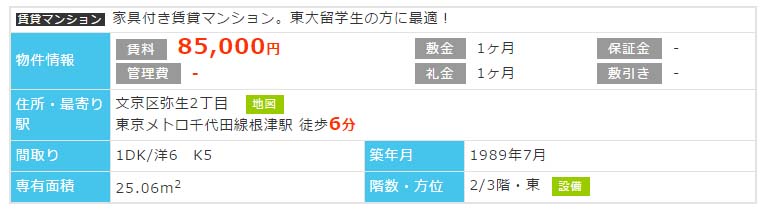
So let’s go ahead and look at an actual advertisement. This is off of todai-sumai.com, which has a very straight-forward layout of information.

The first thing we see is the following heading:

03

The top information tells us that this is a 家具付き賃貸マンション, or a furnished rental apartment (mansion). Like I said, usually apartments are not furnished. This appears to be an exception.

For details on upfront cost vocabulary, please return to our previous article . The rent (賃料) is 85,000 yen (roughly $850) per month, with no additional monthly management fee (管理費), a deposit (敷金) of 1 month’s rent, key money (礼金) of 1 month’s rent, no additional security deposit (保証金), and no additional key money (敷引). Note: I’ve been told 保証金 and 敷引are terms more commonly used in the Kansai and Tokai areas, but they seem to be equivalent in meaning to 敷金 and 礼金 respectively.

The address (住所) is listed to the nearest city block(丁目), in this case Bunkyō ward, Yayoi 2 chōme 文京区弥生二丁目. The nearest station (最寄り) is listed, along with how far away it is on foot (徒歩), which is 6 minutes (分).

The layout of the apartment (間取り) is given as 1DK/洋6 K5, which tells us that this is a one bedroom apartment with a dining/kitchen area, the bedroom being a western (洋) style room that is 6 mats in size. The kitchen area is 5 mats.

The area of the property (専有面積) is 25.06 m², and the date the building was constructed (築年月) is July 1989. It appears this advertisement actually has two apartments, one on the second and one on the third floor, as the floor (階数) is listed as 2/3. The direction the apartment faces (方位) is east (東). Remember that a south-facing apartment is the most desirable in an apartment, and north-facing the least.

1K or 1DK is a typical sized 1 bedroom for people in Japan. If you’re a foreigner who needs to spread out, however, you might find yourself a little claustrophobic in a 5 or 6 mat room. This might not be the case depending on the layout of the apartment, however. I ended up with a sweet deal on a 2K, with two western style rooms (6 mats and 4 mats respectively) and a 3.5 mat kitchen. However, it was FAR more spacious than other places of the same size that I looked at because the rooms were all conjoined with sliding doors that could open to create a seamless space straight through. (This can be useful for airing out the space in the summer and closing off spaces in the winter to retain heat.) Look at the layout of your apartments carefully to determine that the space is being used efficiently, taking note of where doors are placed and that closets to put away your things actually exist, especially in smaller apartments.
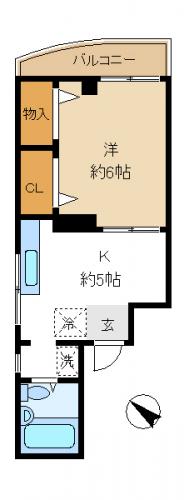
02Taking a look at the floorplan (pictured to the right), we can see the layout of our western-style bedroom (洋), which is approximately (約) 6 mats (6帖), and kitchen area (K), which is approximately 5 mats (and is connected to the front door/entryway (玄)). You’ll also notice that attached to the bedroom is the balcony (バルコニー), and two sets of closets (物入、CL). The main difference between these closets is that 物入 are meant for small furniture and bedding (like folded up futons) to keep a small 6 mat room from being cluttered, whereas a CL is a closet that is more western-style, probably with a bar for hanging your clothes. You can purchase tension bars for the 物入 to hang clothes or even store sets of drawers in them depending on the depth and the size.

Note that in the kitchen there’s only a small amount of counter space, but you can’t see whether or not it has built in burners (which will often be shown on these floorplans, but not always). There’s also not necessarily an expectation that smaller apartments will have burners at all. You usually have to buy these yourself. Also note that the 冷 and 洗 spots for refrigerators and washing machines have X marks through them—this means there is space for them, but they are not included in the apartment (unlike most Western apartments). Since this advertisement is for two apartments, I suspect one of them has furniture and the other doesn’t, or they were too lazy to change the original image of the floor plan.

The toilet and bathtub area in blue here are connected, which typically knocks down the price of apartments, as it’s less desirable than having separate toilet and washing areas.

At the bottom of the basic info and floor plan, there’s a more detail explanation of the apartment that looks like this:

04

I won’t translate all of the details above, but note these little gray and green buttons, which show standard amenities of the apartment. Those in green are the ones this apartment has, such as being close to the station (駅近), being on the second floor or higher (2階以上), having an air conditioner (エアコン), or having fixtures for gas burners (ガスコンロ対応). You can see the larger vocabulary list at the end of this article for more of this vocabulary. Oftentimes when you’re looking at these rental websites they allow you to do advanced searches and narrow by many of these features, in case all electric vs. gas or having an air conditioner or not is a deal breaker for you.

Advertisement Example #2:

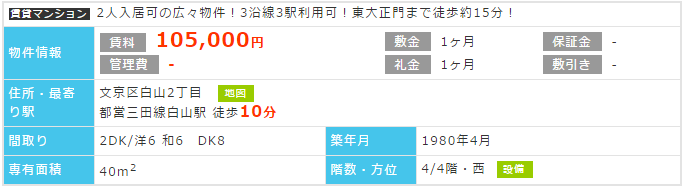
Here’s a quickie look at another advertisement for a slightly more spacious and expensive apartment, just for some more practice and to make a couple points.
layout heading 2

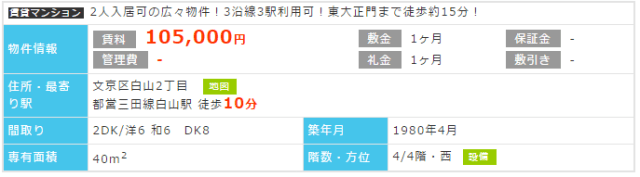
This apartment is 105,000 yen (about $1,050) per month with no additional management fee, 1 month’s deposit and one month’s key money. It’s a 2DK, meaning 2 bedrooms with dining/kitchen area, with the Western-style room measuring 6 mats, the Japanese-style room measuring 6 mats, and the dining/kitchen area measuring 8 mats. It’s on the 4th floor and is west-facing.
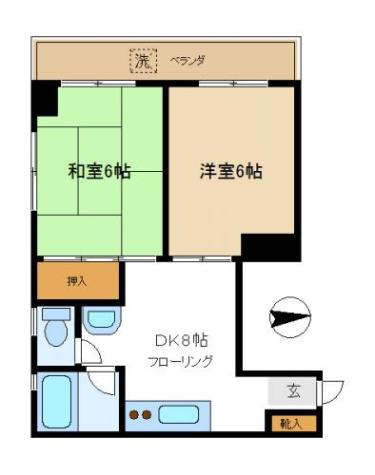
layout 2The floorplan for this apartment is really nice, with a very long balcony (listed here as veranda ベランダ) with two sets of double doors that let in light to both the bedrooms. How the 6 mat Japanese style room on the left in green is illustrated shows you approximately how the entire mat-measuring system works in Japan.

It’s worth noting that for all this space, though, only the Japanese-style room has a closet. If you don’t have a lot of stuff or you intend to use one of the rooms for some storage, this might be fine, but if not, you might end up having to buy a bureau or standing closet to make up for the lack of built-in storage. On the bottom right, however, you see there is a small closet for shoes (靴入) by the door.

Also note that this advertisement shows there is space for two burners, shown with two brown dots. You should check the advertisement to see if they’re built in or you need to hook up your own. Some apartments may say they have a burner (electric or gas), but it also might only be just one. Some people don’t mind this, but as a foreigner who likes to cook, for me this would be difficult to get by with, and I usually ruled out apartments off the bat if they had limited or no space for burners.

The bathroom, while tightly grouped together in one corner, is in fact separate bath and toilet, and the extra blue area next to the toilet is a washstand (typically a small sink/cabinet with a mirror for brushing your teeth. An apartment like this could definitely fit two people who don’t mind being cozy with each other and spending most of their time in their own rooms, but it might also be good for someone who doesn’t mind spending the extra money to have two rooms (maybe if you want a separate study or want to have the western room (instead of the kitchen) as your dining room and spread out your cooking space in the kitchen area.

You can see more detailed examples of real advertisements at:

Paying rent

Because my landlady owns a shop on the first floor beneath my apartment, I’m able to deliver my rent in person and in cash. This will probably vary based on your situation. A Texan in Tokyo has a short paragraph about paying rent electronically, if that’s something you think you might have to do, but be sure to consult with your real estate agent or landlord about the best payment method for them. Have your bank book ready–you can often set up automatic withdrawal for housing companies (versus a small, private rental) or transfer the money yourself monthly.

Useful vocabulary list

To avoid making this post overly long, I won’t go through any more advertisements, but I will include here a useful list of commonly found vocabulary  (not including those already written above) that can serve as a quick reference while you’re searching through sites. It’s not exhaustive, but it’s a start:

Japanese (kanji) Romaji Meaning
不動産 fudōsan real estate agent
募集中 boshūchū taking applications
ご成約 goseiyaku under contract
エリア検索 eria kensaku area search
沿線検索 ensen kensaku rail line search
駅検索 eki kensaku station search
店舗検索 tenpo kensaku store search
アパート apaato apartment (two or three floor building made from wood or lightweight steel)
マンション manshon apartment (multi-story condo building made from reinforced concrete or steel)
一戸建て/戸建 ikkodate/kodate (separate) house
保証人 hoshōnin guarantor
保証人会社 hoshōnin gaisha guarantor company
機関保証人 kikan hoshōnin institutional guarantor
賃貸 chintai rent, lease
借家人 shakuyanin tenant, renter
手数料
仲介手数料
tesūryōchūkai tesūryō agent commission/handling charge/intermediary fee
敷金 shikikin security deposit
保証金 hoshōkin deposit, security money
礼金 reikin key money
賃料
家賃
chinryō
yachin
rent
日割賃料 hiwari chinryō prorated rent
管理費 kanrihi monthly management fee
家財保険 kazai hoken home insurance
駐車所 chūshajo parking
初期費用 shoki hiyō initial moving fees
町内会費 chōnaikaihi neighborhood association fee
更新手数料 kōshintesūryō lease renewal fee
鍵交換代 kaikōkandai lock changing fee
初期費用 shoki hiyō initial moving fees
町内会費 chōnaikaihi neighborhood association fee
更新手数料 kōshintesūryō lease renewal fee
賠償責任保険 baishōsekininhoken liability insurance
現況 genkyō  present condition
soku immediately, at once
入居可能予定日 nyūkyo kanō yotei hi day it is possible to move in
住所 jūsho address
部屋 heya room
最寄り moyori nearest, neighboring, nearby
徒歩 toho on foot/_ minute walk
fun/bun/pun minutes
専有面積 senyū menseki property area
間取り madori house plan
築年月 chikunengatsu date of construction
鉄筋コンクリート tekkin konkuri-to reinforced concrete
木造 mokuzō made of wood
方位 hōi direction (facing)
駅近 ekichika close to a station
設備 setsubi equipment, facilities
所在 shozai whereabouts
備考 bikō notes, remarks
特記 tokki special mention
事項 jikō matter, item
乾燥機 kansōki dryer
洗濯機 sentakuki washer
エアコン eakon air conditioner unit
換気 kanki ventilation
暖房機 danbōki heater, heating unit
オール電化 oorudenka all-electric (i.e. heating, stove – as opposed to gas)
ガスコンロ対応 gasu konro taiō gas range (burner) supported
バス・トイレ別 basu/toire betsu separate bath and toilet
防犯カメラ bōhan kamera security camera
充実 jūjitsu full, complete, improved, upgraded
宅配ボックス takuhai bokkusu home delivery box
路線 rosen route, line
候補 kōho candidate, contender
手ごろ tegoro handy, convenient
入居 nyūkyo moving into
閑静 kansei quiet (e.g. neighborhood)

===

That’s it for my basic apartment hunting posts! I hope these were useful and can serve as a decent reference for someone in the future. If there’s anything I missed or you have further questions, drop us a line at shinpai.deshou@gmail.com or leave a comment below. If I can’t answer your question, I’ll try to find someone who can.

Good luck hunting!

Next article: Living in Japan Part 5: Furnishing Your Japanese Apartment

===

Links with additional information:

Posted in applications, blogs, culture, graduate school, housing, living abroad, main posts, undergraduate, useful links | Tagged , , , , , , , | 6 Comments

Call for Papers: UC Berkeley Japan Studies Graduate Student Conference – Media & Transmission

call for papers [150-2]April 17-18, 2015

University of California, Berkeley

CALL FOR PAPERS

This conference will bring together graduate students from all disciplines in the field of Japanese Studies to explore the past and present role of media in Japan. What can the examination of various media (including images, texts, discourses, objects, and anything else that functions as a medium of transmission) tell us about the formation and transmission of culture and knowledge in Japan?

We welcome submissions from any and all disciplines. Papers may explore, but are not limited to, the following areas of study:

-mediation in literature
-theater and film
-premodern texts
-aesthetic artifacts
-new media studies
-photography
-politicians and the media
-archives
-print culture
-digital humanities
-social theory
-Japan and the world

Deadline for abstracts (up to 250 words): Friday, January 16th, 2015

Please email abstracts (including name, institutional affiliation, and presentation title) to cjsgradconference@berkeley.edu.

Travel (airfare + lodging) funding is available for all presenters. We encourage applicants seeking funding to apply well in advance of the deadline.  Please email the conference organizing committee at cjsgradconference@berkeley.edu with any questions.

Please visit our website at: http://cjsgradconference2015.weebly.com/

Organized by the Center for Japanese Studies, University of California, Berkeley

Supported by the Japan Foundation

Posted in announcements, conferences, graduate school | Tagged , , , , | Leave a comment

Job Opening: Associate Program Officer, Grassroots Exchange & Education Program, The Japan Foundation Center for Global Partnership Exchange & Education Program

job opening - 5
Job: Associate Program Officer, Grassroots Exchange & Education Program
Company: The Japan Foundation Center for Global Partnership Exchange & Education Program
Location: New York, NY
Application deadline: December 12, 2014
Start date: January 5, 2015
Education requirements: BA required, MA preferred

Job description
Established in 1972, the Japan Foundation seeks to promote international cultural exchange and mutual understanding between Japan and other countries. The Foundation awards grants in the areas of Arts & Cultural Exchange, Japanese-Language Education Overseas and Japanese Studies and Intellectual Exchange and operates fellowship programs to foster individual research and the development of human resources. The Center for Global Partnership (CGP) was founded within the Foundation in 1991 and seeks to promote exchange and collaboration between the United States and Japan with the goal of fulfilling shared global responsibilities and contributing to the improvements in the world’s welfare.

The Japan Foundation New York has an opening for an Associate Program Officer in the Center for Global Partnership’s Grassroots Exchange & Education Program. This program promotes collaboration and exchange between the United States and Japan at the grassroots level as well as supports education about Japan at the K-12 levels in the United States.

Responsibilities:
The Associate Program Officer will report to the Program Director and will contribute to the following:

1. Grant-making

  • Review and assess letters of inquiry and proposals, draft recommendations, and related materials;
  • Manage and oversee all phases of the grant process, including communication with and guidance to grant seekers and grantees;
  • Monitor on-going grants using a database to ensure timely payments and follow-up of outstanding issues;
  • Conduct site visits and represent The Japan Foundation CGP at meetings and conferences;
  • Research fields to identify and monitor trends, new models, and new initiatives.

2. Coordination of programs and in-house activities

  • Coordinate various programs including in-house events such as roundtables, seminars, and outreach events;
  • Explore creative ideas and develop new networks to foster innovative program ideas and funding initiatives;
  • Coordinate outreach and external communication initiatives (i.e. LinkedIn, Facebook, monthly newsletter, etc.);
  • Carry out other logistical and administrative duties as assigned by the Program Director and senior management;
  • Assist in the proof reading of English documents.

Qualifications:

  • Bachelor’s degree required. Master’s degree or equivalent work experience in a relevant field preferred;
  • Strong analytical skills; the ability through questioning and informal research to understand the feasibility and implications of submitted proposals;
  • Strong oral and written communication skills in English;
  • Strong organizational skills, keen attention to detail and the ability to manage multiple projects simultaneously;
  • Desire to think creatively, explore new ideas, and develop new networks in order to foster innovative program ideas and funding initiatives;
  • Understanding of contemporary Japan; experience living in Japan and proficiency in the Japanese language, including translating ability, preferred;
  • Proficiency in basic software such as MS Word and Excel; database experience preferred;
  • US citizenship, permanent residency visa, or valid working visa in US.

Full listing on Idealist.org.

Posted in announcements, job openings, jobs | Tagged , , , , , , | Leave a comment

Internship: Spring 2015 Curatorial Internship, The Noguchi Museum [unpaid]

Internship: Curatorial Intern
Institution: The Noguchi Museum
Location: Long Island City, NY
Deadline: 16 December 2014
Term: 12 weeks
Type: unpaid

Via Art Radar.

The Noguchi Museum offers a wide variety of internships for students interested in the work of Isamu Noguchi or those looking to gain experience working for a museum or in a non profit arts organization. The Museum offers fall, spring, and summer internships for undergraduate and graduate students, as well as recently graduated college students. Internships are typically one-to-two days per week for twelve weeks and are unpaid. To see what positions are available, visit our Internship page.

The Noguchi Museum is seeking a qualified student for the spring to assist the Curator in the Museum’s Curatorial Department. This position involves a variety of tasks including research, editing, and organizing records associated with both the Museum’s collection and upcoming exhibitions.

Responsibilities may include:

  • Researching and editing image sets for future web features
  • Expanding curatorial notes on records in the Museum’s digital photoarchive
  • Maintaining and organizing records and periodicals
  • Miscellaneous projects relating to upcoming exhibitions as needed
  • Researching Noguchi’s collectibles
  • Organizing Noguchi’s personal library
  • Research for upcoming exhibitions, which will involve working with objects and in the archives

The ideal candidate will be a highly organized and detail-oriented individual with an interest in curatorial and registration work. Candidates must possess excellent communication skills, strong writing skills, and word-processing skills on a PC-platform. Additional experience with TMS and Photoshop is a plus.

Full information on The Noguchi Museum website.

Posted in announcements, job openings, jobs | Tagged , , , , , , | Leave a comment

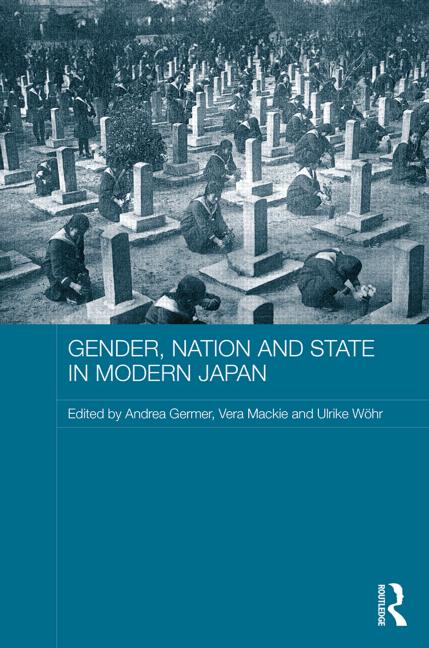
Book Announcement: Gender, Nation and State in Modern Japan

Gender Nation and StateGender, Nation and State in Modern Japan

edited by Andrea Germer, Vera Mackie and Ulrike Wöhr, Routledge, 2014

Gender, Nation and State in Modern Japan makes a unique contribution to the international literature on the formation of modern nation–states in its focus on the gendering of the modern Japanese nation-state from the late nineteenth century to the present. References to gender relations are deeply embedded in the historical concepts of nation and nationalism, and in the related symbols, metaphors and arguments. Moreover, the development of the binary opposition between masculinity and femininity and the development of the modern nation-state are processes which occurred simultaneously. They were the product of a shift from a stratified, hereditary class society to a functionally-differentiated social body. This volume includes the work of an international group of scholars from Japan, the United States, Australia and Germany, which in many cases appears in English for the first time. It provides an interdisciplinary perspective on the formation of the modern Japanese nation–state, including comparative perspectives from research on the formation of the modern nation–state in Europe, thus bringing research on Japan into a transnational dialogue. This volume will be of interest in the fields of modern Japanese history, gender studies, political science and comparative studies of nationalism.

Contents

  1. Introduction: Gender, Nation and State in Modern Japan Andrea Germer, Vera Mackie and Ulrike Wöhr
  2. The Formation of Modern Imperial Japan from the Perspective of Gender Hayakawa Noriyo
  3. Narratives of Heroism in Meiji Japan: Nationalism, Gender and Impersonation Jason G. Karlin
  4. The Nexus of Nation, Culture and Gender in Modern Japan: The Resistance of Kanno Sugako and Kaneko Fumiko Mae Michiko
  5. Domestic Roles and the Incorporation of Women into the Nation State: The Emergence and Development of the ‘Good Wife, Wise Mother’ Ideology Koyama Shizuko
  6. The Making of Ainu Citizenship from the Viewpoint of Gender and Ethnicity Kojima Kyōko
  7. The Gendering of Work and Workers in the Process of Modernisation of the Textile Industry Himeoka Toshiko
  8. The Nation at Work: Gendered Working Patterns in the Taishō and Shōwa PeriodsRegine Mathias
  9. The Spirit to Take Up a Gun: Militarising Gender in the Imperial Army Sabine Frühstück
  10. Women’s Professional Expertise and Women’s Suffrage in Japan, 1868–1952 Sally Ann Hastings
  11. From Natalism to Family Planning: Population Policy and Its Reception During the War and the Postwar Period Ogino Miho
  12. From Mothers of the Nation to Embodied Citizens? Reflexive Modernisation, Women’s Movements and the Nation in Japan Ilse Lenz
  13. Gender and Citizenship in the Anti-Nuclear Power Movement in 1970s Japan Ulrike Wöhr
  14. Salaryman Anxieties in Tokyo Sonata: Shifting Discourses of State, Family and Masculinity in Post-Bubble Japan Romit Dasgupta
  15. Identity Politics, Gender and Nation in Modern Western Philosophy Sidonia Blättler
  16. From Personal Experience to a Political Movement in the 1970s: My View of FeminismIijima Aiko, with an Introduction by Andrea Germer

http://tandf.msgfocus.com/q/1HazNb773bLbS0cUgx7rO/wv

Posted in announcements, culture | Tagged , , , , , , , | Leave a comment