Book Announcement: Male Circumcision in Japan

male circumcisionCastro-Vázquez, Genaro (2015) Male Circumcision in Japan. New York: Palgrave.

ISBN 9781137518750

About the book

Male Circumcision in Japan provides an in-depth examination of anthropological and sociological developments in Japan which challenge the accepted biomedical view of male circumcision as a prophylactic measure. Adult male circumcision in Japan is largely commercialized as cosmetic surgery. Castro-Vázquez analyzes the structural factors and meanings embedded in male circumcision showing the social imagery and growing anxieties concerning changes in gender regimes and sexual mores in Japanese society Introducing the viewpoints of a group Japanese men and women to highlight the significance of penile hygiene to prevent disease, this book casts doubt on the relevance of male circumcision and contests the idea that women prefer the circumcised penis. Male Circumcision in Japan calls into question current globalizing campaigns to promote the circumcision of newborns, children, and adult males.

Contents:

  1. Researching Circumcision 2. A Cosmetic Surgery 3. Men’s Views 4. Women’s Views 5. Urologists and Cosmetic Surgeons 6. Mothers’ View

http://www.palgrave.com/page/detail/male-circumcision-in-japan-genaro-castrov%C3%A1zquez/?isb=9781137518750

Genaro Castro-Vázquez is Assistant Professor in the Division of Sociology at Nanyang Technological University, Singapore.

Posted in announcements, culture | Tagged , , , , , , , , , | Leave a comment

Fun Link Friday: Star Wars Screen Painting at Kiyomizudera

mugsjqaol86lfrcjupp4

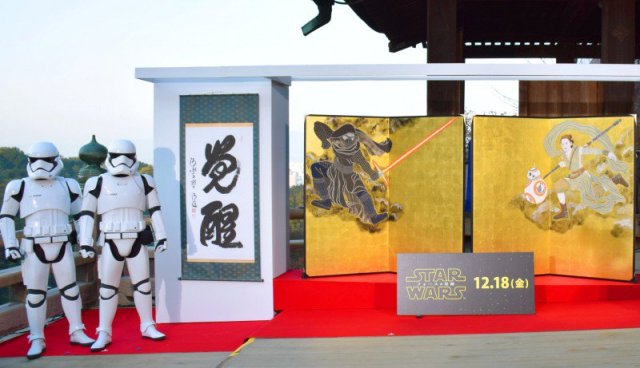
Two Stormtroopers stand next to calligraphy of 覚醒 (awake) and a gold-leaf-covered Rimpa-style screen of Kylo Ren as Raijin and Rey as Fujin. Source.

One of Kyoto’s most famous temples Kiyomizu-dera is a must see if you visit Japan. But if you’re in Japan this December, you can check out something rather unique at this World Heritage site: Star Wars art.

Like the Mario and Luigi painting unveiled earlier this year, this is a Rimpa-style Force Awakens screen painting with Kylo Ren as Raijin (雷神), the Japanese god of thunder and storms, and Rey as Fujin (風神), the Japanese god of wind.

Via Kotaku. For a Japanese version, see Cinema Today.

Posted in culture, fun links, Uncategorized | Tagged , , , , , , , | Leave a comment

Funding: Harvard-Yenching Library travel grant program

money [150-2]TRAVEL GRANT PROGRAM
HARVARD-YENCHING LIBRARY
HARVARD UNIVERSITY

The Harvard-Yenching Library is pleased to announce its Travel Grant Program for the 2015-2016 academic year.  The purpose of the grant is to assist scholars from outside the Boston metropolitan area in their use of the Harvard-Yenching Library’s collections for research.  There will be nineteen grants of $600 each (seven in Chinese studies, seven in Japanese studies, and five in Korean studies) to be awarded on a merit basis to faculty members and to graduate students engaged in dissertation research.  Priority consideration will be given to those at institutions where there are no or few library resources in the East Asian languages, and no major East Asian library collections are available nearby.  Please note that the awards must be used by June 30, 2016.

Applications for the travel grant, including a letter, a brief description of the research topic, and an estimated budget, should be addressed to the following:

James K. M. Cheng
Librarian
Harvard-Yenching Library
Harvard University
2 Divinity Avenue
Cambridge, MA 02138

Fax:       (617) 496-6008
E-mail:  jkcheng@fas.harvard.edu

The deadline for receiving applications is December 22, 2015.

Posted in announcements, funding, graduate school | Tagged , , , , , | Leave a comment

Resource: University of Pennsylvania’s Japanese Juvenile Fiction Collection

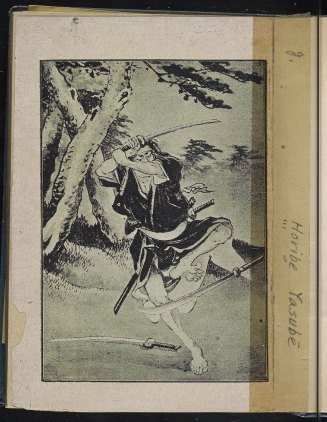
Image from the UPenn juvenile fiction collection.

Image from the UPenn juvenile fiction collection.

Today’s resource is just a quick glance at a database for those literature-minded folk interested in modern Japanese literature or, more specifically, juvenile fiction in Japan. In recent years, the University of Pennsylvania has digitized a sizable collection of Japanese juvenile fiction from the Meiji (1868-1912) and Taishō (1912-1926) periods. The collection:

is a snapshot of early 20th century Japanese publishing history. These 188 small books (roughly 12.75 cm high by 9.25 cm wide) largely contain tales of bravery and adventure: reimagined samurai swashbucklers, ninja-turned-heroes, fantastic journeys, and wars of glory. The romanticized bygone days of the post-medieval Edo period (1600-1868) provided a wealth of material for young urban readers.

The juvenile fiction collection has been fully digitized in high quality for public browsing from the webpage, with easy access to each page via drop-down menus. There are full-page spread and zoom options for ease of viewing, as well as “more information” tabs that provide detailed information titles, publishing, and related works.

Many of the works are from such famous series as the Tatsukawa (Tachikawa) Bunko series. As described in this article on the collection by Mike Williams, a specialist at the UPenn library:

The stories that formed Tatsukawa bunko and enthralled their readership trace their origins back to the spoken-word performance art of kōdan in the latter half of the 20th century. Kōdan featured stories of heroism and wars, delivered in a dramatic and colloquial but certainly professional style. These tales eventually formed the basis for a genre of literature called sokkibon, or to use J. Scott Miller’s term, “phonobooks”. Stenographers of kōdan used newly-imported Western techniques for shorthand (sokki) to transcribe the narratives of performers into readable texts. These printed stories, written with a decidedly oratory style, proved to be hugely successful in the greater Osaka area. With the proliferation of sokkibon as a literary genre, authors familiar with the kōdan and sokkibon penned their own stories in the same vein, conflating the functions of both storyteller and transcriber.

The works in this collection are of great historical significance in literary and publishing history, some of which may not exist elsewhere in the world, let alone in digital format or with a chance of reprinting. If you want to learn more about the genres represented in the collection and its history, see Williams’ article here. Otherwise head over to the collection and check it out at your leisure!

Posted in culture, graduate school, study tools, undergraduate, useful links | Tagged , , , , , , , , | Leave a comment

Call for Papers: Utopias on Display: Visions of Past and Future in Modern Japan

call for papers [150-2]Utopias on Display: Visions of Past and Future in Modern Japan (A Global Asias Workshop)

Date: April 9, 2016

Venue: Department of Asian Studies, Pennsylvania State University, State College, PA.

The trite description of Japan as a modern paradox, simultaneously a repository of ancient tradition and font of cutting-edge technology, is the product of a long history of conscious image-making.  Throughout the modern period and continuing to the present day, displays of the products of Japanese culture and industry, from high art to public infrastructure, have performed a dual role: promoting idealized images of Japan to international audiences, while educating the Japanese public about what the country can and should become.  Exhibits can involve either the dispatch of materials abroad or the invitation of people to sites in Japan.  Whether they display historical artifacts, such as costumes of Nō theater or Edo-period castles, or technological achievements like robots and bullet trains, exhibits of Japan have aimed to define Japan of the present through utopian visions of its past and future.  Bringing the focus of national identity to the distant past or near future effectively papers over uncomfortable aspects of the present, as well as problematic elements of recent history.

Leaders in Japan’s government, economic, and cultural spheres have consistently sought to harness the power of the exhibition to pursue personal and public, local, national, and international goals.  The potential political, economic, and symbolic impact of exhibitions makes them the focus of attention and contention, garnering resources, but also inviting debate and dissension about how those resources will be deployed and what kinds of images would be presented.  The goals and unintended consequences of varied endeavors include changing identities on the international and domestic levels, cultural and technological developments, and permanent changes to urban landscapes in the cities hosting exhibits or on display.

The aim of this workshop, part of Penn State’s Global Japan Program, supported with funds from the Japan Foundation, is to bring together scholars in a variety of disciplines to discuss the particular questions and issues surrounding Japanese exhibits of idealized pasts and futures.  We invite proposals addressing any aspect of exhibitions in or of Japan, such as:

  • Uses of exhibitions to further notions of regional and national identity
  • Displaying Japan and/or aspects of Japanese life abroad (including imperial exhibitions in prewar Japan)
  • Museum displays and discussions of the past and future of Japan
  • Impact of Western notions of display on Japanese practices
  • Ideas of technological and other utopias on display
  • Heritage sites and the uses of domestic and international tourism in “inventing” identities
  • The role of exhibitions in Japan’s international relations

SUBMISSION OF PROPOSALS: Please send an abstract of 250 words maximum and a short CV byJanuary 15, 2016 to both Dr. Ran Zwigenberg at ruz12@psu.edu and Dr. Jessamyn Abel at jua14@psu.edu.  Successful applicants will be notified by 10 February 2016.  Travel and accommodation costs will be covered by Penn State’s Global Japan Project.

Posted in announcements, conferences, graduate school | Tagged , , , , , | Leave a comment

Funding: Mellon Postdoctoral Fellowship, Migration and Displacement in Asia

job opening - 5Institution:      Brown University, History
Location:         Rhode Island, United States
Position:         Postdoctoral Fellowship / Migration and Displacement in Asia

Brown University invites applications for a 2-year Mellon Postdoctoral Fellowship in History, with a specialization in the study of displacement and migration in early modern and modern Asia. This position is to be held jointly at the Cogut Center for the Humanities and the Department of History, effective July 1, 2016. Our goal is to appoint an exceptional scholar of displacement and migration, with priority given to candidates whose research and teaching offer historical and theoretical approaches to the role of radical economic and environmental transformation in the movement of peoples within Asia. The successful candidate will teach two courses per year in the Department of History cross-listed in the Cogut Center’s Humanities course offerings. The fellow will also be affiliated with the Cogut Center and is expected to participate in the weekly Tuesday seminars as well as other activities of the Center. PhD must be in hand by July 1, 2016 and must have been awarded in the last five years. Applicants from outside North America are strongly encouraged to apply. Stipend of $61,500 with an increase to $63,907 the second year plus benefits and a research budget of $2,000 per year. Candidates should send a letter of application, curriculum vitae, writing sample, two sample course descriptions, and three letters of recommendation via  http://apply.interfolio.com/33013.

Review of applications will begin January 1, 2016 and will continue until the position is filled. Brown University is an AA/EOE. Women and minorities are encouraged to apply.

Contact:           Rebecca Nedostup (rebecca_nedostup@brown.edu)

Website:           http://apply.interfolio.com/33013

Posted in announcements, funding, job openings, jobs | Tagged , , , , , , , | Leave a comment

Program/Funding: The Asian Sphere: Call for applicants

The Asian Sphere offers a unique opportunity for outstanding candidates, at the MA and PhD level, to enroll in a multidisciplinary and inter-university graduate program that deals with the Asian continent.

The Asian Sphere is a joint Israeli program between the University of Haifa and the Hebrew University, funded by the Humanities Fund of the Planning and Budgeting Committee of the Council for Higher Education in Israel (VATAT) and Yad Hanadiv. It is a structured graduate program of excellence that deals with the entire Asian continent as a continuous civilizational zone and addresses cross-regional contacts and processes among Asian societies, cultures and states and to a lesser extent between Asia and other continents throughout history until present time.

Apart from a dynamic and exceptional environment of learning and research, the program offers a large number of scholarships for outstanding graduate students. The scholarship for PhD students are in the amount of 60,000 NIS per year + full tuition for three years.

The Asian Sphere accepts students from different disciplines in the humanities and social sciences, such as Asian Studies, Islamic and Middle Eastern Studies, Art History, Archaeology, Geography, Political Science, International Relations, Cultural Studies, History, Religious Studies, Philosophy, Anthropology, Sociology, Economics, and more. Research topics are open and can deal with past or current societies. The core of the Asian Sphere teaching activity revolves around introductory core courses and high-level seminars on trans-regional, trans-continental and trans-cultural themes, each taught by two or more internationally renowned scholars. In addition, students that are accepted to the program will participate in yearly academic retreats, research trips in Israel and abroad, academic conferences and other activities.

For more information visit our web site: http://asian-sphere.huji.ac.il/

Criteria for the selection of candidates for the Asian Sphere Program scholarship:

  • Proven academic excellence.
  • Preliminary research topic and interest that address cross-Asian topics such as analysis of contacts or comparison between two or more regions or cultures in Asia.
  • Candidates should secure in advance the agreement of potential advisor (or advisors) of their thesis, from the University of Haifa or the Hebrew University.

Registration for the Asian Sphere Program:

Interested individuals are requested to send the following documents (combined into one electronic file) to our mail address. Documents in languages other than English or Hebrew should be translated.

  • Curriculum vitae.
  • Report of grades (BA, MA).
  • Abstract of one’s Master’s
  • A writing samples in English (recommended).
  • A document describing one’s research interests, presenting the research questions that interest the candidate, the research context, the research methodology and how the research topic is related to the goals and scope of theAsian SphereProgram (up to 500 words).
  • Two letters of recommendation to be sent separately to the program coordinator  atAsianSphere@gmail.com
  • A written consent from the proposed thesis advisor(s) from the University of Haifa or the Hebrew University.

Requirements of the Asian Sphere Program and Renewal of the scholarship:

  • Doctoral students must participate in our two core courses and in at least three of the program’s interdisciplinary seminars (16 course credits all together) as well as actively participation in the program yearly academic retreat and other activities of the program.
  • Annual renewal of the scholarship will be dependent on demonstrated progress of theAsian Spherefellows and on continued recommendation from their thesis supervisor.
  • To pass from the first to the second year Ph.D. students will have to participate in one core course and at least two of the program’s seminars, write at least one seminar paper, complete their Ph.D. proposal which will be approved by their advisor(s), and successfully advance from stage A to stage B in their doctorate program.
  • To pass from the second to the third year Ph.D. students will have to submit a report with regard to their academic progress and complete at least one chapter of their dissertation approved by their advisor(s).
  • D. students will be encouraged to submit research articles to refereed journals and required to present at least one paper in an international conference held during either the second or the third year of the program.

For additional information regarding terms of acceptance and the procedures, contact Prof. Gideon Shelach (Gideon.shelach@mail.huji.ac.il) and Prof. Rotem Kowner (kowner@research.haifa.ac.il).

All the documents should be sent to the Asian Sphere Scholarships Committee by January 31, 2016 to this email address: AsianSphere@gmail.com

Contact Info:

The Asian Sphere Program
The Hebrew University, Mt Scopus
91905 Jerusalem
Israel

Contact Email:
AsianSphere@gmail.com

URL:

http://asian-sphere.huji.ac.il/

Posted in announcements, funding, graduate school | Tagged , , , , , , , | Leave a comment

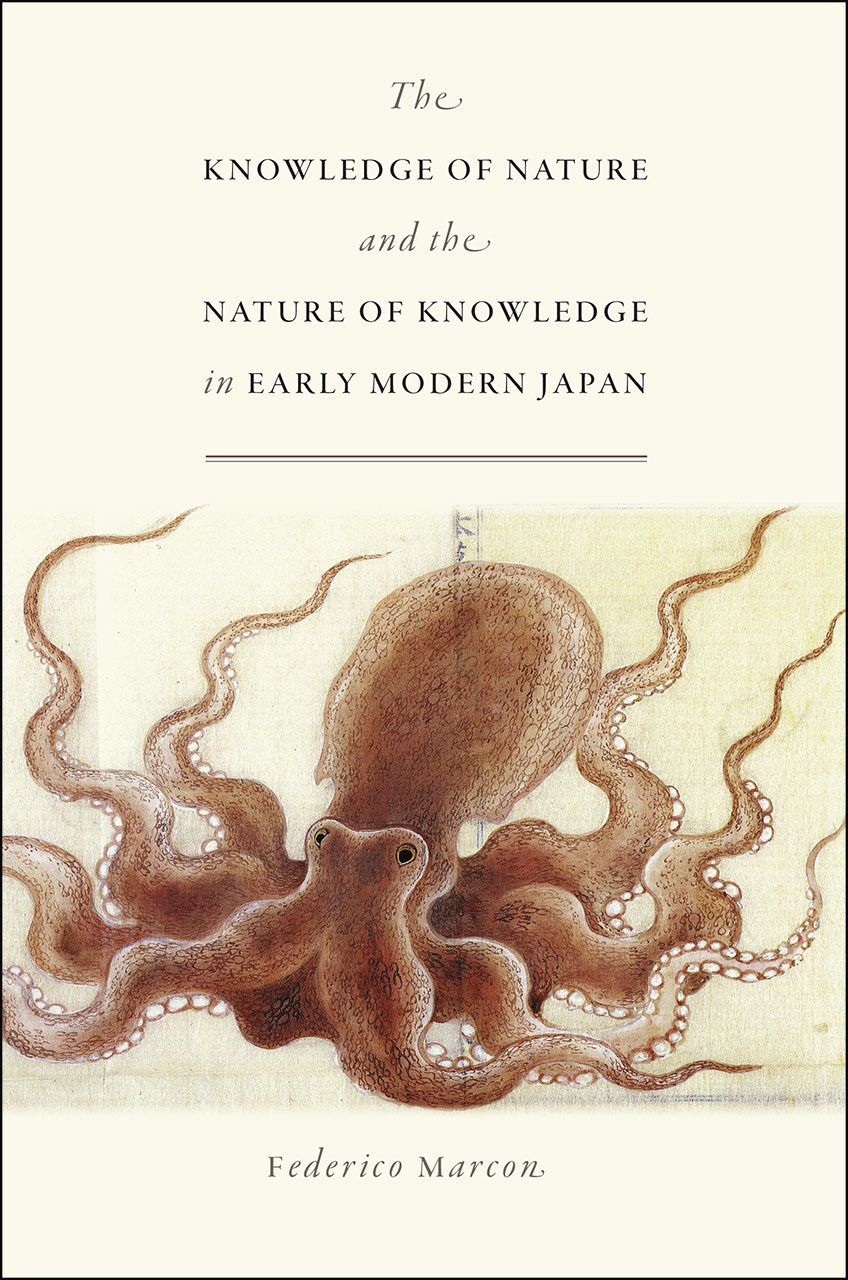
Book Announcement: The Knowledge of Nature and the Nature of Knowledge in Early Modern Japan

nature of knowledgeThe Knowledge of Nature and the Nature of Knowledge in Early Modern Japan

FEDERICO MARCON

Between the early seventeenth and the mid-nineteenth century, the field of natural history in Japan separated itself from the discipline of medicine, produced knowledge that questioned the traditional religious and philosophical understandings of the world, developed into a system (called honzogaku) that rivaled Western science in complexity—and then seemingly disappeared. Or did it? In The Knowledge of Nature and the Nature of Knowledge in Early Modern Japan, Federico Marcon recounts how Japanese scholars developed a sophisticated discipline of natural history analogous to Europe’s but created independently, without direct influence, and argues convincingly that Japanese natural history succumbed to Western science not because of suppression and substitution, as scholars traditionally have contended, but by adaptation and transformation.

The first book-length English-language study devoted to the important field of honzogaku, The Knowledge of Nature and the Nature of Knowledge in Early Modern Japan will be an essential text for historians of Japanese and East Asian science, and a fascinating read for anyone interested in the development of science in the early modern era.

http://press.uchicago.edu/ucp/books/book/chicago/K/bo20145439.html

Posted in Uncategorized | Tagged , , , , , , , | Leave a comment

Call for Papers: Symposium on Traffic, Territory, and Citizenship between Asia & the Americas

call for papers [150-2]Call for Papers: Traffic, Territory, Citizenship: Framing the Circulation of People and Goods between Asia and the Americas in the Long 19th Century

We invite proposals for a two-day symposium on new approaches to the circulation and interchange of people and goods between Asia and the Americas during the long nineteenth century. Sponsored by the Binghamton University Citizenship, Rights, and Cultural Belonging Transdisciplinary Area of Excellence, the symposium will be held April 15-16, 2016, at Binghamton University’s Downtown Center.

Most discussions about the Americas and Asia focus on trans-Pacific trade and migration, overlooking other circuits of movement and connection. We seek, instead, to bring scholars of the Americas into conversation with scholars of South Asia, East Asia, and Southeast Asia to consider global diasporas from each region in the context of labor migration, capitalism, and the emergence of both territorial empires and settler colonial nation-states in the 19th and early 20th centuries.

Critical to our contemporary political economy, the traffic in goods and people between Asia and the Americas has been consequential since the establishment of regular global trade in the early modern era. Linking the Indian, Atlantic and Pacific oceans together, this movement also reconfigured place, as capitalism’s shifting priorities redefined the scope, hierarchy, and density of interconnections on land. Maritime traffic not only linked ports-of-call, it hastened movement into interior hinterlands, configuring them as territory to contest, control, and conquer. Some territories became extractive zones, while others became settler colonies where immigrants lived and worked (often in conflict with indigenous populations) and developed new social and cultural attachments. Taken together, these circuits of interactions produced the pre-conditions for the interrelated political economic concepts that defined global relations in the 20th century: the nation-state, territorial sovereignty, and citizenship.

The symposium will feature two keynote sessions, led by guest senior scholars Madhavi Kale (Bryn Mawr College), a historian of Indian indentured labor migration and Indian domesticity, and Robert Hellyer (Wake Forest University), a historian of international trade in Japan and the global tea trade.

Open to any discipline, the symposium will combine sessions organized around questions drawn from participants’ research with presentations on primary sources. In addition to discussion and feedback on their research, participants will also collectively produce a digitally-annotated bibliography of relevant scholarship and a digital archive of primary sources – both to be published online as an integrated exhibit to spur future research and support teaching on the workshop’s themes.

Proposals should include a title, an abstract (250 words maximum), a description of the proposed primary source for the digital archive, and a brief (1p.) biography or CV.

Please send proposals via e-mail to traffic@binghamton.edu by Thursday, December 31, 2015.

Individuals will be notified of decisions no later than January 31, 2016.

(While the symposium does not have funding to support participants’ travel or lodging, meals will be provided.)

Organizers: 

John Cheng
Assistant Professor of Asian and Asian American Studies
Binghamton University
jcheng@binghamton.edu
https://www.binghamton.edu/aaas/people/cheng.html

Dael A. Norwood
Assistant Professor of History
Binghamton University
dnorwood@binghamton.edu
http://www.binghamton.edu/history/people/faculty/norwood.html

Contact Info:

Dael A. Norwood
Assistant Professor of History
Binghamton University
dnorwood@binghamton.edu
For proposals: traffic@binghamton.edu

Contact Email:

traffic@binghamton.edu

Posted in announcements, conferences, graduate school | Tagged , , , , , , , | Leave a comment

Fun Link Friday: Japan’s Turtle Tracks

While the world is being amazed by Japan’s technological skills (like working on the new Maglev magnet-based shinkansen technology!), it’s still the little things that make us love Japan’s transportation priorities. Like, for example, the recent installation of turtle paths to keep these cute little guys from getting wedged under trains and dying and/or causing delays and accidents.

turtles

This collaboration between the Suma Aqualife Park in Kobe and the West Japan Railway Company has allowed the turtles to pass freely under the tracks, solving their problem and making for really cute sight in the meanwhile. Check out the original Japanese article here and the English language version at Bored Panda! Happy Friday!

Posted in culture, fun links | Tagged , , , | Leave a comment