Job Opening: Visiting Instructor in East Asian History and Culture

job opening - 5Eckerd College, East Asian Studies

Visiting Instructor of East Asian Studies & History

Eckerd College seeks a Visiting Instructor in East Asian history and culture to teach five courses per year, including a two-semester sequence in East Asian culture and history; one World History survey; and two other East Asian studies courses according to the candidate’s specialization, with a preference for themes in environmental history and/or popular culture. Position is for one year, renewable for a second year. Ph.D. or ABD in history or other appropriate discipline required. Eckerd College, the only independent national liberal arts college in Florida, has a tradition of innovative education and teaching/mentoring excellence. Please upload cover letter, curriculum vitae, undergraduate and graduate school transcripts, and recent course evaluations via www.eckerd.edu/hr/employment by March 15th. Inquiries may be sent to Andrew Chittick,chittiab@eckerd.edu. Qualified candidates must be authorized to work in the United States for the College. EOE.  

Posted in announcements, job openings, jobs | Tagged , , , , , , , | Leave a comment

Funding: Scholarships Available to Study Intensive Chinese or Japanese this Summer

money [150-2]Scholarships are available to study intensive Chinese or Japanese at Washington University in St. Louis this Summer with the ALLEX Foundation: http://www.allex.org/summer-chinese-or-japanese/

The WUSTL-ALLEX Intensive Chinese and Japanese Institute will offer intensive beginning level classes in Japanese and Mandarin Chinese at Washington University in St. Louis for seven weeks this summer. Each class meets for 2 hours per day, 5 days a week for 7 weeks. The course is intensive and requires 3-5 hours of mandatory self-managed study per day.

This program is designed to train students to speak and listen to Chinese or Japanese, and to introduce students to reading and writing the language. At the end of the course students will be expected to perform in all four skills—speaking, listening, reading and writing—at a basic level of proficiency. Students will not only learn to speak the language; they will also develop an understanding of Chinese or Japanese interpersonal behavior. The ultimate goal is to teach students not just to speak Chinese or Japanese, but to function successfully in Chinese or Japanese culture—to present yourself as an intelligent person in the culture using the language. Students will learn to speak and perform correctly in a variety of social situations.

Scholarships are available.

For more information please visit:

http://www.allex.org/summer-chinese-or-japanese/ or the ALLEX Foundation at call 607.218.2130.

Alliance for Language Learning and Educational Exchange

www.allex.org | office@allex.org

Twitter: www.twitter.com/ALLEXfoundation

Facebook: www.facebook.com/allexoffice

Posted in announcements, financial assistance, funding, graduate school, undergraduate | Tagged , , , , , , , | Leave a comment

Book Announcement: The Book of Yokai: Mysterious Creature of Japanese Folklore


yokaiThe Book of Yokai: Mysterious Creature of Japanese Folklore

Michael Dylan Foster; with original illustrations by Shinonome Kijin

University of California Press, 2015

http://www.ucpress.edu/book.php?isbn=9780520271029

This monograph introduces yokai in a style that is intended to be accessible to students and scholars of Japan as well as to a general readership with interest in the supernatural or monstrous.

Here is the cover description, followed by a list of the contents:

Monsters, ghosts, fantastic beings, and supernatural phenomena of all sorts haunt the folklore and popular culture of Japan. Broadly labeled yokai, these creatures come in infinite shapes and sizes, from tengu mountain goblins and kappa water spirits to shape-shifting foxes and long-tongued ceiling-lickers. Currently popular in anime, manga, film, and computer games, many yokai originated in local legends, folktales, and regional ghost stories.

Drawing on years of research in Japan, Michael Dylan Foster unpacks the history and cultural context of yokai, tracing their roots, interpreting their meanings, and introducing people who have hunted them through the ages. In this delightful and accessible narrative, readers will explore the roles played by these mysterious beings within Japanese culture and will also learn of their abundance and variety through detailed entries, some with original illustrations, on more than fifty individual creatures. The Book of Yokai provides a lively excursion into Japanese folklore and its ever-expanding influence on global popular culture. It also invites readers to examine how people create, transmit, and collect folklore, and how they make sense of the mysteries in the world around them. By exploring yokai as a concept, we can better understand broader processes of tradition, innovation, storytelling, and individual and communal creativity.

CONTENTS

List of Illustrations
Water Goblin Tales: Preface and Acknowledgments
Names, Dates, Places

Part I. Yokai Culture
1. Introducing Yokai

Yokai, Folklore, and This Book
The Language of Yokai
Event Becomes Object

2. Shape-Shifting History
Heroes of Myth and Legend
Weird Tales and Weird Tastes
Modern Disciplines
Postwar Animation and the Yokai Boom

3. Yokai Practice/Yokai Theory
Yokai Culture Network
Zone of Uncertainty

Part II. Yokai Codex
4. The Order of Yokai
5. Wilds
6. Water
7. Countryside
8. Village and City
9. Home

Epilogue: Monsterful

Notes
Bibliography
Alphabetized List of Yokai in the Codex
Index

https://bookofyokai.wordpress.com/

Posted in announcements, culture | Tagged , , , , , , | Leave a comment

Call for Papers: Joint East Asian Studies Conference – SOAS, University of London

call for papers [150-2]Joint East Asian Studies Conference (JEAS) 2016

7th to 9th September,  SOAS, University of London

The JEAS Conference is a triennial meeting held by the three academic associations representing East Asian Studies in the UK:

This conference provides a major venue for the dissemination of research on East Asian Studies in various disciplines for academics from both the UK and abroad.

Important dates

  • Call for papers: opened on 5 February 2016
  • Call for papers deadline:Friday, 15 April 2016

Notification of acceptance: Friday, 6 May 2016

Registration

  • Early bird registration:Friday, 6 May to Friday 10 June 2016
  • Standard registration:Saturday 11 June 2016 to Friday 2 September 2016

Call for papers

Submission Guidelines

We welcome submissions from established academics and doctoral candidates in any field of East Asian studies working within any academic institution internationally. Priority will be given to panel submissions, but individual paper submissions are also welcome and if accepted will be organised into thematic panels.

Panel sessions will comprise no more than four presenters in any one panel and should indicate a panel chair/ discussant.

Panel submissions should organise around a key theme or field and should take the form of a panel outline of no more than 200 words, which will be published on the conference website and in the conference programme. Panel chairs are responsible for collecting paper abstracts from panellists. Paper abstracts should be no more than 350 words each and must include a title, author affiliation and contact details.

The conference is centred on five key themes and panels in these themes are particularly encouraged:

  1. Aging and Demography
  2. Memory & History
  3. Identity
  4. Trans-Cultural Flows
  5. Geo-Politics

Accepted paper presenters will be allowed 15 minutes for presentation and an additional 5 minutes for question and answer session with the audience.

How to Submit

Further details on the conference and the link for submission of abstracts (via easychair) is available at:

https://www.soas.ac.uk/jeas-2016/

Posted in announcements, conferences, graduate school | Tagged , , , , , | Leave a comment

Fun Link Friday: Download ukiyo-e collections

For the art lovers out there, the Van Gogh Museum in Amsterdam has recently made it possible to download their entire collection of ukiyo-e woodblock prints! This is something they’ve taken great pains to make possible for all of their online collections, but lucky for us, that collection includes a significant number (just over 500!) of works by Japanese masters from the Edo period, including Hokusai and Hiroshige, among others. Be sure to check it out!

Crossing

Happy Friday!


Posted in culture, fun links | Tagged , , , , , , | Leave a comment

Job Opening: Programs Coordinator, University of Dayton

job opening - 5Via JETWITjobs.com.

Institution: University of Dayton, OH
Title: Programs Coordinator
Position Number 005505
Proposed Closing Date 02/20/2016
Proposed Start Date 05/02/2016

POSITION SUMMARY
The Programs Coordinator is responsible for executing all logistical aspects of faculty-led and short-term programming including, but not limited to securing services with vendors, student registration, student advising, collecting student application materials, promotion of faculty-led programs and running essential reports. This position reports to the Assistant Director.

Position Summary Information
The University of Dayton, founded in 1850 by the Society of Mary, is a top ten Catholic research university. The University seeks outstanding, diverse faculty and staff who value its mission and share its commitment to academic excellence in teaching, research and artistic creativity, the development of the whole person, and leadership and service in the local and global community.

To attain its Catholic and Marianist mission, the University is committed to the principles of diversity, inclusion and affirmative action and to equal opportunity policies and practices. As an Affirmative Action and Equal Opportunity Employer we will not discriminate against minorities, females, protected veterans, individuals with disabilities, or on the basis of sexual orientation or gender identity.

Minimum Qualifications

  • Bachelor’s degree and two years of related professional experience OR a Master’s degree and one year of related professional experience
    Experience studying or living abroad
  • Excellent written and verbal communication skills
  • Superior organizational skills

Preferred Qualifications

  • At least one year of experience working with Studio Abroad software
  • Participant on and/or managed a faculty-led or short-term program abroad
  • Experience working with international service providers and/or travel services
  • Strong presentation skills

Full listing at University of Dayton’s website.

Posted in announcements, job openings, jobs | Tagged , , , | Leave a comment

Job Opening: Outreach and International Programs Manager, California State University, Northridge

job opening - 5Institution: California State University, Northridge
Location: Northridge, CA
Job ID: 5185
Posted: 02/10/2016
Application Due: Open Until Filled, screening begins Feb. 23
Type: Full Time

About the University
Serving more than 42,000 students each year, CSUN is one of the largest universities in the United States, and it has an impact to match its size. Money Magazine recently named CSUN one of the top ten values in all of higher education, and the Social Mobility Index ranked CSUN fifth in the nation for elevating its students’ economic and social well-being. CSUN ranks 10th in the country in awarding bachelor’s degrees to underrepresented minority students, fifth nationally in awarding master’s degrees to Hispanic students and enrolls the largest number of deaf and hard-of-hearing students of any U.S. state university. CSUN’s 171 academic programs and engaged centers enjoy international recognition for excellence. CSUN currently partners with more than 100 institutions of higher education in 22 countries around the globe and attracts the largest international student population of any U.S. master’s level institution. Situated on a 356-acre park-like setting in the heart of Los Angeles’ San Fernando Valley, the campus features modern educational buildings and world-class LEED Gold-certified performing arts and recreational facilities recognized as among the best in the country. CSUN is designated as a Hispanic Serving Institution (HSI) and an Asian American, Native American, Pacific Islander Serving Institution (AANAPISI) and we value the diversity of all of our students and the campus community. CSUN is a welcoming university that champions accessibility, academic excellence and student success.

Major Duties
Under the supervision of the Associate Director, the Outreach and International Programs Manager ensures that well qualified international students and prospect partners are recruited to participate in CSUN programs which includes recruiting students for CSUN’s Intensive English Program, the Semester at CSUN Program, and for CSUN’s short-term customized programs for which the Outreach and International Programs Manager has special added responsibility. The incumbent, during international recruitment trips will represent the full load of program offerings from CSUN which includes but it is not limited to undergraduate and graduate degrees; assists the Associate Director in developing academic relationships with respected international universities and in managing recruiting partners (agents) relationships; works with the Associate Director and participates, in support of the recruitment effort, in the development of marketing materials and social media initiatives; participates in the development of a yearly recruitment and marketing plan relevant to the International Programs and Partnerships (IPP) unit; works with the Associate Director to ensure each program is financially successful, ensures growth in participation in the programs offered, and a growth in the number of international prospective and current partners asking for programs from CSUN; plays the lead role in developing and managing the operations of CSUN’s selected customized short-term programs for international groups; develops customized English language programs for international students as well as programs on other content areas (business, engineering, health professions, sciences, the arts, and the like) for international groups that are often midcareer professionals; works collaboratively within the Tseng College, with the full IPP staff team (in particular with the IEP Academic Director when it is related to the English Language content delivery), colleagues who develop and manage programs for domestic markets (in particular with the Assistant Dean for Program Development) to ensure the programs are developed in keeping with Tseng College standards and practices for excellence and distinction in curriculum development, instructional strategies, and support services; works with Tseng College colleagues to ensure program support services are well planned and fully engaged and makes appropriate contact to engage support services from larger University needed to make each short-term or other assigned program successful; works with the manager of housing and student life in the International Programs and Partnerships unit to make arrangements for housing, meal plans, and social and cultural events as needed to enhance to educational and cultural experience of program participants; and performs other duties as assigned.

Qualifications
Equivalent to graduation from an accredited four-year college or university in a job-related field required; a Master’s Degree and/or higher level degree in a directly related field such as International Relations, Linguistics, English as a Second Language, Instructional Design, Educational Technologies, and curriculum is strongly preferred. Equivalent to five years of full-time progressively responsible relevant international experience is required. International market experience in Asia, especially China, Southeast Asia and the Middle East are at an advantage. Oversight and administration of a program with supervision and/or lead experience is a plus.

Knowledge, Skills, & Abilities
Thorough knowledge of general practices, program, and/or administrative specialty, and operational and fiscal analysis and techniques. Advanced knowledge of policies, procedures, and outside regulations pertaining to recruitment and conducting business in the international arena. Knowledge of program and service marketing. Demonstrated knowledge of international publications and web marketing. Ability and specialized skills to: be a consistently positive, responsive, and co-creative colleague with all Tseng College staff and keep all relationships with internal and external partners, clients and with University level colleagues positive and productive making all positively impresses with their work with CSUN and the Tseng College; take initiative and independently plan, organize, coordinate, and perform work in various situations where numerous and diverse demands are involved; show expertise in investigating and analyzing problems with a broad administrative impact and implications and apply CRM and PeopleSoft data to understand recruitment efforts; interpret, and apply a wide variety of policies and procedures to develop conclusions and make recommendations; perform basic research and statistical analysis; analyze data and make accurate projections using business mathematics and basic statistics; communicate effectively both orally and in writing; write clear program descriptions/proposals/reports, budget narratives, personnel position descriptions, performance appraisals, and summary recommendations regarding administrative and program development reports. Ability to work in a diverse environment and train others and provide lead work direction. Demonstrated computer skills using Microsoft Office (i.e. Word, Excel, Outlook, PowerPoint etc.). Must have easy command of mobile communications and computer capabilities needed to work successfully with international clients and while traveling. Must be able to use email, financial/spreadsheet software, online calendaring and presentation software. Ability to speak and write in a second language is an advantage. Experience coordinating English language programs for international students. Excellent communication and project management skills.

TRAVEL REQUIREMENTS: This position is expected to travel internationally and includes responsibilities for international recruitment which may incorporate three to five extended business trips per year. Must be eligible to obtain a US Passport.

Application Screening begins February 23, 2016, and will continue until position is filled.

In order to be considered in the initial review, applications must be submitted prior to the date listed above. Application submissions received after the application screening date will be reviewed at the discretion of the University.

For more detailed information on the application and hiring process, please view the link below:
http://www.csun.edu/careers/

Via HigherEdJobs.com


Posted in announcements, job openings, jobs | Tagged , , , | Leave a comment

Call for Papers: 7th International Symposium for Young Researchers in Translation, Interpreting, Intercultural Studies and East Asian Studies

call for papers [150-2]We are pleased to announce the forthcoming 7th International Symposium for Young Researchers in Translation, Interpreting, Intercultural Studies and East Asian Studies, which will be held on the 1st of July 2016 at the Faculty of Translation and Interpreting, Universitat Autònoma de Barcelona.


The 7th Symposium for Young Researchers is aimed at students who have recently begun their research as M.A. students, PhD students or those who have recently completed their PhD theses. The purpose of this Symposium is to provide a scientific forum within which the next generation of researchers can exchange ideas and present their current research in the field of Translation, Interpreting, Intercultural Studies or East Asian Studies.


Deadline for the abstract submission: March 4.


Keynote speech: “Beneath the Tip of the Iceberg: Exploring the Hidden Patterns of Culture in Translation”, by David Katan, professor of the Department of Humanities at the University of Salento.


For more information: 

http://pagines.uab.cat/simposi/en 

simposi.traduccio@uab.cat


Best regards, 


The organising committee

Posted in announcements, conferences, graduate school, undergraduate | Tagged , , , , , | Leave a comment

Job Opening: Japanese or Chinese Studies, Northern Arizona U.

Institution: Northern Arizona University, Department of Comparative Cultural Studies
Location: Flagstaff, AZ
Position: Instructor in Asian Studies with a focus on Japan or China

The Department of Comparative Cultural Studies (CCS) at Northern Arizona University seeks to hire an Instructor in Asian Studies with a focus on Japan or China, commencing Fall 2016. Responsibilities include teaching four classes per semester, mentoring students in the Asian Studies Interdisciplinary Global programs, and service responsibilities as assigned by the Chair in the Department of Comparative Cultural Studies.

Minimum Qualifications:
-M.A. degree in Asian Studies with a focus on Japan or China, or in a humanistic discipline (such as Humanities, Literature and/or Religious Studies) with a focus on Japan or China, conferred by the contract start date in August 2016.
-Taught at least one course as the instructor of record at the college and/or university level.

Preferred Qualifications:
-Ph.D. degree in Asian Studies with a focus on Japan or China, or in a humanistic discipline (such as Humanities, Literature and/or Religious Studies) with a focus on Japan or China Evidence of success in teaching as instructor of record at the college/university level.
-Demonstrated commitment to working with diverse populations on campus and in the community.

Salary and Benefits: $40,000 for the academic year. This is a Faculty position. NAU offers an excellent benefit package including generous health, dental and vision insurance; participation in the Arizona State Retirement System (ASRS) or the Optional Retirement Program (ORP); sick leave accruals and 10 holidays per year; and tuition reduction for employees and qualified family members. More information on benefits at NAU is available at https://nau.edu/Human-Resources/Benefits/

To apply: Go to http://nau.edu/…/Careers/Faculty-and-Administrator-Openings/, click on “Faculty and Administrator Job Openings,” and select “Instructor, Asian Studies – 602401.”

Application must include one attachment that contains:
• Letter of application detailing teaching experience and addressing the courses you are prepared to teach and/or develop; see http://catalog.nau.edu/Courses/index
• Curriculum Vitae including names and contact information for three professional references
• One sample syllabus from a course on East Asian Culture(s), Humanities and/or Religion(s)
• Student evaluations from a course on East Asian Culture(s), Humanities and/or Religion(s)
• Unofficial Transcripts

(Additional materials may be requested of finalists selected for interview.) Save all items, in the order stated, as a single PDF or Word document. If you have problems submitting application attachments, please contact the department for assistance.

Please also arrange to have three (3) confidential letters of recommendation sent to the committee chair, Dr. Zsuzsanna Gulacsi at zsuzsanna.gulacsi@nau.edu

Review of applications begins on March 9, 2016. This position will be open until filled or closed.

Posted in announcements, job openings, jobs | Tagged , | Leave a comment

Kuzushiji Reading Resources

If you are researching premodern Japan or simply pursuing calligraphy for fun, you should become familiar with kuzushiji 崩し字, or cursive characters, in your primary resources. This is a highly specialized skill that takes a great deal of time to master, but is also quite a bit of (frustrating) fun for those who enjoy puzzles or have a knack for discerning characters. For a basic introduction to kuzushiji and a glimpse at what it can look like, please refer to this article at Naruhodo なるほど.

There are a lot of resources out there for researchers and enthusiasts, but they are rarely found in one convenient place that is kept up to date. One exception is the University of Pennsylvania’s website, which we will build upon with other resources in this post. Unfortunately, the majority of kuzushiji resources are Japanese-language only, but some English is interspersed here and there.

Texts

For text resources, specialist Okada Mariko, responsible for the kuzushiji workshop held at the University of Michigan in 2013, put together a useful set of books for studying kuzushiji on your own, which are as follows:

  • くずし字で「百人一首」を楽しむ  (WorldCat)
  • くずし字で「東海道中膝栗毛」を楽しむ : 古文書入門  (WorldCat)
  • くずし字で「おくのほそ道」を楽しむ (WorldCat)
  • 一週間で読めるくずし字. 古今集・新古今集(WorldCat)
  • 一週間で読めるくずし字. 伊勢物語 (WorldCat)
  • 古文書くずし字 200 (WorldCat)
  • 覚えておきたい, 古文書くずし字 500(WorldCat)
  • 基礎古文書のよみかた (WorldCat)

There is also a number of suggested books listed on the Komonjo Navi site listed below, including dictionaries and period-specific guides, which can be found here.


About Kuzushiji/Basic Introductions

These sites provide simple introductions to kuzushiji and in many cases practice materials you can use to get started with basic forms.

くずし字解読講座テキスト一覧(古文書解読) Kuzushiji Kaidoku Kōza Text Ichiran (Komonjo Kaidoku)
http://www.tosyokan.pref.shizuoka.jp/contents/history/kuzushi.html

Shizuoka Prefectural Central Library put together a series of essays related to kuzushiji, beginning with a basic introduction and moving on to reading practice materials that go step-by-step guiding the reader through the unfamiliar with increasing difficulty. These essays and practice materials are available in PDF format, which is very helpful for those who may want to download the articles or read them on tablets for easy access.

くずし字を学ぶKuzushiji o Manabu
https://itunes.apple.com/jp/itunes-u/kuzushi-ziwo-xuebu/id651357086

Waseda University offers audio course instruction (Japanese only) on kuzushiji by Professor Nobuyuki Kanechiku in thirteen episodes. Although we haven’t listened to them, they are undoubtedly a very valuable resource, since instruction by Japanese specialists is rarely available outside of Japan. Downloading these episodes is free of charge.

変体仮名あぷりThe Hentaigana App
http://alcvps.cdh.ucla.edu/support/
https://play.google.com/store/apps/details?id=edu.waseda.hentaigana

hentaiganaappThe Hentaigana App was just released this year through a collaboration between UCLA and Waseda University. It offers a convenient way to start learning and practicing kuzushiji recognition. The Waseda archival collections are some of the most useful for practicing kuzushiji reading in premodern documents. They have also been seamlessly integrated into the app to practice over 320 hentaigana, including photographs and detailed information of primary sources, a review mode, and an integrated hentaigana dictionary.


KuLA Kuzushiji App
iOS: https://itunes.apple.com/jp/app/kuzushi-zi-xue-xi-zhi-yuanapurikula/id1076911000?l=en&mt=8
Android: https://play.google.com/store/apps/details?id=yuta.hashimoto.kula

This app is designed to make to introduce total beginners to the concept of kana variants (hentaigana) and kuzushiji. It also allows readers with elementary knowledge to challenge themselves in reading the movable-type edition of Hojoki (in kanji hiragana majiri) as well as texts printed later on in the Edo period.

古文書なび Komonjo Navi
http://komonjyonavi.web.fc2.com/index.html

古文書なび provides a basic introduction to kuzushiji and komonjo reading, including books and guides useful for beginners, explanations about the structure of premodern documents and their writing styles, materials for beginners, and some basic practice materials such as calligraphic cards of the Hyakunin isshū.

Reference Sites:

These sites provide reference materials, such as dictionaries or commonly used character forms. They may be difficult to use at first, but are immensely helpful once you familiarize yourself with their individual methods for looking up characters.

古文書事始ネット Komonjogoto hajime netto
http://komonjo.riok.net/

This site offers a searchable database of characters. They can be arranged by hiragana syllable, onyomi, or kunyomi, and the code for the characters associated with a syllable in komonjo writings. You can also search by radicals for a given kanji, which then narrow down the field of characters. The page also includes instructions for looking up character strings and offers some limited examples for komonjo practice.

Kuzushi ji Cross Search (Historiographical Institute of the University of Tokyo)
http://clioz39.hi.u-tokyo.ac.jp/ships/ZClient/W34/

This site allows you to directly input characters into a searchable database, which yields a series of different versions of that character in kuzushiji. One of the benefits of the results on this page is that they are drawn directly from primary sources, with that source listed, so it is possible to compare different calligraphic hands and styles. Below the basic search results there are also direct links to the full image of the source and the archive from which it was drawn.

Database of Kuzushiji くずし字字典 (Historiographical Institute of the University of Tokyo)
http://wwwap.hi.u-tokyo.ac.jp/ships/shipscontroller-e

This database, also by the Historiographical Institute, draws on the same materials as above. While it does not include the direct links to the archives from which the kuzushiji images came, it has the added benefit of a “related search” section in the results, which provides links to similar phrases and characters.

江戸時代の変体仮名・変体仮名一覧表 Edo Jidai no Hentaigana- Hentaigana Ichiranhyō
http://hikog.gokenin.com/hentaiganaichiranhayamihyou.html
http://hikog.gokenin.com/hiraganagojuonjun.html

These pages provide basic charts of the most commonly found hentaigana and kuzushiji characters, as seen in Edo period works. While it is not comprehensive, it is a handy guide in a pinch for quick reference.

Primary Sources for Reading Practice (With Reading Guides):

These sites provide convenient primary sources for reading practice, but also some form of guide to help the read along, whether it is a transcription of the document into modern Japanese or a read-along mouseover that can be used to quiz yourself as you go.

Komonjo (Princeton University)
http://komonjo.princeton.edu/

Thomas Conlan’s Komonjo site provides a highly contextualized basis for looking at premodern documents and analyzing them based on their content as well as materiality. In terms of reading kuzushiji, the site provides high-resolution images of medieval documents side-by-side with transcriptions into type text, making it useful for interpreting documents yourself with a handy guide to their actual text.

女性関連資料 Josei Kanren Shiryō
http://www.lib.nara-wu.ac.jp/nwugdb/jindex.html

This site, part of the Nara joshi daigaku databases, provides a series of documents related to women from the Edo period and the Meiji period. Each document’s page includes a brief explanation in Japanese. Some (but not all) of the pages include an automatic pop-up window with the readings of the text, making it easy to read and check.

伊勢物語の世界 Ise Monogatari no Sekai
http://www.lib.nara-wu.ac.jp/nwugdb/iseindex.html

This collection, also a part of the Nara joshi daigaku databases, uses the same system as above to examine Edo period texts related to Ise monogatari. Users click through the original text and a pop-up window provides the readings.

江戸時代紀行文集 Edo-jidai Kikō Bunshū
http://www.lib.nara-wu.ac.jp/nwugdb/kindex.html

Another collection from Nara joshi daigaku, this page provides an interactive map of numerous travel accounts from the Edo period. Accounts that have the kuzushiji readings available open up in an overhead frame so that you can scroll through the text while clicking through pages of the original work.

春日権現霊験記繪巻 Kasuga Gongen Genki Emaki
http://mahoroba.lib.nara-wu.ac.jp/y04/

As with the above, this Nara joshi daigaku collection of the Kasuga Gongen Genki emaki provides a pop-up window of the readings for the original text so you can follow along as you click through the handscroll’s visuals.

劇場訓蒙図彙 Shibai Kinmō Zui
http://www2.ntj.jac.go.jp/dglib/contents/learn/ebook01/

This site focuses on an early nineteenth century kabuki text, with useful term search options for those looking for something specific. For kuzushiji practice, the original text can be opened in a side-by-side window of PDFs with an official typeset version that matches the source page-for-page.

『源氏物語』画像 Genji Monogatari Gazō
http://dglb01.ninjal.ac.jp/lcgenji_image/

This site provides stunning copies of Genji monogatari, which have been scanned into a high-quality viewing platform in which the typeset text is overlaid. The user can control the heaviness of the opacity of the typeset text, so it is possible to toggle the readings as you work through the kuzushiji.

奈良絵本室町時代物語 (Hiroshima University) Nara Ehon Muromachi Jidai Monogatari
http://opac.lib.hiroshima-u.ac.jp/portal/dc/kyodo/naraehon/muromachi_top.html
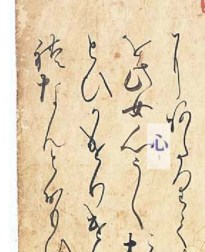
kuzushijiHiroshima University’s Nara e-hon collection has one of the most fascinating and convenient methods for viewing kuzushiji readings side-by-side with their visual collections, which is a “glass-view” that accompanies their materials. With this feature, you can hover your mouse over the image, making the reading of calligraphic characters appear next to the small area of text you’re examining.

甲州法度之次第Kōshū hatto no shidai
http://rarebook.dl.itc.u-tokyo.ac.jp/koshu/

Tokyo University also has a spectacular glass-view option for their Kōshū hatto no shidai handscroll, although this glass-view is not the small character-by-character mouseover, but appears in chunks for each section.

===

There are innumerable other archival resources for reading kuzushiji (the Waseda collections are notable, for example), but these are the main sources that also allow for reading aids so you can practice along with your primary sources.


Know of any other great sites for learning kuzushiji or practicing your reading? Let us know in the comments or shoot an email to shinpai.deshou@gmail.com!

Posted in culture, graduate school, study tools, undergraduate, useful links | Tagged , , , , , , , , , | 2 Comments