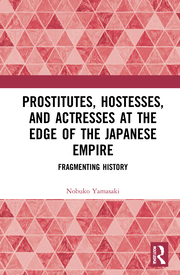
Book Announcement: Prostitutes, Hostesses, and Actresses at the Edge of the Japanese Empire: Fragmenting History

Prostitutes, Hostesses, and Actresses at the Edge of the Japanese Empire: Fragmenting History

Nobuko Ishitate-Okunomiya Yamasaki

Book Description:

Analysing materials from literature and film, this book considers the fates of women who did not or could not buy into the Japanese imperial ideology of “good wives, wise mothers” in support of male empire-building.

Although many feminist critics have articulated women’s active roles as dutiful collaborators for the Japanese empire, male-dominated narratives of empire-building have been largely supported and rectified. In contrast, the roles of marginalized women, such as sex workers, women entertainers, hostesses, and hibakusha have rarely been analyzed. This book addresses this intellectual lacuna by closely examining memories, (semi-)autobiographical stories, and newspaper articles, grounded or inspired by lived experiences not only in Japan, but also in Shanghai, Manchukuo, colonial Korea, and the Pacific. Chapters further explore the voices of diasporic Korean women (Zainichi Korean woman born in Japan, as well as Korean American woman born in Korea) whose lives were impacted, intervening ethnocentric narratives that were at the heart of the Japanese empire. An appendix presents the first English translation of a memorable statement on comfort women by former Japanese propaganda actress, Ri Kōran / Yamaguchi Yoshiko.

Prostitutes, Hostesses, and Actresses at the Edge of the Japanese Empire will appeal to students and scholars of Japanese literature and film studies, as well as gender, sexuality and postcolonial studies.

For more information: https://www.routledge.com/Prostitutes-Hostesses-and-Actresses-at-the-Edge-of-the-Japanese-Empire/Yamasaki/p/book/9780367648381

Posted in announcements, culture | Tagged , , , , , , , , , | Leave a comment

Book Announcement: Maiko Masquerade: Crafting Geisha Girlhood in Japan

Maiko Masquerade: Crafting Geisha Girlhood in Japan
by Jan Bardsley

Maiko Masquerade explores Japanese representations of the maiko, or apprentice geisha, in films, manga, and other popular media as an icon of exemplary girlhood. Jan Bardsley traces how the maiko, long stigmatized as a victim of sexual exploitation, emerges in the 2000s as the chaste keeper of Kyoto’s classical artistic traditions. Insider accounts by maiko and geisha, their leaders and fans, show pride in the training, challenges, and rewards maiko face. No longer viewed as a toy for men’s amusement, she serves as catalyst for women’s consumer fun. This change inspires stories of ordinary girls—and even one boy—striving to embody the maiko ideal, engaging in masquerades that highlight questions of personal choice, gender performance, and national identity.

For more information: https://www.ucpress.edu/book/9780520296442/maiko-masquerade

Posted in announcements, culture | Tagged , , , , , , , , , , | Leave a comment

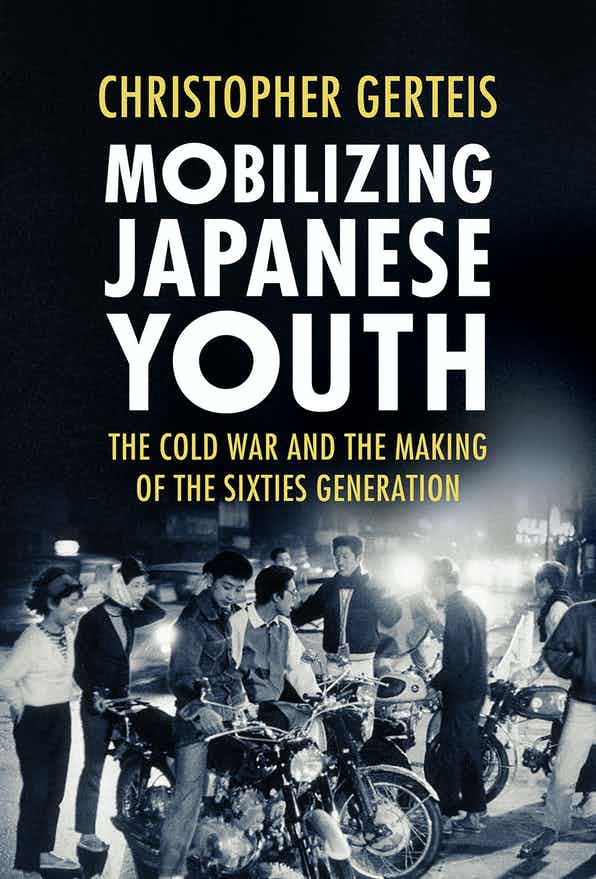
Book Announcement: Mobilizing Japanese Youth: The Cold War and the Making of the Sixties Generation

Mobilizing Japanese Youth: The Cold War and the Making of the Sixties Generation

Christopher Gerteis

In Mobilizing Japanese Youth, Christopher Gerteis examines how non-state institutions in Japan—left-wing radicals and right-wing activists—attempted to mold the political consciousness of the nation’s first postwar generation, which by the late 1960s were the demographic majority of voting-age adults. Gerteis argues that socially constructed aspects of class and gender preconfigured the forms of political rhetoric and social organization that both the far-right and far-left deployed to mobilize postwar, further exacerbating the levels of social and political alienation expressed by young blue- and pink- collar working men and women well into the 1970s, illustrated by high-profile acts of political violence committed by young Japanese in this era.

As Gerteis shows, Japanese youth were profoundly influenced by a transnational flow of ideas and people that constituted a unique historical convergence of pan-Asianism, Mao-ism, black nationalism, anti-imperialism, anticommunism, neo-fascism, and ultra-nationalism. Mobilizing Japanese Youth carefully unpacks their formative experiences and the social, cultural, and political challenges to both the hegemonic culture and the authority of the Japanese state that engulfed them. The 1950s-style mass-mobilization efforts orchestrated by organized labor could not capture their political imagination in the way that more extreme ideologies could. By focusing on how far-right and far-left organizations attempted to reach-out to young radicals, especially those of working-class origins, this book offers a new understanding of successive waves of youth radicalism since 1960.

For more information: https://www.cornellpress.cornell.edu/book/9781501756313/mobilizing-japanese-youth/

Posted in announcements, culture | Tagged , , , , , , , | Leave a comment

Resource: Library and Archive Travel Grants

Not everyone is based at an institution where they have access to a Japan Studies collection, particularly a comprehensive one that may have the specialist materials they need. Fortunately a lot of larger institutions with these holdings sponsor library or archive travel grants to help those who might need to make a short-term visit for research.
The following list is of those grant programs I could find, some of which are Japan-specific and others that are not. There are likely many more, particularly at archives that may seem unlikely to have Asia-related holdings. If there is anything not included below that is relevant, please leave a comment or email shinpai.deshou@gmail.com so it can be added!

Posted in graduate school, main posts, study tools, undergraduate, useful links | Tagged , , , , , , | Leave a comment

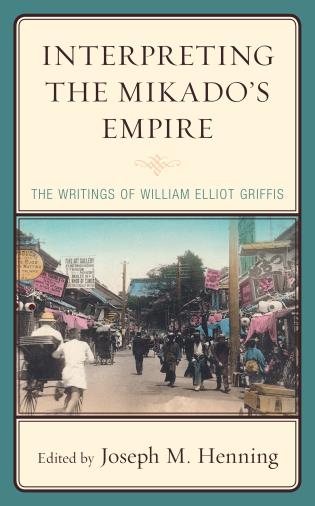
Book Announcement: Interpreting the Mikado’s Empire: The Writings of William Elliot Griffis

Interpreting the Mikado’s Empire:
The Writings of William Elliot Griffis
EDITED BY JOSEPH M. HENNING

For more than fifty years, William Elliot Griffis (1843–1928) chronicled a rapidly changing Meiji Japan and its people. He was unequaled in the length of his writing career and the breadth of his work, which illuminated the entire sweep of Meiji history and reached a multiplicity of American audiences. A teacher in the provincial city of Fukui and later in Tokyo, he reported in magazine essays on the last days of feudalism in Japan and its aspirations to become a modern nation. After returning to the United States, he continued to write. In dozens of books and hundreds of articles, he covered topics including the samurai class, daily life, racial theory, empire, and war. Extending his reach even further, he was a tireless public speaker and delivered thousands of lectures on Japan. He described his self-appointed task as “interpreting Japan to America, with voice and pen.” This anthology brings together the best of his writing, offering a dynamic perspective on Meiji Japan through the eyes of a colorful and engaging writer.

For more information: https://rowman.com/ISBN/9781793626509/Interpreting-the-Mikado’s-Empire-The-Writings-of-William-Elliot-Griffis

Posted in announcements, culture | Tagged , , , , , , , , , | Leave a comment

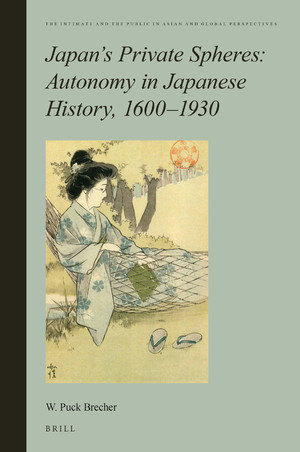
Book Announcement: Japan’s Private Spheres: Autonomy in Japanese History, 1600-1930

Japan’s Private Spheres: Autonomy in Japanese History, 1600-1930

Author: William Puck Brecher

Japan’s Private Spheres: Autonomy in Japanese History, 1600-1930 traces the shifting nature of autonomy in early modern and modern Japan. In this far-reaching, interdisciplinary study, W. Puck Brecher explores the historical development of the private and its evolving relationship with public authority, a dynamic that evokes stereotypes about an alleged dearth of individual agency in Japanese society. It does so through a montage of case studies.

For the early modern era, case studies examine peripheral living spaces, boyhood, and self-interrogation in the arts. For the modern period, they explore strategic deviance, individuality in Meiji education, modern leisure, and body-maintenance. Analysis of these disparate private realms illuminates evolving conceptualizations of the private and its reciprocal yet often-contested relationship to the state.

For further information: https://brill.com/view/title/59530.

Posted in announcements, culture | Tagged , , , , | Leave a comment

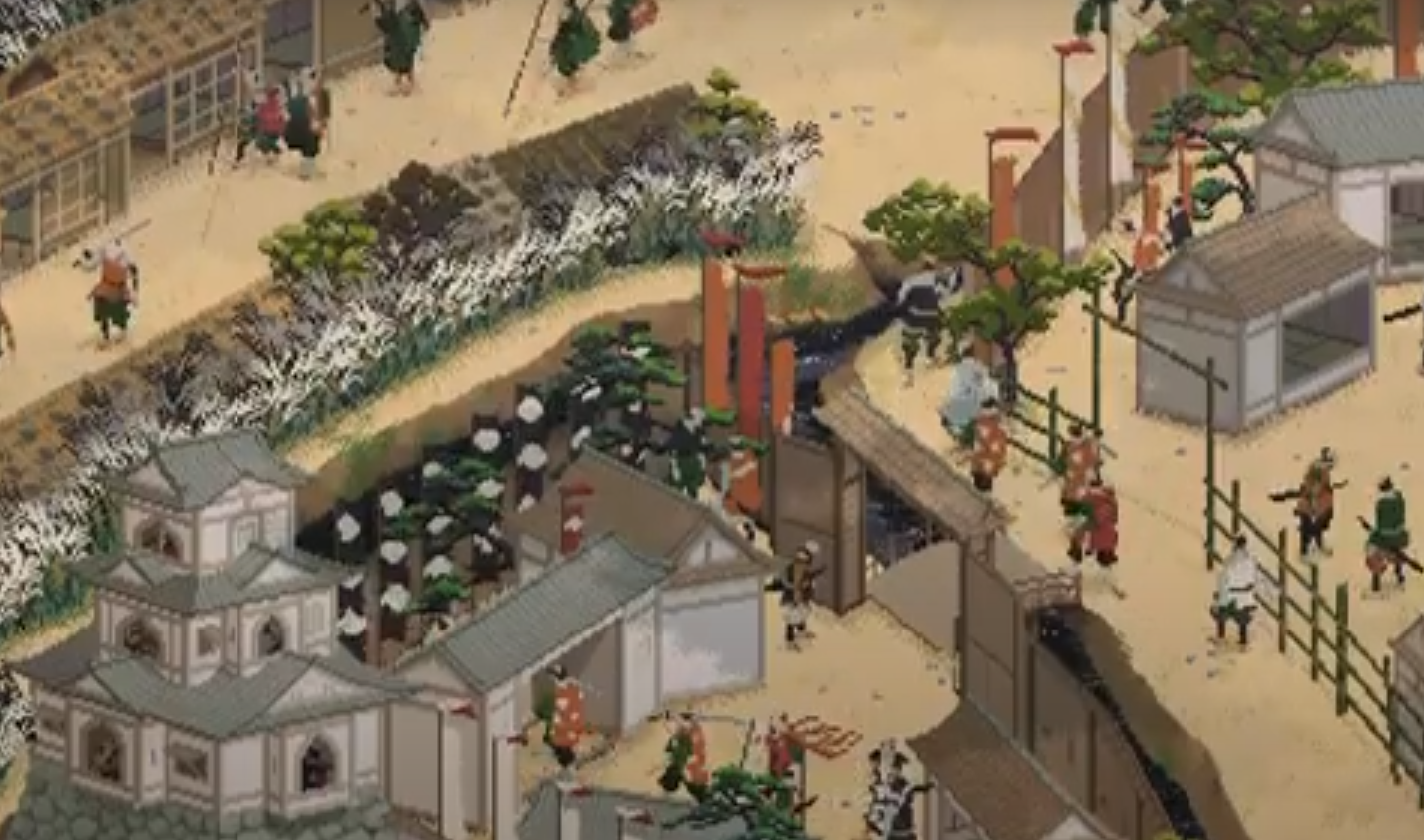
Fun Link Friday: Pixel Animation Battle of Sekigahara

Pixel art has been around for decades, and whether you’re playing a video game or enjoying some 8-bit nostalgia of daily life in Japan, it’s always a joy.

A couple of weeks ago Spoon & Tamago featured the work of the videographer Yusuke Shigeta, who has taken pixel art to the next level by animating a famous 17th century folding screen, the Sekigahara sansui zu byobu of the Osaka Museum of History, using 3D modeling and pixel design.

The result is a super cool rendering of the late medieval/early modern world, helping us imagine what it might have been like to be on the ground! You can check out the video below for a glimpse at the animation and see more details at the Culture Gate website where this and other art projects are being sponsored. Happy viewing!

Posted in culture, fun links | Tagged , , , , , , , , , | Leave a comment

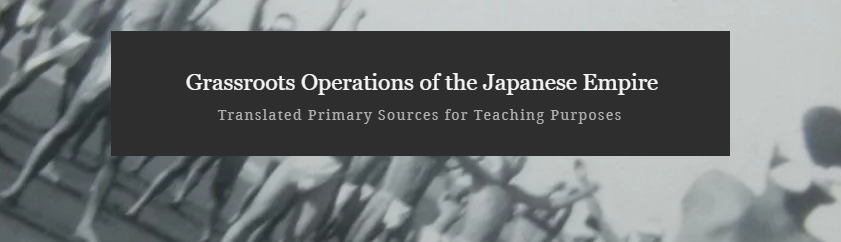
Resource: Grassroots Operations of the Japanese Empire Translated Primary Sources for Teaching Purposes

Today’s resource post is Grassroots Operations of the Japanese Empire: Translated Primary Sources for Teaching Purposes. Begun in 2021 by Sayaka Chatani, Assistant Professor of History at the National University of Singapore, the website provides a wide variety of primary sources related to the Japanese empire.

In order to facilitate use in high school and college classrooms, each source has been translated into English and is presented with a brief introduction to its context written by a historian. Citations are also given for the original source, making it easy to refer to for further investigation.

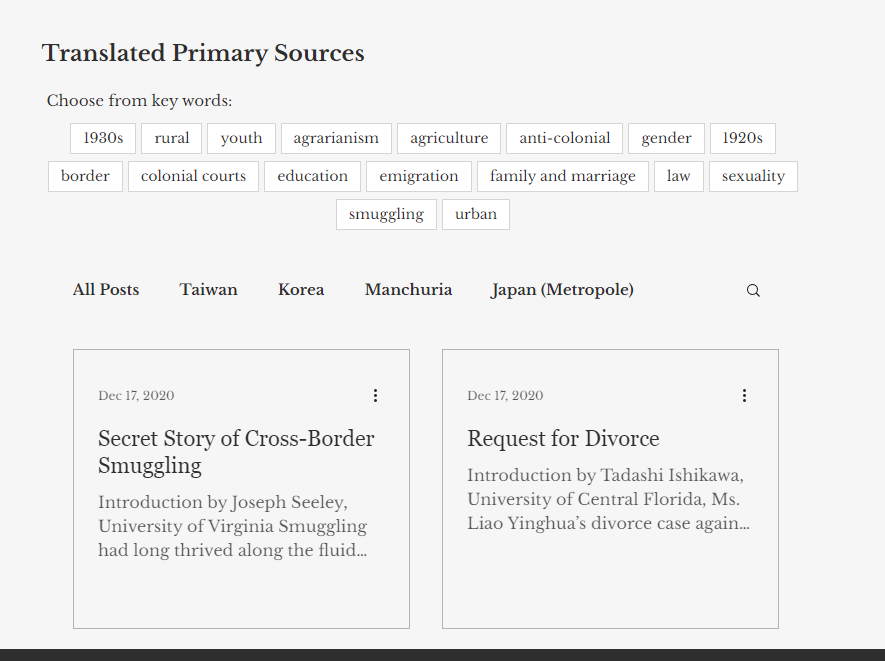
The translation section allows one to either select key words that will pull up relevant documents or to browse by geographic location. There is also a separate “Other Useful Sources” section that refers to many other sites and archives with relevant research materials, making this a great place for educators teaching on modern East Asia to look for further classroom materials (or send students hunting for other sources).

Given the difficulty of and time investment in publishing large translated sourcebooks for teaching, Grassroots Operations of the Japanese Empire: is an excellent means to leverage collaborative scholarship and expertise for open-access resources. There is information provided on how scholars can contribute their own translations or class assignments and Chatani welcomes students to share any sources of their own and potentially take part in the writing process, modeling forward-thinking and inclusive pedagogical methods for integrating students into our scholarship. I hope to see this site continue to grow and transform in the years to come!

Posted in graduate school, main posts, study tools, undergraduate, useful links | Tagged , , , , , , , , , , , | Leave a comment

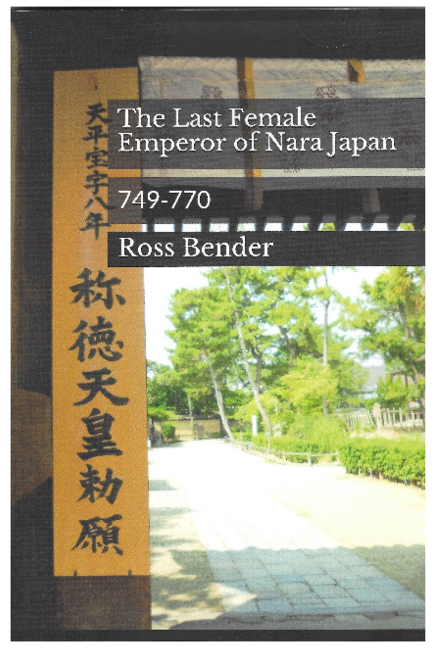
Book Announcement: The Last Female Emperor of Nara Japan, 749-770

The Last Female Emperor of Nara Japan, 749-770
by Ross Bender

The last female emperor of Nara Japan was Kōken/Shōtoku Tennō, who ruled from 749 to 770, with an interregnum from 758 to 764. She was the last in a series of six ancient empresses regnant in Japan, who ruled, interspersed with male royals, from 592 to 770. These female sovereigns were designated as ‘Tennō‘ in the chronicles, a term normally translated as ‘Emperor.’ She was a powerful ruler, an adroit politician who overcame three challenges to her rule by male members of the nobility. After her death, female emperors took the throne only twice more, many years later in the 17th and 18th century when the imperial house was completely dominated by the military rulers, the Tokugawa shoguns. This study is a narrative of the period of her reign. It is a companion to my five volumes of translation from the Shoku Nihongi, published from 2015-2016. The book has minimal bibliographic notes and is intended as an introduction for Western readers; scholars may consult my translations for a more detailed account. It is dedicated to Kimoto Yoshinobu, the expert on the Fujiwara in the 8th century.

Table of Contents

Female Rule in Ancient Japan
Kōken’s Reign, 749-757
The Junnin Interregnum and the Nakamaro Supremacy, 758-783
The Fall of Nakamaro and the Rise of Dōkyō, 764-766
The Dōkyō Supremacy and the Death of the Empress, 767-770
Appendix 1: Shoku Nihongi
Appendix 2: Imperial Edicts – Senmyō, Choku, and Shō
Epilogue
Selected Bibliography

For more information: The Last Female Emperor of Nara Japan 749-770

Posted in announcements, culture | Tagged , , , , , , , | Leave a comment

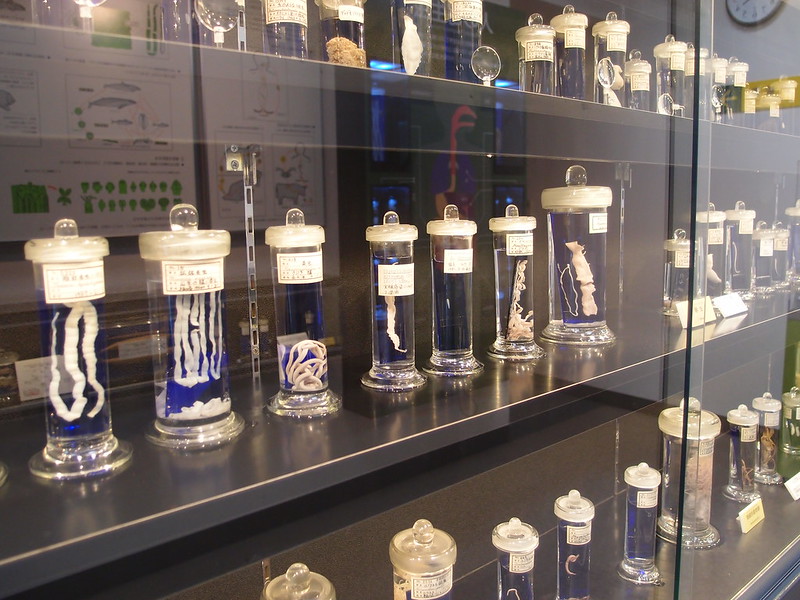
Fun (?) Link Friday: Meguro Parasitological Museum

Photo by Guilhem Vellut

When was the last time you thought about… parasites? Maybe watching a horror movie or taking your pet to the vet. But if you’re interested in exploring scientific knowledge about these creepy wigglies for fun, Japan has a museum for you!

An Open Culture article recently highlighted The Meguro Parasitological Museum, which has been around since 1953 giving people the heebie-jeebies. Inside you’ll find over 60,000 species of parasite, with hundreds on rotating display. It might not be for everyone, but it’s certainly fascinating to see parasites longer than my living room is wide.

If you’re in Tokyo looking for something unique to do, it could be a fun way to fuel new nightmares! And if you aren’t in Japan, you can still catch a glimpse of some of their offerings on their website or through their Flickr gallery. Enjoy (?) clicking!

Posted in culture, fun links | Tagged , , , , | Leave a comment