
Educators from elementary to university level will find a vast amount of fantastic resources at the Asia for Educators website, which is an ongoing initiative of the Weatherhead East Asian Institute at Columbia University intended for both faculty and students orienting themselves toward a more global perspective on history, art, culture, literature, religion, and more.
Although at times intimidating to navigate because of its overwhelming amount of material and numerous subsections, Asia for Educators features a wide variety of primary and secondary source materials on top of pedagogical resources, including lesson plans, maps, and more. Here I’ll provide a brief rundown of its various subsections, some of which a broad enough that they could each be their own resource post.
In the Online Professional Development on East Asia section, visitors have access to online courses, reading groups, video presentations, and book groups for K-12 educators. Some of the topics already featured include both classic novels and modern visual materials (such as graphic novels) with Asia-related content. Users can sign up with the AfE website to gain access to/register for these programs.
The Video Lectures and Presentations by Faculty section appears to have the videos down at the moment, which is unfortunate, but can still be used to glimpse a series of topics (and their interrelations) on China and Japan, primarily ancient to early modern subjects likely of interest to educators for comparative work on premodern societies.
 The Resources for Teachers & Students on the main page is perhaps the most extensive on the site, broken down into Geography, Art, Language Arts, and Religion. Those exploring the Geography section will find a series of key readings on location, place, human/environmental interaction, movement, and region, which are further subdivided into numerous exercises using maps and other content. Whether you’re looking for an exercise on the geographic distribution of population density or exploring topographic connections to the Silk Road, there will be plenty to draw from on this site.
Similarly, the Art section of the site has a rich collection of online resources, ranging from ways to search art by topic, time period, or country/region to labels accompanied by short write-ups that specify whether the online resource is a special exhibition, teaching art unit, thematic essay, or other type of resource related to the arts.
In Language Arts, you’ll find links to the National Consortium for Teaching About Asia’s recommended titles, divided by both geographic region and by age-range. This is especially useful for K-12 educators looking to diversify representation in their classrooms.
The Religions section focuses primarily on China, providing broad overviews of various belief systems in China and their historical circumstances. The focus is on Late Imperial China (c. 1644-1911), but also includes information on earlier practices and how they informed changing views of religious practice.
Thinking more globally, the bottom of the main page includes resources by time period, a series of timelines, major themes, print and video resources, primary sources (including DBQs, for those teaching AP classes), and a handful of teaching modules.

There really is an enormous amount of content on the site, so depending on your goals as a teacher or the kind of unit you’re developing you’ll get different mileage from different aspects of the site. Be sure to take some time to dig deep into each section!
 GRINNELL COLLEGE. The Department of Religious Studies invites applications for a tenure-track appointment in East Asian Religions and Global Buddhism beginning Fall 2019. Assistant Professor (Ph.D.) preferred; Instructor (ABD) or Associate Professor possible. Research and teaching interests might include, but are not limited to: religions of Japan, China and/or Korea, Buddhism, gender, media, and/or transnational studies.
 The Friends of the University of Wisconsin-Madison Libraries is pleased to offer grants intended to offset expenses for out-of-town scholars wishing to utilize the rich resources held by the UW-Madison General Library System. Awards of up to $2,000 each are available to scholars living in the United States and $3,000 to those fromelsewhere around the world. Scholars may be asked to share their research experience with UW-Madison faculty, staff, and students on an informal basis during their visit. A short follow-up report is also requested at the completion of their stay.
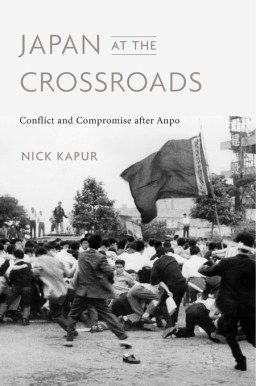 Japan at the Crossroads: Conflict and Compromise after Anpo


 What can I do with a B.A. in Japanese Studies?