In my last guest post, I suggested a few ways to begin looking for and applying to museum internships. Today, I will try to provide something of an overview of the types of internship/volunteer positions that exist, how they work, and what sort of tasks you might find yourself handling.
There are a huge variety of volunteer / internship positions. The responsibilities you’ll handle all depend on the kinds of tasks or projects a museum needs to get done, how much time, space, and staffing (for managing and mentoring interns) they have, and other resources available to them. Some volunteer positions are pre-set for a limited period of time, such as a summer internship or a one- school-year-long internship. Others are more open-ended. Two of the internships I’ve done had no set schedule or end date, only ending when I decided to leave to pursue other things (read: leaving town to attend grad school); up until then, I just continually took on new tasks or got involved in new projects, as needed. Finally, there are some volunteer positions, such as docent (gallery tour guide) positions, which are much more long-term endeavors. In fact, many museums have a one- or two-year long course of training for docents before they are allowed to be “full” docents. I have not done this sort of thing myself, so, I’m afraid I don’t really know any further details about how that works, but it’s worth looking into, if you are interested.

Somewhat related to the time factor, there is also the differentiation between those volunteer/internship positions that are keenly crafted and organized and those done a bit more on the fly. In my experience, this is much more a spectrum, rather than a binary, but like most things, it is easier to explain as a binary.
Sometimes volunteer/internships can resemble a study abroad program, in the sense that the internship as a whole runs on a set schedule; when you start and end is fixed, and is not open-ended. There is usually a formal welcome day and orientation program, and over the course of your time there, other events occur according to a set schedule. These may include project deadlines for the actual volunteer work you’re helping with, as well as guest lectures, workshops, or training sessions scheduled into the internship program. In a program like this, you might have a mentor or internship coordinator whose chief activities are to run the program (i.e. to lead those workshops, training sessions, etc.), not entirely unlike the program director of a study abroad program or a classroom teacher running a course. As I said, it’s a spectrum, and I have never myself participated in a museum internship that quite functioned this way, but I have done language programs and study abroad programs and other internships which resembled those sorts of highly pre-organized, pre-scheduled training programs. It’s not hard to imagine that there would be internship programs out there that are more thoroughly structured than what I have seen and more intensively focused on a planned course of training and education.
In contrast, there are internships that are less planned out, where instead of being a participant in a “program,” spending most of your time in workshops and training sessions or the like, you function more like a low-ranking member of the staff, aiding in the actual day-to-day workings of the museum. Programs like these are typically characterized by working directly with staff members (e.g. curators) whose chief job is not to teach or train you, or to “run” an internship “program,” but rather to organize exhibitions, manage collections, and take care of other museum work, with your help. This is not to say you won’t get plenty of mentoring, or that you’ll be worked really hard doing menial tasks. As I touched upon briefly in my previous post, most museum professionals you’ll be working with are fully on board with the idea that you’re there to learn and not just to be free labor, so they are eager to teach you.

Curators have a keen interest in shaping future museum professionals, passing on their experience and expertise, and knowing that there will be someone of quality to take over in the next generation. No matter what specific field you (or the curator) may be interested in, whether it’s woodblock prints or Buddhist painting, there’s a good chance that the curator you’re working with will feel that there are not nearly enough enthusiastic young up-and-coming specialists/scholars in that area; if your interests align with theirs, they will likely be quite encouraging of your pursuit of that interest and they’ll be more than happy to do their part to help ensure that the next generation has dedicated , skilled, and experienced, experts.
I also think that there is a strong sense among curators and other museum professionals that graduate programs do not really prepare people adequately for museum work. Of course, there are all kinds of things really specific to museum work, from registration and collections management to gallery layout design, or how to write object labels and the importance of considering your audience when planning an exhibition. And graduate school may help prepare you for some of these. But speaking more strictly of expertise with art history and the objects themselves, one curator I worked with emphasized the importance of knowing how to handle objects, how to judge quality (of the original when it was made) and damage or deterioration, and other skills associated with connoisseurship. A lot of this can only be learned by actually handling objects, looking very closely, and looking at a great many objects. In other words, it can only be learned from experience, and not from a textbook or a lecture. As a result, this curator felt strongly about the great value of hands-on workshops and demonstrations, which serve as a beginning, or as a help later on, in pointing out to the emerging scholar (i.e. the intern, i.e. you or me) things to look out for and to notice. And I think she is absolutely right. I don’t want to go on about this too much, since it’s somewhat off-topic, but I don’t think I have ever had an art history professor spend more than five minutes, if that, talking about paper quality, printing quality, differing editions and how to identify them, fugitive pigments (colors that fade or change into other colors with age, exposure to light, and/or moisture), or how to identify a fake or a later copy. Some have provided limited explanations of the techniques involved in producing a certain type of work, including the way they are mounted; but they have rarely done so with an eye to teaching practical skills or connoisseurship per se. There are obvious reasons for the university classroom context being this way, and I appreciate why that is so. Nevertheless, it means that in a museum internship, the curators and other staff you work with (e.g. collections managers, conservators) will not simply put you to work, but will be quite eager to teach you these aspects of art history, connoisseurship, and art handling.
To return to the subject at hand, because I obtained most of my internships by simply inquiring about the possibility of volunteering, rather than applying for any kind of pre-existing, pre-arranged internship program, my internship experience was more open-ended, and functioned more like working as a staff member. At one of the two institutions where I did this type of internship, I had my own desk, my own phone number (though I hardly ever received calls), and my own institutional email address. And most importantly, I had my own tasks and projects. Rather than having any kind of pre-scheduled “program,” with specific tasks or lessons, workshops, activities or the like pre-scheduled out, I basically just helped in whatever way the curator (or the department as a whole) needed help at that time, taking on mini-projects or specific tasks that became my responsibility.
 These tasks included things assigned to me, as well as things I just sort of picked up on my own initiative. I handled the incoming mail for the department, sorting it and delivering it to staff members’ desks; I managed the invite lists and RSVP lists for special events such as members’ openings; I opened the gallery each day, unlocking the doors, turning on the lights and all the multimedia elements, wiping down the plexiglass cases, and making sure everything looked clean and orderly. I was also responsible for organizing the department’s invoices and submitting them to the Finance department to get checks paid out to all of our contractors and others we bought services from (e.g. shipping, banners, printing of pamphlets and postcards). This provided me with a valuable glimpse into how much money it costs to organize an exhibition and all the different elements that go into it, from marketing to design to installation, shipping & insurance.
At the other institution where I did this type of curatorial internship, I reorganized the object files for the entire Japanese collection on my first day, and became, for the limited time that I was there, the chief person responsible for maintaining the organization of those files, pulling files when the curator needed them, adding things to the files when asked, and doing a lot of work on the electronic collections database as well. Sometimes I accompanied visiting scholars and other guests, helping them in whatever little ways I could, serving as a go-fer or messenger, and just being present so that no visitor/guest (no outside person) was ever left alone with objects or in any restricted area such as storage. In the process I learned all kinds of really interesting and useful things about how collections are organized, what kinds of data museums keep on their collections, and how a curatorial department is organized and operates.
Yes, there was a lot of photocopying and a lot of stuffing envelopes. But I think it important to just take these kinds of things in stride. It is important work that actually needs to get done, not just busy work – you, the intern, are genuinely helping the department. As tedious as it seems, it is a “skill,” so to speak, that does prove valuable. You figure out, or get shown, shortcuts and better techniques for doing these kinds of things more efficiently. And, remember, it’s quite likely that someday, whether as a “curatorial assistant” or “asst. collections manager” or “associate professor,” you’ll find yourself needing to do these tasks and won’t have an intern to foist it off onto. So, menial though it may be, knowing your way around all the different settings in the scanner/copier/fax, being able to use Mail Merge to convert a list of names and addresses into a printable sheet of address labels, and other things like this are rather useful. Though I was low on the totem pole as an intern, I could not help but feel pride and enjoyment at being a part of a team and a sense of ownership and accomplishment when I handled a task or project myself. Opening up the gallery, flipping some switches, and wiping off cases may seem really trivial, but for 10-20 minutes every day, I had the entire gallery to myself, and had greater access to it, and a more intimate relationship with it, than I ever would as a mere one-time museum visitor.
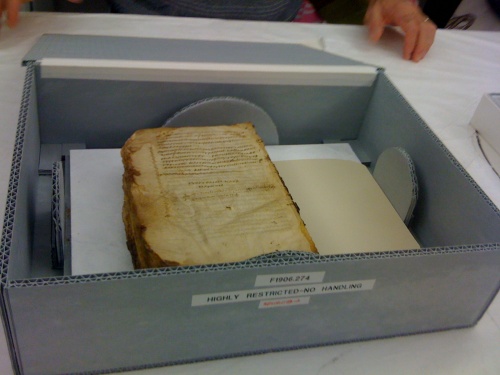
In contrast to the wide range of activities and tasks I performed in those internships, my most recent internship focused on a very specific project. Rather than working in the offices or otherwise being directly involved in exhibitions/collections tasks in a general sense, we P. Project interns had workstations in the collections storage area, and focused on powering through a project photographing a collection of Edo period woodblock printed books, page by page, from cover to cover. We had our work overseen in various ways by a curator, a conservator, and the collections managers, but the project was essentially ours. We interns worked closely with one another and with this particular set of books, rather than engaging with other elements of the museum’s collections or working directly with the curator. Still, we were not wholly isolated, and we did still meet many members of the staff of various departments. We were able to take part in tours, workshops, guest lectures, and training sessions. But this was, all in all, a very different experience, though no less valuable; we may not have been exposed very much at all to the workings of the museum or the intricacies of the job of the curator, but we got very direct, extensive, hands-on experience with Edo period woodblock printed books. We learned much about them first-hand, from their content and style to the differing levels of quality of paper and of printing techniques. I believe we indeed acquired a level of expertise and familiarity with these materials that I think relatively few of my age or education level (as an MA student and not a post-doc/professional) can claim.
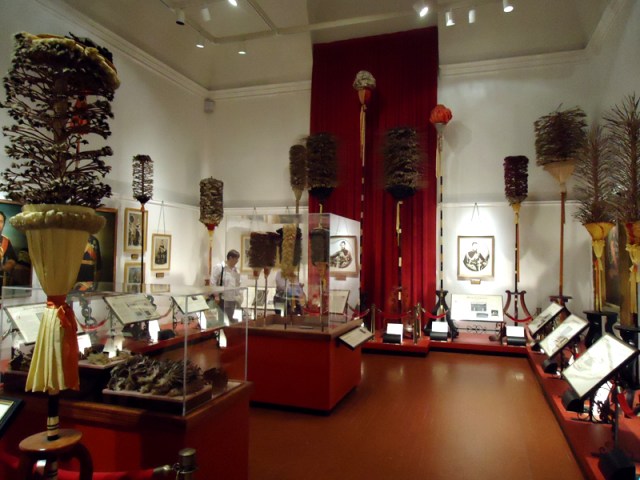
Although this was a very particular, tightly organized, chronologically closed-ended, and intensive internship project, working roughly 40 hours a week for 10 weeks, many museums also have volunteer/internship opportunities to do similarly focused work on a more open-ended basis. If you read Japanese (or Chinese, or another language) particularly well, or have other skills or expertise (e.g. knowledge of prints, or experience with databases or archives), there may be opportunities for you to help with specific projects. Most major museums are currently in the process of upgrading to new electronic databases, digitizing the collection, creating or expanding a publicly-accessible online collections database, or otherwise reorganizing their records, tasks for which there is often simply no way around it but to invest many, many man-hours – man-hours which the short-staffed, full-time staff simply cannot dedicate to the task. Therefore, there is almost always a need for volunteers. Many museums are also in the process of surveying their collections, and need help not only with data entry, but with researching and identifying objects in order to create that data. For example, I know one museum which recently acquired a huge number of objects from a collector who recently passed away and who did not necessarily keep sufficiently thorough or accurate records. So, if you have abilities reading inscriptions, recognizing artists’ signatures, or identifying the conservation status of Japanese prints and paintings, for example, your local museum might be happy for your help. You have but to ask.
In this post, I have attempted to provide an overview of a few different types of curatorial volunteer/internship positions. Of course, in reality, there is a very wide spectrum of types of positions, and every volunteer experience is different; still, I believe that my experience can prove applicable, and informative. Internships in other departments – such as marketing & PR, conservation, or archives – may prove quite different, as would internships in organizations other than those more typically identified as “museums.” Even within curatorial departments, for example, there is still incredible variety in how curators, departments, museums do things and an incredible variety of tasks that need to be done. In other words, there are plenty of opportunities out there.
As always, my thanks to Paula for allowing me this opportunity to contribute to this excellent blog project of hers, and if you have any questions or comments, I would love to hear (read) them.
In my next post, currently planned as the last of a three-part series, I will attempt to summarize what different departments and roles within the museum do, as well as some other aspects of how things at a museum function. I think we may all have a good sense of what the marketing/PR department does, and HR, and Security, but what exactly is a registrar? How does one get to be a collections manager? And what precisely does a curator do (and not do)? I’ll attempt to answer these questions in my next post. Until then.





 What can I do with a B.A. in Japanese Studies?