Funding: The Robert H. N. Ho Family Foundation Program in Buddhist Studies

The Robert H. N. Ho Family Foundation Program in Buddhist Studies

The American Council of Learned Societies (ACLS) invites applications in the 2019-20 competition year of The Robert H. N. Ho Family Foundation Program in Buddhist Studies. In cooperation with the Foundation, ACLS offers an integrated set of fellowship and grant competitions supporting work that will expand the understanding and interpretation of Buddhist thought in scholarship and society, strengthen international networks of Buddhist studies, and increase the visibility of innovative currents in those studies.

  • Postdoctoral Fellowshipstwo-year stipends to recent recipients of the PhD for residence at a university for research, writing, and teaching
  • Research Fellowships: one-year stipends for scholars who hold a PhD degree, with no restrictions on time from the PhD
  • New Professorships: multi-year grants to colleges and universities to establish or expand teaching in Buddhist studies

These are global competitions. There are no restrictions as to the location of work proposed, the citizenship of applicants, or the languages of the final written product. Applications must be submitted in English. Program information and applications are available at www.acls.org/programs/buddhist-studies/.

Deadline for submission of fellowship applications: November 13, 2019.
Deadline for institutional applications for New Professorships: January 8, 2020.

For more information, please email BuddhistStudies@acls.org

Program in Buddhist Studies on Facebook.


The American Council of Learned Societies is the leading private institution supporting scholars in the humanities and humanistic social sciences. In the 2018-19 competition year, ACLS awarded over $25 million to nearly 350 scholars worldwide. Recent fellows’ and grantees’ profiles and research abstracts are available at https://www.acls.org/Fellows-and-Research/Recent-Awardees. We look forward to an equally successful competition year in 2019-20, and we encourage you to circulate this notice to members of your community who may be interested in these fellowship and grant opportunities.

Established in 2005, The Robert H. N. Ho Family Foundation is a private philanthropic organisation based in Hong Kong. The Foundation’s dual mission is to foster appreciation of Chinese arts and culture to advance global learning and to cultivate deeper understanding of Buddhism in the context of contemporary life. www.rhfamilyfoundation.org.
Posted in announcements, graduate school, study abroad | Tagged , , , | Leave a comment

Fun Link Friday: Ikebana Battles 🌿🌻

What artful masterpiece can you put together in five minutes?

At the third annual flower arranging battle in Ota, Tokyo this summer, spectators got to find out! Although the traditional art of ikebana (flower arrangement) in Japan is often thought of as an almost meditative practice in aesthetics, in recent years interest has been drummed up through regular events that pit expert and amateur flower specialists alike against one another.

The “hanaike flower arranging battle” held in May at the Ota Market (where flowers are often bid on by wholesalers and florists) demanded that participants create an improvised ikebana piece in just five minutes.

Viewers voted on each work across different categories, much as one would at a sports match. They have so little time, yet seem to be so calm!

A quick Youtube search reveals there’s a few other videos of the event, so have fun checking it out!

Happy Friday!

Posted in culture, fun links | Tagged , , , , , | Leave a comment

Want to share your advice or experience? Write for us!

You’ve got Japan/Japanese experience! Do you have some aspect of your present career, past jobs, educational endeavors, or any other part of the journeys that took you there that you think readers would benefit from hearing about? Write a short blog post for Shinpai Deshou!

This could be single or multi-part articles about personal experiences, tools or services you’ve used, advice about a specific field, or anything else that’s geared towards helping others develop their knowledge and skills in Japan-related fields.

Send an email at shinpai.deshou@gmail.com and pitch an article! We’re happy to collaborate with guest writers to develop their ideas and create an even bigger body of shared knowledge for the community.

Posted in site maintenance | Leave a comment

Job Opening: Lecturer in Japanese Literature, University of East Anglia

The University of East Anglia is looking to appoint a new Lecturer / Senior Lecturer in Japanese Literature, with a specialistion in modern and/or contemporary Japanese literature and the ability to teach and research other aspects of Japanese literature. This is a new position created with the support of the Japan Foundation. The post is based in the School of Literature, Drama and Creative Writing within the Faculty of Arts and Humanities, and the post-holder will be expected to contribute to our new MA in Interdisciplinary Japanese Studies, hosted in the Interdisciplinary Institute for the Humanities in the Faculty, and to work with the Centre for Japanese Studies to further develop our Japanese Studies programmes initiated in 2011.
Norwich is a UNESCO City of Literature and is home to the renowned National Centre for Writing (located in the historic city centre) and the British Centre for Literary Translation (within the School). Full details at https://myview.uea.ac.uk/webrecruitment/pages/vacancy.jsf?vacancyRef=ATR1483 .

Deadline for applications 19 September 2019.

For more information see the following PDF.

Posted in announcements, job openings, jobs | Tagged , , | Leave a comment

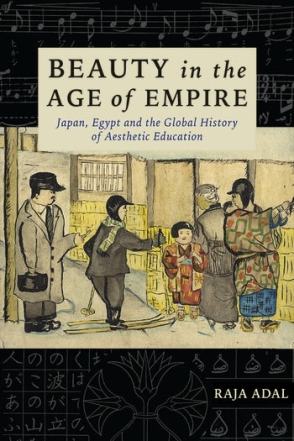
Book Announcement: Beauty in the Age of Empire: Japan, Egypt, and the Global History of Aesthetic Education

Beauty in the Age of Empire: Japan, Egypt, and the Global History of Aesthetic Education
Raja Adal

When modern primary schools were first founded in Japan and Egypt in the 1870s, they did not teach art. Yet by the middle of the twentieth century, art education was a permanent part of Japanese and Egyptian primary schooling. Both countries taught music and drawing, and wartime Japan also taught calligraphy. Why did art education become a core feature of schooling in societies as distant as Japan and Egypt, and how is aesthetics entangled with nationalism, colonialism, and empire?

Beauty in the Age of Empire is a global history of aesthetic education focused on how Western practices were adopted, transformed, and repurposed in Egypt and Japan. I uncover the emergence of aesthetic education in modern schools and its role in making a broad spectrum of ideologies from fascism to humanism attractive. With aesthetics, educators sought to enchant children with sounds and sights, using their ears and eyes to make ideologies into objects of desire. Spanning multiple languages and continents, and engaging with the histories of nationalism, art, education, and transnational exchanges, Beauty in the Age of Empire offers a strikingly original account of the rise of aesthetics in modern schools and the modern world. It shows that, while aesthetics is important to all societies, it was all the more important for those countries on the receiving end of Western expansion, which could not claim to be wealthier or more powerful than Western empires, only more beautiful.

For more information: http://cup.columbia.edu/book/beauty-in-the-age-of-empire/9780231191166

Posted in announcements, culture | Tagged , , , , , | Leave a comment

Fun Link Friday: 2019 Rice Field art at Inakadate

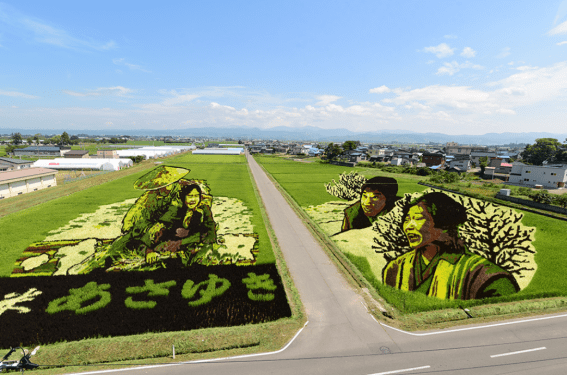
As long-time readers know, each year we showcase the rice paddy art of Inakadate, Aomori Prefecture, which has a long standing tradition of growing multicolored rice to great gigantic rice paddy art!

This year the theme is  Oshin「おしん」, a television drama (image below), and Okaasan to Issho, 「おかあさんといっしょ」a morning children’s show from NHK.

Here’s a couple links to some wide photos of the two fields, and below is a video showing the rice from overhead:

You can also check out the live feed at Inakadate’s official website! Just remember the time difference so you’re not checking at night! 🙂

For last year’s art, see this page.


Posted in culture, fun links | Tagged , , , , | Leave a comment

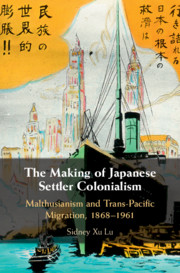
Book Announcement: The Making of Japanese Settler Colonialism: Malthusianism and Trans-Pacific Migration, 1868-1961

The Making of Japanese Settler Colonialism: Malthusianism and Trans-Pacific Migration, 1868-1961
Sidney Xu Lu

This innovative study demonstrates how Japanese empire-builders invented and appropriated the discourse of overpopulation to justify Japanese settler colonialism across the Pacific. Lu defines this overpopulation discourse as ‘Malthusian expansionism’. This was a set of ideas that demanded additional land abroad to accommodate the supposed surplus people in domestic society on the one hand and emphasized the necessity of national population growth on the other. Lu delineates ideological ties, human connections and institutional continuities between Japanese colonial migration in Asia and Japanese migration to Hawaii and North and South America from 1868 to 1961. He further places Malthusian expansionism at the center of the logic of modern settler colonialism, challenging the conceptual division between migration and settler colonialism in global history. This title is also available as Open Access.

For more information: https://www.cambridge.org/core/books/making-of-japanese-settler-colonialism/644DFDA740495E1C2D49B20CCF914418?#fndtn-information

Posted in announcements, culture | Tagged , , , , , , , , | Leave a comment

Fun Link Friday: Cooking Edo Period Food 🍚

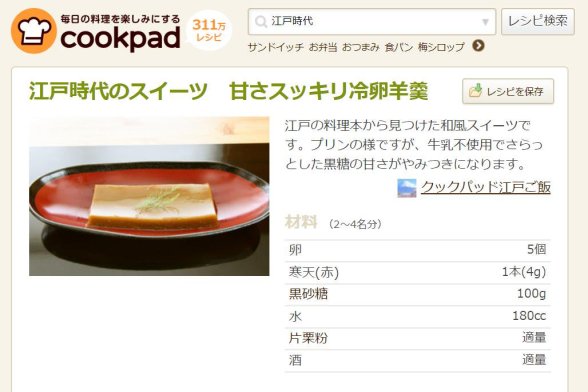
When in Japan, food is everything. What’s the local specialty? What’s the best omiyage? But have you stopped and wondered “What were people eating 200 years ago?” Well the Center for Open Data in the Humanities might be able to help you with that. They’ve been working on a dataset of 100+ recipes from an Edo period (1603-1868) collection from 1785.

Starting with egg recipes, they’ve been releasing the information from the dataset on CookPad, Japan’s most popular cooking site.

Combined with some professional photos of modern attempts at the recipes, you can get a sense of what some early modern Japanese might have had on their tables! The main page of the Edo period recipes can be found here, and Sora News 24 also translated a couple into English.

Happy weekend cooking!

Posted in culture, fun links | Tagged , , , , , , , | Leave a comment

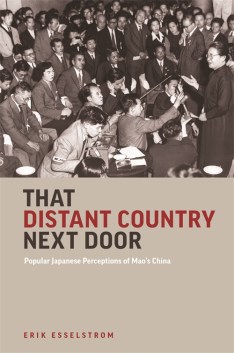
Book Announcement: That Distant Country Next Door: Popular Japanese Perceptions of Mao’s China

THAT DISTANT COUNTRY NEXT DOOR: POPULAR JAPANESE PERCEPTIONS OF MAO’S CHINA
Erik Esselstrom

Japan’s road to war in China in the 1930s–1940s is well known, as are the legacies of that conflict in the diplomatic disputes, territorial rows, and educational policy battles between Japan and China since the 1980s. Less understood is the nature of Japan-China relations in the intervening decades. How did a popular Japanese perception of China that facilitated imperial aggression become one that embraced restoring friendly diplomatic ties and cultivating mutually beneficial economic and cultural interactions? Exploring everyday Japanese impressions of the People’s Republic of China from the end of the U.S. Occupation in 1952 to normalization of Japan-China relations in 1972, this book analyzes representations of the PRC in Japanese print media and visual culture in connection with four topics: the 1954 visit to Japan by Minister of Health Li Dequan, China’s atomic weapons testing in 1964–1967, the Red Guard movement of the early Cultural Revolution years, and the culture of continental “rediscovery” in 1971–1972.

Japanese views of China under Mao were infused with elements of thematic and conceptual continuity linking the prewar, wartime, and postwar eras. In sketching out a portrait of these elements, Erik Esselstrom explains how the reconstruction of Japan’s relationship with China included more than just the trials and tribulations of Cold War diplomacy. In so doing, he reintegrates postwar Japan-China relations within the longer history of East Asian cultural interaction and engagement.

Posted in announcements, culture | Tagged , , , , , , , , , , | Leave a comment

Fun Link Friday: Throw out your garbage!

Some of you may have already seen this instagram account going viral, but it’s too funny to miss out on. An anonymous woman has created, in her own words, “an account uploading things my husband has left around.”

Entitled “Throw out your garbage!” the account is a series of very relatable commentaries on things the woman has found in her home. Take for example:

”You’re f*cking kidding me.” to wasteful aluminum foil use.

Or this precarious drink placement: “Is this the Leaning Tower of Pisa?”

Though my personal favorite is “THIS IS A TOILET. It’s like a horror movie.”


To check out these and other hilarious posts, visit her site at: https://www.instagram.com/gomi_sutero/

Happy Friday!

Posted in culture, fun links | Tagged , , | Leave a comment