
For the kogei- and fashion lovers, Collectors Weekly interviewed Los Angeles County Museum of Art (LACMA) director Christine Drosse back in 2011 about netsuke. The link includes links to LACMA’s online collections of Edo- and Meiji Period netsuke as well as to the International Netsuke Society.
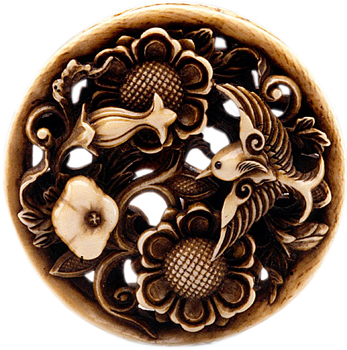
“Ishikawa Rensai carved this ivory and inlaid piece depicting lotus blossoms and a bird in the mid-to-late 19th century.” Via Collectors Weekly
When men wore kimono in the 17th century, they had hanging containers and pouches called sagemono and stacked containers called inrō in which to carry small personal items. The containers hung by a cord that was attached to a small carving which was slipped underneath the kimono sash at the hip. This carving was called a netsuke and its mass would prevent the cord of the hanging container from slipping out from beneath the sash.
Initially, the container cords were tied to small readily available items such as pieces of wood, root, coral, or shell. Such were the origins of netsuke in Japan. Gradually these small functional toggles developed into what most of us know today as netsuke.
Check out the collections and the interview on “The Folklore and Fashion of Japanese Netsuke.”
 What can I do with a B.A. in Japanese Studies?
Reblogged this on seikaiha’s blah-blah-blah and commented:
great craftsmanship.